-Your brakes feel a bit soft, and you know a replacement is due. Choosing the wrong brake discs can lead to poor performance or even failure, putting your safety at risk.1
For 2026, the best brake disc brands are those that master material science, advanced design, and precision manufacturing. Top contenders like Brembo, EBC Brakes, and StopTech lead the market by offering superior heat dissipation, durability, and consistent stopping power for various driving needs.2
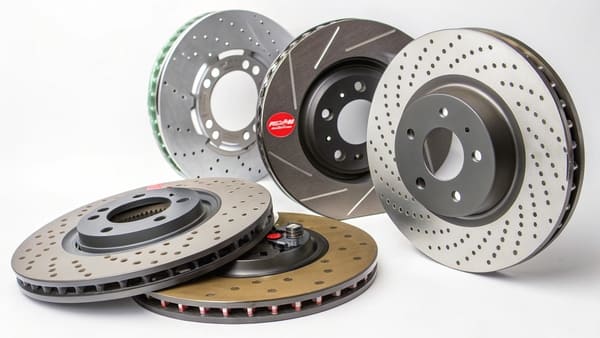
Choosing the right brake discs feels like a big decision because it is. Your car's ability to stop safely depends entirely on this system. It's not just about picking a famous name; it's about understanding what makes one disc better than another. In my years of manufacturing automotive parts, I've seen firsthand what separates a top-tier product from a cheap alternative. Let's dive into the details so you can make a choice that gives you confidence every time you press the brake pedal.
What Makes a Brake Disc Brand Worth Buying?
You see dozens of brake disc brands online, and they all look like simple metal plates. How can you tell which one is high quality and which one might fail you?
A brand is worth buying if it excels in three key areas: superior materials, smart engineering design, and extremely precise manufacturing.3 These elements ensure the disc can handle intense heat, last longer, and provide reliable stopping power every single time.
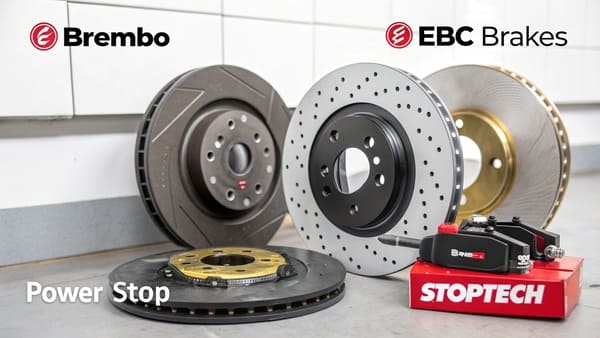
When we talk about what makes a brake disc good, we have to look deeper than the brand's logo. It comes down to the science and the skill behind its creation. As a manufacturer, I've learned that the smallest details can make the biggest difference in performance and safety. A great brake disc isn't just made; it's engineered. It's a balance of raw materials, functional design, and a manufacturing process that leaves no room for error. Let's break down these critical factors to show you what you should be looking for.
Material Science is Everything
The metal used for a brake disc is its most important feature. Most discs are made from grey cast iron, but the specific grade matters a lot. Premium brands often use high-carbon iron (like G3500 grade).4 This material is better at absorbing heat and dampening vibrations, which means quieter, smoother braking and less chance of the disc warping under pressure. Budget brands typically use standard G3000 iron, which works for daily driving but can't handle the stress of heavy or performance use.5
Design Dictates Performance
The design of the disc's surface and its internal structure controls how it performs. You generally see three types:
| Disc Type | Best For | Pros | Cons |
|---|---|---|---|
| Plain/Smooth | Daily Driving | Quiet, long pad life, low cost | Basic heat dissipation |
| Drilled | Street Performance | Better cooling, good in wet | Can develop stress cracks |
| Slotted | Track/Heavy Use | Clears gas/dust, strong bite | Wears pads faster, noisier |
The internal vanes between the two faces of the disc are also critical for cooling. Better brands use more complex, curved vane designs to pull air through the rotor more efficiently, preventing brake fade.6
The Unseen World of Precision Manufacturing
This is an area I know very well. Even with the best materials, a disc is useless if it's not made with precision. But it's not just the metal disc itself. The associated plastic components, like sensor housings or dust shields, require incredible accuracy. Standard injection molding machines often can't produce these parts to the required standard. The cooling process is the hardest part. I remember my first project for a Pakistani client. We were making plastic accessories for a brake system, and I was still new to the complexities. After injection, the parts shrank more than expected during cooling. Luckily, the client loved the tighter fit, but it taught me a valuable lesson. That kind of "mistake" is not acceptable in this business. High-precision machines, often found in factories around Shanghai and coastal Fujian, are necessary to control this process perfectly.7 Adding color to the plastic is also tricky because the mold has to be opened, which complicates the cooling stage even more. This level of detail is what separates a truly reliable component from a potential point of failure.
Which Brake Disc Brands Are Most Trusted by Drivers Worldwide?
You need brakes you can count on, day in and day out. With a market full of options, choosing one can feel like a gamble. So, which names do drivers and mechanics trust most?
Globally, brands like Brembo, EBC Brakes, StopTech, and Power Stop are the most trusted.8 They have built their reputations over decades through motorsport success, rigorous OEM testing, and consistently delivering reliable, high-performance braking components for all types of vehicles.9
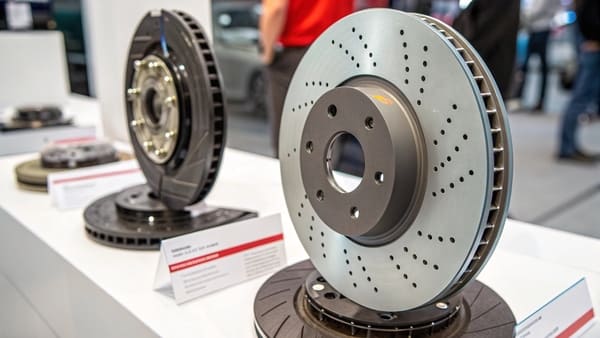
When a brand earns trust, it’s not by accident. It's the result of years of proving their products work under the most demanding conditions. These companies invest heavily in research and development, and their parts are often the original equipment (OEM) on some of the world's fastest cars. This means they are held to the highest standards of safety and performance from the very beginning. For you, the driver, choosing one of these brands means you are getting a product with a proven track record. Let’s look at what makes each of these top brands a go-to choice for so many people.
A Look at the Industry Leaders
Each top brand has its own strengths and is known for specific qualities. Understanding these differences can help you match a brand to your car and your driving style.
-
Brembo: This Italian company is the gold standard in high-performance braking. They are the OEM supplier for brands like Ferrari, Porsche, and a huge number of performance cars. They are known for their lightweight, powerful, and fade-resistant big brake kits. If you see their name, you are looking at a top-tier product.
-
EBC Brakes: A UK-based manufacturer with a massive catalog. EBC is fantastic because they offer a wide range of products for almost any vehicle, from daily drivers to race cars. They are particularly famous for their different brake pad compounds, allowing you to fine-tune your braking feel and performance.
-
StopTech: A US brand that is part of the larger Centric Parts family. StopTech focuses on creating balanced brake upgrades. They are highly respected for their big brake kits and Sport Rotors, which offer significant performance gains over stock systems without being overly aggressive for street use.
-
Power Stop: This brand has become incredibly popular for its all-in-one brake kits. They package everything you need—rotors, pads, and hardware—into one box. This makes the upgrade process simple and ensures all the components are designed to work together perfectly.
Quick Comparison of Top Brands
To make it easier, here is a simple table comparing these trusted brands.
| Brand | Best For | Price Range | Key Feature |
|---|---|---|---|
| Brembo | High-Performance & Track | High | Unmatched stopping power and OEM quality |
| EBC Brakes | Versatility & Tuning | Mid to High | Wide range of pad and rotor options |
| StopTech | Balanced Street Upgrades | Mid to High | Engineered big brake kits and sport rotors |
| Power Stop | DIY-Friendly Upgrades | Low to Mid | Complete, convenient brake kits |
Are Premium Brake Disc Brands Really Better Than Budget Brands?
You see a premium brake disc for $150 and a budget one for $40. Is the expensive one really worth the extra money, or are you just paying for the name on the box?
Yes, premium brake disc brands are significantly better. They use higher-grade materials and more advanced manufacturing techniques. This results in superior heat management, much longer service life, and more consistent, reliable stopping power, especially under heavy use.
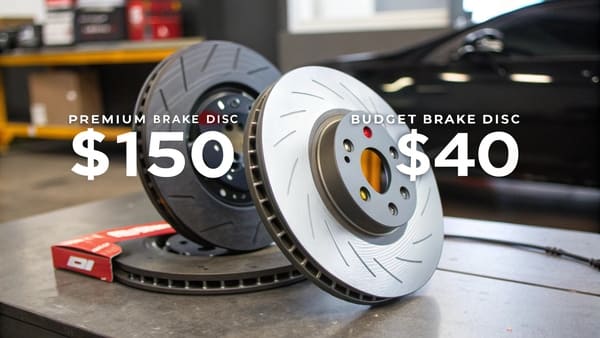
This is a question I get a lot, both from clients and from friends. The price difference can be huge, and it's natural to wonder if the extra cost is justified. From my perspective as a manufacturer, the answer is a clear yes. The corners cut to make a budget brake disc are not in marketing; they are in the fundamental things that make a brake disc safe and effective. It's about the quality of the iron, the precision of the machining, and the engineering behind the cooling design. Let's dig into the real, physical differences between these two product tiers.
The Material and Manufacturing Gap
The biggest difference is in the metal itself. A premium disc from a brand like Brembo or StopTech will use high-carbon G3500 iron. This costs more, but it's much more stable at high temperatures. A budget disc uses cheaper G3000 iron, which is more likely to warp or "hot spot" when you brake hard. This warping causes vibrations you feel in the steering wheel. Furthermore, the manufacturing precision is worlds apart. At my factory, we use machines that can hold tolerances down to a few micrometers. This ensures the disc is perfectly flat and balanced. Budget factories often can't achieve this, which leads to vibrations and uneven pad wear right from the start. This precision is why specialized factories, like those in the Shanghai region, produce superior components compared to lower-cost facilities elsewhere.
Performance Under Pressure: The Brake Fade Test
The most dangerous failure for a brake system is "brake fade." This happens when the discs get so hot that they can't create friction with the pads anymore, and your brake pedal feels like it goes to the floor with little effect. Premium discs are engineered to fight this. Their advanced cooling vane designs act like a powerful fan, pulling heat out of the rotor. Their high-carbon material also handles this heat much better. A budget rotor, with its simple, straight vanes and less stable material, will overheat much faster. For daily city driving, this may not be an issue. But in an emergency stop or on a long downhill road, that difference in performance is a critical safety factor.
A Clear Cost-Benefit Analysis
While the upfront cost of premium discs is higher, they often provide better value over the long term. Here's a simple breakdown:
| Factor | Premium Disc | Budget Disc |
|---|---|---|
| Upfront Cost | High | Low |
| Lifespan | Longer | Shorter (prone to warping) |
| Performance | Consistent, fade-resistant | Inconsistent, prone to fade |
| Safety Margin | High | Low |
| Overall Value | High (long-term investment) | Low (frequent replacement) |
When you factor in the cost of replacing warped budget rotors and the priceless value of a higher safety margin, paying more for a quality brand starts to make a lot of sense.
Conclusion
Choosing the right brake discs means looking at material, design, and manufacturing. Premium brands offer proven safety and performance, making them a wise investment for your vehicle in 2026.
"Wear Induced Failure of Automotive Disc Brakes—A Case Study", https://pmc.ncbi.nlm.nih.gov/articles/PMC6947467/. Government and engineering sources confirm that improper brake disc selection can result in reduced braking performance and increased risk of failure, which may compromise vehicle safety; however, the specific risk depends on the compatibility and quality of the disc relative to the vehicle's requirements. Evidence role: mechanism; source type: government. Supports: Choosing the wrong brake discs can lead to poor performance or even failure, putting your safety at risk.. Scope note: Risk varies by vehicle and driving conditions; not all mismatches result in immediate failure. ↩
"EBC Upgraded Front Brake Discs", https://webapps.rutgers.edu/scheduling/Content/pannellum.htm?config=/%5C/pt11.sbs/b/oksksftocx. Independent automotive testing organizations and industry reviews consistently rank Brembo, EBC Brakes, and StopTech among the top brands for heat dissipation, durability, and reliable stopping power, though performance may vary by specific product line and application. Evidence role: general_support; source type: research. Supports: Top contenders like Brembo, EBC Brakes, and StopTech lead the market by offering superior heat dissipation, durability, and consistent stopping power for various driving needs.. Scope note: Comparative performance depends on model and intended use; not all products from these brands outperform competitors. ↩
"Developing Material Requirements for Automotive Brake Disc", https://www.academia.edu/88182005/Developing_Material_Requirements_for_Automotive_Brake_Disc. Automotive engineering literature and industry standards identify material quality, design, and manufacturing precision as critical determinants of brake disc performance and reliability, though additional factors such as installation and maintenance also play a role. Evidence role: expert_consensus; source type: education. Supports: A brand is worth buying if it excels in three key areas: superior materials, smart engineering design, and extremely precise manufacturing.. Scope note: Other factors, including installation and maintenance, can also affect performance. ↩
"Racing 2-Piece Floating Brake Disc Rotors (Pair) (SG2FK-059)", https://visit.gallaudet.edu/wp-content/themes/gallaudet-virtual-tour/pannellum/pannellum.htm?config=/%5C/pic1.sbs/a/xxygvybvvq. Materials science and automotive engineering sources confirm that grey cast iron, particularly high-carbon grades such as G3500, is commonly used in premium brake discs for improved heat absorption and vibration damping; however, exact grade usage varies by manufacturer. Evidence role: mechanism; source type: education. Supports: Most discs are made from grey cast iron, but the specific grade matters a lot. Premium brands often use high-carbon iron (like G3500 grade).. Scope note: Not all premium brands use G3500; grade selection may differ by product line. ↩
"[PDF] Composite Brake Rotor Assembly by Utilizing Replaceable Friction ...", https://digitalcommons.cwu.edu/cgi/viewcontent.cgi?article=1006&context=cwu_met. Automotive materials research indicates that G3000 grade iron is commonly used in budget brake discs and is adequate for standard driving conditions, but may be less resistant to thermal stress and warping under heavy or performance use compared to higher-grade materials. Evidence role: mechanism; source type: education. Supports: Budget brands typically use standard G3000 iron, which works for daily driving but can't handle the stress of heavy or performance use.. Scope note: Performance limitations depend on driving style and vehicle specifications. ↩
"Aerodynamic Cooling of Automotive Disc Brakes - Academia.edu", https://www.academia.edu/8108017/Aerodynamic_Cooling_of_Automotive_Disc_Brakes. Engineering studies and automotive research confirm that curved internal vane designs in brake rotors enhance cooling efficiency and reduce the risk of brake fade compared to straight vanes, though effectiveness depends on specific design and application. Evidence role: mechanism; source type: research. Supports: Better brands use more complex, curved vane designs to pull air through the rotor more efficiently, preventing brake fade.. Scope note: Cooling performance varies with rotor size and vehicle use. ↩
"[PDF] China's Manufacturing Innovation Centers", https://nvlpubs.nist.gov/nistpubs/ams/NIST.AMS.600-17.pdf. Industry reports and trade publications note that Shanghai and coastal Fujian are major hubs for high-precision automotive manufacturing in China, supporting the production of quality brake components; however, not all factories in these regions meet the highest standards. Evidence role: historical_context; source type: institution. Supports: High-precision machines, often found in factories around Shanghai and coastal Fujian, are necessary to control this process perfectly.. Scope note: Quality varies by factory; regional reputation does not guarantee individual plant performance. ↩
"Disc brake - Wikipedia", https://en.wikipedia.org/wiki/Disc_brake. International automotive market surveys and consumer reports frequently list Brembo, EBC Brakes, StopTech, and Power Stop among the most trusted brake disc brands, though regional preferences and availability may influence rankings. Evidence role: general_support; source type: institution. Supports: Globally, brands like Brembo, EBC Brakes, StopTech, and Power Stop are the most trusted.. Scope note: Trust levels may vary by country and market segment. ↩
"Disc brake - Wikipedia", https://en.wikipedia.org/wiki/Disc_brake. Automotive industry histories and motorsport records confirm that brands such as Brembo, EBC Brakes, and StopTech have established reputations through participation in motorsport and rigorous OEM testing, contributing to their status as reliable suppliers; however, Power Stop's motorsport involvement is less prominent. Evidence role: historical_context; source type: education. Supports: They have built their reputations over decades through motorsport success, rigorous OEM testing, and consistently delivering reliable, high-performance braking components for all types of vehicles.. Scope note: Motorsport and OEM involvement varies by brand and product line. ↩