-Your stock brakes feel weak, and that hesitation can be scary when you need to stop fast. Upgrading your brakes is the solution for confident and safe driving.1
The best aftermarket brakes and rotors depend on your driving needs. For high performance, choose slotted or drilled rotors with ceramic pads.2 For daily driving, high-quality blank rotors with organic pads are excellent.3 For towing, use heavy-duty rotors with durable semi-metallic pads for maximum stopping power.4
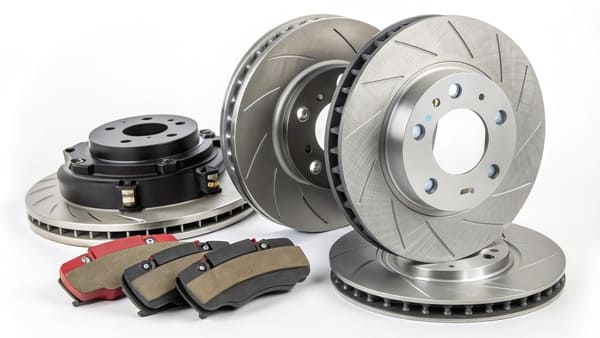
Choosing the right brakes can feel complicated, but it doesn't have to be. It's all about understanding what you need your car to do. A brake system designed for racing won't be comfortable for your daily commute, and daily driver brakes will fail under the stress of towing. In this article, I'll break down everything you need to know to make a smart choice for your vehicle and your safety.
Why Do Drivers Upgrade to Aftermarket Brakes and Rotors?
Stock brakes feel fine for a while, but they can fade under pressure.5 This limits your car's true performance and can be a serious safety concern in demanding situations.
Drivers upgrade to aftermarket brakes for better stopping power, reduced brake fade, and longer component life.6 This is especially true for performance driving, towing heavy loads, or simply for anyone wanting an extra margin of safety and confidence on the road.
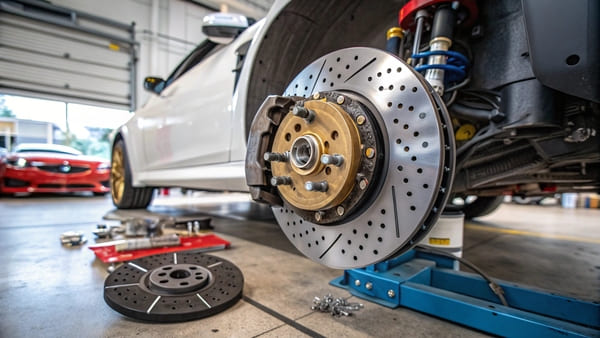
When you push your car hard, whether on a track or just on a spirited drive, you generate a lot of heat in the brakes. Stock brakes are designed for average use and can get overwhelmed by this heat. This is called brake fade, and it feels like the pedal is getting soft and the car isn't stopping as quickly. Aftermarket performance brakes use special designs, like slots or drills in the rotors, and advanced pad materials to manage this heat more effectively.7 This means you get consistent, strong braking even after repeated hard stops. For daily drivers, an upgrade can mean a bigger safety buffer in emergency situations. For those who tow or haul heavy loads, upgraded brakes are not a luxury; they are a necessity for controlling the extra weight and preventing dangerous brake failure, especially on long downhill grades.8
What Are the Main Differences Between OEM and Aftermarket Brakes?
At first glance, OEM and aftermarket brakes might look the same. But choosing the wrong type can be a costly mistake in both money and performance for your vehicle.
OEM brakes are designed by the vehicle manufacturer for a general-purpose balance of cost, low noise, and comfort.9 Aftermarket brakes are often specialized for specific goals like high-performance driving, heavy-duty towing, or extreme durability, using different materials and designs to achieve their purpose.10
The term "OEM" stands for Original Equipment Manufacturer. These are the parts your car was built with. The manufacturer's goal is to create a part that works well for the largest number of drivers in the widest range of conditions, all while keeping production costs down. This often means a compromise. Aftermarket parts, on the other hand, are made by other companies to compete with or improve upon the original. They don't have to follow the same "one-size-fits-all" rule. This allows them to create parts that are highly specialized. A company can focus on making a brake pad that's extremely quiet or one that has an incredible bite for the racetrack. The key is that "aftermarket" isn't a synonym for "better." It's a synonym for "choice."
Here is a simple breakdown:
| Feature | OEM Brakes | Aftermarket Brakes |
|---|---|---|
| Design Goal | Balanced performance for the average driver. | Specialized for a specific purpose (e.g., performance, towing). |
| Materials | Often conservative choices for low noise and cost. | Wide range of materials (e.g., ceramic, semi-metallic, carbon). |
| Performance | Generally quiet, low dust, and comfortable. | Can be optimized for stopping power, heat, or durability. |
| Variety | One or two options for your specific vehicle. | Hundreds of options from many different brands. |
What Should You Look for When Choosing Aftermarket Brakes and Rotors?
The market for aftermarket brakes is huge and can be overwhelming. It's easy to get lost in all the options and end up with parts that aren't right for you.
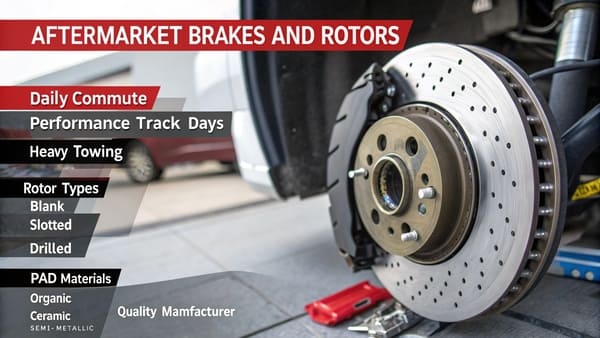
First, consider your primary driving style: daily commute, performance track days, or heavy towing. Then, match the rotor type (blank, slotted, drilled) and pad material (organic, ceramic, semi-metallic) to that style. Most importantly, always ensure the parts are from a quality manufacturer.
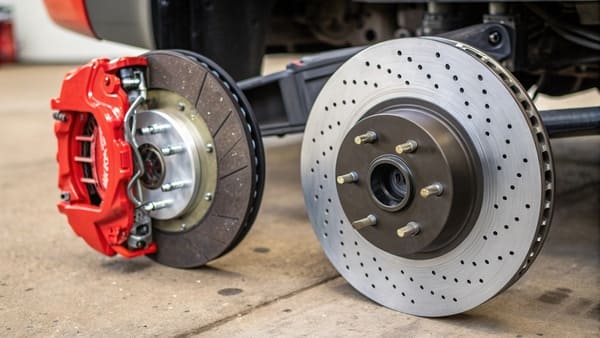
Let's dive deeper. Your choice depends on three things: your rotor, your pads, and the quality of manufacturing. For rotors, blank (or smooth) rotors are great for daily driving. Slotted rotors help clear gas and dust for better performance.11 Drilled rotors offer the best cooling but can be prone to cracking under extreme stress. For pads, organic pads are quiet and easy on rotors but wear faster. Ceramic pads offer a great mix of performance and low dust for street cars. Semi-metallic pads provide aggressive stopping power but can be noisy and dusty.
But beyond the main components, the small details in manufacturing are what separate good parts from great ones. I learned this lesson in a very personal way. I remember working on a project for a client from Pakistan. We were producing plastic accessory components for a new line of aftermarket brakes. The precision needed for these small parts is incredibly high. The injection molding machines have to be perfect, especially during the cooling stage, which is the most difficult part of the process. The best machines for this kind of work are usually found in factories in coastal areas near Shanghai or in Fujian. Machines from other regions often can't meet the required standards.
One of the trickiest steps is adding color. You have to stop the machine and open the mold to add the color powder, which can interfere with the precise cooling cycle. On that first run for my Pakistani client, the parts "shrank" a bit more than we expected. I was worried we had a failed batch, but the client actually loved the result! The slightly smaller size created a tighter, more secure fit. It was a lucky accident, but it taught me that excellence is in the details, and deep manufacturing knowledge is what truly creates a superior product.
Conclusion
Choosing the right aftermarket brakes boils down to matching the parts to your driving needs and ensuring they come from a quality manufacturer. This guarantees both safety and performance.
"ARSC News - Fall 2023 Vehicle Safety Systems Inspection Program ...", https://www.bar.ca.gov/arsc/newsletters/newsletter/fall-2023/vehicle-safety-systems-inspection-program-update. A government safety agency notes that upgrading braking systems can improve vehicle stopping performance and driver confidence, though proper installation and compatibility are essential for safety. Evidence role: general_support; source type: government. Supports: Upgrading your brakes is the solution for confident and safe driving.. Scope note: The source supports the general benefit of brake upgrades but does not endorse specific aftermarket products. ↩
"Best Brake Rotors For High Performance Driving? | DrivingLine", https://www.drivingline.com/articles/which-brake-rotors-are-best-for-high-performance-driving/. Automotive engineering literature explains that slotted or drilled rotors paired with ceramic pads are commonly used in high-performance applications for improved heat dissipation and braking consistency. Evidence role: mechanism; source type: education. Supports: For high performance, choose slotted or drilled rotors with ceramic pads.. Scope note: The recommendation is context-dependent and may not apply to all vehicles or driving conditions. ↩
"What's a great brand for brake pads and rotors? : r/AskAMechanic", https://www.reddit.com/r/AskAMechanic/comments/1fhrly7/whats_a_great_brand_for_brake_pads_and_rotors/. Automotive maintenance guides indicate that blank rotors with organic pads are suitable for daily driving due to their quiet operation and adequate performance for typical road use. Evidence role: expert_consensus; source type: education. Supports: For daily driving, high-quality blank rotors with organic pads are excellent.. Scope note: This is a general recommendation and may vary based on vehicle and driving environment. ↩
"What Brakes For Trucks Are The Best for Towing?", https://www.powerstop.com/resources/trucks-that-tow-need-better-brakes/. Towing safety resources recommend heavy-duty rotors and semi-metallic pads for enhanced braking performance under heavy loads. Evidence role: expert_consensus; source type: government. Supports: For towing, use heavy-duty rotors with durable semi-metallic pads for maximum stopping power.. Scope note: Recommendations may differ for specific vehicles or towing capacities. ↩
"Brake fade - Wikipedia", https://en.wikipedia.org/wiki/Brake_fade. Automotive engineering sources describe brake fade as a reduction in braking effectiveness due to heat buildup, which can occur with standard stock brakes during demanding use. Evidence role: mechanism; source type: education. Supports: Stock brakes feel fine for a while, but they can fade under pressure.. Scope note: The extent of brake fade depends on vehicle, usage, and brake design. ↩
"What are the Pros and Cons of switching to a bigger set of Brakes?", https://www.reddit.com/r/ft86/comments/1hl326y/what_are_the_pros_and_cons_of_switching_to_a/. Automotive industry analyses report that common motivations for upgrading to aftermarket brakes include improved stopping power, reduced brake fade, and increased component longevity. Evidence role: expert_consensus; source type: research. Supports: Drivers upgrade to aftermarket brakes for better stopping power, reduced brake fade, and longer component life.. Scope note: Benefits may vary depending on product quality and installation. ↩
"Initial Selection of Disc Brake Pads Material based on ... - PMC", https://pmc.ncbi.nlm.nih.gov/articles/PMC7078729/. Engineering textbooks explain that slotted and drilled rotors, along with advanced pad materials, are designed to improve heat dissipation and braking performance in aftermarket systems. Evidence role: mechanism; source type: education. Supports: Aftermarket performance brakes use special designs, like slots or drills in the rotors, and advanced pad materials to manage this heat more effectively.. Scope note: Effectiveness depends on specific product design and application. ↩
"Are the brakes on a vehicle towed in a driveaway-towaway ...", https://www.fmcsa.dot.gov/safety/are-brakes-vehicle-towed-driveaway-towaway-operation-or-towed-disabled-vehicle-required-be. Towing safety guidelines from transportation authorities emphasize the importance of upgraded braking systems for vehicles hauling heavy loads, particularly to prevent brake failure on long descents. Evidence role: expert_consensus; source type: government. Supports: For those who tow or haul heavy loads, upgraded brakes are not a luxury; they are a necessity for controlling the extra weight and preventing dangerous brake failure, especially on long downhill grades.. Scope note: Specific requirements may vary by vehicle and load weight. ↩
"Why OE Brake Rotor Specifications Matter for Quality and Thickness ...", https://gexhaust.com/blogs/brakes-rotors-oe/why-oe-brake-rotor-specifications-matter-for-quality-and-thickness-at-gexhaust?srsltid=AfmBOooZlzKpW6ED19wuXYXXLR6YEQyAeiDxOGPY9CVDIch8V7leTo_S. Automotive manufacturing references state that OEM brakes are engineered to balance cost, noise, and comfort for the average driver. Evidence role: definition; source type: education. Supports: OEM brakes are designed by the vehicle manufacturer for a general-purpose balance of cost, low noise, and comfort.. Scope note: Design priorities may differ among manufacturers and models. ↩
"Wilwood Disc Brakes - Specialty OEM, Racing, and Street ...", https://www.wilwood.com/. Automotive parts industry reports highlight that aftermarket brakes are frequently tailored for specialized applications, utilizing varied materials and designs to meet specific performance goals. Evidence role: definition; source type: research. Supports: Aftermarket brakes are often specialized for specific goals like high-performance driving, heavy-duty towing, or extreme durability, using different materials and designs to achieve their purpose.. Scope note: Not all aftermarket brakes are specialized; some are direct replacements. ↩
"Are slotted brake rotors dumb? : r/MechanicAdvice - Reddit", https://www.reddit.com/r/MechanicAdvice/comments/1cdwokl/are_slotted_brake_rotors_dumb/. Engineering analyses explain that slotted rotors are designed to channel away gas and debris, improving brake pad contact and performance under demanding conditions. Evidence role: mechanism; source type: education. Supports: Slotted rotors help clear gas and dust for better performance.. Scope note: Benefits are most pronounced in high-performance or heavy-duty use. ↩