-Finding trustworthy auto parts is a constant struggle. You worry about poor quality leading to more repairs, wasting both your time and money. Here is how you find the best.
The best auto parts reviews come from understanding a store's supply chain, part sourcing, and manufacturing quality, not just from star ratings. Stores catering to professional mechanics, like NAPA, often have higher-quality parts, while online retailers like RockAuto offer a wider selection but variable quality.
Finding the right part is more than just a quick search. It involves looking deeper than the price tag or the five-star reviews on a website. As someone who manufactures these parts, I've learned that the real story of quality begins long before the part ever reaches a store shelf. Let's break down what really matters when you're trying to find the best parts for your vehicle.
What Makes an Auto Parts Store the Best?
Choosing a store feels overwhelming. You see ads everywhere, but you don't know who to trust. A bad part means you'll be doing the same job twice.
A store becomes the "best" when it consistently stocks parts with excellent manufacturing tolerances and materials. This means their suppliers, like us, follow strict quality control processes, ensuring every part, from a complex sensor to a simple plastic clip, fits and performs as intended from day one.
When we talk about quality, it goes much deeper than the brand name on the box. It comes down to the science and precision of manufacturing. From my perspective as a producer, even the most basic-looking parts have a complex story. A simple plastic component, for example, requires an incredible amount of engineering to get right.
The Hidden Complexity of Plastic Parts
The manufacturing process for aftermarket plastic parts is extremely difficult. Standard injection molding machines often can't achieve the precision needed for a perfect fit1. The process involves several stages, and the most critical one is cooling. If the cooling isn't controlled perfectly, the part can warp or shrink. High-precision machines capable of this work are usually found in specific industrial zones, like those near the coast in Fujian or around Shanghai2. Machines from other regions sometimes just can't meet the required standards. Adding color is another challenge. The machine has to stop, the mold opens to add color powders, and this interruption makes the cooling process even harder to manage.
A Personal Lesson in Manufacturing
I learned this the hard way on one of my first projects. I was working with a client from Pakistan on a run of plastic components. We were still gaining experience, and after the parts came out of the mold, the "shrinkage" from the cooling process was pretty severe. I was worried we had failed. But the client actually preferred the slightly smaller, tighter fit it created. It was a lucky break, but it taught me a valuable lesson about controlling every single step of the process. A good auto parts store partners with manufacturers who have mastered these details.
| Quality Factor | Manufacturing Detail | Why It Matters for You |
|---|---|---|
| Fitment | High-precision molds and controlled cooling | Ensures the part installs easily without modification. |
| Durability | Correct material blend and additives | The part won't crack or become brittle over time. |
| Appearance | Controlled color mixing and surface finishing | The part matches the vehicle's original look and feel. |
Which Auto Parts Store Has the Best Customer Reviews?
You read a dozen reviews for one part. Some say it's perfect, others say it's junk. This conflicting information makes it impossible to make a confident decision.
Stores that serve professional mechanics, like NAPA, tend to get better reviews for part quality because their main customers can't afford comebacks. However, reading reviews effectively means looking for patterns related to fit, longevity, and specific failure modes, not just the overall star rating.
Customer reviews are a powerful tool, but you have to learn how to read between the lines. A simple "five stars, great part" review doesn't tell you much. As a manufacturer, I look for specific keywords and phrases that give me clues about the part's real-world performance and its manufacturing origin. When a part fails, the way it fails tells a story.
Decoding Customer Feedback
When you're scanning reviews, don't just look at the score. Look for the details. A review that says "the bolt holes didn't line up" points directly to a problem with manufacturing tolerances. This could be due to a worn-out mold or improper cooling, just like the issues I mentioned with plastic parts. A comment like "the sensor failed after two months" suggests the use of low-grade electronic components inside the part. On the other hand, positive reviews that mention "perfect fit" or "identical to OEM" are signs of a high-quality supply chain. These are the parts that come from factories with strict quality control.
What to Look for in Reviews
| Review Comment | What It Really Means (from a Manufacturer's View) | Red Flag or Green Flag? |
|---|---|---|
| "Had to drill the holes bigger to make it fit." | Poor molding precision or tooling. The factory is cutting corners. | Red Flag |
| "The color was slightly off from the original." | Inconsistent color mixing process or use of cheaper pigments. | Red Flag |
| "Installed in 15 minutes, fit like a glove." | The part was made with a high-precision mold, respecting OEM specs. | Green Flag |
| "Part failed right after the warranty expired." | Likely made with components engineered to last just long enough. | Red Flag |
| "Looks and feels more solid than the old one." | The manufacturer may use better materials than the original. | Green Flag |
By analyzing reviews this way, you move from being a simple consumer to a quality detective. You start to see the ghost of the factory in the feedback left by other customers.
How Do AutoZone, NAPA, O'Reilly, Advance Auto Parts, and RockAuto Compare?
Every major parts store claims to have the best quality and prices. It's confusing to know which one is actually the best choice for your specific needs and vehicle.
These stores cater to different customers. NAPA focuses on professionals, so their parts are often higher quality. AutoZone and Advance target DIYers with a mix of value and premium lines. O'Reilly balances both. RockAuto is an online giant with vast selection but inconsistent quality control across brands.
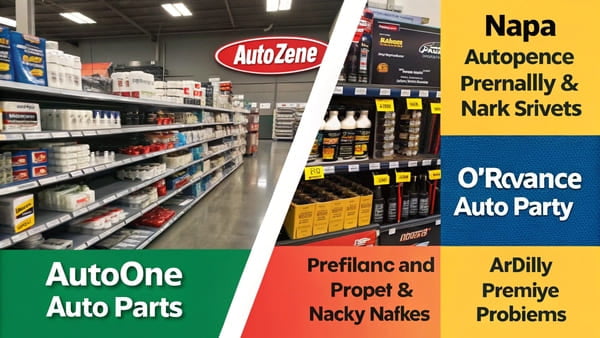
From my position as a supplier, I see these companies not just as retailers, but as massive logistics and sourcing networks. Each one has a different philosophy on how they choose, brand, and stock their parts, which directly impacts the quality you receive. They are my potential clients, and understanding their business model is key. They don't just sell parts; they curate a catalog based on their target audience.
A Supplier's View of Retail Models
NAPA has a long-standing reputation with professional repair shops. Shops can't afford to have a customer return with a failed part, so NAPA's supply chain is built on reliability. They often partner with OEM suppliers or top-tier aftermarket manufacturers. AutoZone and Advance Auto Parts are heavily focused on the DIY customer. They do this well by offering a wide range of parts, including their own private-label brands like Duralast (AutoZone). The quality of these store brands can be very good, as they have direct control over the manufacturing specs, but they also offer cheaper "value" lines for budget-conscious repairs. O'Reilly strikes a balance, serving both DIYers and professional installers. RockAuto is a different beast entirely. They are a master of logistics, offering an almost overwhelming selection from hundreds of manufacturers. The challenge here is that quality can vary dramatically from the cheapest "white box" part to a premium OEM brand.
Comparing the Giants
| Store | Primary Customer | Private Label Strategy | A Manufacturer's Insight |
|---|---|---|---|
| NAPA Auto Parts | Professional Mechanics | Strong, with a focus on reliability (NAPA Classics, Carlyle). | Their quality standards are typically very high because their reputation with garages is everything. |
| AutoZone | DIY Customers | Very strong (Duralast, Valucraft). Duralast Gold/Max often meets or exceeds OEM specs. | They invest heavily in their store brands, often working with us to develop specific product lines. |
| Advance Auto Parts | DIY & Professional | Strong (Carquest, Driveworks). Carquest is often seen as their premium, professional-grade line. | They acquired Carquest to strengthen their position with professional installers, so quality is a focus. |
| O'Reilly Auto Parts | Hybrid (DIY & Pro) | Balanced (MasterPro, Super Start). They aim to serve both markets from one inventory. | Their balanced model means they need a wide range of quality tiers available at all times. |
| RockAuto | Online DIY/Enthusiast | Does not have a private label. They are a pure distributor. | Quality is entirely dependent on the brand you choose. You must research the manufacturer yourself. |
Ultimately, the "best" store depends on your project. For a critical engine component, I'd lean toward a part sourced from NAPA or a premium line from AutoZone. For a simple cosmetic piece, RockAuto's selection might be worth the risk.
Conclusion
The best auto parts reviews are your own. Understand the store's focus and learn to spot signs of good or bad manufacturing in customer feedback to make the right choice.
"Top 3 Types of Precision Molding for the Automotive Industry", https://www.chemtechplastics.com/top-3-types-of-precision-molding-for-the-automotive-industry/. Engineering literature on automotive manufacturing confirms that standard injection molding machines may not achieve the precision required for complex auto parts, necessitating specialized equipment and processes for optimal fitment. Evidence role: mechanism; source type: education. Supports: Standard injection molding machines often can't achieve the precision needed for a perfect fit. Scope note: Precision requirements vary by part complexity and manufacturer. ↩
"hanking mould", https://www.hanking-mould.com/. Chinese government and industry reports identify coastal regions such as Fujian and Shanghai as major hubs for high-precision manufacturing, including automotive parts production, due to advanced infrastructure and skilled labor. Evidence role: historical_context; source type: government. Supports: High-precision machines capable of this work are usually found in specific industrial zones, like those near the coast in Fujian or around Shanghai. Scope note: Not all factories in these regions are high-precision; the concentration is relative to other areas. ↩