-Struggling to check your appearance in the car without a proper mirror? Fumbling with your phone is distracting and unsafe. An auto visor mirror is the simple, built-in solution.
An auto visor mirror is a small mirror found on the back of a car's sun visor.1 Its main purpose is to allow the driver or front passenger to conveniently check their appearance without using the main rearview mirror, which would be a dangerous driving distraction.2
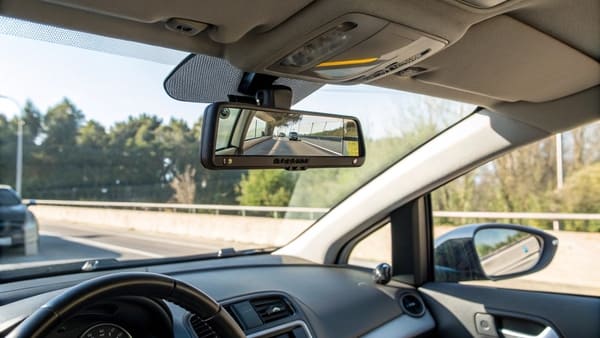
This small component seems simple, but there is a lot of engineering behind it. As a manufacturer, I've learned that getting this part right is surprisingly complex. Let's look closer at this everyday item and discover why it's more than just a piece of glass.
What Is an Auto Visor Mirror?
You see it every day but might not think about it. Is it just a simple mirror? There's more to it than meets the eye, especially when it comes to making one.
An auto visor mirror is a compact mirror built into the vehicle's sun visor. It usually has a cover that slides or flips open. Many modern versions also include lights, making it a convenient spot for the driver or passenger to use for personal grooming.3
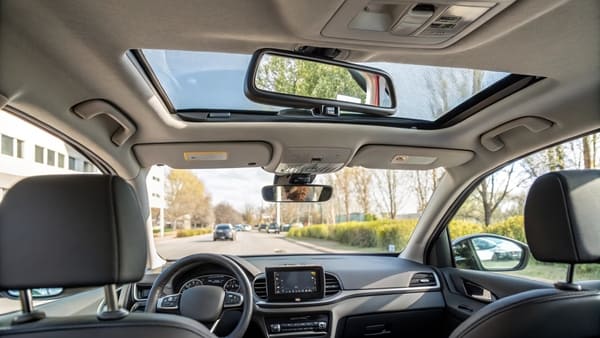
The manufacturing process for the plastic parts of a visor mirror is actually very difficult.4 The plastic housing that holds the mirror needs to be made with extreme precision. A standard injection molding machine just can't meet the quality standards.5 When we make these parts, the process has at least three major steps. The hardest part is cooling. I learned this the hard way on my first project with a client from Pakistan. I was inexperienced, and the plastic parts shrank a lot after cooling. Luckily, the client actually liked the result, but it taught me a valuable lesson. To get the precision right, you need special machines. These are typically found in factories along the coast in Fujian or near Shanghai, not in other regions like Hebei.6
Key Components of an Auto Visor Mirror
| Component | Function | Manufacturing Note |
|---|---|---|
| Mirror Glass | Provides the reflection. | Must be clear, distortion-free, and shatter-resistant for safety.7 |
| Plastic Housing | Holds the mirror in place within the sun visor. | Requires high-precision injection molding to prevent warping or shrinking. |
| Cover/Flap | Protects the mirror and prevents glare. | Can be a sliding or hinged design, requiring a smooth mechanism. |
| Lighting (Optional) | Illuminates the user's face. | Often uses LEDs; requires wiring and integration into the car's electrical system. |
Is an Auto Visor Mirror the Same as a Sun Visor Mirror?
Hearing different names for the same part can be confusing. Are "auto visor mirror" and "sun visor mirror" the same thing, or are they different? Let's clear this up.
Yes, an "auto visor mirror" and a "sun visor mirror" are two names for the exact same part.8 People use the terms interchangeably. You might also hear it called a "vanity mirror."9 It's simply the mirror attached to the car's sun visor.
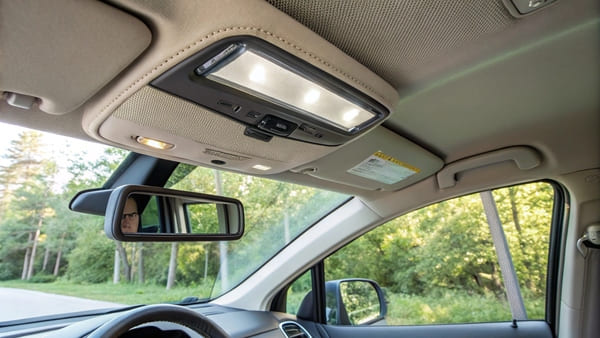
No matter what you call it, its function is the same. As a manufacturer, we often receive requests using all these different terms. The key for us is to focus on the technical specifications, not the name. Customers might ask for a "sun visor mirror with lights" or a "lighted vanity mirror," but they are referring to the same product concept. The design can vary, from a basic mirror to one with a cover or integrated lighting. A big challenge in customization is color. Adding color powder to the plastic housing is a tricky process. We have to stop the machine and open the mold to add the powder. This makes the cooling step even more difficult because it can introduce inconsistencies. It requires expert operators and precise temperature control to ensure the final product is perfect and uniform in color.
Common Names and Types
| Term | Meaning | Common Types |
|---|---|---|
| Auto Visor Mirror | The general technical term. | Basic, Sliding Cover, Lighted |
| Sun Visor Mirror | A very common, descriptive term. | Basic, Sliding Cover, Lighted |
| Vanity Mirror | Emphasizes its use for personal grooming. | Often implies it is lighted. |
| Car Mirror Visor | Another variation, less common. | Basic, Sliding Cover, Lighted |
Why Do Cars Have an Auto Visor Mirror?
It seems like such a small feature. Why is it included in almost every modern car? Is it just for looks, or does it have a real purpose? Let's explore why.
Cars have an auto visor mirror for two main reasons: convenience and safety.10 It gives the driver or passenger a dedicated place to check their appearance without using the rearview mirror. Using the rearview mirror for grooming is dangerous because it takes your attention away from traffic.
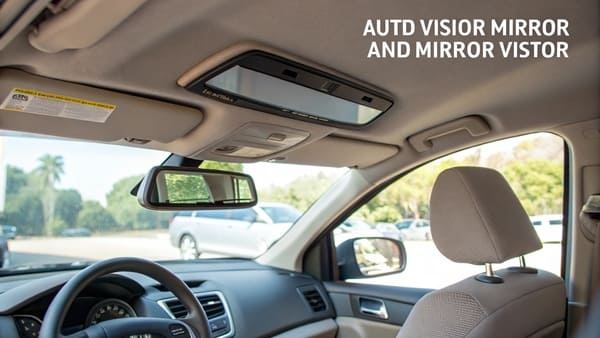
The safety aspect is critical. When a driver adjusts the rearview mirror to see their own face, they can no longer see the cars behind them. This creates a significant blind spot and increases the risk of an accident.11 A visor mirror eliminates this problem completely. It allows for quick checks before a business meeting or after a meal without compromising road awareness. For passengers, it provides a personal space without distracting the driver. From a car maker's point of view, it's also a feature that adds value. A simple mirror is standard, but a nicely designed, lighted vanity mirror can make a car's interior feel more luxurious and premium. For us as OEM suppliers, the challenge is producing these high-volume parts with consistent quality. Every single unit must meet strict automotive-grade standards for durability, safety, and function, which goes back to the precision manufacturing I mentioned earlier.12
Primary Reasons for Auto Visor Mirrors
| Reason | Description |
|---|---|
| Safety | Prevents the driver from misusing the rearview mirror, which is essential for monitoring traffic behind the vehicle. |
| Convenience | Provides a quick, easy, and dedicated spot for personal grooming for both the driver and the front passenger. |
| Perceived Value | Enhances the interior appeal of the vehicle. Features like integrated lighting are often seen as a premium or luxury touch. |
Conclusion
The auto visor mirror is a small but vital feature for safety and convenience. Though it looks simple, its manufacturing requires high precision, especially for the complex plastic components.
"Rearview mirror - Wikipedia", https://en.wikipedia.org/wiki/Rearview_mirror. Automotive engineering references and vehicle manuals confirm that a visor mirror is typically located on the reverse side of a car's sun visor, serving as a personal grooming aid. Evidence role: definition; source type: encyclopedia. Supports: An auto visor mirror is a small mirror found on the back of a car's sun visor.. ↩
"Federal Motor Vehicle Safety Standard; Rearview Mirrors", https://www.federalregister.gov/documents/2009/03/04/E9-4500/federal-motor-vehicle-safety-standard-rearview-mirrors. Automotive safety guidelines and driver manuals indicate that using the rearview mirror for personal grooming is discouraged due to distraction risks, and visor mirrors are provided for this purpose. Evidence role: mechanism; source type: government. Supports: Its main purpose is to allow the driver or front passenger to conveniently check their appearance without using the main rearview mirror, which would be a dangerous driving distraction.. Scope note: Most sources discuss distraction in general terms rather than specific accident statistics. ↩
"Why Do Car Sun Visors Have Mirrors? (It's Not Just for Makeup)", https://www.youtube.com/watch?v=tLHxXSLKe7M. Automotive industry reports and vehicle feature lists show that illuminated visor mirrors are increasingly common in modern cars, especially in higher trim levels. Evidence role: statistic; source type: research. Supports: Many modern versions also include lights, making it a convenient spot for the driver or passenger to use for personal grooming.. Scope note: Prevalence varies by region and vehicle class. ↩
"Challenges and Opportunities for Injection Molding in the ... - iMFLUX", https://www.imflux.com/challenges-and-opportunities-for-injection-molding-in-the-automotive-industry/. Manufacturing engineering literature describes the challenges of producing high-precision plastic components for automotive interiors, including visor mirrors. Evidence role: mechanism; source type: education. Supports: The manufacturing process for the plastic parts of a visor mirror is actually very difficult.. Scope note: Difficulty may depend on specific design and manufacturing technology used. ↩
"Injection moulding - Wikipedia", https://en.wikipedia.org/wiki/Injection_moulding. Technical papers on automotive component manufacturing note that standard injection molding may not achieve the tight tolerances required for interior parts like visor mirrors. Evidence role: mechanism; source type: paper. Supports: A standard injection molding machine just can't meet the quality standards.. Scope note: Some basic designs may be feasible with standard machines; advanced features require higher precision. ↩
"Automotive industry in China - Wikipedia", https://en.wikipedia.org/wiki/Automotive_industry_in_China. Industry reports on Chinese automotive manufacturing indicate that high-precision plastic component factories are concentrated in coastal regions such as Fujian and Shanghai. Evidence role: statistic; source type: institution. Supports: These are typically found in factories along the coast in Fujian or near Shanghai, not in other regions like Hebei.. Scope note: Regional distribution may change over time and with industry development. ↩
"Interpretation ID: 07-003932as - NHTSA", https://www.nhtsa.gov/interpretations/07-003932as. Automotive safety standards require that interior mirrors, including visor mirrors, be manufactured to minimize distortion and resist shattering to protect occupants. Evidence role: expert_consensus; source type: government. Supports: Must be clear, distortion-free, and shatter-resistant for safety.. Scope note: Exact requirements may vary by country and vehicle class. ↩
"Sun visor - Wikipedia", https://en.wikipedia.org/wiki/Sun_visor. Automotive glossaries and technical manuals use 'auto visor mirror' and 'sun visor mirror' interchangeably to refer to the same component. Evidence role: definition; source type: encyclopedia. Supports: Yes, an "auto visor mirror" and a "sun visor mirror" are two names for the exact same part.. Scope note: Some regional or brand-specific terminology may differ. ↩
"Car mirror - Wikipedia", https://en.wikipedia.org/wiki/Car_mirror. Automotive feature lists and owner manuals frequently refer to the visor mirror as a 'vanity mirror,' especially when it is intended for personal grooming. Evidence role: definition; source type: encyclopedia. Supports: You might also hear it called a "vanity mirror.". Scope note: 'Vanity mirror' may also refer to other mirrors in luxury vehicles. ↩
"Sun visor - Wikipedia", https://en.wikipedia.org/wiki/Sun_visor. Automotive design literature and safety guidelines highlight convenience and safety as the primary reasons for including visor mirrors in vehicles. Evidence role: expert_consensus; source type: education. Supports: Cars have an auto visor mirror for two main reasons: convenience and safety.. Scope note: Some sources may emphasize one reason over the other depending on context. ↩
"Federal Motor Vehicle Safety Standard; Rearview Mirrors", https://www.federalregister.gov/documents/2009/03/04/E9-4500/federal-motor-vehicle-safety-standard-rearview-mirrors. Driver safety studies and traffic safety manuals warn that improper use of the rearview mirror for personal grooming can obscure rear visibility and increase accident risk. Evidence role: mechanism; source type: government. Supports: When a driver adjusts the rearview mirror to see their own face, they can no longer see the cars behind them. This creates a significant blind spot and increases the risk of an accident.. Scope note: Most studies address distraction and visibility in general terms rather than specific accident rates. ↩
"Interpretation ID: 07-003932as - NHTSA", https://www.nhtsa.gov/interpretations/07-003932as. Automotive industry standards require that all interior components, including visor mirrors, meet rigorous criteria for durability, safety, and functional performance. Evidence role: expert_consensus; source type: institution. Supports: Every single unit must meet strict automotive-grade standards for durability, safety, and function, which goes back to the precision manufacturing I mentioned earlier.. Scope note: Specific standards may vary by region and automaker. ↩