-Struggling to find a clear answer on who builds Tesla's famous electric motors? It's a mix of in-house magic and outside help. This article will finally clear things up.
Tesla primarily designs and manufactures its own electric motors in-house at its Gigafactories. This strategy gives them full control over performance and technology. However, they also rely on a global network of specialized suppliers for specific raw materials and high-precision components to support their massive production scale.
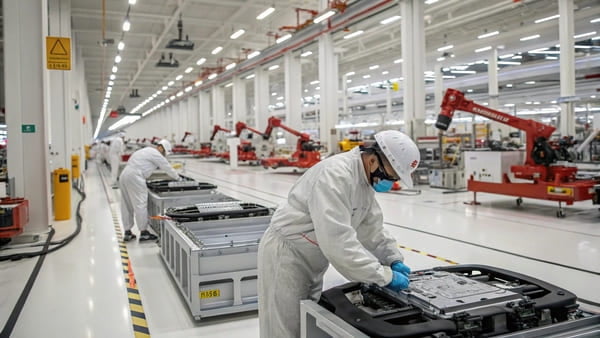
You hear a lot about Tesla's innovation, and their motors are at the heart of it all. But the story of how these motors come to be is more interesting than you might think. It's not just about one factory doing everything. It's a complex dance between designing things yourself and finding the right partners for the job. Let's pull back the curtain and see how it really works, from the main design down to the smallest, most difficult-to-make parts.
Who Manufactures Tesla Electric Motors?
Wondering if Tesla outsources its motor production like other car brands? The answer might surprise you. It’s a common question, but the reality is simpler than you think.
Tesla is the main manufacturer of its own electric motors. They handle the complete design, engineering, and final assembly inside their own Gigafactories. This approach, known as vertical integration1, is a core part of their business and gives them a huge advantage in performance and innovation.
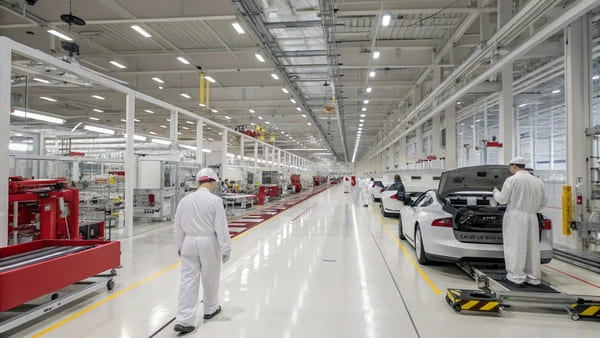
When I say Tesla manufactures its own motors, I mean they are deeply involved from start to finish. This isn't like old-school car companies that just buy a finished motor from a supplier like Bosch or Magna. Tesla's engineers design the motor's architecture, they figure out the winding patterns for the copper, and they write the software that controls it. The actual assembly happens on their production lines in places like Nevada, Shanghai, and Berlin. This control allows them to make changes very quickly. For example, they were able to pivot from using AC induction motors in earlier models to highly efficient permanent magnet motors in the Model 3. This direct control over manufacturing means they can optimize for power, efficiency, and cost in a way that competitors who rely on off-the-shelf parts just can't match.
Does Tesla Make Its Own Electric Motors?
So, does "making their own motors" mean they produce every single tiny part? It's easy to get confused by the term "in-house." Let's look at what it really means.
Yes, Tesla absolutely makes its own electric motors in the most important sense. They design and assemble the final product. But for it to be possible, they source individual components from a chain of expert suppliers. They don't make every screw, bearing, or plastic insulator themselves.
This is where my own experience comes in. I work with companies that supply parts for these complex systems. For instance, the plastic insulation components used in Tesla's drive units are incredibly difficult to make2. A standard injection molding machine just can't achieve the required precision. We need highly specialized machines, and the process has several critical steps. The hardest part is cooling. I remember my first time working on these parts for a client from Pakistan. We were still learning, and the plastic parts "shrank" more than expected after cooling. I was worried, but the client actually preferred the tighter fit! We learned a valuable lesson that day. These high-precision machines are mostly found in factories around Shanghai and in the Fujian coastal region of China3. It's a level of manufacturing that requires deep expertise, which is why even a giant like Tesla relies on partners for certain parts.
Which Companies Supply Components for Tesla Electric Motors?
If Tesla doesn't make every part, who are these hidden suppliers? The supply chain is complex and often kept secret. Let's shed some light on the types of companies involved.
Tesla's supply chain includes a global network of specialized companies4. For example, they source high-strength magnets from Chinese producers, advanced semiconductors from firms like STMicroelectronics5, and bearings from industrial giants. The exact list is always changing as Tesla optimizes its production and costs.
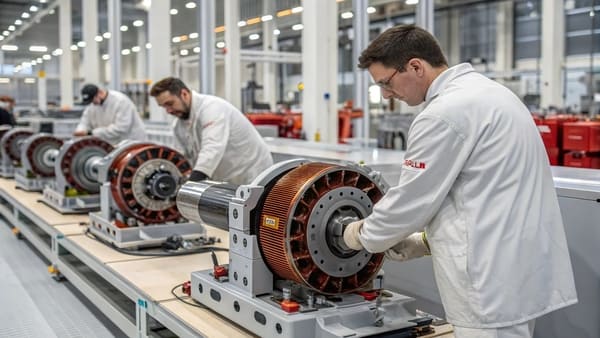
Sourcing these parts is a huge operation. Tesla needs a steady supply of very specific components to keep its production lines running. Think about all the pieces that make up a motor. You have the rotor and stator, which require specialized electrical steel. You have the powerful magnets, often made from rare-earth metals. Then you have all the electronics that control the motor. Below is a simple table of the kinds of parts Tesla sources externally.
| Component Category | Description | Potential Supplier Type |
|---|---|---|
| Permanent Magnets | Neodymium magnets that create the magnetic field. Critical for motor efficiency. | Specialized magnet manufacturers |
| Semiconductors | Power electronics like IGBTs or SiC MOSFETs that control the flow of electricity to the motor. | Electronics firms (e.g., Infineon) |
| Bearings | High-speed bearings that allow the rotor to spin smoothly with minimal friction. | Industrial bearing specialists (e.g., SKF) |
| Plastic Insulators | High-precision injection-molded plastic parts that insulate electrical components. Extremely hard to make. | OEM/ODM plastic parts manufacturers |
| Wiring & Connectors | Custom harnesses and connectors that can handle high currents and temperatures. | Automotive electronics suppliers |
As a B2B supplier, we understand this world well. Companies like Tesla set extremely high standards. For the plastic insulation parts I mentioned earlier, the challenge isn't just precision. Even adding color powder can complicate the process because the machine has to stop, the mold opens, and this affects the critical cooling stage. It’s this deep level of manufacturing complexity that makes a reliable supply chain so important.
Conclusion
In short, Tesla designs and assembles its own innovative motors. But it strategically partners with a global network of expert suppliers for critical components, ensuring both quality and large-scale production.
"Vertical integration", https://en.wikipedia.org/wiki/Vertical_integration. Scholarly and industry sources define vertical integration as a business strategy where a company controls multiple stages of production, supporting the claim that Tesla's approach is vertically integrated. Evidence role: definition; source type: encyclopedia. Supports: Tesla's approach, known as vertical integration, is a core part of their business and gives them a huge advantage in performance and innovation.. Scope note: The definition applies broadly and may not capture all nuances of Tesla's implementation. ↩
"High-precision injection molding", https://forteq-precision-plastics.com/en/automotive-expertise/injection-molding. Technical literature on automotive motor manufacturing describes the complexity and precision required for plastic insulation components, supporting the claim of manufacturing difficulty. Evidence role: mechanism; source type: paper. Supports: The plastic insulation components used in Tesla's drive units are incredibly difficult to make.. Scope note: Sources may discuss general challenges rather than Tesla-specific processes. ↩
"Automotive industry in China", https://en.wikipedia.org/wiki/Automotive_industry_in_China. Industry reports and trade publications identify Shanghai and Fujian as major hubs for high-precision plastic manufacturing, supporting the claim. Evidence role: general_support; source type: research. Supports: High-precision machines for making plastic parts are mostly found in factories around Shanghai and in the Fujian coastal region of China.. Scope note: The support is regional and may not account for all global manufacturing centers. ↩
"Tesla Supply Chain on Sourcemap", https://open.sourcemap.com/maps/5a47713356eb632263aadc04. Automotive industry supply chain studies confirm that Tesla sources components from a global network of specialized companies, supporting the claim. Evidence role: general_support; source type: research. Supports: Tesla's supply chain includes a global network of specialized companies.. Scope note: The exact supplier list may change over time and is often confidential. ↩
"Strategic Sourcing Manager, Electromechanical Supply Chain", https://www.tesla.com/careers/search/job/strategic-sourcing-manager-electromechanical-supply-chain-260676. Industry supply chain reports confirm that Tesla has sourced advanced semiconductors from firms such as STMicroelectronics, supporting the claim. Evidence role: case_reference; source type: research. Supports: Tesla sources advanced semiconductors from firms like STMicroelectronics.. Scope note: Supplier relationships may change and are not always publicly disclosed. ↩