-Struggling to source reliable brake parts? Poor quality can ruin your reputation and hurt your business. Understanding brake components helps you choose the right ones and ensure customer safety.
Car brake parts are the components that work together to slow down and stop a vehicle. They mainly include brake pads, rotors, calipers, and brake lines. Choosing the right ones involves matching them to the vehicle, focusing on high-quality materials, and verifying manufacturing precision for safety and durability1.
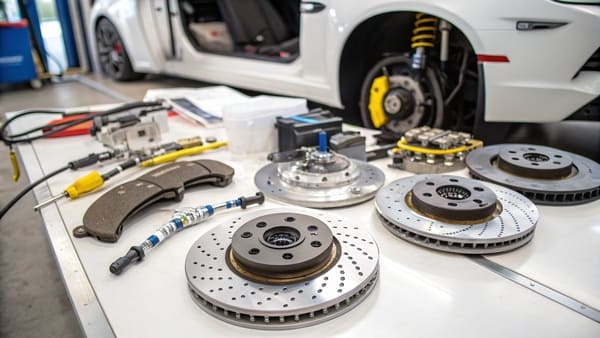
Choosing the right brake parts for your business is one of the most important decisions you can make. It’s not just about finding a part that fits; it’s about ensuring safety, reliability, and performance. I’ve learned over many years that the small details in manufacturing make a huge difference in the final product. Let's dive into what those details are and what you need to know to make the best choice for your inventory and your customers.
What Are the Main Parts of a Car Brake System?
You hear terms like calipers, rotors, and pads, but what do they all do? Not knowing the function of each part makes it very hard to source the right inventory.
The main parts of a modern disc brake system are the brake pads, brake rotor, and caliper. The master cylinder, brake lines, and brake fluid create the hydraulic force that makes them work. For older drum brake systems, the main parts are brake shoes and drums.
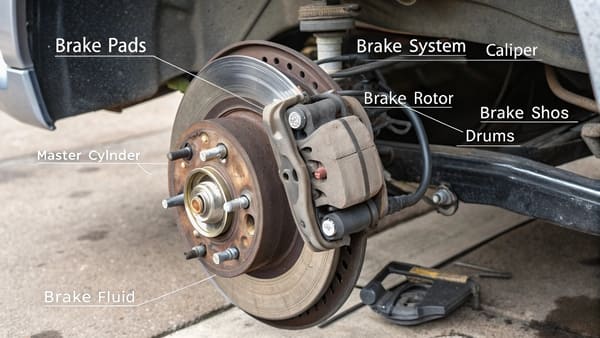
To really understand how to choose good brake parts, you first need to know what each part does. It’s a system where every component has a critical job. If one part fails, the whole system is compromised. Think of it as a team. The master cylinder is the coach, the brake fluid is the messenger, and the pads and rotors are the players on the field doing the hard work.
Here’s a simple breakdown of how they all work together:
- You press the brake pedal.
- This pushes a piston in the master cylinder, pressurizing the brake fluid.
- The high-pressure fluid travels through the brake lines to each wheel.
- At the wheel, the fluid pressure forces the caliper to squeeze the brake pads against the spinning brake rotor.
- This friction converts the car's motion into heat, slowing the vehicle down.
The quality of each component is essential. For instance, a poorly made brake rotor can warp under heat, causing a dangerous vibration when braking. A low-quality brake pad can wear out too quickly or fail to provide enough stopping power. That's why we focus so much on the manufacturing process.
Key Brake System Components
| Part Name | Function | Why Quality Matters |
|---|---|---|
| Brake Pads | Create friction against the rotor to slow the car. | Material composition determines stopping power, noise, and lifespan. |
| Brake Rotors (Discs) | The spinning disc that the pads clamp onto. | Must be perfectly balanced and able to dissipate heat to prevent warping. |
| Brake Caliper | Squeezes the brake pads against the rotor using hydraulic pressure. | Precision engineering prevents sticking or leaking, ensuring even pad pressure. |
| Brake Lines | Tubes that carry brake fluid from the master cylinder to the calipers. | Must withstand high pressure without expanding or leaking. |
| Master Cylinder | Converts the force from the brake pedal into hydraulic pressure. | A reliable seal and bore are critical for consistent brake feel and safety2. |
What Is the Difference Between Disc Brake Parts and Drum Brake Parts?
Disc brakes and drum brakes look different, but what's the real functional difference? Stocking the wrong type or not understanding performance trade-offs can hurt your business and your customers' trust.
Disc brakes use pads that clamp a spinning rotor, which is great for dissipating heat and provides better stopping power. Drum brakes use shoes that push outward against the inside of a spinning drum. They are generally less expensive but not as effective at managing heat.
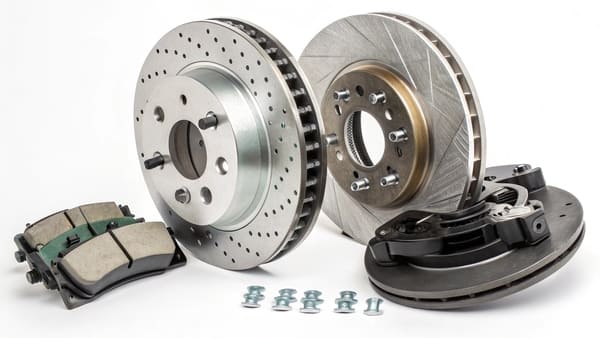
The biggest difference between disc and drum brakes comes down to performance, especially when it comes to heat. Brakes work by creating friction, and friction creates a lot of heat. If that heat can't escape, the brakes start to lose effectiveness, a dangerous situation known as "brake fade3." Disc brakes are exposed to the open air, so they cool down much more efficiently. Drum brakes enclose all the components, trapping heat inside. This is why most modern cars use disc brakes, at least on the front wheels, which handle about 70% of the braking force. Drum brakes are still used on the rear wheels of some economy cars and trucks because they are cheaper to manufacture and the parking brake mechanism is simple to integrate.
Disc Brakes vs. Drum Brakes
| Feature | Disc Brake System | Drum Brake System |
|---|---|---|
| Main Parts | Caliper, Pads, Rotor | Wheel Cylinder, Shoes, Drum |
| Performance | Excellent stopping power, resists brake fade3. | Good stopping power, but can fade with heavy use. |
| Heat Dissipation | Excellent, parts are exposed to air. | Poor, heat is trapped inside the drum. |
| Cost | Generally more expensive to manufacture and replace. | Less expensive to produce and maintain. |
| Common Use | Front and rear on most modern cars; all four on performance cars. | Rear wheels of some economy cars and light trucks. |
From a manufacturing standpoint, both have their challenges. But making high-quality rotors for disc brakes requires incredible precision4. The metal must be perfectly balanced, and the surface finish has to be exact. We've found that the best factories for this kind of high-precision work are concentrated in specific regions, like the coastal areas of Fujian or near Shanghai. The machinery they use is simply on another level compared to what you might find elsewhere. It’s this focus on precision that separates a good, reliable rotor from a cheap one that will cause problems down the line.
Which Brake Parts Wear Out the Fastest and Need Regular Replacement?
Some brake parts last for years, while others wear out quickly. Not stocking the high-turnover parts means you're missing out on consistent, repeat business from your customers.
Brake pads are the fastest-wearing part of any brake system because they are designed to be worn down by friction. Brake rotors also wear down from this friction and heat, and they are the second most commonly replaced part, often changed at the same time as the pads.
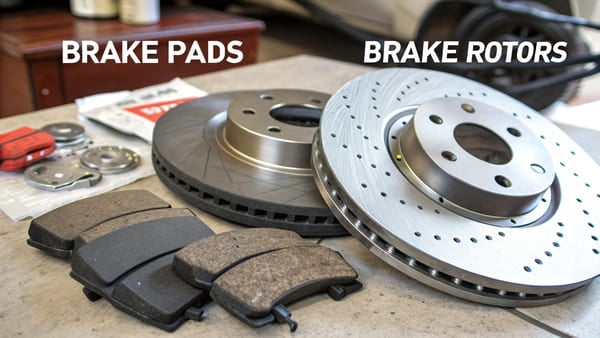
Brake pads and rotors are considered "consumables." Their entire job is to turn motion into heat by wearing themselves away. Because of this, they are the most profitable and consistent sellers for any auto parts business. The lifespan of pads and rotors depends on the material they are made from, the vehicle they are on, and the driving style of the owner. A driver who is heavy on the brakes in city traffic will wear through pads much faster than someone who does mostly highway driving.
This is where manufacturing quality becomes so important. The specific blend of materials in a brake pad—the "formulation"—is a closely guarded secret. It determines how well the pad stops, how much noise it makes, and how long it lasts. Getting this formulation right is a science. One of the trickiest parts of the process is when you have to add different raw materials. The machine has to stop, and you have to open the mold to add the new ingredients. This makes the next step, cooling and shaping5, very difficult because the temperature is no longer stable.
I learned this the hard way on one of my first big orders for brake parts. It was for a client in Pakistan. We were inexperienced with this specific formulation, and after the parts came out of the mold and cooled, they had "shrunk" more than we expected. I was worried we had ruined the whole batch. But when the client received them, he was actually happier. The slightly smaller size was a better fit for the specific calipers used in his market. It was a lucky break, but it taught me a valuable lesson about the incredible precision required. A tiny change in the cooling process or material mix can completely change the final product. Since then, we have perfected our process to ensure every part is exactly to spec, providing the reliable performance our clients depend on.
Brake Part Replacement Frequency
| Part | Replacement Frequency | Why It Wears Out |
|---|---|---|
| Brake Pads | High (every 30,000-70,000 miles) | Sacrificial material designed to create friction. |
| Brake Rotors | High (every 50,000-70,000 miles) | Intense heat and friction from pads wear down the metal surface. |
| Brake Fluid | Medium (every 2-3 years) | Absorbs moisture over time, which lowers its boiling point and can cause corrosion. |
| Brake Calipers/Lines | Low (only if they fail or leak) | Mechanical parts that are not designed to wear down but can fail from age or corrosion. |
Conclusion
Understanding brake parts is key to running a successful auto parts business. Focus on sourcing high-quality pads and rotors, as they are your most reliable sellers and crucial for vehicle safety.
Learn how manufacturing precision directly impacts the safety and lifespan of brake parts, helping you avoid costly failures and protect your reputation. ↩
Explore how master cylinder quality affects brake feel and overall vehicle safety, helping you choose the best parts. ↩
Learn about brake fade, its causes, and how it can compromise vehicle safety, especially under heavy use. ↩
Explore the challenges and standards involved in producing reliable, high-performance brake rotors. ↩
See why precise cooling and shaping are vital steps in brake part production, influencing fit and performance. ↩