-Sourcing from China feels risky and overwhelming. You worry about scams and poor quality. But what if there's a platform that can help you find reliable suppliers safely?
Yes, Made-in-China.com is a legitimate and generally safe B2B platform for sourcing in 20261. However, its value depends on your ability to perform thorough due diligence. It connects you with thousands of suppliers, but you are still responsible for vetting each one carefully before placing an order.
Navigating a massive B2B platform can feel like searching for a needle in a haystack. You see endless product listings and supplier profiles, but it’s hard to know where to begin or who to trust. It's a common feeling, and it’s what stops many businesses from unlocking the potential of global sourcing. To get the most out of it, you first need to understand how the system is designed to work for you, the international buyer. Let's break down the process step-by-step so you can approach it with confidence and clarity.
How Does Made-in-China.com Actually Work for International Buyers?
The platform looks complex at first glance. You might feel lost, worried you'll miss a critical step and make a costly mistake. Here is a simple breakdown.
Made-in-China.com works as a B2B marketplace connecting international buyers with Chinese manufacturers and suppliers. You can search for products, send inquiries (RFQs), negotiate terms, and manage orders. The platform supports this process with tools like supplier verification badges and secure payment options to add a layer of safety2.
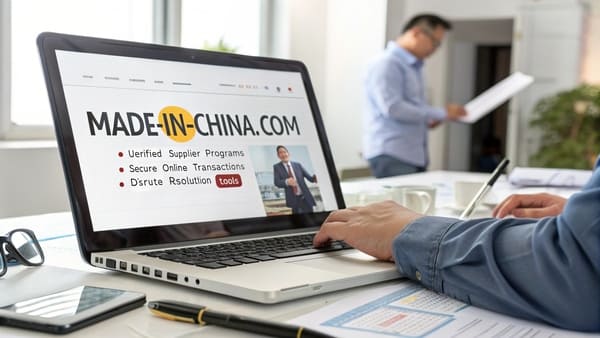
The core function of the platform is to make connections. Think of it as a huge, specialized trade show that's open 24/7. As a buyer, your journey typically follows a clear path. You start by searching for a product, like "LED headlights" or "custom wiring harnesses." From there, you filter the results based on various criteria, including supplier type. This is where you'll see labels like "Audited Supplier." These labels are important because they mean the platform’s own team, or a third party, has performed some level of verification.3
Operating a B2B platform with this level of detail is incredibly difficult. It requires a highly skilled operations team to manage the complex supply-and-demand matching across borders. The verification process alone is a major challenge. A good team needs at least a three-step process to check a supplier's qualifications, and the most difficult step is the initial business license and capability audit.4 From my experience in the industry, the teams that can do this well are usually located in coastal manufacturing hubs like Fujian or near Shanghai. They have the expertise to manage these complex checks properly.
Buyer's Journey on the Platform
| Step | Action | Key Consideration |
|---|---|---|
| 1. Search & Filter | Use specific keywords to find products. | Filter for "Audited Suppliers" to narrow down to more vetted companies. |
| 2. Send Inquiry (RFQ) | Contact potential suppliers with your requirements. | Be as detailed as possible about specs, quantity, and target price. |
| 3. Negotiate | Discuss price, MOQs, payment terms, and lead times. | Good communication is key. Assess their responsiveness and professionalism. |
| 4. Order Sample | Always order a sample before committing to a bulk order. | This is your best check for quality and if they understood your needs. |
| 5. Place Order | Finalize the purchase order and payment terms. | Consider using the platform's secure payment options for extra protection. |
Is Made-in-China.com a Legitimate Platform or Just a Supplier Directory?
Is this website just a big phonebook for factories? Or does it actually offer real protection and tools to help your business succeed? Let's clarify what it really is.
Made-in-China.com is far more than a simple directory; it is a legitimate trading platform. It actively facilitates commerce by offering verified supplier programs, secure online transaction systems, and dispute resolution channels.5 These features make it an active partner in the sourcing process, not just a passive list of names.
A simple directory just gives you a name and a number. After that, you're on your own. A true B2B platform, however, invests heavily in building a trustworthy ecosystem. The verification badges you see, like "Audited Supplier," are a perfect example. Creating and maintaining these verification systems is one of the hardest parts of running a B2B platform.6 Every time the platform wants to add a new type of certification or update its standards, the entire audit process has to be carefully managed. The team might need to pause existing audits to integrate the new standards, which can create bottlenecks and complexities in the verification flow. This effort is what separates a real platform from a basic list.
I learned this the hard way early in my career. My first experience using the platform was for a project with a client from Pakistan. I was still learning, and we ran into some serious "matching" problems after the order was placed—the specifications weren't quite right due to some miscommunication. I was worried it would be a disaster. But, surprisingly, the client actually liked the final product even more. It was a lucky break, but it taught me a valuable lesson: the platform provides the tools, but clear communication and careful verification are my responsibility. It’s a powerful tool, but not a substitute for due diligence.
How Reliable Are Suppliers on Made-in-China.com in Real Trading Scenarios?
A verified badge and a nice profile look good online. But will the supplier actually deliver high-quality products on time when your money is on the line? Let's look at real-world reliability.
Supplier reliability on Made-in-China.com varies widely. While many are professional and trustworthy, you must conduct your own due diligence.7 Prioritize "Audited Suppliers," review their business documents and factory reports, and always test their communication. Never skip ordering a sample or arranging a factory inspection for large orders.
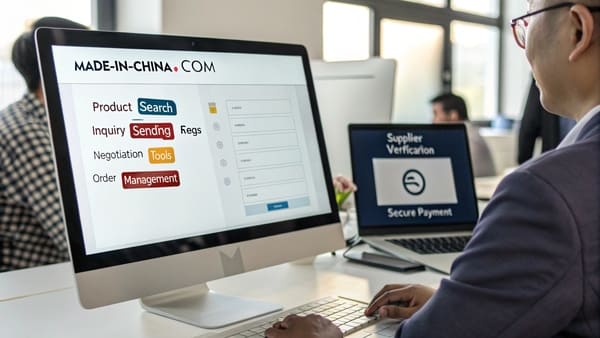
The platform is a starting point, not a guarantee of success. The "Audited Supplier" status is a great filter because it means someone has physically checked that the company is a real, operating business.8 This is the first and most critical step in a proper verification process. However, it doesn't automatically guarantee product quality or smooth communication. Your job is to dig deeper. Think of yourself as a detective. Start by looking at their profile. How long have they been on the platform? Do they have positive reviews? What certifications do they hold?9
Next, start a conversation. Send a detailed inquiry and see how they respond. Are they professional? Do they answer all your questions clearly? Or are their answers vague and slow? This initial communication is a huge indicator of what it will be like to work with them. As an OEM/ODM manufacturer ourselves, we know that clear, responsive communication is the foundation of a successful partnership. If a potential supplier can't handle that, it's a major red flag. Always remember to get a sample before you commit to a large order. It’s the single most effective way to verify quality and ensure they can meet your specifications.10
Your Supplier Vetting Checklist
| Checkpoint | What to Do | Why It's Important |
|---|---|---|
| 1. Review Profile | Look for "Audited Supplier" status, years on the platform, and business type (manufacturer vs. trading company). | This provides a baseline level of trust and helps you find actual factories. |
| 2. Analyze Audit Report | Download and read the SGS or TÜV Rheinland report available on their profile.11 | The report contains photos of the factory, production lines, and key business details. |
| 3. Test Communication | Send a detailed inquiry and evaluate their response time, clarity, and professionalism. | Poor communication is a strong predictor of future problems with your order. |
| 4. Order Samples | Always get a physical sample to test for quality, materials, and functionality. | This is the only way to be 100% sure of what you're buying before committing. |
| 5. Consider Inspection | For large or critical orders, hire a third-party inspection service to check the goods before shipment.12 | Provides an unbiased quality check and protects your investment. |
Conclusion
Made-in-China.com is a powerful and legitimate tool for B2B sourcing in 2026. Your success, however, depends entirely on your commitment to careful supplier verification and thorough due diligence.
"Made in China - Wikipedia", https://en.wikipedia.org/wiki/Made_in_China. Independent reviews and business analyses describe Made-in-China.com as a legitimate B2B platform that connects international buyers with Chinese suppliers, though users are advised to conduct due diligence to ensure safety. Evidence role: expert_consensus; source type: encyclopedia. Supports: Made-in-China.com is a legitimate and generally safe B2B platform for sourcing in 2026.. Scope note: Most sources provide general assessments and recommend buyer caution rather than guaranteeing safety in all cases. ↩
"How to find Verified Suppliers on Made-in-China.com? - YouTube", https://www.youtube.com/watch?v=7NQekuKKQxc. Made-in-China.com publicly describes its supplier verification badges and secure payment services as measures to enhance transaction safety for buyers. Evidence role: mechanism; source type: institution. Supports: The platform supports this process with tools like supplier verification badges and secure payment options to add a layer of safety.. Scope note: Descriptions are based on platform documentation and may not reflect independent audits of effectiveness. ↩
"Audited Suppliers | Choose the Reliable China Suppliers on Made ...", https://www.made-in-china.com/audited-suppliers/for-buyers/. According to Made-in-China.com and third-party inspection agencies, the 'Audited Supplier' label indicates that a supplier has undergone an on-site inspection by the platform or an authorized third party such as SGS or TÜV Rheinland. Evidence role: definition; source type: institution. Supports: "Audited Supplier" labels mean the platform’s own team, or a third party, has performed some level of verification.. Scope note: The depth and frequency of audits may vary and are not a guarantee of ongoing compliance. ↩
"Business License Information | Charleston, SC - Official Website", https://www.charleston-sc.gov/134/Business-License-Information. Industry guidelines and sourcing best practices recommend multi-step supplier verification processes, typically including business license checks, capability audits, and ongoing monitoring. Evidence role: expert_consensus; source type: education. Supports: A good team needs at least a three-step process to check a supplier's qualifications, and the most difficult step is the initial business license and capability audit.. Scope note: Specific steps and their difficulty may vary by platform and industry. ↩
"Buyer's Guide | Made-in-China.com", https://trading.made-in-china.com/buyerfaq. Made-in-China.com describes itself as a B2B trading platform offering supplier verification, secure transactions, and dispute resolution services to facilitate international commerce. Evidence role: mechanism; source type: institution. Supports: Made-in-China.com is far more than a simple directory; it is a legitimate trading platform. It actively facilitates commerce by offering verified supplier programs, secure online transaction systems, and dispute resolution channels.. Scope note: Descriptions are based on platform documentation and may not reflect independent evaluations of effectiveness. ↩
"What's the hardest part of verifying a supplier before payment?", https://www.reddit.com/r/Alibaba/comments/1ps8tbf/whats_the_hardest_part_of_verifying_a_supplier/. Industry analyses highlight that maintaining robust supplier verification systems is a significant operational challenge for B2B platforms due to the need for ongoing audits and compliance updates. Evidence role: expert_consensus; source type: research. Supports: Creating and maintaining verification systems like 'Audited Supplier' is one of the hardest parts of running a B2B platform.. Scope note: The degree of difficulty may vary by platform and audit scope. ↩
"Read Customer Service Reviews of www.made-in-china.com", https://www.trustpilot.com/review/www.made-in-china.com. User reviews and sourcing guides indicate that supplier reliability on Made-in-China.com is variable, and buyers are advised to perform independent due diligence before making purchases. Evidence role: general_support; source type: education. Supports: Supplier reliability on Made-in-China.com varies widely. While many are professional and trustworthy, you must conduct your own due diligence.. Scope note: Evidence is based on aggregated user experiences and may not represent all suppliers. ↩
"Audited Suppliers | Choose the Reliable China Suppliers on Made ...", https://www.made-in-china.com/audited-suppliers/for-buyers/. According to Made-in-China.com and third-party inspection agencies, 'Audited Supplier' status is granted after an on-site inspection confirms the existence and operations of the business. Evidence role: definition; source type: institution. Supports: The 'Audited Supplier' status is a great filter because it means someone has physically checked that the company is a real, operating business.. Scope note: The inspection confirms business existence but does not guarantee ongoing quality or compliance. ↩
"The Vendor Due Diligence Checklist: A 5-Step Guide", https://www.bitsight.com/blog/five-step-vendor-due-dilligence-checklist. Sourcing best practice guides recommend reviewing supplier tenure, customer feedback, and certifications as key steps in the due diligence process. Evidence role: expert_consensus; source type: education. Supports: Buyers should check how long a supplier has been on the platform, their reviews, and certifications as part of due diligence.. Scope note: Guidelines are general and may not address all platform-specific features. ↩
"Why Brands Should Get Sample Packaging Before Ordering", https://www.gprinting.com/blog/why-brands-should-get-sample-packaging-before-ordering. Sourcing experts and trade organizations recommend ordering samples as a critical step to verify product quality and supplier capability before placing large orders. Evidence role: expert_consensus; source type: education. Supports: Ordering a sample before a large order is the single most effective way to verify quality and ensure specifications are met.. Scope note: While highly effective, sample orders may not reveal all potential issues in mass production. ↩
"Can the buyers verify the Audit Report from SGS and how ...", https://www.made-in-china.com/faq/detail1u320001746/About-Audit-Reports.html. Made-in-China.com states that suppliers who have undergone third-party audits by SGS or TÜV Rheinland have their reports available for download on their profiles. Evidence role: mechanism; source type: institution. Supports: Buyers can download and read SGS or TÜV Rheinland audit reports on supplier profiles on Made-in-China.com.. Scope note: Availability depends on supplier participation in the audit programs. ↩
"Preshipment Inspection | United States Trade Representative", https://ustr.gov/trade-agreements/wto-multilateral-affairs/wto-issues/customs-issues/preshipment-inspection. International trade organizations and sourcing experts recommend third-party pre-shipment inspections for large or critical orders to ensure product quality and compliance before shipment. Evidence role: expert_consensus; source type: education. Supports: For large or critical orders, buyers should hire a third-party inspection service to check goods before shipment.. Scope note: Inspections reduce but do not eliminate all risks of defects or non-compliance. ↩