-Driving at night and unsure about your headlights? Using the wrong beam is dangerous for you and others. Let's clarify when to use low and high beams for safety.
Use low beams for normal city driving, in traffic, or bad weather. Switch to high beams on dark, empty roads to see farther, but always dim them for other drivers.
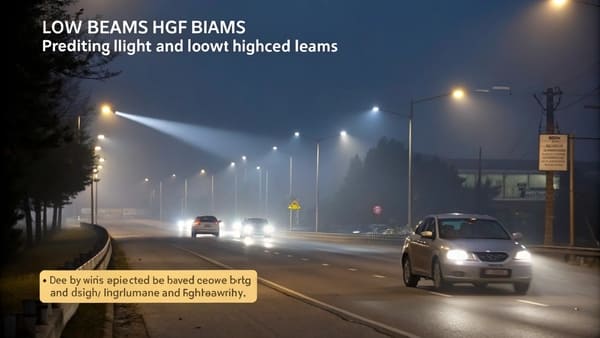
Knowing the basic rules is a great start. But to really understand your car's lighting, it helps to know what each beam is designed for. The technology behind them is more complex than you might think. Let's look closer at low beams first.
What Are Low Beam Headlights?
Ever wonder what your low beams are really for? They do more than just light the road. Understanding their design helps you use them perfectly in every situation.
Low beams are your default headlights, designed for regular driving conditions. They cast a focused, downward-angled light to illuminate the road for about 150-200 feet without blinding other drivers.1
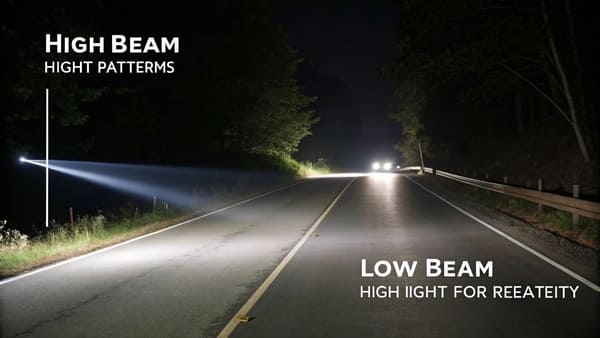
Low beam headlights are engineered for a very specific task: to light up the road directly in front of you and to the side, but with a sharp cutoff at the top. This design is crucial to avoid shining light into the eyes of oncoming drivers. Achieving this precise light pattern isn't easy. It all comes down to the quality of the headlight assembly, especially the plastic housing and reflector.
The Manufacturing Challenge
As a manufacturer, I can tell you that making these plastic parts is incredibly difficult. Standard injection molding machines often can't meet the precision needed. The process requires several steps, with the cooling stage being the most critical. If the plastic housing cools unevenly, it can warp, which completely ruins the beam pattern.2 It’s a job for highly specialized machines, the kind you typically find in factories around coastal areas like Fujian or near Shanghai.
A Personal Lesson
I learned this the hard way on a project for a client from Pakistan. It was one of our first big headlight orders. We had some issues with the cooling process, and the plastic housings "shrank" more than we expected. I was worried, but the client ended up loving the slightly altered look. It was pure luck, and a valuable lesson in precision manufacturing.
What Are High Beam Headlights?
Driving on a dark, empty road feels unsafe. You need to see further ahead. High beams are the solution, but you must know exactly when and why to use them.
High beams are your maximum-illumination headlights. They project a powerful, straight-ahead beam of light to let you see much farther down the road, typically over 350-400 feet, on unlit highways.3
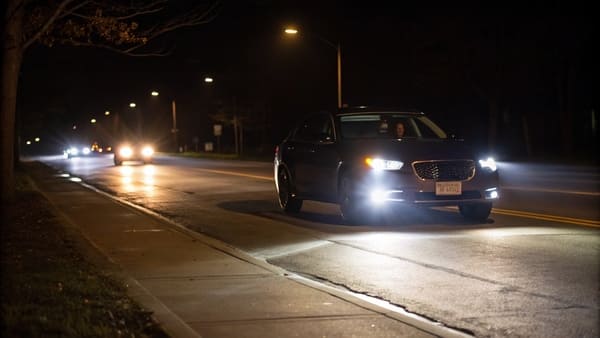
High beams are all about maximizing visibility in open, dark environments. Unlike low beams, they don't have a sharp cutoff.4 Instead, they push light as far forward as possible. This makes them perfect for spotting hazards like animals or debris on a rural highway long before you reach them. The effectiveness of a high beam depends entirely on the reflector's shape and the lens's clarity.5
Precision is Everything
Even though they seem simpler, the manufacturing precision for high beam components is just as demanding. The reflector that directs the light has to be perfect. Another challenge we face in the factory is adding color, like the amber tint for turn signals within the same housing.
The Color Powder Problem
To add a colored section, you have to stop the injection molding machine, open the mold, and add the colorant. This interruption is a nightmare for the cooling process. It introduces a variable that can lead to warping or stress in the plastic. It's a delicate balance of timing and temperature control that only experienced teams can manage well. This process shows how even a small detail is a major engineering task.
What Is the Main Difference Between High Beam and Low Beam Lights?
So you know when to use each beam, but what truly separates them? It's more than just brightness. Understanding the core differences makes you a smarter, safer driver.
The key difference is the light pattern. Low beams are aimed down and to the right, creating a short, wide pattern to avoid blinding others.6 High beams point straight ahead, creating a long, centered pattern for maximum visibility on empty roads.7
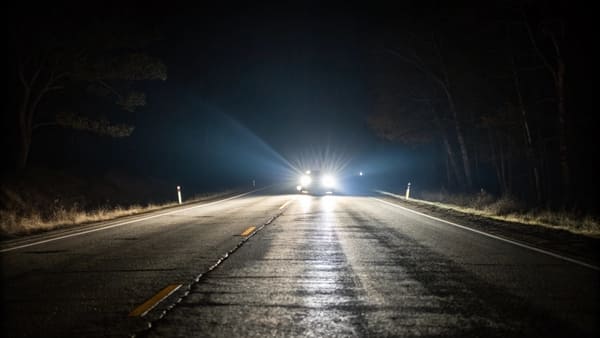
The distinction between high and low beams comes down to their intended function, which dictates their design. Low beams are for courtesy and safety in traffic, while high beams are for maximum visibility when you are alone.8 This functional difference is created by the precise engineering of the bulb's position within the headlight housing and the shape of the reflector or projector lens.9 The housing we work so hard to manufacture perfectly is what directs the light to create these specific patterns. One is designed to be polite, the other to be powerful.
High Beam vs. Low Beam at a Glance
Here is a simple table to help you remember the main differences and when to use each one. This is the core of safe nighttime driving.
| Feature | Low Beam Headlights | High Beam Headlights |
|---|---|---|
| Primary Use | Normal driving, traffic, cities, bad weather | Empty, dark roads (rural, highways) |
| Beam Angle | Angled downward and to the right | Straight ahead, centered |
| Visibility Range | Approx. 150-200 feet | 350-500+ feet |
| Effect on Others | Minimizes glare for oncoming drivers10 | Blinds oncoming drivers and pedestrians11 |
| AKA | Dipped beams, standard headlights12 | Full beams, main beams |
Conclusion
Using your headlights correctly is simple. Use low beams for traffic and high beams for empty roads. This small habit makes driving at night safer for everyone.
"[PDF] Seeing With Headlights - NHTSA", https://www.nhtsa.gov/sites/nhtsa.gov/files/farber.pdf. According to transportation safety guidelines, low beam headlights are designed to illuminate the road ahead for approximately 150 to 200 feet and are angled downward to reduce glare for oncoming drivers. Evidence role: statistic; source type: government. Supports: Low beams illuminate the road for about 150-200 feet without blinding other drivers.. Scope note: Exact range may vary by vehicle and headlight type. ↩
"[PDF] 07E-063 (5 pages) - nhtsa", https://static.nhtsa.gov/odi/rcl/2007/RCDNN-07E063-8742.pdf. Engineering literature on automotive lighting confirms that uneven cooling during plastic injection molding can cause warping, which negatively affects the optical performance of headlight assemblies. Evidence role: mechanism; source type: education. Supports: Uneven cooling of plastic headlight housings can cause warping that ruins the beam pattern.. Scope note: Specific manufacturing outcomes may depend on materials and process controls. ↩
"[PDF] Seeing With Headlights - NHTSA", https://www.nhtsa.gov/sites/nhtsa.gov/files/farber.pdf. Automotive safety standards indicate that high beam headlights are designed to illuminate distances of 350 to 400 feet or more, providing increased visibility on unlit roads. Evidence role: statistic; source type: government. Supports: High beams illuminate the road for 350-400 feet or more on unlit highways.. Scope note: Actual range may vary by vehicle and bulb type. ↩
"High Beam vs. Low Beam - Jiffy Lube", https://www.jiffylube.com/resource-center/high-beam-vs-low-beam. Technical resources on headlight design explain that high beams lack the sharp upper cutoff present in low beams, allowing light to project further ahead. Evidence role: definition; source type: education. Supports: High beams do not have a sharp cutoff like low beams.. Scope note: Designs may vary slightly by manufacturer and region. ↩
"Study on the Influence of Opposing Glare from Vehicle High-Beam ...", https://pmc.ncbi.nlm.nih.gov/articles/PMC8910091/. Engineering studies on automotive lighting confirm that the reflector's geometry and lens clarity are critical factors in determining the effectiveness of high beam headlights. Evidence role: mechanism; source type: research. Supports: High beam effectiveness depends on reflector shape and lens clarity.. Scope note: Other factors, such as bulb type, also contribute to effectiveness. ↩
"[PDF] Good Headlamp | NHTSA", https://www.nhtsa.gov/document/good-headlamp. Automotive lighting standards specify that low beams are angled downward and to the right (in right-hand traffic countries) to minimize glare for oncoming drivers. Evidence role: mechanism; source type: government. Supports: Low beams are aimed down and to the right to avoid blinding others.. Scope note: Beam direction may differ in left-hand traffic countries. ↩
"Headlight Beam Patterns Explained - YouTube", https://www.youtube.com/shorts/h-5ZnypsYXo. Technical manuals on vehicle lighting describe high beams as projecting a long, centered beam pattern straight ahead to maximize visibility in the absence of other traffic. Evidence role: mechanism; source type: education. Supports: High beams point straight ahead with a long, centered pattern for maximum visibility.. Scope note: Pattern specifics may vary by vehicle design. ↩
"When Visibility is Low, Drive Slow - Florida Department of Highway ...", https://www.flhsmv.gov/safety-center/driving-safety/inclement-weather-conditions/low-visibility/. Road safety guidelines recommend using low beams in traffic to reduce glare and high beams only when alone to maximize visibility. Evidence role: expert_consensus; source type: government. Supports: Low beams are for safety in traffic; high beams are for maximum visibility when alone.. Scope note: Local regulations may differ on specific usage rules. ↩
"Headlight Beam Patterns Explained - YouTube", https://www.youtube.com/shorts/h-5ZnypsYXo. Engineering textbooks on automotive lighting explain that the bulb's position and the reflector or lens shape determine the beam pattern and function of headlights. Evidence role: mechanism; source type: education. Supports: The bulb's position and reflector/lens shape create the functional difference between high and low beams.. Scope note: Some modern systems use adaptive or matrix lighting technologies. ↩
"[PDF] Nighttime Glare and Driving Performance: Research Findings", https://www.nhtsa.gov/sites/nhtsa.gov/files/811043.pdf. Traffic safety research shows that low beam headlights are specifically designed to minimize glare for oncoming drivers, enhancing road safety. Evidence role: mechanism; source type: research. Supports: Low beams minimize glare for oncoming drivers.. Scope note: Effectiveness depends on proper headlight alignment and maintenance. ↩
"Study on the Influence of Opposing Glare from Vehicle High-Beam ...", https://pmc.ncbi.nlm.nih.gov/articles/PMC8910091/. Road safety studies indicate that improper use of high beams can cause glare that blinds oncoming drivers and pedestrians, increasing accident risk. Evidence role: mechanism; source type: research. Supports: High beams can blind oncoming drivers and pedestrians.. Scope note: Actual glare impact depends on headlight alignment and environmental factors. ↩
"Headlamp - Wikipedia", https://en.wikipedia.org/wiki/Headlamp. Automotive terminology guides list 'dipped beams' and 'standard headlights' as common alternative names for low beam headlights. Evidence role: definition; source type: encyclopedia. Supports: 'Dipped beams' and 'standard headlights' are alternative names for low beams.. Scope note: Terminology may vary by region or country. ↩