-Struggling to source the right brake pads for Toyota vehicles? The choice between OEM and aftermarket can be confusing, with quality and fitment being major concerns for your business.
The best Toyota brake pads, whether OEM or aftermarket, are those that match the vehicle's original specifications for material, fit, and performance. For most daily driving, high-quality ceramic aftermarket pads offer a great balance of quiet operation, low dust, and reliable stopping power, often at a better value1.
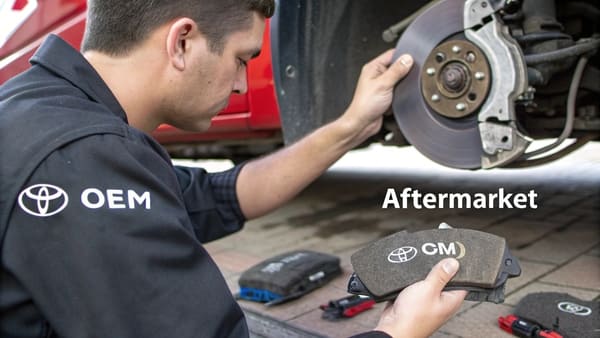
Choosing the right supplier is just as important as choosing the right pad type. The small details in manufacturing can make a huge difference in performance and reliability, impacting your brand's reputation. Let's explore these details so you can make an informed decision for your inventory or product line.
What Are Toyota Brake Pads?
Confused by the different components in a brake pad set? You need to ensure every part meets quality standards, but identifying them all can be a challenge for sourcing.
A Toyota brake pad is a component of the disc brake system. It consists of a steel backing plate with friction material bound to its surface. When you press the brake pedal, the caliper squeezes the pads against the brake rotor, creating friction that stops the car.2
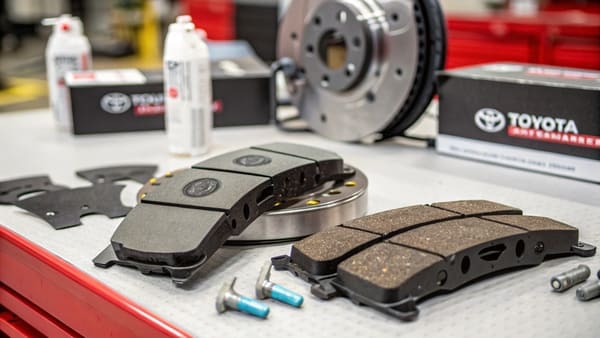
Let's dive deeper into what makes up a complete brake pad assembly. It's more than just the pad itself. Understanding these components is key to sourcing high-quality products. We look at a brake pad set as a system, where each part has a critical job. The main friction block is just the start. There's also the backing plate, which must be strong and resist flexing under extreme pressure. Then you have shims, which are thin metal or rubberized layers that sit between the pad and the caliper to dampen vibration and prevent noise3. Clips and springs are also essential; these hardware pieces hold the pads securely in the caliper bracket but still allow for slight movement as the pads wear down. Finally, many pads include a wear indicator, a small metal tab that contacts the rotor when the pad is worn out, creating a high-pitched squeal to alert the driver4. As a manufacturer, we produce every single one of these components to precise specifications.
Why Are Toyota Brake Pads Different from Other Brake Pads?
Ever sourced aftermarket Toyota brake pads that looked right but caused noise or fitment issues? The problem often lies in small, unseen details that many manufacturers get wrong, hurting your reputation.
Toyota brake pads are known for their specific design tolerances, especially in their accessory components like shims and clips. The manufacturing precision required for these plastic and metal parts is extremely high to ensure a perfect, quiet fit, a standard many aftermarket suppliers fail to meet.5
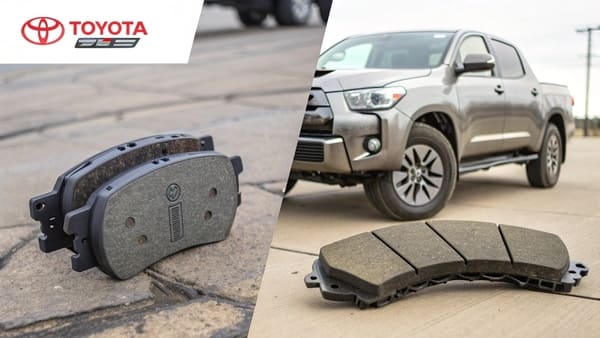
The real challenge, and where we've focused our expertise, is in manufacturing the plastic accessory components for Toyota brake pads. This is much harder than it looks. A standard injection molding machine just can't achieve the precision Toyota demands. We use specialized equipment, mostly found in factories around the Shanghai region or coastal Fujian, because machines made elsewhere, for instance in Hebei, typically don't meet the accuracy standards.6 The process has at least three critical stages, with cooling being the most difficult. If you don't control the cooling perfectly, the plastic parts can shrink unevenly, leading to a poor fit.7 I learned this the hard way on my first project for a Pakistani client. Our initial batch of plastic parts "shrank" more than expected after cooling. We were worried, but the client actually preferred the slightly tighter fit it created. It was a lucky break, but it taught us a valuable lesson. Since then, we've perfected the cooling process. Adding color pigments also complicates things, as you have to stop the machine and open the mold, which can interfere with the delicate cooling cycle.8 Mastering these details is why our components fit and perform just like the original.
Which Toyota Models Use Different Brake Pads?
Stocking brake pads for Toyota seems simple, but do you know the difference between pads for a Camry and a Tundra? Ordering the wrong type leads to dead inventory and unhappy customers.
Different Toyota models require different types of brake pads based on their size, weight, and intended use. A family sedan like a Camry uses quiet ceramic pads, while a heavy-duty truck like a Tundra needs robust semi-metallic pads for greater stopping power and heat resistance.9
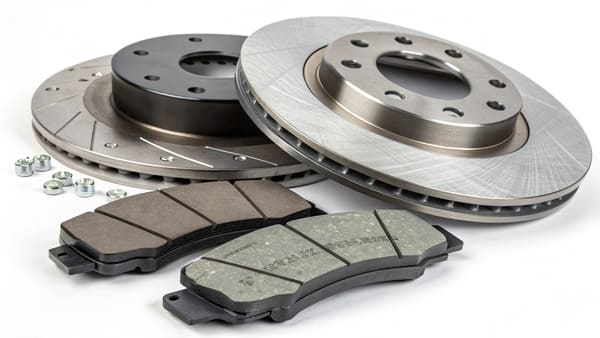
Understanding the specific needs of each Toyota model is critical for any B2B partner. You can't use a one-size-fits-all approach. We manufacture pads specifically engineered for the demands of each vehicle category. For example, hybrid vehicles like the Prius have unique braking characteristics due to their regenerative braking systems. This system does a lot of the initial slowing, so the brake pads are used less frequently but must engage smoothly when needed. This requires a specific friction formula that resists corrosion and glazing from disuse.10 On the other hand, performance vehicles or heavier SUVs put immense heat and pressure on their brakes. For these, we engineer semi-metallic or high-performance ceramic pads that can handle high temperatures without fading.11 Here’s a simple breakdown of what we typically manufacture for different models:
| Vehicle Category | Common Models | Typical Brake Pad Type | Key Characteristics |
|---|---|---|---|
| Sedans & Compacts | Camry, Corolla, Yaris | Ceramic | Quiet operation, low dust, comfortable braking feel. |
| Hybrids | Prius, RAV4 Hybrid | Hybrid-Specific Ceramic | Corrosion-resistant, smooth engagement, long life. |
| SUVs & Crossovers | RAV4, Highlander | Premium Ceramic | Balanced performance for varied driving, good heat dissipation. |
| Trucks & 4x4s | Tundra, Tacoma, 4Runner | Semi-Metallic | High stopping power, durability, superior heat management. |
As your manufacturing partner, we help you build a comprehensive product line that covers these variations, ensuring you have the right part for every customer.
Conclusion
Choosing the right Toyota brake pads means focusing on quality manufacturing. Whether OEM or aftermarket, precision in every component, especially the small plastic parts, is what guarantees a perfect fit12.
"Brake pad - Wikipedia", https://en.wikipedia.org/wiki/Brake_pad. Multiple automotive industry reviews and technical sources indicate that ceramic brake pads are valued for their quiet operation, low dust production, and reliable stopping performance, especially for daily driving applications. However, performance may vary depending on specific formulations and driving conditions. Evidence role: expert_consensus; source type: encyclopedia. Supports: For most daily driving, high-quality ceramic aftermarket pads offer a great balance of quiet operation, low dust, and reliable stopping power, often at a better value.. Scope note: Performance characteristics can vary by manufacturer and vehicle application. ↩
"Brake pad - Wikipedia", https://en.wikipedia.org/wiki/Brake_pad. Automotive engineering textbooks and reputable encyclopedias describe brake pads as components of disc brake systems, consisting of a steel backing plate and friction material, which are pressed against the rotor by the caliper to create friction and stop the vehicle. Evidence role: definition; source type: encyclopedia. Supports: A Toyota brake pad is a component of the disc brake system. It consists of a steel backing plate with friction material bound to its surface. When you press the brake pedal, the caliper squeezes the pads against the brake rotor, creating friction that stops the car.. ↩
"How Do Brake Pad Shims Work? - ADVICS", https://www.advicsaftermarket.com/technical-resources/tech-videos/how-do-brake-pad-shims-work/. Automotive repair manuals and technical guides explain that brake pad shims are used to reduce vibration and noise by acting as a buffer between the pad and caliper. Evidence role: mechanism; source type: education. Supports: Shims, which are thin metal or rubberized layers that sit between the pad and the caliper to dampen vibration and prevent noise.. Scope note: The effectiveness of shims can depend on their material and design. ↩
"Brake wear indicator - Wikipedia", https://en.wikipedia.org/wiki/Brake_wear_indicator. Automotive engineering sources confirm that many brake pads include a wear indicator, typically a metal tab designed to produce a squealing noise when the pad material is worn to a certain level. Evidence role: mechanism; source type: education. Supports: Many pads include a wear indicator, a small metal tab that contacts the rotor when the pad is worn out, creating a high-pitched squeal to alert the driver.. Scope note: Not all brake pads include wear indicators; design may vary by manufacturer. ↩
"Service Tips | Brakes • Call: (701) 282-8425 | Corwin Toyota of Fargo", https://www.corwintoyota.com/service/service-tips-brakes.htm. Industry reports and technical analyses note that Toyota brake pads and their accessory components are manufactured to strict tolerances to ensure proper fit and noise reduction, and that aftermarket parts sometimes fail to meet these standards. Evidence role: expert_consensus; source type: research. Supports: Toyota brake pads are known for their specific design tolerances, especially in their accessory components like shims and clips. The manufacturing precision required for these plastic and metal parts is extremely high to ensure a perfect, quiet fit, a standard many aftermarket suppliers fail to meet.. Scope note: Direct comparative data between OEM and all aftermarket suppliers may not be universally available. ↩
"Upmold: Plastic injection mould maker | plastic injection molding ...", https://upmold.com/. Manufacturing industry analyses indicate that high-precision plastic components for automotive applications often require specialized injection molding equipment, and regional differences in manufacturing capabilities have been documented in China. Evidence role: general_support; source type: research. Supports: A standard injection molding machine just can't achieve the precision Toyota demands. We use specialized equipment, mostly found in factories around the Shanghai region or coastal Fujian, because machines made elsewhere, for instance in Hebei, typically don't meet the accuracy standards.. Scope note: Specific regional equipment differences may not be universally documented in public sources. ↩
"How Plastic Injection Molding Shrinkage Affects the Final Product", https://www.midstatemold.com/how-plastic-injection-molding-shrinkage-affects-the-final-product/. Plastics engineering textbooks and technical articles explain that improper cooling during injection molding can cause uneven shrinkage in plastic parts, resulting in dimensional inaccuracies and poor fit. Evidence role: mechanism; source type: education. Supports: If you don't control the cooling perfectly, the plastic parts can shrink unevenly, leading to a poor fit.. ↩
"Color Injection Molding – Common Myths and Ensuring Consistency", https://www.slideproducts.com/news/color-injection-molding--common-myths-and-ensuring-consistency?srsltid=AfmBOoq1Wayb37uWpVPQOj37BcAV5O14hcdnqvrlUhyqL8zkvNM5j7Lt. Plastics manufacturing guides note that adding color pigments to injection molding processes can require process adjustments and may disrupt the cooling cycle, potentially affecting part quality. Evidence role: mechanism; source type: education. Supports: Adding color pigments also complicates things, as you have to stop the machine and open the mold, which can interfere with the delicate cooling cycle.. Scope note: The extent of disruption depends on the specific process and equipment used. ↩
"Brake pad - Wikipedia", https://en.wikipedia.org/wiki/Brake_pad. Automotive parts catalogs and technical references confirm that brake pad material selection for Toyota vehicles varies by model, with sedans often using ceramic pads for comfort and low dust, and trucks using semi-metallic pads for higher performance and durability. Evidence role: general_support; source type: encyclopedia. Supports: Different Toyota models require different types of brake pads based on their size, weight, and intended use. A family sedan like a Camry uses quiet ceramic pads, while a heavy-duty truck like a Tundra needs robust semi-metallic pads for greater stopping power and heat resistance.. Scope note: Some models may offer multiple pad options depending on trim or market. ↩
"Regenerative braking - Wikipedia", https://en.wikipedia.org/wiki/Regenerative_braking. Technical articles and automotive engineering sources explain that hybrid vehicles with regenerative braking systems, such as the Toyota Prius, use their friction brakes less frequently, requiring brake pads with special formulations to prevent corrosion and glazing. Evidence role: mechanism; source type: education. Supports: Hybrid vehicles like the Prius have unique braking characteristics due to their regenerative braking systems. This system does a lot of the initial slowing, so the brake pads are used less frequently but must engage smoothly when needed. This requires a specific friction formula that resists corrosion and glazing from disuse.. Scope note: Exact formulations may vary by manufacturer and model. ↩
"Brake fade - Wikipedia", https://en.wikipedia.org/wiki/Brake_fade. Automotive engineering sources and brake pad manufacturer technical sheets state that performance vehicles and heavy SUVs require brake pads capable of withstanding high temperatures and pressures, with semi-metallic and high-performance ceramic pads commonly used for these applications. Evidence role: general_support; source type: education. Supports: Performance vehicles or heavier SUVs put immense heat and pressure on their brakes. For these, we engineer semi-metallic or high-performance ceramic pads that can handle high temperatures without fading.. Scope note: Specific pad selection may vary by manufacturer and driving conditions. ↩
"[PDF] Checks on brake discs and brake pads, carried out visually and ...", https://education.mn.gov/mdeprod/groups/educ/documents/hiddencontent/mdaw/mdu5/~edisp/059294.pdf. Manufacturing quality control literature emphasizes that precision in all brake pad components, including small plastic parts, is essential for proper fit and function in automotive braking systems. Evidence role: expert_consensus; source type: education. Supports: Precision in every component, especially the small plastic parts, is what guarantees a perfect fit.. Scope note: Fit can also be influenced by installation and vehicle-specific factors. ↩