-Your car might be overheating, and you are worried about picking the wrong replacement part. A bad choice can lead to serious engine damage1, but the options are confusing.
To choose the best car radiator, you must match the material, core design, and dimensions to your vehicle's make, model, and year. Always check the original manufacturer's specifications. Prioritize a high-quality unit that fits perfectly, as this is more important for engine health than price alone.
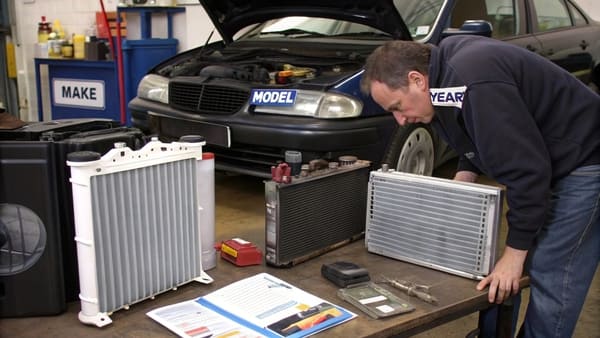
Choosing a new radiator can feel like a big task, but it doesn't have to be. Your car's cooling system is one of its most important functions, and the radiator is the star player. If you understand a few key things about how it works and what to look for, you can make a smart choice that protects your engine. Let's break it down together so you feel confident in your decision.
What Does a Car Radiator Actually Do?
You see that big grille at the front of your car, but what is the part behind it really doing? Not knowing its function can make it hard to see its importance.
A car radiator is the main part of your vehicle's cooling system2. Its job is to get rid of the heat that the engine creates. It circulates a special fluid called coolant to absorb this heat and then cools it down using airflow3.
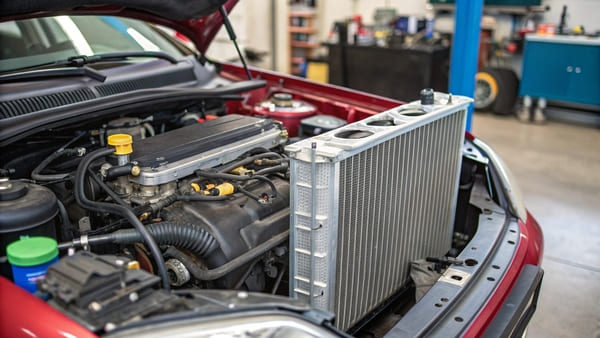
Let's dive a little deeper into how this process works. Your engine gets very hot when it's running. To stop it from overheating, coolant is pumped through small passages inside the engine block. This coolant absorbs the heat. The hot coolant then flows out of the engine and into the radiator.
The radiator is made of many small tubes with thin metal fins attached to them. As the hot coolant flows through these tubes, air from outside the car passes over the fins. This could be from the car moving or from a fan that turns on when you're stopped. The fins increase the surface area, allowing the heat to escape from the coolant into the air very quickly. The now-cooled liquid flows out of the radiator and back into the engine to start the process all over again. It’s a continuous cycle that keeps your engine at a safe temperature.
Why Is Your Car Radiator Important for Engine Performance?
You might think a radiator is just there to stop your car from overheating. But a weak or failing radiator can hurt your engine's power and fuel economy long before a total breakdown.
A radiator is critical for performance because it keeps the engine at its ideal operating temperature. An engine running too hot or too cold loses power, burns more fuel, and suffers from faster wear on its internal parts, leading to expensive damage4.
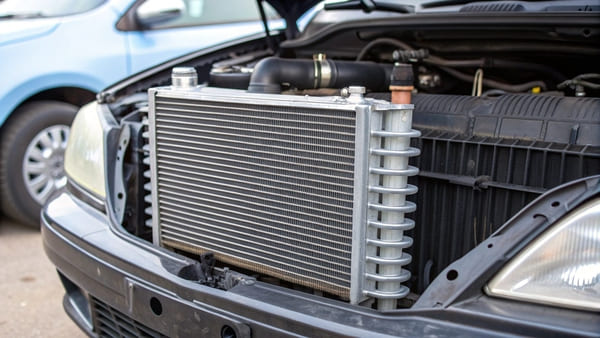
Every engine is designed to run most efficiently within a specific temperature range5. When the radiator does its job well, the engine stays in this sweet spot. This allows the engine oil to maintain the right thickness to lubricate parts properly. It also ensures the metal components expand to the correct size for tight seals and smooth operation.
If the radiator can't keep the engine cool enough, things start to go wrong. The oil can become too thin, leading to more friction and wear. Metal parts can expand too much, causing stress and potential damage. The engine's computer might even reduce power to protect itself. On the flip side, if an engine runs too cold because of a faulty thermostat or other issue, it won't burn fuel efficiently. A high-quality, reliable radiator is the foundation for consistent power, good gas mileage, and a long-lasting engine. This is why manufacturing precision is so important for all radiator components.
What Are the Main Types of Car Radiators?
When you shop for a radiator, you see terms like "aluminum," "copper-brass," "cross-flow," and "down-flow." These options can be confusing and lead you to make the wrong choice.
The main types are based on material and flow design. Most modern radiators are aluminum because it's light and efficient6. Older ones are copper-brass, which is heavier but easier to repair7. Flow designs are either cross-flow (tanks on the sides) or down-flow (tanks on top and bottom)8.
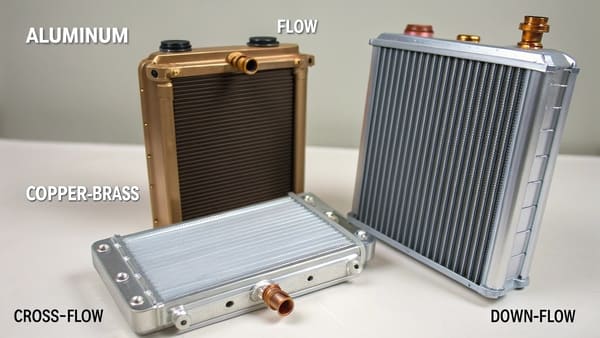
Understanding the differences will help you pick the right one for your car. The choice often comes down to what your car was originally built with and your specific needs. Let's look at the details.
Material Matters: Aluminum vs. Copper-Brass
The material of the radiator core is a big factor. Each has its pros and cons.
| Feature | Aluminum Radiators | Copper-Brass Radiators |
|---|---|---|
| Weight | Lighter | Heavier |
| Heat Transfer | Excellent | Very Good |
| Durability | Strong, but harder to repair | Softer, but easy to solder/repair |
| Cost | Generally less expensive | Often more expensive |
| Common Use | Most modern cars (post-1980s) | Classic cars, heavy-duty trucks |
Most cars today come with aluminum radiators that have plastic tanks on the sides or top9. They are very efficient for their weight. Copper-brass is a classic choice, known for its repairability, which is why you see it in vintage cars and some industrial applications10.
The Hidden Challenge: Plastic Components
Many people don't realize that the plastic tanks on modern radiators are incredibly difficult to manufacture correctly. You can't just use a standard injection molding machine. You need a very precise machine to get the parts right. The process involves multiple steps, and the cooling stage is the most critical11. If it’s not done perfectly, the plastic can shrink or warp.
I learned this the hard way. Early in my career, I was working on an order for a client from Pakistan. We were making plastic radiator tanks, and I was still new to how sensitive the cooling process was. After molding, the parts shrunk more than I expected. I was worried we had ruined the whole order. Funnily enough, the client actually preferred the slightly smaller, denser parts. It was a lucky break, but it taught me a huge lesson about precision. Since then, we've perfected our cooling process to ensure every part we make meets exact specifications, because you can't always count on getting lucky.
Conclusion
Choosing the right radiator means matching it to your car and prioritizing quality. A well-made radiator protects your engine and ensures reliable performance for many years to come12.
"Can a bad radiator hose cause engine damage? - Quora", https://www.quora.com/Can-a-bad-radiator-hose-cause-engine-damage. Automotive engineering sources note that improper radiator selection or installation can result in engine overheating and subsequent damage to internal components, though the extent of damage depends on the severity and duration of overheating. Evidence role: mechanism; source type: education. Supports: A bad choice can lead to serious engine damage.. Scope note: The risk of engine damage varies with vehicle type and operating conditions. ↩
"Radiator (engine cooling) - Wikipedia", https://en.wikipedia.org/wiki/Radiator_(engine_cooling). Standard automotive references describe the radiator as the primary component responsible for dissipating engine heat within the vehicle's cooling system. Evidence role: definition; source type: encyclopedia. Supports: A car radiator is the main part of your vehicle's cooling system.. ↩
"How Does a Car Radiator Work? | UTI - Universal Technical Institute", https://www.uti.edu/blog/automotive/radiators. Automotive textbooks explain that coolant absorbs engine heat and is cooled by air passing through the radiator, forming the basis of the cooling cycle. Evidence role: mechanism; source type: education. Supports: It circulates a special fluid called coolant to absorb this heat and then cools it down using airflow.. ↩
"How much overheating does it take to cause engine damage? - Reddit", https://www.reddit.com/r/MechanicAdvice/comments/4yneys/how_much_overheating_does_it_take_to_cause_engine/. Engineering literature indicates that engines operating outside their optimal temperature range experience reduced efficiency, increased fuel consumption, and accelerated wear, though the specific impacts depend on engine design and conditions. Evidence role: mechanism; source type: education. Supports: An engine running too hot or too cold loses power, burns more fuel, and suffers from faster wear on its internal parts, leading to expensive damage.. Scope note: Exact effects may vary by engine model and severity of temperature deviation. ↩
"Heat engine - Wikipedia", https://en.wikipedia.org/wiki/Heat_engine. Automotive engineering sources confirm that internal combustion engines are optimized for a particular temperature range to maximize efficiency and minimize emissions. Evidence role: expert_consensus; source type: education. Supports: Every engine is designed to run most efficiently within a specific temperature range.. ↩
"How Does a Car Radiator Work? | UTI - Universal Technical Institute", https://www.uti.edu/blog/automotive/radiators. Industry and engineering references report that aluminum is the predominant material for modern automotive radiators due to its favorable strength-to-weight ratio and thermal conductivity. Evidence role: statistic; source type: education. Supports: Most modern radiators are aluminum because it's light and efficient.. Scope note: Some vehicles, especially older or specialized models, may use other materials. ↩
"Five Reasons a Copper Brass Radiator Core is Best For Your Vehicle", https://www.nargroup.com/five-reasons-a-copper-brass-radiator-core-is-best-for-your-vehicle/. Automotive history sources note that copper-brass radiators were standard in older vehicles and are valued for their repairability, though they are heavier than aluminum alternatives. Evidence role: historical_context; source type: encyclopedia. Supports: Older ones are copper-brass, which is heavier but easier to repair.. Scope note: Repairability depends on available skills and tools. ↩
"How Does a Car Radiator Work? | UTI - Universal Technical Institute", https://www.uti.edu/blog/automotive/radiators. Automotive engineering manuals describe cross-flow and down-flow as the two main radiator flow designs, distinguished by the orientation of their tanks and coolant flow direction. Evidence role: definition; source type: education. Supports: Flow designs are either cross-flow (tanks on the sides) or down-flow (tanks on top and bottom).. ↩
"What are car and truck radiators made out of? - Quora", https://www.quora.com/What-are-car-and-truck-radiators-made-out-of. Automotive manufacturing data indicate that the majority of modern vehicles are equipped with aluminum radiators featuring plastic tanks for cost and weight savings. Evidence role: statistic; source type: education. Supports: Most cars today come with aluminum radiators that have plastic tanks on the sides or top.. Scope note: Some high-performance or specialty vehicles may use alternative designs. ↩
"Why Opting for Brass-Copper Radiators Makes Sense for Your Vehicle", https://hdautoparts.com/blog/Brass-Copper-Radiators-Make-Sense-for-Vehicle.html. Classic car restoration guides and industrial equipment references highlight copper-brass radiators for their ease of repair and continued use in vintage and heavy-duty applications. Evidence role: historical_context; source type: education. Supports: Copper-brass is a classic choice, known for its repairability, which is why you see it in vintage cars and some industrial applications.. Scope note: Modern vehicles rarely use copper-brass radiators except in restorations or specific industrial contexts. ↩
"What type of materials is being used in a radiator's top & bottom tank ...", https://www.quora.com/What-type-of-materials-is-being-used-in-a-radiator-s-top-bottom-tank-I-know-that-it-is-plastic-but-I-need-the-exact-specification-as-this-plastic-can-withstand-a-temperature-of-200-F. Manufacturing engineering sources describe the multi-step process of plastic tank production for radiators, emphasizing the importance of controlled cooling to prevent defects such as warping or shrinkage. Evidence role: mechanism; source type: education. Supports: The process involves multiple steps, and the cooling stage is the most critical.. Scope note: Specific process details may vary by manufacturer and plastic formulation. ↩
"Understanding Car Radiators: When to Consider Replacement", https://toptierautomotive.com/understanding-car-radiators-when-to-consider-replacement/. Automotive maintenance literature supports that high-quality radiators contribute to engine longevity and consistent vehicle performance, though actual lifespan depends on maintenance and operating conditions. Evidence role: general_support; source type: education. Supports: A well-made radiator protects your engine and ensures reliable performance for many years to come.. Scope note: Radiator and engine lifespan also depend on maintenance and usage patterns. ↩