-Struggling to choose the right brake pads for your car? The wrong choice can lead to noise and poor performance. Let’s break down the options so you can decide confidently.
The best brake pad depends on your needs. Semi-metallic pads offer superior stopping power and heat resistance, ideal for heavy vehicles and performance driving. Ceramic pads provide a quieter, cleaner ride with less dust, making them perfect for daily commuting and luxury cars. Neither is universally "better."

Choosing brake pads can feel overwhelming with all the technical terms. You see options like "semi-metallic" and "ceramic" but aren't sure what they mean for your car's safety and performance. This uncertainty can make a simple maintenance task feel like a major risk. But understanding the core differences is actually quite simple, and it's the key to getting exactly what you need. Let's dive into what makes each type of brake pad unique so you can make an informed choice for your vehicle and driving style.
What Are Semi-Metallic Brake Pads?
You've probably heard that semi-metallic pads are for "heavy-duty" use. But this label can be confusing, leaving you unsure if they are overkill for your daily driver.
Semi-metallic brake pads are made from a composite of metal fibers, typically 30% to 65% metal by weight.1 These metals can include steel, iron, and copper, all bound together with fillers and friction modifiers. This composition makes them durable and excellent at dissipating heat.
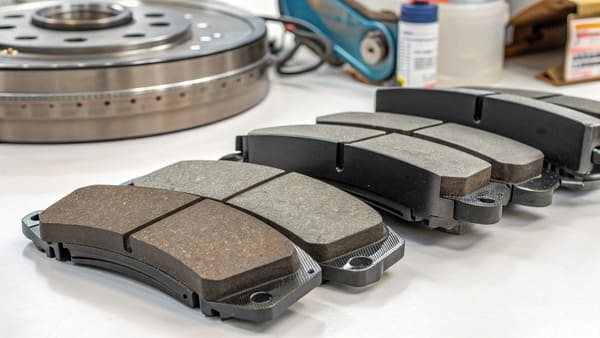
Semi-metallic brake pads are true workhorses. Their high metal content gives them fantastic thermal conductivity. This means they can handle a lot of heat and cool down quickly, which is critical for preventing brake fade during repeated hard stops or when towing heavy loads.2 The metal fibers provide a strong "bite," giving you firm and responsive pedal feel. This is why you often find them as standard equipment on trucks, SUVs, and performance cars. However, this strength comes with some trade-offs. The same metal fibers that make them so effective can also make them noisier and produce more dark-colored dust than other pad types.3 They are also more abrasive, which can lead to faster wear on your brake rotors.4
| Feature | Performance |
|---|---|
| Stopping Power | Excellent, strong initial bite |
| Heat Resistance | Very Good, dissipates heat quickly |
| Noise Level | Moderate to High |
| Brake Dust | High, dark-colored dust |
| Rotor Wear | Higher than other types |
| Best For | Trucks, SUVs, performance driving, towing |
What Are Ceramic Brake Pads?
Are you tired of constantly cleaning black brake dust from your wheels? The squealing and grinding from old pads can also be incredibly annoying, making your daily drive less pleasant.
Ceramic brake pads are made from a dense ceramic material, similar to what's used to make pottery, but much more durable. They contain ceramic fibers, non-ferrous filler materials, and bonding agents.5 They may contain tiny amounts of copper or other metals to aid in heat transfer.
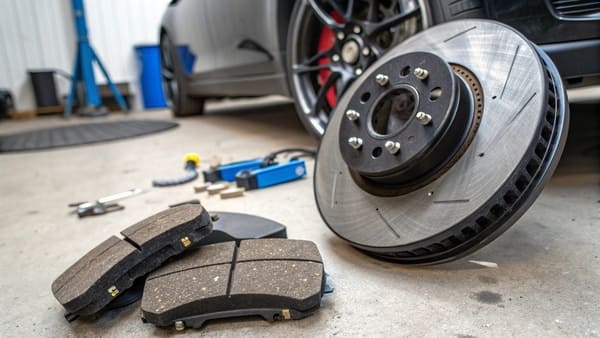
Ceramic brake pads are the go-to choice for drivers who prioritize comfort and cleanliness. Their main advantage is that they are incredibly quiet. The composition of the pads creates a friction frequency that is beyond the range of human hearing, resulting in a virtually silent stop.6 They also produce a very fine, light-colored dust that doesn't stick to wheels, keeping your rims looking cleaner for longer.7 Ceramic pads offer very stable and consistent performance across a wide range of temperatures, making them reliable for daily driving.8 While their stopping power is more than adequate for most passenger cars, they generally don't have the aggressive initial "bite" of semi-metallic pads.9 This makes them less ideal for high-performance track use or heavy-duty towing, where maximum stopping force and rapid heat dissipation are the top priorities.
| Feature | Performance |
|---|---|
| Stopping Power | Good and consistent |
| Heat Resistance | Good and stable |
| Noise Level | Very Low, virtually silent |
| Brake Dust | Very Low, light-colored dust |
| Rotor Wear | Low, very gentle on rotors |
| Best For | Daily driving, luxury cars, commuters |
Are Semi-Metallic Brake Pads Better Than Ceramic Overall?
Now you know the basics of both, but you're stuck at the final decision. This indecision is frustrating when you just want to buy the right parts and move on.
Neither type is "better" overall; the best choice depends entirely on your vehicle and driving habits. Semi-metallic pads are better for performance and heavy-duty tasks10, while ceramic pads are better for quiet, clean daily driving. The key is matching the pad to the application.
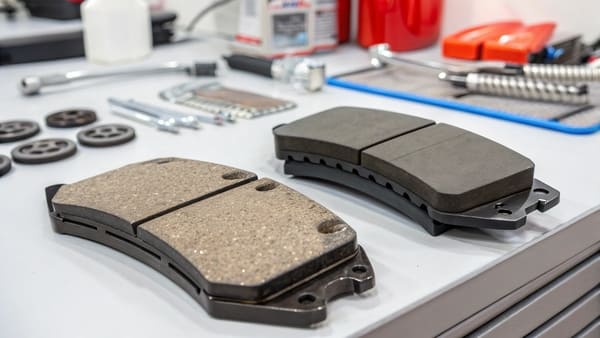
The friction material is just one part of the story. As a manufacturer, I can tell you that the quality of the entire brake pad assembly is what truly matters for safety and performance. This includes the backing plate, the shims, and even the small plastic accessories. In my factory, we've found that producing these plastic components is surprisingly difficult. Standard injection molding machines just don't have the precision required. The process involves multiple steps, and the cooling stage is the most challenging. The machines that can handle this level of precision are usually found in specific regions, like the coastal areas of Fujian or near Shanghai.
I learned this the hard way on a project for a Pakistani client. It was one of our first times making a specific brake pad accessory. After the injection molding process, the plastic parts "shrank" more than we expected during cooling. I was worried it was a failure, but the client actually preferred the tighter fit. It was a lucky break, but it taught us a valuable lesson about controlling every variable, even how color powders are added, which requires opening the mold and can disrupt the delicate cooling process. This experience reinforces that a great brake pad is more than just its primary material—it's about expert manufacturing from start to finish.
| Factor | Semi-Metallic Pads | Ceramic Pads |
|---|---|---|
| Primary Use Case | Performance, Towing, Heavy Vehicles | Daily Commuting, Luxury Cars |
| Pedal Feel | Firm, aggressive bite | Smooth, consistent response |
| Noise | Can be noisy, especially when cold | Extremely quiet |
| Dust | Significant, dark-colored dust | Very little, light-colored dust |
| Rotor Wear | Harsher on rotors | Very gentle on rotors |
| Cost | Generally less expensive | Generally more expensive |
| Cold Performance | Excellent | Good, but can be slightly reduced |
Conclusion
Choosing between semi-metallic and ceramic pads comes down to your priorities. Go with semi-metallic for power and heavy use, or choose ceramic for a quiet, clean ride.
"Brake pad - Wikipedia", https://en.wikipedia.org/wiki/Brake_pad. According to automotive engineering sources, semi-metallic brake pads generally contain between 30% and 65% metal by weight, including steel, iron, and copper, bound with fillers and friction modifiers. Evidence role: definition; source type: encyclopedia. Supports: Semi-metallic brake pads are made from a composite of metal fibers, typically 30% to 65% metal by weight.. Scope note: Exact composition may vary by manufacturer and application. ↩
"What's the Difference Between Ceramic & Metallic Brake Pads?", https://tires.bridgestone.com/en-us/learn/automotive/tire-maintenance/ceramic-vs-metallic-brake-pads. Engineering literature notes that the high metal content in semi-metallic brake pads provides superior thermal conductivity, which helps dissipate heat and reduces the risk of brake fade under heavy use. Evidence role: mechanism; source type: education. Supports: Their high metal content gives them fantastic thermal conductivity. This means they can handle a lot of heat and cool down quickly, which is critical for preventing brake fade during repeated hard stops or when towing heavy loads.. Scope note: Performance may vary depending on specific pad formulation and vehicle application. ↩
"Is it normal for semi metallic brakes to be a little noisy? 2010 fusion sel", https://www.reddit.com/r/fordfusion/comments/12bzma1/is_it_normal_for_semi_metallic_brakes_to_be_a/. Automotive maintenance guides report that semi-metallic brake pads tend to generate more noise and dark-colored dust compared to ceramic or organic pads due to their metal content. Evidence role: general_support; source type: encyclopedia. Supports: The same metal fibers that make them so effective can also make them noisier and produce more dark-colored dust than other pad types.. Scope note: Noise and dust levels can vary with pad design and vehicle type. ↩
"What's the Difference Between Ceramic & Metallic Brake Pads?", https://tires.bridgestone.com/en-us/learn/automotive/tire-maintenance/ceramic-vs-metallic-brake-pads. Technical reviews indicate that semi-metallic brake pads are generally more abrasive than ceramic pads, potentially causing increased rotor wear over time. Evidence role: mechanism; source type: education. Supports: They are also more abrasive, which can lead to faster wear on your brake rotors.. Scope note: Rotor wear rates depend on driving conditions and pad formulation. ↩
"Brake pad - Wikipedia", https://en.wikipedia.org/wiki/Brake_pad. Automotive engineering sources describe ceramic brake pads as being composed of dense ceramic materials, ceramic fibers, non-ferrous fillers, and bonding agents, engineered for durability and performance. Evidence role: definition; source type: encyclopedia. Supports: Ceramic brake pads are made from a dense ceramic material, similar to what's used to make pottery, but much more durable. They contain ceramic fibers, non-ferrous filler materials, and bonding agents.. Scope note: Exact formulations may differ among manufacturers. ↩
"The Pros and Cons of Ceramic Brake Pads - ADVICS", https://www.advicsaftermarket.com/technical-resources/tech-tips/pros-and-cons-of-ceramic-brake-pads/. Industry analyses state that ceramic brake pads are engineered to minimize noise, with friction frequencies often above the audible range for humans, resulting in quieter operation. Evidence role: mechanism; source type: research. Supports: Their main advantage is that they are incredibly quiet. The composition of the pads creates a friction frequency that is beyond the range of human hearing, resulting in a virtually silent stop.. Scope note: Some noise may still occur under certain conditions or with specific vehicles. ↩
"The Pros and Cons of Ceramic Brake Pads - ADVICS", https://www.advicsaftermarket.com/technical-resources/tech-tips/pros-and-cons-of-ceramic-brake-pads/. Automotive sources note that ceramic brake pads typically generate fine, light-colored dust that is less likely to adhere to wheels compared to the darker, stickier dust from semi-metallic pads. Evidence role: general_support; source type: encyclopedia. Supports: They also produce a very fine, light-colored dust that doesn't stick to wheels, keeping your rims looking cleaner for longer.. Scope note: Dust characteristics may vary with pad formulation and driving conditions. ↩
"Ceramic pads in the cold : r/cars", https://www.reddit.com/r/cars/comments/gyxcx3/ceramic_pads_in_the_cold/. Technical reviews confirm that ceramic brake pads provide stable and consistent braking performance over a broad temperature range, making them suitable for everyday driving. Evidence role: mechanism; source type: education. Supports: Ceramic pads offer very stable and consistent performance across a wide range of temperatures, making them reliable for daily driving.. Scope note: Extreme performance conditions may affect consistency. ↩
"Everybody says that semi metallic brake pads have better stopping ...", https://www.reddit.com/r/MechanicAdvice/comments/1ry0gn8/everybody_says_that_semi_metallic_brake_pads_have/. Comparative studies indicate that ceramic brake pads provide sufficient stopping power for typical passenger vehicles but usually lack the aggressive initial bite characteristic of semi-metallic pads. Evidence role: expert_consensus; source type: research. Supports: While their stopping power is more than adequate for most passenger cars, they generally don't have the aggressive initial 'bite' of semi-metallic pads.. Scope note: Performance may vary with vehicle type and pad formulation. ↩
"What's the Difference Between Ceramic & Metallic Brake Pads?", https://tires.bridgestone.com/en-us/learn/automotive/tire-maintenance/ceramic-vs-metallic-brake-pads. Industry guidelines recommend semi-metallic brake pads for performance driving and heavy-duty applications due to their superior heat resistance and stopping power. Evidence role: expert_consensus; source type: encyclopedia. Supports: Semi-metallic pads are better for performance and heavy-duty tasks. Scope note: Suitability depends on specific vehicle and driving conditions. ↩