-Your engine is misfiring, and you suspect an ignition coil. You don't want to waste money replacing a perfectly good part. I'll show you how to test it first.
To test an ignition coil, you can use a digital multimeter to check the resistance of its primary and secondary windings.1 Compare your readings to the manufacturer's specifications. For a more definitive test, a spark tester can show you the quality of the spark it produces.
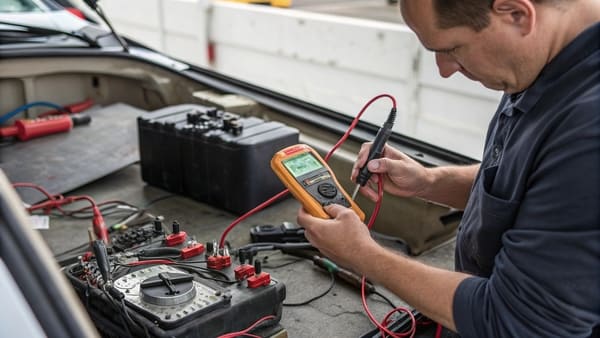
Diagnosing a bad ignition coil is a common task, but it requires a bit of know-how to avoid guesswork. Throwing new parts at a problem is expensive and often doesn't fix the root cause. Understanding how to properly test these components is key. Before we get into the testing methods, it’s important to understand what this small part actually does. This knowledge will make the diagnostic process much clearer.
What Does an Ignition Coil Actually Do in a Vehicle?
You know the ignition coil is essential for your car to run. But what is its actual job? Let’s look at the function of this critical component.
An ignition coil acts as a high-voltage transformer.2 It takes the low 12-volt charge from the battery and multiplies it into thousands of volts. This powerful electrical charge is what creates the spark at the spark plug, igniting the fuel and air mixture.
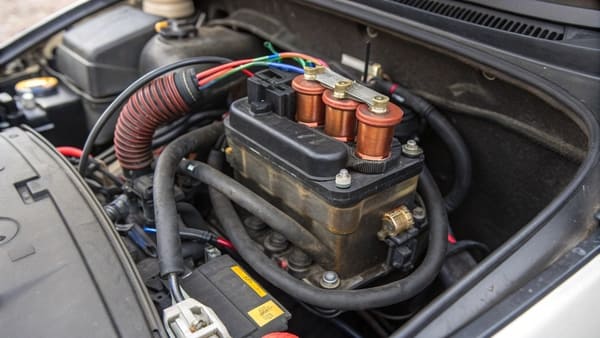
The ignition coil is a simple but brilliant device. It’s all about transforming energy. Think of it as a power amplifier for your car's ignition system. Without this step-up in voltage, the 12 volts from your battery would never be enough to jump the gap on a spark plug and start combustion.3 This process happens thousands of times per minute, so the coil has to be incredibly reliable. The quality of its construction is everything, which is something I learned firsthand in my manufacturing business.
The Coil's Core Function
Inside every ignition coil are two sets of copper windings wrapped around an iron core.4
- Primary Winding: Has a few hundred turns of thicker wire.
- Secondary Winding: Has tens of thousands of turns of very thin wire.
When the ignition system is triggered, current flows through the primary winding, creating a magnetic field. Then, the current is suddenly cut off. This collapse of the magnetic field induces a massive voltage spike in the secondary winding.5 This is the high-voltage charge that gets sent to the spark plug.
Why Quality Housing is Critical
This whole process generates a lot of electrical energy and heat, which must be contained. That’s why the plastic housing of an ignition coil is so important. Manufacturing these housings is incredibly difficult. Standard injection molding machines often lack the precision needed. The process has several steps, but the cooling stage is the most challenging. High-precision machines, typically found in coastal regions like Fujian or near Shanghai, are required to get it right.6
I remember the first time I produced ignition coils for a client from Pakistan. We were still new to the specific material. After molding, the plastic housings shrank more than we expected during cooling. I was worried we had failed, but the client was actually thrilled. The slight shrinkage resulted in an even tighter, more secure fit. It was a happy accident, but it taught us a crucial lesson about material science and process control. We've since perfected that process to ensure every part meets exact design specifications from the start.
| Manufacturing Stage | Key Challenge | Why It Matters |
|---|---|---|
| Injection Molding | High Precision | Ensures the internal windings and core fit perfectly without stress. |
| Material Selection | Heat & Voltage Resistance | The housing must insulate thousands of volts and withstand engine heat. |
| Cooling Process | Dimensional Stability | Improper cooling leads to shrinkage or warping, compromising the seal. |
| Adding Colorants | Process Interruption | Stopping the machine to add color can disrupt the cooling cycle. |
What Are the Most Common Symptoms of a Bad Ignition Coil?
Your car is running poorly, but you're not sure why. The problem could be a failing ignition coil. Let's review the most common warning signs.
The most common symptoms of a bad ignition coil are engine misfires (shaking or stumbling), a rough idle, reduced power, and worse fuel economy.7 Your check engine light will likely turn on, often with a misfire-related code. In some cases, the engine won't start.
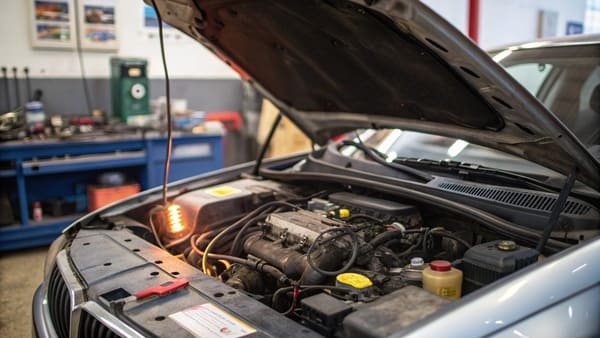
When an ignition coil starts to fail, it can't deliver the strong, consistent spark your engine needs. This leads to a chain reaction of performance problems that are usually easy to spot if you know what to look for. These symptoms are your engine’s way of telling you that something is wrong with the combustion process. Ignoring them can lead to more serious issues down the road, so it’s best to investigate as soon as you notice them.
Performance and Drivability Issues
A weak or intermittent spark from a failing coil directly impacts how your engine runs.
- Engine Misfires: This is the most classic symptom. You'll feel the engine shake or hesitate, especially under load (like accelerating or going uphill). It feels like the engine is stumbling over itself.
- Rough Idle: When the car is stopped but the engine is running, you may notice excessive vibration or an unsteady engine speed. This is because one or more cylinders are not firing correctly.
- Loss of Power: Your car will feel sluggish and won't accelerate as quickly as it used to. This is a direct result of incomplete combustion in one or more cylinders.
Diagnostic Trouble Codes (DTCs)
Modern cars are great at self-diagnosis. When a misfire is detected, the Engine Control Module (ECM) will almost always trigger the check engine light.8 If you use an OBD-II scanner, you will likely see specific codes.
| DTC Code | Meaning | What It Tells You |
|---|---|---|
| P0300 | Random/Multiple Cylinder Misfire Detected | The misfire is happening in more than one cylinder, which could point to a widespread issue. |
| P0301 | Cylinder 1 Misfire Detected | The problem is isolated to the first cylinder. "P0302" would be cylinder 2, and so on. |
| P0351 | Ignition Coil "A" Primary/Secondary Circuit | This code points more directly to a fault in the coil or its circuit for a specific cylinder. |
These codes are extremely helpful because they can tell you exactly which cylinder is having the problem. You can then focus your testing on the coil for that specific cylinder.
Can a Faulty Ignition Coil Damage Your Engine?
A bad coil seems like a small problem. You might be tempted to put off the repair. But this can be a costly mistake with serious consequences.
Yes, a faulty ignition coil can cause significant and expensive damage. The most immediate risk is to the catalytic converter, which can be destroyed by unburnt fuel from misfires.9 This alone can be a repair costing over a thousand dollars.
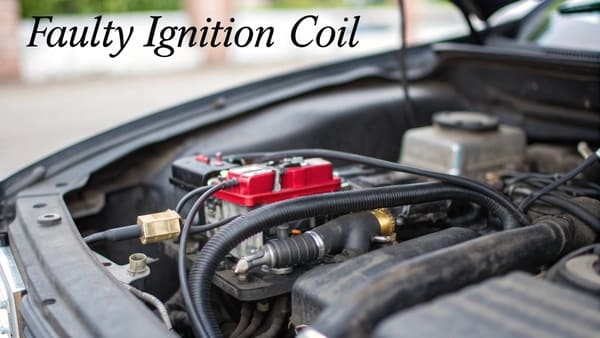
Driving with a bad ignition coil is not just an inconvenience; it's a gamble with the health of your vehicle's most expensive components. A simple misfire, if left unchecked, starts a domino effect that can lead to catastrophic failures. The cost of replacing a single ignition coil is tiny compared to the potential repair bills that can result from ignoring the problem. Understanding these risks makes it clear why addressing a faulty coil promptly is so important.
The Catalytic Converter Killer
This is the biggest and most common collateral damage from a bad coil.
- How it Happens: When a cylinder misfires, raw, unburnt gasoline is dumped into the exhaust system. This fuel travels to the catalytic converter, which operates at extremely high temperatures (over 800°F / 426°C).10
- The Result: The raw fuel ignites inside the converter, causing its internal ceramic honeycomb structure to melt and break apart. This is known as a "meltdown."
- The Cost: A clogged or destroyed catalytic converter will cause a major loss of power and will not pass an emissions test.11 Replacing one is one of the most expensive repairs a car owner can face.
Damage to Other Components
The damage doesn't stop at the catalytic converter. A persistent misfire can cause other problems throughout the engine and ignition system.
| Component | How It's Damaged | Consequence |
|---|---|---|
| Spark Plugs | Unburnt fuel and carbon can build up on the spark plug in the misfiring cylinder. | The spark plug becomes "fouled" and can no longer produce a good spark, even if the coil is replaced. |
| Oxygen Sensors | Soot and unburnt fuel can coat the oxygen sensors in the exhaust. | The sensors can't read the exhaust gases correctly, leading to poor fuel economy and performance. |
| Engine Internals | A constant misfire creates vibration and imbalance in the engine's rotating assembly.12 | Over a long period, this can cause premature wear on engine bearings and other internal parts. |
In short, the small cost of a new ignition coil is an investment in preventing much larger, more painful repair bills.
Conclusion
Testing your ignition coil correctly saves you from replacing good parts and prevents much bigger problems. A faulty coil is not just an annoyance; it is a direct threat to your engine.
"Spark gap - Wikipedia", https://en.wikipedia.org/wiki/Spark_gap. Automotive technical manuals and educational resources describe using a digital multimeter to measure the resistance of ignition coil windings and recommend comparing results to manufacturer specifications; spark testers are also cited as tools for assessing coil output, though results may vary by vehicle design. Evidence role: mechanism; source type: education. Supports: To test an ignition coil, you can use a digital multimeter to check the resistance of its primary and secondary windings. Compare your readings to the manufacturer's specifications. For a more definitive test, a spark tester can show you the quality of the spark it produces.. Scope note: Testing procedures may differ for certain coil types or modern ignition systems. ↩
"Ignition coil - Wikipedia", https://en.wikipedia.org/wiki/Ignition_coil. Standard automotive engineering references and encyclopedias explain that ignition coils function as high-voltage transformers, converting 12 volts from the battery into the thousands of volts required to create a spark at the spark plug. Evidence role: definition; source type: encyclopedia. Supports: An ignition coil acts as a high-voltage transformer. It takes the low 12-volt charge from the battery and multiplies it into thousands of volts. This powerful electrical charge is what creates the spark at the spark plug, igniting the fuel and air mixture.. ↩
"Faraday's Law and Auto Ignition - HyperPhysics", http://hyperphysics.phy-astr.gsu.edu/hbase/magnetic/ignition.html. Automotive engineering literature indicates that typical spark plug gaps require voltages far exceeding 12 volts—often between 10,000 and 45,000 volts—to initiate a spark, necessitating the voltage step-up provided by the ignition coil. Evidence role: mechanism; source type: education. Supports: Without this step-up in voltage, the 12 volts from your battery would never be enough to jump the gap on a spark plug and start combustion.. Scope note: Exact voltage requirements depend on engine design and spark plug gap. ↩
"Ignition coil - Wikipedia", https://en.wikipedia.org/wiki/Ignition_coil. Technical references and educational materials describe ignition coils as containing primary and secondary copper windings around an iron core, which is essential for their function as transformers. Evidence role: definition; source type: education. Supports: Inside every ignition coil are two sets of copper windings wrapped around an iron core.. Scope note: Some modern coil designs may use alternative materials or configurations. ↩
"Physics 123 Weeks 8 & 9 (Electromagnetic Induction)", https://physics.calpoly.edu/physics-123-weeks-8-9-electromagnetic-induction. Physics and automotive engineering sources explain that the rapid interruption of current in the primary winding of an ignition coil causes the magnetic field to collapse, inducing a high voltage in the secondary winding via electromagnetic induction. Evidence role: mechanism; source type: education. Supports: When the ignition system is triggered, current flows through the primary winding, creating a magnetic field. Then, the current is suddenly cut off. This collapse of the magnetic field induces a massive voltage spike in the secondary winding.. ↩
"Manufacturing method for ignition coil for internal combustion engine", https://patents.google.com/patent/WO2014167776A1/en. Manufacturing industry reports and technical papers discuss the importance of high-precision injection molding for automotive components and note that advanced manufacturing facilities are concentrated in certain regions of China, including coastal provinces. Evidence role: historical_context; source type: institution. Supports: Standard injection molding machines often lack the precision needed. The process has several steps, but the cooling stage is the most challenging. High-precision machines, typically found in coastal regions like Fujian or near Shanghai, are required to get it right.. Scope note: Regional distribution of manufacturing capabilities may change over time. ↩
"6 Common Ignition Coil Failure Symptoms", https://www.firestonecompleteautocare.com/blog/maintenance/faulty-ignition-coil/. Automotive diagnostic manuals and technical references list engine misfires, rough idle, reduced power, poor fuel economy, and illuminated check engine lights as common symptoms of ignition coil failure. Evidence role: expert_consensus; source type: education. Supports: The most common symptoms of a bad ignition coil are engine misfires (shaking or stumbling), a rough idle, reduced power, and worse fuel economy. Your check engine light will likely turn on, often with a misfire-related code. In some cases, the engine won't start.. Scope note: Symptoms may overlap with other ignition or fuel system faults. ↩
"[PDF] 01-16-13 - Engine, Misfire Diagnostic Aid (2033805) - nhtsa", https://static.nhtsa.gov/odi/tsbs/2023/MC-10238297-0001.pdf. Government and technical documentation on OBD-II systems confirm that the ECM is programmed to detect engine misfires and will illuminate the check engine light, often storing specific diagnostic trouble codes. Evidence role: mechanism; source type: government. Supports: When a misfire is detected, the Engine Control Module (ECM) will almost always trigger the check engine light. If you use an OBD-II scanner, you will likely see specific codes.. Scope note: Detection sensitivity and code specifics may vary by vehicle make and model. ↩
"Understanding Fire Hazards with Catalyst-Equipped Cars", https://www.tceq.texas.gov/airquality/mobilesource/vetech/catfire.html. Automotive repair guides and emissions control resources note that persistent engine misfires can cause unburnt fuel to enter the catalytic converter, leading to overheating and potential failure, which is a costly repair. Evidence role: mechanism; source type: government. Supports: A faulty ignition coil can cause significant and expensive damage. The most immediate risk is to the catalytic converter, which can be destroyed by unburnt fuel from misfires. This alone can be a repair costing over a thousand dollars.. Scope note: Severity of damage depends on duration and driving conditions. ↩
"Understanding Fire Hazards with Catalyst-Equipped Cars", https://www.tceq.texas.gov/airquality/mobilesource/vetech/catfire.html. Technical and government sources report that catalytic converters typically operate at temperatures above 800°F (426°C), and exposure to unburnt fuel from misfires can cause further temperature increases and potential damage. Evidence role: statistic; source type: government. Supports: When a cylinder misfires, raw, unburnt gasoline is dumped into the exhaust system. This fuel travels to the catalytic converter, which operates at extremely high temperatures (over 800°F / 426°C).. Scope note: Actual operating temperatures may vary with vehicle and driving conditions. ↩
"Understanding Fire Hazards with Catalyst-Equipped Cars", https://www.tceq.texas.gov/airquality/mobilesource/vetech/catfire.html. Automotive and government emissions resources confirm that a failed or clogged catalytic converter can cause significant engine power loss and will typically result in a failed emissions test. Evidence role: mechanism; source type: government. Supports: A clogged or destroyed catalytic converter will cause a major loss of power and will not pass an emissions test. Replacing one is one of the most expensive repairs a car owner can face.. Scope note: Other exhaust system faults can produce similar symptoms. ↩
"Misfire Detection in Spark Ignition Engine Using Transfer Learning", https://pmc.ncbi.nlm.nih.gov/articles/PMC9287110/. Engineering studies and technical manuals indicate that persistent engine misfires can cause abnormal vibration and imbalance, leading to increased wear on engine bearings and other internal components over time. Evidence role: mechanism; source type: research. Supports: A constant misfire creates vibration and imbalance in the engine's rotating assembly. Over a long period, this can cause premature wear on engine bearings and other internal parts.. Scope note: Severity of damage depends on engine design and duration of misfire. ↩