Are your vehicle's brakes feeling unstable or overly aggressive? This small, often overlooked part could be the reason, impacting safety and control when you need it most.
A brake compensating valve, also known as a proportioning valve, is a critical safety component in your vehicle's braking system. Its job is to adjust the brake fluid pressure sent to the rear wheels based on the vehicle's load, preventing dangerous rear-wheel lock-up during hard braking.
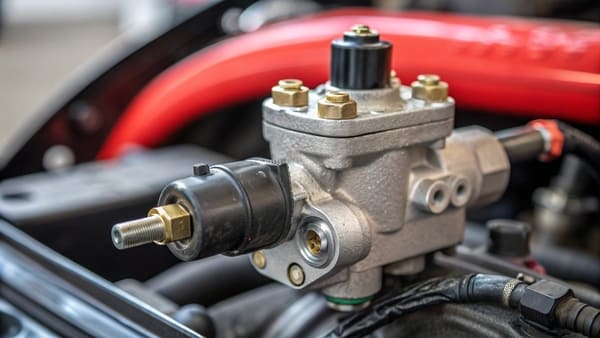
This small valve plays a huge role in how your car behaves when you hit the brakes. Understanding how it works is not just for mechanics; it's important for anyone involved in sourcing or selling automotive parts. It is a key piece of the puzzle for vehicle safety. In this guide, I'll walk you through everything you need to know about it, based on my years of manufacturing these components.
What Is a Brake Compensating Valve, Exactly?
You have heard the term, but do you know what it is? Misunderstanding this part can lead to incorrect diagnostics or sourcing the wrong component for your customers.
A brake compensating valve is a device that manages the balance of brake force between the front and rear wheels. It senses changes in vehicle load and adjusts the hydraulic pressure to the rear brakes accordingly, ensuring stable and controlled stops under all conditions.
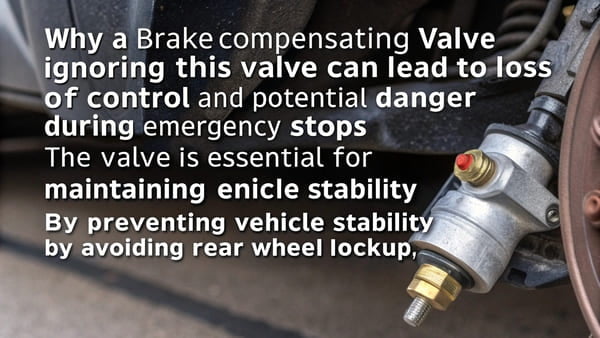
Let's dive deeper into what this part is. Think of it as a smart pressure regulator. When you brake hard, the vehicle's weight shifts forward, lightening the load on the rear axle. If the rear brakes received the same high pressure as the front brakes, the lightly loaded rear wheels would lock up easily. This is where the compensating valve comes in. It's typically located in the brake line that runs to the rear axle. It has an internal mechanism, usually a spring-loaded piston, that restricts fluid pressure to the rear brakes when it senses the vehicle is lightly loaded. This ensures the front brakes do most of the work, just as they should. For anyone in the business of automotive parts, knowing the difference between a simple proportioning valve and a load-sensing compensating valve is key to providing the right solution.
| Valve Type | Function | Common Application |
|---|---|---|
| Fixed Proportioning Valve | Provides a static, predetermined pressure reduction to the rear. | Lighter passenger cars. |
| Load-Sensing Valve | Dynamically adjusts rear brake pressure based on vehicle load. | Trucks, vans, SUVs. |
| ABS Integrated | Function is handled electronically by the ABS control module. | Modern vehicles. |
Why Is a Brake Compensating Valve So Important for Safety?
Ignoring a small valve might seem harmless. But a faulty one can cause your car to lose control and spin out during an emergency stop, putting lives at risk.
This valve is absolutely critical for maintaining vehicle stability during braking. By preventing the rear wheels from locking up, it stops the vehicle from skidding or spinning. This balanced braking ensures you can make controlled, safe stops, especially when the vehicle's load changes.
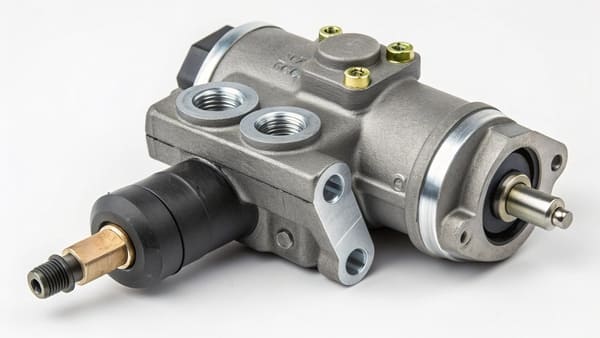
The importance of this valve comes down to simple physics. When you brake, inertia causes the vehicle's weight to transfer to the front wheels. This pushes the front tires into the pavement, giving them more grip. At the same time, the rear of the car lifts slightly, reducing the grip of the rear tires. If full braking pressure were applied to all four wheels equally, the rear wheels would lock up long before the front ones. A locked rear wheel has almost no lateral grip, meaning the back of the car can easily slide out, causing a dangerous spin. The compensating valve prevents this scenario. It ensures that no matter how hard you brake or how much weight is in the car, the rear brakes only receive as much pressure as they can handle without locking. As a manufacturer, I can't stress enough how crucial the quality of this part is. A failure here isn't an inconvenience; it's a major safety hazard.
| Braking Scenario | Without Compensating Valve | With Functioning Compensating Valve |
|---|---|---|
| Hard Stop (Empty Car) | High risk of rear-wheel lock-up and spin. | Balanced braking, straight and stable stop. |
| Hard Stop (Full Load) | Braking may be inefficient if pressure is too low. | Optimal pressure sent to rear for maximum braking. |
| Gentle Stop | Minimal effect, braking feels normal. | Minimal effect, braking feels normal. |
What Does a Brake Compensating Valve Actually Do in Real-Time?
You know it's important, but what's its moment-to-moment job? Understanding its specific actions is key for troubleshooting and explaining its value to your clients.
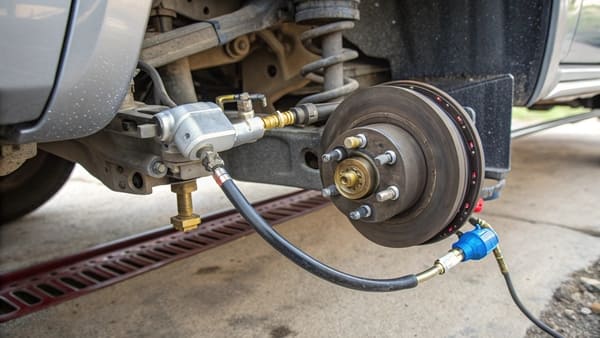
The valve constantly senses the vehicle's load, often through a mechanical link to the rear suspension. When the vehicle is lightly loaded, it reduces brake fluid pressure to the rear. When it's heavily loaded, it allows more pressure, optimizing braking force.
Let's talk about the manufacturing process because it reveals a lot about how this part functions. The valve contains very precise plastic components. Making these is incredibly difficult. A standard injection molding machine just can't achieve the required precision. When I first started producing these, I learned this the hard way. The process requires several steps, with the cooling stage being the most critical. Adding colorants is also tricky because you have to stop the machine and open the mold, which disrupts the cooling.
I remember my first order for these parts was for a client in Pakistan. I was still inexperienced, and after the plastic components cooled, they had "shrunk" more than I expected. I was worried, but the client tested them and, surprisingly, preferred the result. It was pure luck, but it taught me a huge lesson about material science and process control. That one experience forced me to master the cooling process to ensure every part is perfect. Now, we use high-precision machines, typically found in coastal manufacturing hubs like Fujian, to control every variable.
| Manufacturing Challenge | Why It's Difficult | Our Solution |
|---|---|---|
| Injection Precision | Standard machines can't meet the tight tolerances. | Use of high-precision machines from specialized regions. |
| Cooling Process | Improper cooling causes warping or shrinking. | Multi-stage, strictly controlled cooling protocols. |
| Adding Colorants | Requires stopping the machine, affecting temperature stability. | Advanced techniques to integrate color without disrupting the cycle. |
Conclusion
The brake compensating valve is essential for safe, stable braking. Its performance depends on manufacturing precision, making high-quality sourcing critical for anyone in the automotive parts industry.