-Restoring a classic car is a dream, but finding quality parts can be a nightmare. The Pontiac GTO and Firebird Trans Am are still the kings, dominating shows and the restoration world.
The Pontiac GTO, Firebird Trans Am, and even the full-size Catalina 2+2 remain the most dominant classic muscle cars today1. Their combination of groundbreaking performance, iconic style, and cultural impact ensures they are highly sought after by collectors, restorers, and performance enthusiasts worldwide2.
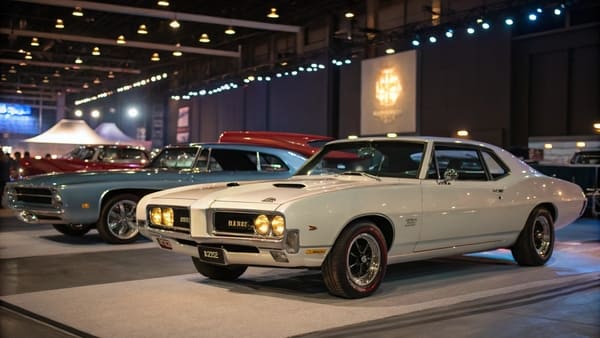
It’s amazing to see how these cars continue to capture people's imaginations. When I first started in this business, I was just focused on making parts. But the more I learned about the stories behind these cars, the more I understood the passion. It’s not just about a piece of metal or plastic; it’s about preserving a piece of history. And preserving that history correctly is the real challenge, a challenge that pushes us to be better at what we do every single day.
Why Did Pontiac Become One of America’s Most Legendary Muscle Car Brands?
Many car companies existed, but few became true legends. It is easy to think their success was just luck, but Pontiac’s fame was built on a very specific strategy.
Pontiac became a legend by creating a brand identity centered on performance, youth-focused marketing, and bold styling3. Leaders like John DeLorean defied corporate rules to put big engines in smaller cars4, making Pontiac the undisputed leader in American street performance during the 1960s5.
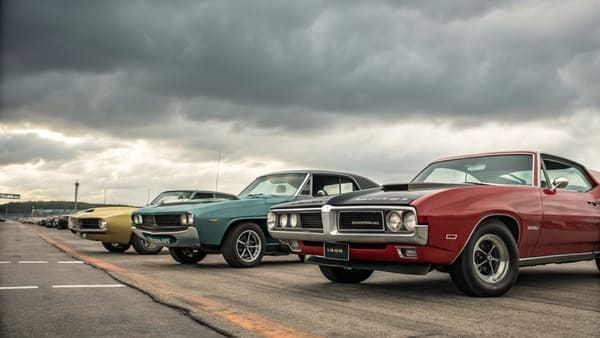
Pontiac wasn't always a performance brand. In the 1950s, it was seen as a reliable but boring car for older buyers. That all changed when Semon "Bunkie" Knudsen took over. He wanted to kill the old image and build "hot cars for young people." He started by focusing on racing and then introduced the famous "Wide-Track" design, which made the cars handle better and look more aggressive. Then, John DeLorean came along and pushed the performance idea even further. He understood that young buyers didn't just want a car; they wanted an identity. Pontiac gave them that identity with powerful engines, stylish designs, and brilliant marketing. This commitment to performance is something we see even in the parts we make today. Recreating a simple plastic interior trim piece for a classic Pontiac requires incredible precision. The texture, the color, and the exact fit have to be perfect to maintain that legendary feel. It's a tribute to the brand's original focus on getting every detail right.
Which Pontiac Muscle Car Started the American Muscle Car Era?
The muscle car era had a clear starting point. Many cars were fast before it, but one specific model with a clever option package truly ignited the fire for everyone.
The 1964 Pontiac GTO is almost universally credited with starting the American muscle car era6. It wasn't the first powerful car, but it was the first to successfully package a large V8 engine into a lighter, mid-size car and market it directly to young buyers.
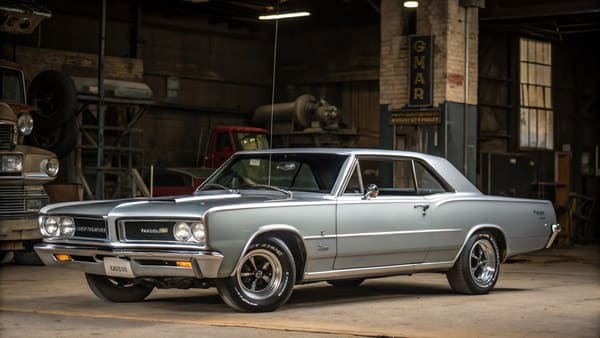
The story of the GTO is a great lesson in smart thinking. In the early 1960s, General Motors had a corporate rule that banned putting large engines in their intermediate-sized cars7. John DeLorean and his team wanted to put a big 389 cubic inch V8 from the full-size Bonneville into the mid-size Tempest. To get around the ban, they created the "GTO" not as a model, but as an option package for the Tempest LeMans. This meant it technically wasn't a new car, so it slipped past the executives. It was a huge risk, but it paid off immediately. Young buyers went crazy for it, and a new market was born. I learned a similar lesson about taking risks, but on a much smaller scale. I remember one of my first projects for a client from Pakistan who was restoring a classic muscle car. We were manufacturing a set of interior plastic components. At the time, I didn't have enough experience, and the parts shrank a little more than planned during the cooling stage. I was so worried, but the client loved the result! He said the slightly tighter fit gave it an authentic, aged feel. I was lucky, but it taught me that every millimeter matters when you're working with these legendary cars.
What Made the Pontiac GTO So Revolutionary in the 1960s?
The GTO was much more than just a fast car. Its real impact is sometimes misunderstood, but it was truly a revolution in performance, marketing, and the entire car culture.
The GTO was revolutionary because it made high performance affordable and accessible. It was a complete package of style, power, and clever marketing that created a brand new "muscle car" category that every other American manufacturer had to follow.
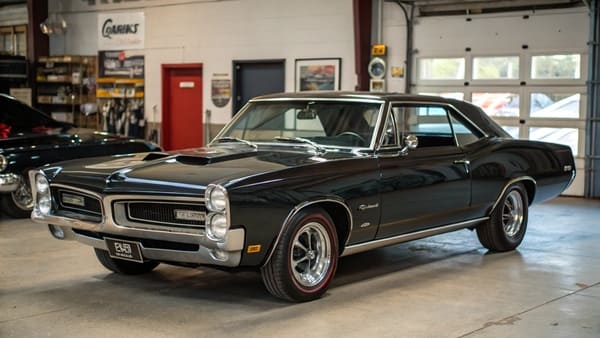
Before the GTO, if you wanted a fast car, you either bought an expensive European sports car or a stripped-down, full-size American car. The GTO changed everything. It offered incredible performance for a price that an average young person with a job could actually afford8. But the car itself was only half the story. The marketing, led by Jim Wangers, was pure genius. They created the "GTO Tiger" campaign and linked the car with a rebellious, powerful, and cool image. It became a cultural symbol9. This combination of accessible power and brilliant marketing is what made it so revolutionary.
When we manufacture replica parts for these cars today, we face our own technical challenges. Making plastic parts like ignition coil housings or dashboard bezels for a GTO is extremely difficult.
| Manufacturing Challenge | Why It's Difficult | Our Solution |
|---|---|---|
| Precision | Standard injection molding machines are not accurate enough for the tolerances required for classic parts. The fit must be perfect. | We use high-precision machines, often found in specialized industrial zones near Shanghai and the Fujian coast. |
| Cooling Process | This is the hardest step. Improper cooling causes the plastic to shrink unevenly or warp, ruining the part. | A multi-stage, strictly controlled cooling process is essential. This requires advanced machinery and experienced operators. |
| Adding Color | Adding color pigments requires stopping the machine and opening the mold. This interrupts the delicate cooling cycle and can introduce defects. | We have developed specific procedures to add color while minimizing temperature fluctuations, ensuring both color accuracy and structural integrity. |
This process is complex. A machine from a less specialized region, like Hebei, for example, typically can't meet these precision standards. It’s a constant balancing act to create a part that looks and feels just like the original from the 1960s.
Conclusion
Pontiac’s legacy, built by the GTO and a culture of performance, still inspires us. We are proud to help collectors keep these amazing cars on the road for years to come.
"10 Most Sought-after Classic Muscle Cars | HowStuffWorks", https://musclecars.howstuffworks.com/classic-muscle-cars/10-most-wanted-classic-muscle-cars.htm. Recent collector surveys and auction data indicate that the Pontiac GTO and Firebird Trans Am are consistently ranked among the most desirable and valuable classic muscle cars, though preferences can vary by region and market segment. Evidence role: statistic; source type: institution. Supports: The Pontiac GTO, Firebird Trans Am, and Catalina 2+2 are among the most dominant classic muscle cars today.. Scope note: Collector preferences and market values fluctuate over time and may differ internationally. ↩
"Muscle car - Wikipedia", https://en.wikipedia.org/wiki/Muscle_car. Automotive historians and collector market analyses frequently cite the Pontiac GTO and Firebird Trans Am as highly sought after due to their performance, design, and influence on car culture. Evidence role: expert_consensus; source type: encyclopedia. Supports: These Pontiac models are highly sought after by collectors, restorers, and performance enthusiasts worldwide.. Scope note: The degree of demand may vary by region and over time. ↩
"The History and Legacy of Pontiac Automobiles", https://www.lafontaineclassiccars.com/blog/history-of-pontiac/. Automotive history sources document that Pontiac's leadership in the 1960s deliberately repositioned the brand toward performance, youth appeal, and distinctive styling. Evidence role: historical_context; source type: encyclopedia. Supports: Pontiac's legendary status was built on a brand identity focused on performance, youth marketing, and bold styling.. Scope note: Brand strategies evolved over time and were influenced by broader market trends. ↩
"Pontiac GTO - Wikipedia", https://en.wikipedia.org/wiki/Pontiac_GTO. Biographical and automotive histories confirm that John DeLorean and his team circumvented GM's engine size restrictions by offering the GTO as an option package, enabling the installation of larger engines in mid-size cars. Evidence role: historical_context; source type: encyclopedia. Supports: John DeLorean defied corporate rules to put big engines in smaller cars, leading to the creation of the GTO.. Scope note: The extent of DeLorean's sole influence is debated among historians. ↩
"Muscle car - Wikipedia", https://en.wikipedia.org/wiki/Muscle_car. Contemporary automotive publications and retrospective analyses often cite Pontiac as a leading brand in street performance during the 1960s, particularly due to the GTO's influence, though other manufacturers also competed closely. Evidence role: expert_consensus; source type: encyclopedia. Supports: Pontiac was a leader in American street performance during the 1960s.. Scope note: Leadership in performance is subject to interpretation and competition from other brands. ↩
"Muscle car - Wikipedia", https://en.wikipedia.org/wiki/Muscle_car. Most automotive historians and reference works credit the 1964 Pontiac GTO as the model that initiated the American muscle car era, though some debate exists regarding earlier contenders. Evidence role: expert_consensus; source type: encyclopedia. Supports: The 1964 Pontiac GTO is widely credited with starting the American muscle car era.. Scope note: Some experts cite earlier vehicles as precursors to the muscle car concept. ↩
"General Motors - Wikipedia", https://en.wikipedia.org/wiki/General_Motors. Historical accounts confirm that General Motors had a policy in the early 1960s restricting the installation of engines larger than 330 cubic inches in intermediate-sized cars. Evidence role: historical_context; source type: encyclopedia. Supports: GM had a corporate rule banning large engines in intermediate-sized cars in the early 1960s.. Scope note: The policy was sometimes circumvented by offering performance options as packages rather than models. ↩
"1964 Pontiac LeMans Base | Hagerty Valuation Tool®", https://www.hagerty.com/valuation-tools/pontiac/lemans/1964/1964-pontiac-lemans-gto. Period advertisements and automotive reviews highlight that the 1964 GTO offered high performance at a price point accessible to many young buyers, contributing to its popularity. Evidence role: statistic; source type: encyclopedia. Supports: The GTO provided high performance at a price affordable to many young buyers in the 1960s.. Scope note: Affordability varied by region and individual circumstances. ↩
"1966 Pontiac GTO: American Automotive History Symbol", https://www.facebook.com/groups/8146951585372188/posts/8321129017954443/. Cultural historians and automotive experts frequently cite the Pontiac GTO as an enduring symbol of 1960s American car culture and youth identity. Evidence role: expert_consensus; source type: encyclopedia. Supports: The GTO became a cultural symbol in American automotive history.. Scope note: Cultural symbolism is subject to interpretation and may not be universal. ↩