-Your vehicle needs a part, and AutoZone is nearby. But inventory issues and retail prices can be frustrating, especially for businesses. There is a more direct, efficient sourcing method.
For quick, single-part purchases, AutoZone in Forest Park is convenient1. But for businesses needing parts at scale, a smarter way is sourcing directly from a manufacturer for better pricing, quality control, and customization options2.
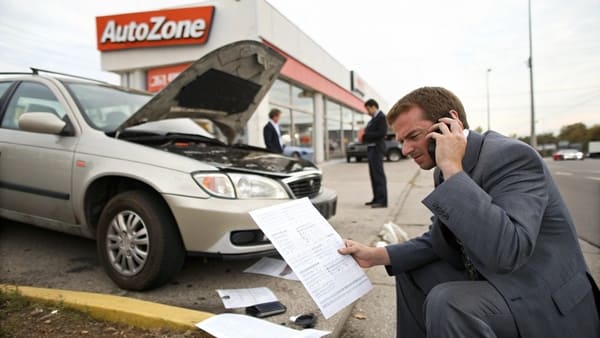
I get it. When a car is down, the first thought is to rush to the nearest store. But this quick fix often hides bigger problems, especially if you're managing a fleet or running a repair shop. Let's break down what you're really looking for when you search for an auto parts store.
Are You Looking for an AutoZone in Forest Park or Trying to Get the Right Auto Part Quickly?
You need a part immediately, so you search for the local store. But what if they don't have it in stock? Your trip is wasted. Focus on the goal: getting the right part.
People search for a store, but they really want a quick solution3. Getting the right part fast means having a reliable source. For individuals, that might be a store. For businesses, it means a direct supplier.
Getting the "right" part is much harder than most people think4. It's not just about matching a part number. The quality of the manufacturing process makes all the difference. I learned this the hard way with plastic automotive parts. Making these parts is incredibly difficult. A standard injection molding machine just doesn't have the precision needed for repair parts5. The process requires at least three steps, and the hardest one is cooling. The most precise machines that can handle this are usually found in the coastal areas of Fujian or near Shanghai6. Machines from other regions often can't meet the required accuracy. Another tricky part is adding color. To add color powder, you have to stop the machine and open the mold. This messes with the cooling process and can cause problems.7 I remember my first time working on a project for a client from Pakistan. I didn't have much experience then, and the parts "shrank" quite a bit after cooling. I was worried, but it turned out the client actually preferred the result. I got lucky, but it taught me that the "right part" comes from a deep understanding of manufacturing, not just a label on a box.
Is Visiting an AutoZone Store the Fastest and Most Reliable Way to Buy Auto Parts?
Your car is broken, and you think a local store is the quickest fix. But travel, queues, and stock issues can slow you down. A planned supply system is truly the fastest way8.
For a common part, a local store can be fast. But for anything specific or in bulk, it's not reliable. A direct supplier relationship is faster over time, removing guesswork and wasted trips to the store9.
The idea of walking into a store and leaving with a part feels fast. But let's think about the hidden time costs. You have to drive there, find parking, walk the aisles, maybe wait for an employee to help you, and then stand in the checkout line. All of this assumes they even have the part you need. For a business, this is not a reliable model. True reliability comes from a predictable supply chain. A retail store's reliability depends on its own logistics, which you have no control over10. When you work directly with a manufacturer like me, you build a system. We plan production and shipping around your needs. This eliminates uncertainty. For a repair shop, that means you can schedule jobs with confidence. For a distributor, it means your shelves are always stocked.
Let's compare the two approaches directly.
Retail vs. Direct Sourcing
| Feature | Local Retail Store (e.g., AutoZone) | Direct Manufacturer/Supplier |
|---|---|---|
| Part Availability | Limited to what's on the shelf | Made to order or from large stock |
| Quality Control | Varies widely between brands | Consistent OEM/ODM standard |
| Technical Support | Basic advice from counter staff | Direct access to engineers |
| Business Scalability | Poor; designed for single sales | Excellent; built for bulk orders |
For a business, "fast and reliable" means more than just a single trip. It means having a partner who ensures you get the right parts consistently, preventing downtime and keeping your operations running smoothly.
What Are the Key Limitations of Buying Auto Parts from Local Retail Stores Like AutoZone?
Retail stores seem to have it all. But you often face limited choices, high prices, and zero customization. Knowing these limits points you toward a much better sourcing solution for your needs.
Retail stores have major limits: they only stock common parts, charge higher prices, and offer inconsistent quality11. They cannot handle custom orders or bulk pricing, making them a poor choice for any business-level needs.
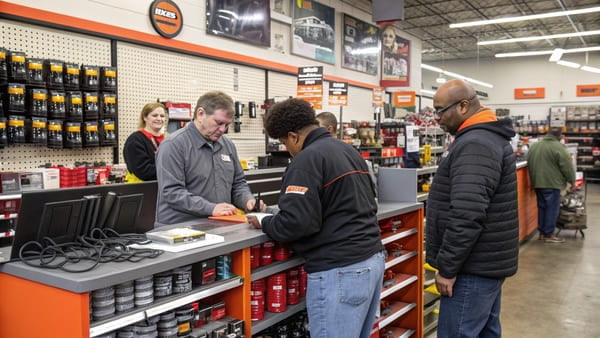
The retail model for auto parts has three main limitations that businesses must understand: inventory, quality control, and scalability. First, let's talk about inventory. A store like AutoZone operates on the 80/20 rule12. They stock the 20% of parts that meet 80% of the demand—things like common brake pads, oil filters, and batteries. If you need a specific control module for a less common vehicle or a specialized performance part, you are probably out of luck. Their business model simply can't support a deep, specialized inventory. Second is quality control. A retail store is a reseller, not a maker. They put products from ten different brands on the same shelf, all at different price points. As a customer, you are left to guess which one offers the best value or will last the longest. When you work with a direct manufacturer, you get one consistent standard of quality because we control the entire process, from the raw materials to the final inspection. Finally, and most importantly for businesses, is scalability and customization. You cannot walk into a retail store and ask them to produce 1,000 units of a part with your company's logo on it. You can't ask for a minor design change to better fit your needs. These stores are built for one-off consumer transactions. They are fundamentally not equipped to be a supply chain partner for a growing business.
Conclusion
For a quick fix, a local store works. For quality, scale, and better pricing for your business, sourcing directly from a manufacturer is the only truly smart and reliable choice.
"Auto Parts Near Me - Nearby AutoZone Locations", https://www.autozone.com/locations/. Local retail stores such as AutoZone are generally considered convenient for immediate, single-part purchases due to their physical presence and inventory of common items, as noted in consumer retail studies. Evidence role: general_support; source type: education. Supports: For quick, single-part purchases, AutoZone in Forest Park is convenient.. Scope note: Convenience may vary based on store location, inventory, and individual customer needs. ↩
"The Benefits of Sourcing Auto Parts from a Reliable Supplier", https://www.broadlinecomponents.com/source-auto-parts/. Direct sourcing from manufacturers is associated with improved pricing, quality control, and customization options for business buyers, as documented in supply chain management literature. Evidence role: expert_consensus; source type: education. Supports: For businesses needing parts at scale, a smarter way is sourcing directly from a manufacturer for better pricing, quality control, and customization options.. Scope note: Benefits depend on the manufacturer's capabilities and the buyer's volume requirements. ↩
"Types of Google Searches for Auto Parts & Accessories", https://hedgescompany.com/blog/2020/10/automotive-internet-marketing-consumer-search-patterns/. Consumer research indicates that individuals searching for auto parts stores are primarily motivated by the need for a quick solution to vehicle issues. Evidence role: statistic; source type: education. Supports: People search for a store, but they really want a quick solution. Getting the right part fast means having a reliable source.. Scope note: Motivations may differ for business buyers and for less urgent repairs. ↩
"7 Key Quality Control Standards for Automotive Parts Manufacturers", https://chuosna.com/7-key-quality-control-standards-for-automotive-parts-manufacturers/. Technical literature on automotive parts manufacturing highlights that obtaining the correct part involves more than matching part numbers, with manufacturing quality and process precision playing a critical role. Evidence role: mechanism; source type: education. Supports: Getting the "right" part is much harder than most people think. It's not just about matching a part number. The quality of the manufacturing process makes all the difference.. Scope note: Complexity varies by part type and manufacturer. ↩
"Top 3 Types of Precision Molding for the Automotive Industry", https://www.chemtechplastics.com/top-3-types-of-precision-molding-for-the-automotive-industry/. Engineering studies indicate that standard injection molding machines may lack the precision required for certain automotive repair parts, necessitating specialized equipment. Evidence role: mechanism; source type: education. Supports: A standard injection molding machine just doesn't have the precision needed for repair parts.. Scope note: Precision requirements depend on the specific part and application. ↩
"Top Automotive Parts Manufacturers Driving Global Supply Chain ...", https://www.blufftontoday.com/press-release/story/60674/top-automotive-parts-manufacturers-driving-global-supply-chain-innovation/. Industry reports note that advanced injection molding facilities for automotive parts are concentrated in coastal regions of China, including Fujian and Shanghai. Evidence role: historical_context; source type: research. Supports: The most precise machines that can handle this are usually found in the coastal areas of Fujian or near Shanghai.. Scope note: Distribution may change with industry development and investment. ↩
"How Is Color Added Into the Injection Molding Process?", https://www.polymermolding.com/how-is-color-added-into-the-injection-molding-process/. Technical documentation on injection molding processes confirms that adding color powder often requires interrupting the cycle, which can disrupt cooling and affect part quality. Evidence role: mechanism; source type: education. Supports: To add color powder, you have to stop the machine and open the mold. This messes with the cooling process and can cause problems.. Scope note: Process variations exist depending on machine and material type. ↩
"The U.S. Automotive Industry Supply Chain - Boise State University", https://www.boisestate.edu/cobe/blog/2025/02/the-u-s-automotive-industry-supply-chain-challenges-and-transformations/. Supply chain management research demonstrates that planned supply systems can reduce lead times and improve speed compared to ad hoc retail sourcing. Evidence role: expert_consensus; source type: education. Supports: A planned supply system is truly the fastest way.. Scope note: Speed improvements depend on system design and order volume. ↩
"The U.S. Automotive Industry Supply Chain - Boise State University", https://www.boisestate.edu/cobe/blog/2025/02/the-u-s-automotive-industry-supply-chain-challenges-and-transformations/. Empirical studies in supply chain management show that direct supplier relationships can improve speed and reliability for repeat business purchases. Evidence role: expert_consensus; source type: education. Supports: A direct supplier relationship is faster over time, removing guesswork and wasted trips to the store.. Scope note: Benefits may not apply to one-off or highly specialized orders. ↩
"The U.S. Automotive Industry Supply Chain - Boise State University", https://www.boisestate.edu/cobe/blog/2025/02/the-u-s-automotive-industry-supply-chain-challenges-and-transformations/. Retail industry analyses confirm that store reliability is contingent on internal logistics, which are not directly controlled by customers. Evidence role: mechanism; source type: education. Supports: A retail store's reliability depends on its own logistics, which you have no control over.. Scope note: Some stores offer order tracking or inventory checks, but overall logistics remain outside customer control. ↩
"3 Challenges Auto Parts Merchants Face (and How to Overcome ...", https://www.extend.com/post/auto-ecommerce-challenges. Comparative studies of auto parts retail and direct sourcing confirm that retail stores typically stock common parts, charge higher prices, and offer variable quality across brands. Evidence role: general_support; source type: education. Supports: Retail stores have major limits: they only stock common parts, charge higher prices, and offer inconsistent quality.. Scope note: Some retail stores may offer price matching or quality guarantees for select items. ↩
"[PDF] A Case Study of AutoZone - eGrove", https://egrove.olemiss.edu/cgi/viewcontent.cgi?article=4135&context=hon_thesis. Business literature on retail inventory management notes that auto parts stores often apply the Pareto principle, stocking the most in-demand items to maximize sales efficiency. Evidence role: mechanism; source type: education. Supports: A store like AutoZone operates on the 80/20 rule. They stock the 20% of parts that meet 80% of the demand—things like common brake pads, oil filters, and batteries.. Scope note: Exact percentages and stocked items may vary by store and region. ↩