Sourcing quality CV joints is a major headache. A bad batch can lead to warranty claims and damage your brand's reputation. Finding a truly reliable manufacturing partner is crucial.
To find the best CV joint manufacturer, you must evaluate their core production technology1, especially their heat treatment and precision shaping processes2. Also, check their material quality3, market focus (OEM vs. aftermarket4), and their ability to match components for specific application requirements5.
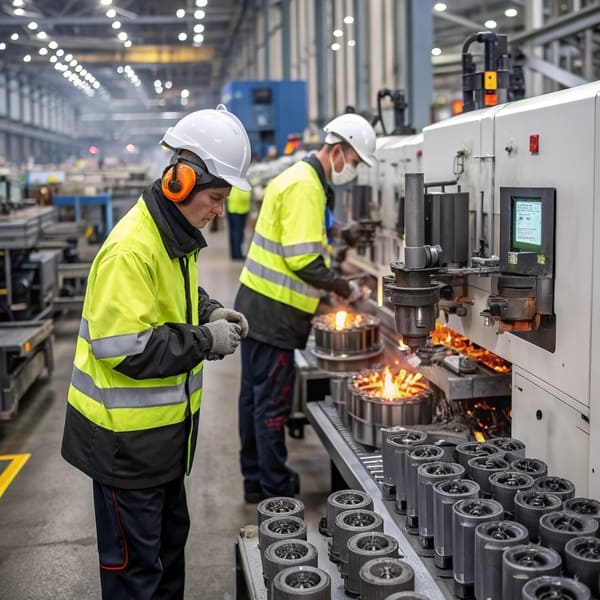
Finding a good supplier is about more than just looking at a price list. You need to dig deeper into how they actually make their products. The best partners are the ones who understand the small details that make a big difference in performance and durability. This guide will walk you through exactly what to look for, based on my own experience in this industry. Let's break down how to separate the great suppliers from the rest.
Who Are the Leading CV Joint Manufacturers in the Global Market Today?
The global market for CV joints feels crowded and confusing. Choosing the wrong supplier from a long list is a risk that can cost you time and money.
While giants like GKN, NTN, and Nexteer dominate the OEM space, many highly capable OEM/ODM manufacturers, especially in China, serve global distributors and brands. These specialized factories often provide a better balance of quality, flexibility, and direct partnership for non-OEM buyers.
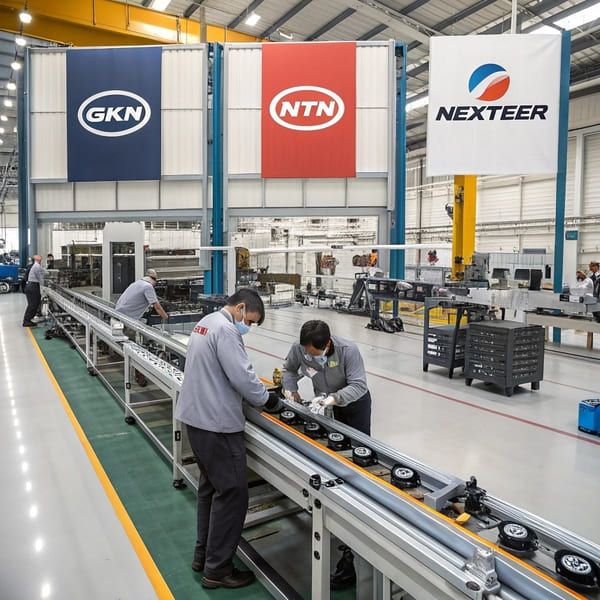
When you start looking for a CV joint supplier, you'll see a few big names come up over and over. These are the Tier 1 suppliers that work directly with major car brands. They are experts in large-scale, long-term OEM contracts. But for most importers, distributors, or brands building an aftermarket line, working with these giants isn't practical. The real opportunity lies in finding a direct factory partner6 who specializes in OEM/ODM production7 for the global market. These manufacturers have the technology and quality systems of an OEM supplier but with the flexibility to work on custom projects, private-label products, and wholesale distribution. They are the backbone of the global aftermarket supply chain.
Comparing Supplier Types
| Supplier Type | Primary Market | Key Strengths | Best For |
|---|---|---|---|
| Global Tier 1 Brands (e.g., GKN) | OEM | Massive R&D, direct automaker relationships | Car manufacturers' assembly lines |
| Specialized OEM/ODM Factories | OEM & Aftermarket | High-quality production, flexibility, customization | Importers, distributors, private-label brand8s |
| Trading Companies | Aftermarket | Wide product variety, low MOQ | Small buyers needing diverse parts |
| Low-End Manufacturers | Aftermarket | Lowest price | Price-sensitive markets with low-performance needs |
My focus has always been on building relationships with the second group: specialized OEM/ODM factories. They have the engineering depth to produce a reliable product but are structured to help businesses like yours grow.
What Criteria Should You Use to Evaluate a CV Joint Manufacturer?
Every factory website says "high-quality." But how do you know if their claims are true before you place a large order and find out the hard way?
You should evaluate a manufacturer on their core technical capabilities. This includes their production machinery9, their heat treatment and cooling process10, their ability to match material specifications with raceway precision11, and their quality control certifications like IATF 1694912.
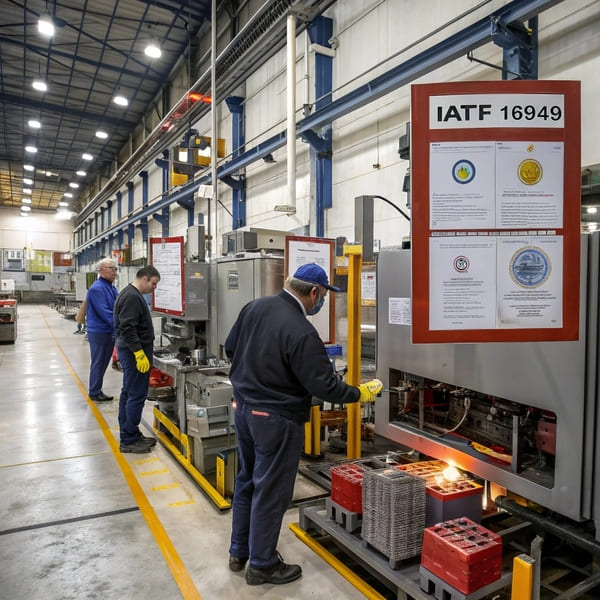
From my experience, producing a top-tier CV joint is incredibly difficult. It’s not something you can do with standard machining equipment. The real quality comes from processes that are hard to see from the outside. I learned that you have to ask specific, technical questions to find out if a potential partner truly knows what they are doing. It's all about their equipment, their process control, and their understanding of materials. A good manufacturer can talk about these details for hours. A weak one will just keep repeating "good quality."
Key Technical Evaluation Points
1. Manufacturing Process and Equipment
The best CV joints go through at least three critical manufacturing stages. The most difficult stage is the heat treatment, cooling, and precision shaping. This step determines the part's final hardness and durability. The machinery required for this is highly specialized and expensive. In China, for example, you'll find factories with this level of equipment in coastal areas like Fujian or around Shanghai. Factories in other regions might not have machines with the necessary precision, which can lead to parts that wear out quickly. You must ask potential suppliers about their heat treatment process and the origin of their machinery.
2. Material and Raceway Precision Matching
Another huge challenge is matching the material properties to the precision of the raceway. During production, the machines have to be stopped for calibration. When they do this, the mold has to be opened. This can interfere with the critical cooling and shaping process, creating tiny imperfections that lead to big problems later. A skilled manufacturer has techniques to manage this and ensure every single unit maintains its precise shape and strength.
I remember my first time producing CV joints for a client in Pakistan. We had some initial issues, and the first batch came out with a slightly larger "clearance13" than the standard spec. I was really worried. But the customer installed them and reported back that they were perfect for their local road conditions. That experience taught me that precision is everything, and sometimes the "right" spec depends entirely on the end-use application.
Which CV Joint Manufacturers Focus on OEM vs Aftermarket Supply?
An OEM part and an aftermarket part are built for different purposes. Sourcing from a supplier who doesn't understand your target market can lead to major problems with fit, performance, or price.
Large, well-known corporations almost exclusively serve the OEM market. In contrast, many specialized manufacturers are agile and serve both. They often run dedicated production lines for OEM-quality parts and separate lines for aftermarket solutions, offering flexibility to global buyers.
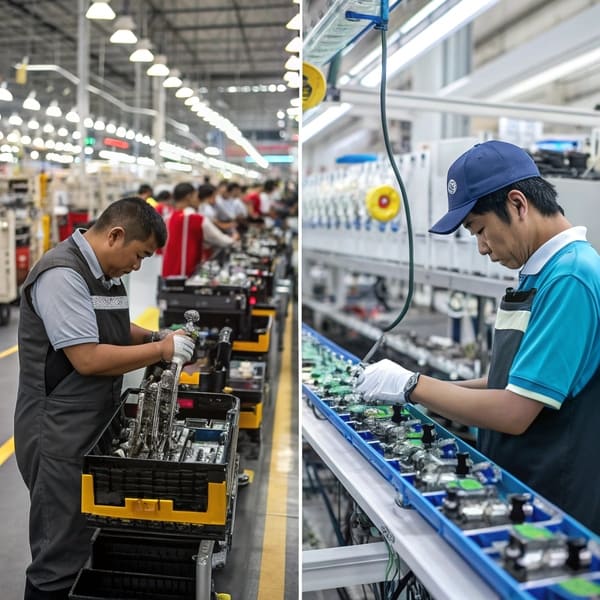
Understanding a manufacturer's customer base is just as important as understanding their technology. An OEM-focused factory is used to long development cycles, rigorous testing, and massive order volumes from car companies. An aftermarket-focused factory understands the need for broad vehicle coverage14, competitive pricing, and faster turnaround times. As a B2B supplier, we've built our business to bridge this gap. We have the engineering and quality control of an OEM supplier but the flexibility to meet the diverse needs of the global aftermarket.
Understanding the Different Focus Areas
OEM Supply
Working with car manufacturers is a completely different ball game. It involves a process called Production Part Approval Process (PPAP)15, where every single detail of the part and the production method is scrutinized and documented. The contracts are long-term, and the focus is on absolute consistency over millions of units. A factory dedicated only to this might not be set up to handle a 5,000-piece order for a private-label brand8.
Aftermarket Supply
The aftermarket is all about providing solutions for vehicles already on the road. This means a supplier needs to offer parts for a wide range of models and years. While quality is still critical, the definition of "quality" is more about fitness for purpose16. The story I mentioned about my Pakistani client is a perfect example. The slightly larger clearance13, which might have been rejected by an OEM, was actually a feature for that specific aftermarket application. A good aftermarket partner understands these nuances and can work with you to develop a product that is perfect for your specific customers, rather than just meeting a generic spec sheet. This is where a flexible OEM/ODM manufacturer17 truly shines. They can tune the product for performance, durability, or cost, depending on your project goals.
Conclusion
Finding the right CV joint partner means looking past the big names and focusing on true manufacturing capability, market focus, and a willingness to work together to meet your specific needs.
Understanding core production technology helps you assess a manufacturer's ability to deliver durable, high-performance CV joints. ↩
Learning about these processes reveals how manufacturers achieve the necessary hardness and durability for CV joints. ↩
Material quality directly affects the longevity and performance of CV joints, making it a key factor in supplier selection. ↩
Knowing the distinction helps you choose a supplier that matches your business needs and target market. ↩
This ensures the CV joints you source are tailored for your customers' unique needs, improving satisfaction and reducing returns. ↩
Direct factory partnerships offer better customization, quality control, and communication compared to intermediaries. ↩
OEM/ODM production allows for custom solutions and private-label products, giving your business a competitive edge. ↩
Private-label brands gain flexibility, customization, and market differentiation by partnering with specialized manufacturers. ↩
Advanced machinery is essential for producing reliable CV joints, so understanding this helps you evaluate suppliers. ↩
Proper heat treatment and cooling are critical for achieving the right hardness and preventing premature failure. ↩
Raceway precision impacts the smooth operation and lifespan of CV joints, making it a vital quality metric. ↩
Certifications ensure consistent quality and compliance with industry standards, reducing risk for buyers. ↩
Understanding clearance helps you source CV joints optimized for specific road conditions and customer needs. ↩
Broad coverage allows you to serve more customers and expand your product offerings in the aftermarket. ↩
PPAP is crucial for OEM supply, ensuring every part meets strict quality and documentation requirements. ↩
Ensuring fitness for purpose means the CV joint will perform reliably in its intended application, reducing warranty claims. ↩
Flexible manufacturers can adapt to your project goals, whether you need performance, durability, or cost optimization. ↩