-Choosing the right air conditioning system for your bus fleet feels complicated. Making the wrong choice can lead to high costs and unhappy passengers, hurting your business reputation.
To choose the best bus aircon system, you must analyze your specific operating conditions. This includes the local climate, average passenger load, and the size of your bus. Match these factors with the system's cooling capacity (BTU), power source, and the manufacturing quality of all its components.
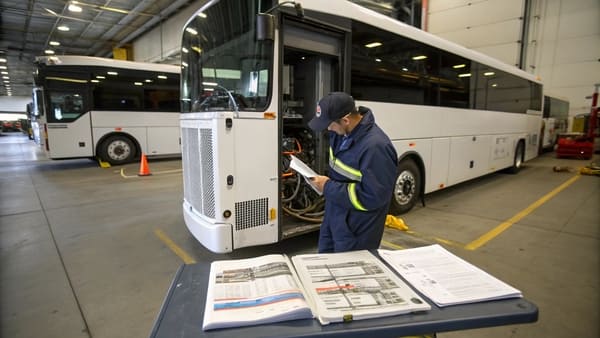
It sounds simple enough, but the real challenge is in the details. Many people focus only on the big parts like the compressor, but the quality of the entire system, down to the smallest plastic component, determines its long-term performance and reliability. I’ve learned this through years of manufacturing these parts. Let's break down what you really need to know to make an informed decision that benefits your fleet for years to come.
What Is a Bus Aircon System and How Does It Work?
Many people think a bus aircon is just a bigger version of a car's AC. This misunderstanding can lead to poor maintenance choices and underestimating the system's complexity.
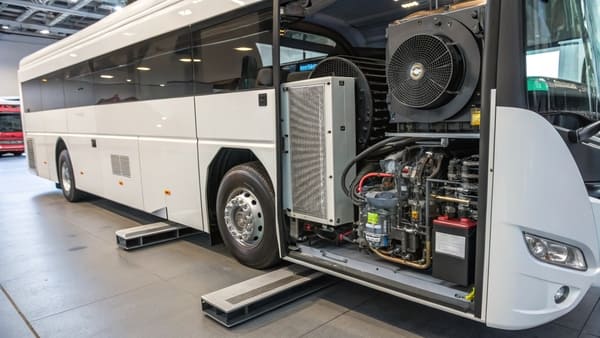
A bus aircon system is a large-scale climate control unit designed for commercial vehicles. It cools the cabin by circulating a refrigerant through a closed loop.1 The refrigerant absorbs heat from inside the bus and releases it outside, using a compressor, condenser, evaporator, and other key components.2

Let's dive deeper into how this process actually functions inside a bus. It's a continuous cycle that relies on a few core principles of thermodynamics, but I'll explain it in simple terms. The entire system is basically a heat mover. It takes unwanted heat from inside the passenger cabin and transfers it to the air outside.
The process has four main stages, each handled by a specific component:
| Component | Function |
|---|---|
| Compressor | This is the heart of the system. It takes low-pressure refrigerant gas and compresses it into a high-pressure, hot gas. |
| Condenser | The hot gas flows to the condenser. Here, fans blow outside air over the condenser coils, removing the heat and turning the refrigerant into a high-pressure liquid. |
| Expansion Valve | The high-pressure liquid then passes through the expansion valve, which causes it to rapidly drop in pressure and temperature, turning it into a very cold, low-pressure liquid spray. |
| Evaporator | This cold spray flows into the evaporator, located inside the bus's air handler. A fan blows cabin air across the evaporator coils. The cold refrigerant absorbs the heat from the air, and the now-cool air is blown into the bus. The refrigerant, having absorbed heat, turns back into a low-pressure gas, and the cycle starts all over again at the compressor. |
This cycle is much larger and more powerful than in a car. It has to cool a much bigger space and handle heat from dozens of passengers, which is why the components are so robust and need a lot more power to operate.3
Why Is Bus Aircon Important for Passenger Comfort and Fleet Performance?
Some fleet managers might see a high-quality aircon system as just another major expense. But ignoring passenger comfort can lead to complaints, bad reviews, and fewer repeat customers.
A reliable bus aircon is vital for business success. It directly improves passenger satisfaction, making them more likely to choose your service.4 For the fleet, it enhances driver safety by reducing fatigue and protects the bus interior from heat damage, boosting your brand's reputation and performance.
Thinking of air conditioning as just a "nice-to-have" feature is a mistake I've seen many businesses make. It is a core part of your service delivery and has a direct impact on your bottom line. Let's look at the specific benefits from three different angles: the passenger, the driver, and the business itself.
The Passenger Experience
For passengers, especially on long routes or in hot climates, air conditioning is not a luxury; it's a necessity. A comfortable temperature makes the journey pleasant and reduces travel-related stress. Good systems also filter the air, removing dust and pollutants, which improves overall cabin health. A stuffy, hot bus immediately creates a negative impression and makes customers unlikely to return.
Driver Safety and Performance
A cool and comfortable driver is a safe driver. High temperatures in the driver's cabin can cause fatigue, slow reaction times, and reduce concentration. This poses a significant safety risk.5 Providing a reliable AC system ensures your drivers are alert and focused, which is essential for protecting your passengers and your vehicles.
Fleet and Business Performance
From a business perspective, a good AC system is a competitive advantage.
- Brand Reputation: It shows you care about your customers and drivers.
- Asset Protection: Extreme heat can damage interior upholstery, dashboards, and electronics over time. AC helps regulate the temperature and protect your investment.6
- Winning Contracts: Many corporate or municipal transport contracts have strict requirements for passenger comfort, making a high-performance AC system a prerequisite for bidding.7
In short, investing in good air conditioning is investing in your entire operation's success.
What Components Make Up a Modern Bus Air Conditioning System?
You know an AC system has important parts, but which ones truly define its quality? Focusing only on the brand name can mean you end up with a system that has weak links.
A modern bus AC system includes a compressor, condenser, and evaporator. But it also relies on supporting parts like fans, filters, control panels, and all the plastic ducting and housing.8 The manufacturing quality of these "minor" plastic components is often what determines the system's reliability and lifespan.9
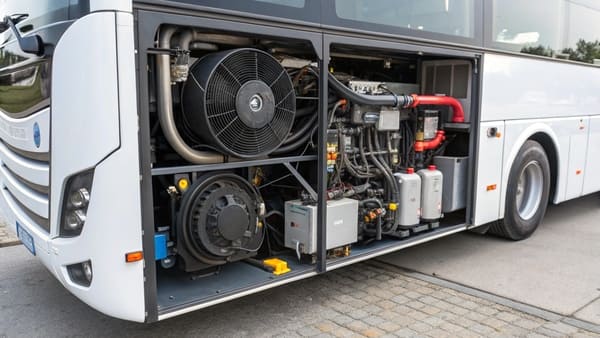
When we supply parts for bus aircon systems, we know that every piece matters. While the main mechanical parts do the heavy lifting, the system will fail if the supporting components aren't up to the task. This is especially true for the plastic parts—the air ducts, vents, and casings.
Manufacturing these plastic components is surprisingly difficult. You can't use just any injection molding machine. To get the precision needed for a perfect fit and airflow, you need highly advanced equipment. The cooling process during manufacturing is the most critical stage.10 If it’s not done perfectly, the part can warp or shrink incorrectly. I’ve found that the best factories with this level of precision are usually located in the coastal areas of Fujian or near Shanghai. Machines from other regions, like Hebei, often struggle to meet these strict standards.
Another challenge is adding color. To make a part a specific color, you have to add color pigments to the raw plastic. This process often requires stopping the machine and opening the mold, which completely disrupts the sensitive cooling stage.11 It takes a lot of skill to manage this without creating defects.
I remember one of our first big orders for these parts was for a client in Pakistan. We were still refining our process, and the plastic parts shrank a little more than we had calculated after they cooled. I was really worried we had messed up the whole order. But when the client received them, he was actually happier. He said the slightly smaller, denser parts felt more robust. It was a lucky break for us, but it taught me a huge lesson about how critical and difficult it is to control that cooling process. Since then, we've perfected our techniques to ensure every part comes out exactly as designed, every time.
Conclusion
Choosing the right bus aircon means looking beyond the main specs. You need to match the system to your climate and bus size, and critically, you must ensure every single component is manufactured for durability.12
"Heating, ventilation, and air conditioning - Wikipedia", https://en.wikipedia.org/wiki/Heating,_ventilation,_and_air_conditioning. According to technical overviews of bus air conditioning systems, these units are specifically engineered for commercial vehicles and operate by circulating refrigerant in a closed loop to transfer heat from the cabin to the outside environment. Evidence role: definition; source type: encyclopedia. Supports: A bus aircon system is a large-scale climate control unit designed for commercial vehicles. It cools the cabin by circulating a refrigerant through a closed loop.. Scope note: This source provides a general technical description and may not cover all possible system variations. ↩
"How Does AC Refrigerant Work? - Valley College", https://valley.edu/how-does-ac-refrigerant-work/. Standard HVAC engineering references describe the refrigeration cycle in bus air conditioning systems as involving heat absorption from the cabin and heat release outside, facilitated by a compressor, condenser, evaporator, and related components. Evidence role: mechanism; source type: education. Supports: The refrigerant absorbs heat from inside the bus and releases it outside, using a compressor, condenser, evaporator, and other key components.. Scope note: While the general mechanism is widely accepted, specific component arrangements may vary by manufacturer. ↩
"Bus Air Conditioner, Bus Air Conditioning System - GUCHEN", https://www.guchen.com/bus-air-conditioner/. Comparative studies of vehicle air conditioning systems note that bus AC units are significantly larger and more powerful than those in cars, due to the greater interior volume and passenger load, necessitating more robust components and higher energy consumption. Evidence role: statistic; source type: research. Supports: This cycle is much larger and more powerful than in a car. It has to cool a much bigger space and handle heat from dozens of passengers, which is why the components are so robust and need a lot more power to operate.. Scope note: Exact power requirements and component specifications can vary by bus model and climate conditions. ↩
"UO research looks at how climate is affecting public transportation", https://news.uoregon.edu/content/uo-research-looks-how-climate-affecting-public-transportation. Transportation industry reports indicate that passenger comfort, including reliable air conditioning, is a key factor influencing customer satisfaction and repeat ridership in bus services. Evidence role: expert_consensus; source type: institution. Supports: A reliable bus aircon is vital for business success. It directly improves passenger satisfaction, making them more likely to choose your service.. Scope note: The relationship is supported by industry surveys but may be influenced by other service factors. ↩
"Fatigue, Hours of Service, and Highway Safety - NCBI - NIH", https://www.ncbi.nlm.nih.gov/books/NBK384974/. Occupational health research has found that elevated temperatures in vehicle cabins can increase driver fatigue, impair reaction times, and reduce concentration, thereby raising safety risks. Evidence role: mechanism; source type: paper. Supports: High temperatures in the driver's cabin can cause fatigue, slow reaction times, and reduce concentration. This poses a significant safety risk.. Scope note: Most studies focus on general vehicle operation, not exclusively on buses. ↩
"How Does Car AC Work? | UTI - Universal Technical Institute", https://www.uti.edu/blog/automotive/air-conditioning. Automotive maintenance guides and technical bulletins report that prolonged exposure to high temperatures can degrade upholstery, dashboards, and electronic components, and that air conditioning helps mitigate these effects by regulating interior temperatures. Evidence role: mechanism; source type: education. Supports: Extreme heat can damage interior upholstery, dashboards, and electronics over time. AC helps regulate the temperature and protect your investment.. Scope note: The extent of damage depends on material quality and exposure duration. ↩
"Passenger Authority - nysdot - NY.Gov", https://www.dot.ny.gov/passenger. Procurement guidelines from municipal and corporate transportation authorities often specify minimum standards for passenger comfort, including air conditioning, as eligibility criteria for service contracts. Evidence role: case_reference; source type: government. Supports: Many corporate or municipal transport contracts have strict requirements for passenger comfort, making a high-performance AC system a prerequisite for bidding.. Scope note: Requirements may vary by region and contract type. ↩
"What Are the Components of an Air Conditioning System?", https://www.rsi.edu/blog/hvacr/what-are-the-components-of-an-air-conditioning-system/. Technical manuals for bus air conditioning systems list the main components as compressor, condenser, evaporator, and supporting elements such as fans, filters, control panels, and ducting. Evidence role: definition; source type: education. Supports: A modern bus AC system includes a compressor, condenser, and evaporator. But it also relies on supporting parts like fans, filters, control panels, and all the plastic ducting and housing.. Scope note: Component lists may differ slightly depending on system design and manufacturer. ↩
"HVAC Systems as Emission Sources Affecting Indoor Air Quality a ...", https://nepis.epa.gov/Exe/ZyPURL.cgi?Dockey=P101CWT7.TXT. Engineering analyses of HVAC systems highlight that the durability and precision of supporting plastic components, such as ducting and housings, can significantly affect overall system reliability and service life. Evidence role: mechanism; source type: research. Supports: The manufacturing quality of these "minor" plastic components is often what determines the system's reliability and lifespan.. Scope note: Direct long-term studies on bus AC systems may be limited; evidence is often extrapolated from general HVAC research. ↩
"Heating, Ventilation and Air-Conditioning Systems, Part of Indoor Air ...", https://www.epa.gov/iaq-schools/heating-ventilation-and-air-conditioning-systems-part-indoor-air-quality-design-tools. Manufacturing engineering literature notes that achieving precise fit and airflow in molded plastic HVAC components requires advanced equipment and careful control of the cooling stage to prevent warping or shrinkage. Evidence role: mechanism; source type: education. Supports: To get the precision needed for a perfect fit and airflow, you need highly advanced equipment. The cooling process during manufacturing is the most critical stage.. Scope note: Most references discuss general HVAC or automotive applications, not exclusively bus systems. ↩
"Pigments for Plastic Colorants: Types, Properties & Processing Guide", https://www.specialchem.com/polymer-additives/guide/pigments-for-plastics. Plastics manufacturing guides explain that adding color pigments to raw plastic can require process interruptions, such as stopping machines and opening molds, which may affect the cooling stage and final part quality. Evidence role: mechanism; source type: education. Supports: To make a part a specific color, you have to add color pigments to the raw plastic. This process often requires stopping the machine and opening the mold, which completely disrupts the sensitive cooling stage.. Scope note: The exact process may vary depending on the type of plastic and manufacturing setup. ↩
"Design of an Air Conditioning System for a 16- Seater Bus-Automobile", https://www.academia.edu/42675966/Design_of_an_Air_Conditioning_System_for_a_16_Seater_Bus_Automobile. Fleet management best practice guides recommend selecting bus air conditioning systems based on local climate, vehicle size, and component durability to ensure optimal performance and longevity. Evidence role: expert_consensus; source type: institution. Supports: Choosing the right bus aircon means looking beyond the main specs. You need to match the system to your climate and bus size, and critically, you must ensure every single component is manufactured for durability.. Scope note: Recommendations may vary by region and fleet type. ↩