-Choosing the right brake pads can be confusing. Making the wrong choice for your product line can impact performance, customer satisfaction, and your bottom line. Let's simplify this decision.
The best brake pad depends on the application. For daily driving where quietness and low dust are priorities, ceramic pads are ideal1. For heavy-duty use, high-performance driving, or budget-focused lines, semi-metallic pads are the superior choice2 due to their durability and stopping power.
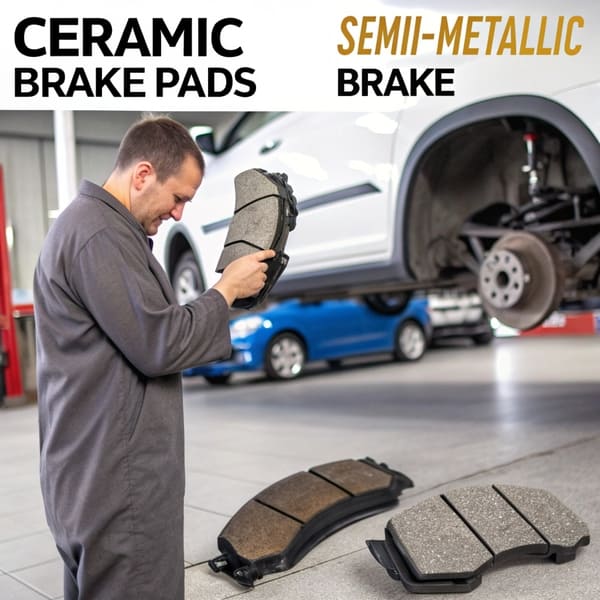
I understand that as a distributor, importer, or brand owner, you need more than a simple answer. You need to know the technical details to make the best sourcing decisions for your market. The performance of a brake pad is not just about the label; it's about the manufacturing process behind it3. Let's break down the differences so you can choose confidently.
What Are Semi-Metallic and Ceramic Brake Pads and How Do They Differ?
The names "semi-metallic" and "ceramic" sound technical and can be confusing. Not knowing the core differences can lead to stocking the wrong product for your target customers. Let's define them.
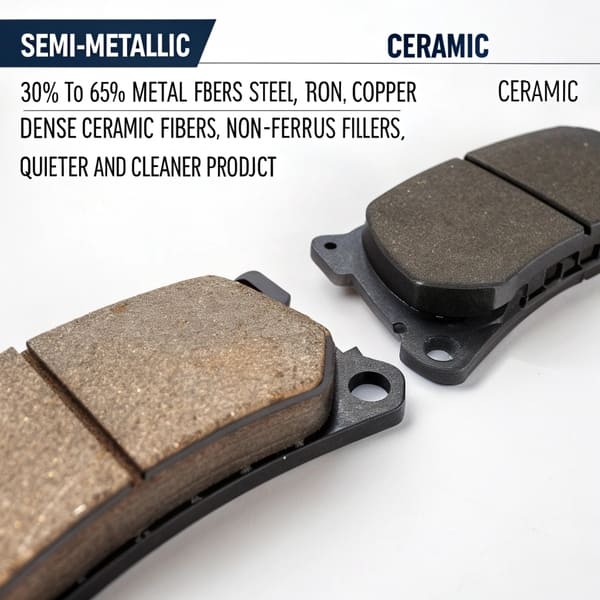
Semi-metallic pads are made from a mix of 30% to 65% metal fibers like steel, iron, or copper, combined with fillers. Ceramic pads use dense ceramic fibers, non-ferrous fillers, and very few metal fibers, creating a quieter, cleaner, but often more expensive product.
In my years of manufacturing automotive parts, I've learned that brake pads are one of the most complex components to produce correctly. The difficulty lies in the precision of the formula4 and the manufacturing process. For example, creating a high-quality brake pad requires at least three critical production stages. The hardest stage is controlling the cooling, shaping, and density5. The machinery needed for this level of precision is not common. You typically find it in specialized factories around Shanghai or in the Fujian coastal region6. Machines from other areas often just can't meet the required standards. Another major challenge is adding raw materials accurately7. When we mix the materials, the machine has to stop and the mold opens to add ingredients. This makes the subsequent cooling and shaping process very tricky. It’s this manufacturing expertise that separates a reliable, high-performance pad from a standard one.
Key Material Differences
| Feature | Semi-Metallic Brake Pads | Ceramic Brake Pads |
|---|---|---|
| Primary Material | 30-65% Metal Fibers (Steel, Copper) | Ceramic Fibers, Non-Ferrous Fillers |
| Heat Transfer | Excellent | Good |
| Noise Level | Can be noisy | Very quiet |
| Dust Output | High (dark dust) | Low (light-colored dust) |
| Rotor Wear | Higher | Lower |
| Cost | More affordable | More expensive |
What Are the Pros and Cons of Ceramic Brake Pads?
Ceramic pads are often praised as the premium option. But are they always the best choice for your specific business needs and customer base? Let's look at the full picture.
The main pros of ceramic pads are that they are extremely quiet and produce very little light-colored dust. They also provide stable performance across different temperatures8. The cons are their higher cost and a potentially less aggressive initial "bite" compared to semi-metallic pads.
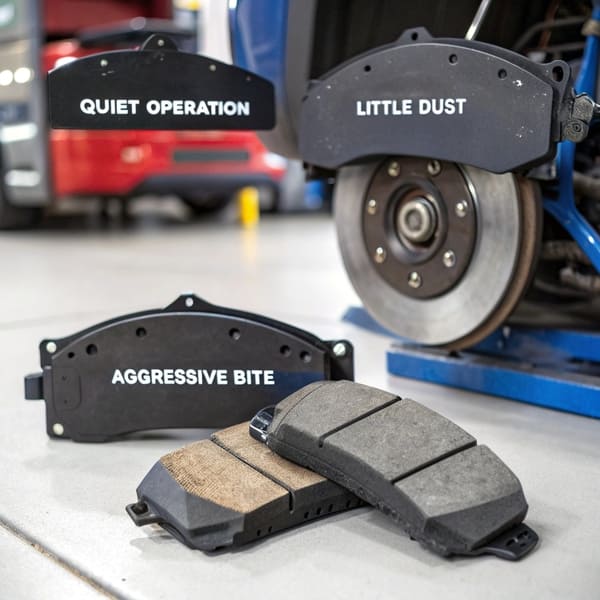
Let's dive deeper into why a business would choose to stock ceramic pads. Their biggest selling point is comfort. The ceramic compound and low metal content9 mean they generate noise at a frequency beyond human hearing, so they are virtually silent. This is a huge plus for owners of luxury cars and daily commuters who value a quiet ride. Another major benefit is the minimal, light-colored dust10 they produce. This keeps expensive wheels looking clean, a strong selling point for appearance-conscious customers. From a performance standpoint, they are very stable and don't fade easily under normal to moderately hard braking. As a manufacturer, we focus heavily on the formulation to ensure this stability. However, they are more expensive to produce, which translates to a higher wholesale and retail price. This can make them a tough sell in price-sensitive markets. For your business, offering a premium ceramic brake pad line is perfect for targeting the high-end aftermarket, luxury vehicle repair shops, and customers who prioritize refinement over raw performance.
What Are the Pros and Cons of Semi-Metallic Brake Pads?
Semi-metallic pads are the workhorses of the brake world. But their known drawbacks, like noise and dust, can be a deal-breaker for some customers. Let's weigh the good against the bad.
The pros are excellent heat transfer, a strong initial bite11, and great performance in heavy-duty applications, all at an affordable price. The cons are that they can be noisy, produce more dark dust, and cause more wear on brake rotors over time.
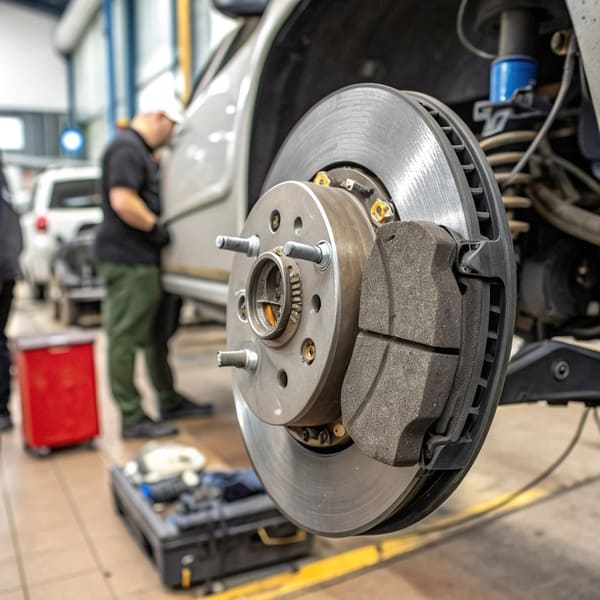
I have a memorable story about semi-metallic pads. On one of my first projects, we were working with a client from Pakistan. We supplied a batch of semi-metallic pads, but due to some initial challenges with our cooling and density control process, the pads showed some "uneven wear" after use. I thought it was a major failure and was worried about the partnership. To my surprise, the client was actually very happy with it. Their specific market found that wear characteristic desirable for their local driving conditions. It was a powerful lesson for me: what one market sees as a flaw, another can see as a feature.
Since then, we have perfected our manufacturing process. We can now precisely control the density and composition12 to produce pads with perfectly uniform wear, or introduce specific wear patterns if a client requests it. This is the advantage of semi-metallic pads from a business perspective. They are incredibly versatile. Their high metal content allows them to pull heat away from the rotor13 effectively, making them ideal for trucks, SUVs that tow, and performance cars. Their aggressive bite gives drivers a strong sense of confidence. And most importantly, their lower manufacturing cost makes them a highly profitable product14 for distributors and wholesalers targeting the mass market, repair shops, and performance enthusiasts.
Conclusion
The best brake pad choice depends entirely on the vehicle's purpose and your business goals. We manufacture both types, customizing the formula and performance to meet your specific market needs.
Learn why ceramic pads are the top choice for customers who prioritize quiet operation and clean wheels, helping you target the right market segment. ↩
Discover situations where semi-metallic pads outperform others, ensuring you stock products that meet demanding performance needs. ↩
Understand the critical role of manufacturing in brake pad reliability, so you can source from factories with proven expertise. ↩
Find out how precise formulations impact safety and performance, helping you choose suppliers who deliver consistent quality. ↩
Explore why advanced production controls are essential for high-quality brake pads, giving you an edge in product selection. ↩
Learn why sourcing from these regions ensures access to advanced technology and higher product standards. ↩
See why precise ingredient mixing is crucial for consistent brake pad quality, reducing the risk of product failures. ↩
Understand the benefits of temperature stability for safety and reliability, especially for premium vehicle applications. ↩
Discover the science behind silent brake pads, appealing to luxury and comfort-focused customers. ↩
Learn how this feature attracts appearance-conscious customers and boosts your product's appeal in the aftermarket. ↩
Find out why this characteristic is valued in performance and heavy-duty vehicles, helping you target the right buyers. ↩
See how advanced manufacturing leads to customizable products that meet diverse market needs. ↩
Explore why heat management is critical for trucks, SUVs, and performance cars, ensuring safety and durability. ↩
Understand how cost advantages translate to higher margins, making these pads attractive for mass-market sales. ↩