-Choosing brake pads feels complicated. The wrong choice can mean noise, dust, and poor performance1. This guide will help you pick the right pads for your car and budget.
Ceramic brake pads2 offer quiet operation, low dust, and long rotor life, making them ideal for daily driving. Metallic brake pads3 provide superior high-temperature performance and a lower price, but they are noisier, produce more dust, and wear rotors faster. Your choice depends on your driving style4.
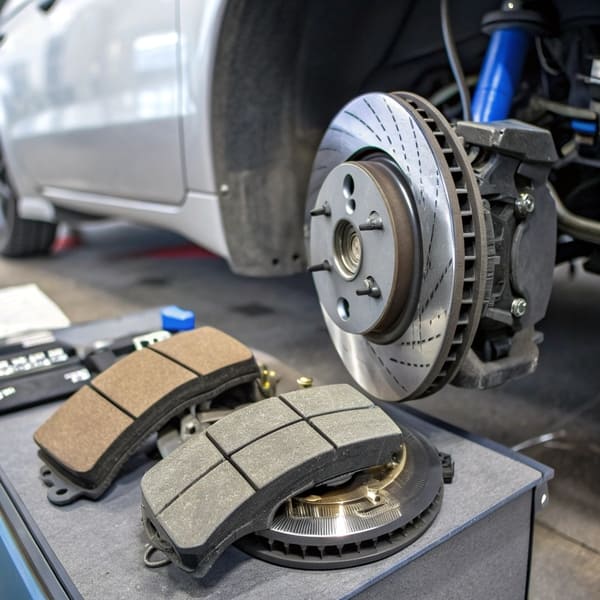
When you're looking to replace your brake pads, the two most common options you'll see are ceramic and metallic. They both stop your car, but they do it very differently. Understanding these differences is key to making a smart decision that affects your safety, comfort, and wallet. Let’s dive into what each type of brake pad is made of and how that impacts your driving experience.
What Exactly Are Ceramic and Metallic Brake Pads?
Confused by brake pad terms? Picking blindly can lead to poor performance and regret. Let's break down what these materials actually are so you can understand the technology.
Ceramic brake pads2 are made from dense ceramic fibers and non-ferrous fillers5 bonded together. Metallic pads are made from a mix of metals like steel, iron, and copper6, bonded with a graphite lubricant. Each composition is designed for different performance goals and driving conditions.
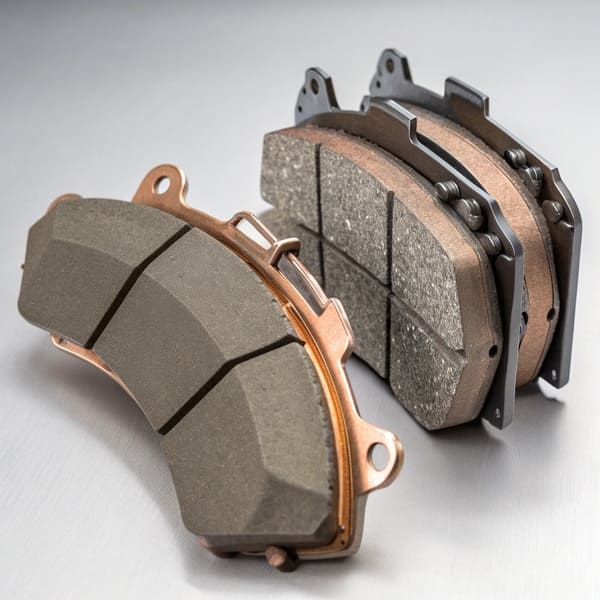
The manufacturing process for these pads is incredibly complex. From my experience as a manufacturer, getting the right density and durability is not easy. It requires high-precision machinery7, the kind you often find in factories in coastal Fujian or near Shanghai. The machines need to control the cooling and shaping process perfectly. One of the toughest steps is adding the raw materials. The machine has to stop, and the mold opens to add the mixture, which can make the cooling process tricky. If the density isn't right, the pad won't perform correctly.
The Makeup of Ceramic Pads
Ceramic pads are the newer technology. They are made from ceramic fibers, filling materials, and bonding agents. They don't have much metal, if any at all. This is why they are so quiet and produce a fine, light-colored dust that doesn't stick to your wheels.
The Composition of Metallic Pads
Metallic pads, sometimes called semi-metallic, contain a high percentage of metal—usually between 30% and 70%. This mix includes steel, iron, copper, and other composites. The metal content makes them great at transferring heat, which helps them perform better under heavy braking.
What Are the Key Differences Between Ceramic and Metallic Brake Pads?
They both stop your car, sure. But their differences directly affect noise, dust, and your wallet. Let's lay out a clear comparison to see which one fits you best.
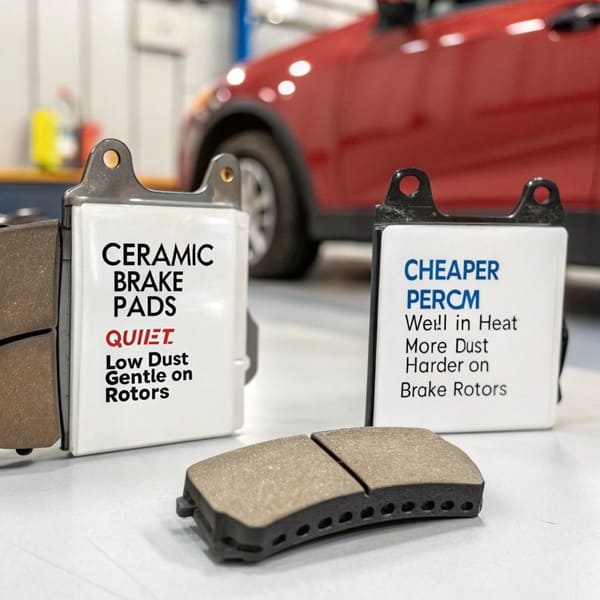
The key differences are noise, dust, rotor wear8, and cost. Ceramic pads are quiet, low-dust, and gentle on rotors but more expensive. Metallic pads are cheaper and perform well in heat, but they're louder, create more dust, and are harder on brake rotors.
I learned a lot about these differences from a real-world experience. Early on, I worked with a client from Pakistan on a batch of metallic brake pads. After production, we found they had some "uneven wear9." I was worried, but the client was actually happy. His vehicles operated under heavy loads, and this characteristic somehow suited his specific needs. It taught me that the "best" pad isn't universal; it depends entirely on the application. Since then, we've perfected our process to control for this, but it was a valuable lesson.
Here is a simple table to break down the main differences:
| Feature | Ceramic Brake Pads | Metallic Brake Pads |
|---|---|---|
| Noise Level | Very quiet, minimal noise. | Can be noisy, may squeal. |
| Brake Dust | Produces very little, light-colored dust. | Produces a lot of dark, noticeable dust. |
| Rotor Wear | Very gentle on brake rotors, extending their life. | Abrasive, causes more wear on rotors. |
| Performance | Excellent, stable performance for daily driving. | Strong performance, especially in high heat. |
| Cost | Generally more expensive. | More affordable, budget-friendly. |
| Lifespan | Typically lasts longer under normal conditions. | Durable, but lifespan can vary with use. |
How Do Ceramic and Metallic Brake Pads Compare in Braking Performance?
You need brakes that work when it matters most. Choosing the wrong pads could lead to poor stopping power or fade under pressure. Let's compare how they actually perform on the road.
Metallic pads offer a stronger initial "bite" and handle extreme heat better, making them suitable for aggressive driving. Ceramic pads provide smoother, more consistent stopping power for daily commuting10 but may not perform as well as metallics under repeated, high-speed braking.

The performance difference comes down to how the materials handle heat and friction. Think of it like this: metallic pads are built for toughness and heat, while ceramic pads are designed for consistency and comfort. Neither is universally better; their performance shines in different situations. Understanding these scenarios is the key to choosing the right pad for how you drive your car every day.
Daily Driving and Commuting
For the average driver, ceramic pads are often the best choice. They provide smooth, reliable stopping power without any drama. The braking is very predictable from the first stop of the day to the last. They work well in a wide range of temperatures you'd experience in city or highway driving.
Aggressive or Performance Driving
If you enjoy spirited driving or take your car to a track, metallic pads are usually the way to go. Their metal content helps them dissipate heat quickly. This reduces "brake fade11," which is when pads get too hot and lose their stopping power. They also have a stronger initial bite, meaning they grab the rotor more aggressively as soon as you press the pedal.
Weather Conditions
In wet or cold conditions, both pad types perform well, but metallic pads sometimes have a slight edge. Their abrasive nature can help clear water and grime from the brake rotor surface a little more effectively, ensuring a solid contact for stopping.
Conclusion
Your best choice depends on your priorities. For quiet, clean, and smooth daily driving, choose ceramic. For budget-friendly, high-performance stopping power, especially with heavy use, choose metallic.
Understand how your brake pad selection can impact your driving comfort, wheel cleanliness, and overall braking effectiveness. ↩
Learn why ceramic brake pads are ideal for quiet, low-dust, and long-lasting performance, making them a top choice for everyday drivers. ↩
Discover why metallic brake pads are preferred for aggressive driving and heavy loads due to their superior heat management and stopping power. ↩
Find out how your unique driving habits should guide your decision between ceramic and metallic brake pads for optimal results. ↩
Explore the advanced materials in ceramic pads that contribute to their quiet operation and minimal dust production. ↩
Learn about the metal blends in metallic pads and how they enhance heat transfer and braking performance. ↩
See how advanced manufacturing ensures brake pads meet strict safety and performance standards for your vehicle. ↩
Understand how your choice of brake pad can extend or reduce the lifespan of your brake rotors, saving you money. ↩
Gain insights into brake pad wear patterns and how they can affect performance and maintenance costs. ↩
Find out why ceramic pads offer the best balance of comfort, reliability, and low maintenance for everyday drivers. ↩
Learn how to avoid dangerous loss of braking power by choosing the right pad material for your driving needs. ↩