-Choosing the right brake pads can be confusing. A wrong choice means poor performance or a shorter lifespan. This guide will help you understand the key differences clearly.
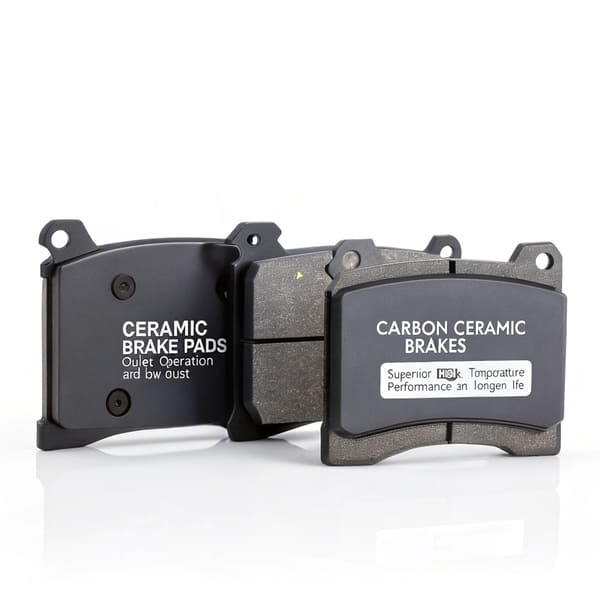
Ceramic brake pads are ideal for daily driving, offering quiet operation and low dust1. Carbon ceramic brakes provide superior high-temperature performance2 and a much longer life for track use, but they come at a significantly higher cost. The best choice depends entirely on your driving needs.
Upgrading your brakes is a big decision. You want to make sure you get the right parts for your car and your driving style. It is not just about stopping power; it is also about noise, dust, and how long the parts will last. Let's dive deeper into what sets these two popular brake types apart, so you can make a choice that you will be happy with for miles to come.
What Are the Key Differences Between Ceramic and Carbon Ceramic Brake Pads?
You hear "ceramic" and "carbon ceramic" and they sound almost the same. This can lead to buying the wrong, and sometimes very expensive, parts for your car.
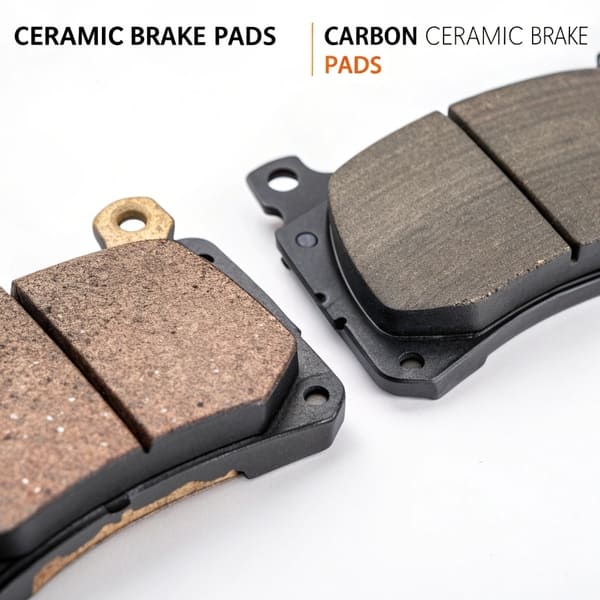
The main differences are in their materials, intended use, and cost. Ceramic pads use a clay-based compound with copper fibers3 for daily driving. Carbon ceramic pads use carbon fiber reinforced silicon carbide4, built for extreme heat and racing performance, making them much more expensive.
The manufacturing process for these two types of brake pads is worlds apart. Standard ceramic pads are relatively straightforward to produce. High-performance carbon ceramic pads, however, require extreme precision. The machinery needed for production must control cooling, shaping, and density very carefully. I have found that factories in the Fujian and Shanghai areas5 often have the advanced equipment needed for this. The machines from other regions sometimes struggle to meet the strict tolerance requirements. One of the hardest steps is mixing the raw materials. The machine has to stop to add different ingredients, and the mold has to be opened. This makes the cooling process very difficult to control. It's a delicate balance to get the material density just right for extreme performance6.
Material and Performance Breakdown
| Feature | Ceramic Brake Pads | Carbon Ceramic Brake Pads |
|---|---|---|
| Material | Clay, ceramic compounds, copper fibers | Carbon fiber, silicon carbide |
| Best Use | Daily street driving | High-performance driving, track use |
| Heat Tolerance | Good | Exceptional |
| Dust Level | Very Low | Low |
| Noise Level | Very Quiet | Quiet (can squeal when cold) |
| Cost | Moderate | Extremely High |
How Do Carbon Ceramic Brakes Signal When They Need Replacement?
Carbon ceramic brakes do not have the usual squealing wear indicators. You might not know they are worn until it is too late, which is a major safety risk.
Carbon ceramics are checked by weight and visual inspection, not by sound. Mechanics weigh the rotor to see if it's below the minimum weight stamped on it7. They also look for surface damage like pitting or chipping. There is no squealing sound to warn you.
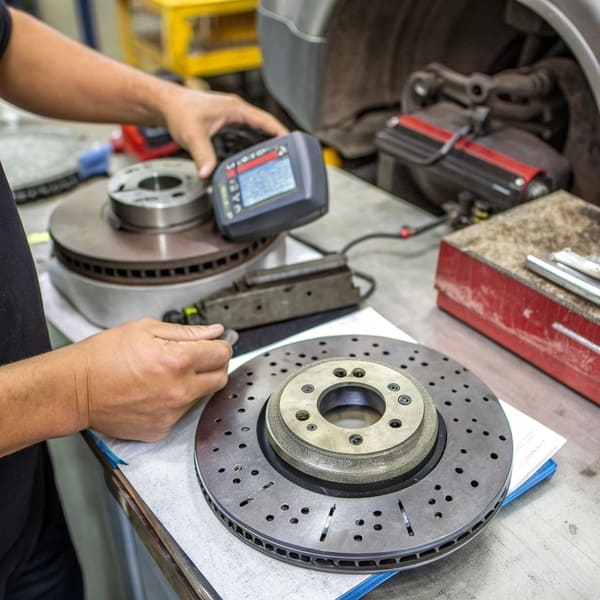
You cannot rely on the old methods to check carbon ceramic brakes. They do not have the small metal tab that makes a high-pitched squeal when the pads are low. That metal tab would destroy an expensive carbon ceramic rotor. Instead, maintenance requires a professional approach. The most accurate method is to remove the wheel and the rotor and weigh it. The manufacturer stamps a minimum weight on the rotor hat. If it's below that number, it needs to be replaced. The second method is a careful visual check. You look at the pad thickness, but you must also inspect the rotor's surface very closely for any signs of oxidation, which looks like pitting or white spots. I learned this the hard way on an early project with a client from Pakistan. We saw some uneven wear on the first batch because of tiny inconsistencies in the material mix. That experience taught me how sensitive these materials are and why professional inspection is absolutely critical.
Why Do Carbon Ceramic Rotors Wear Faster Under High Temperatures?
You paid a lot for carbon ceramic brakes for their performance. So it seems strange that they can wear out quickly under the very heat they are designed to handle.
Carbon ceramic rotors wear differently than iron rotors. At extreme temperatures, above 600°C (1112°F), the carbon material oxidizes. It essentially turns into a gas and disappears. This material loss is the main cause of wear during intense track use, not friction.

The way these rotors wear is completely different from what you might expect. A standard iron rotor wears down from physical friction. The brake pad grinds against it, slowly wearing away the metal. A carbon ceramic rotor is much harder and experiences very little frictional wear. Its enemy is extreme heat. When these rotors get incredibly hot, like during a race, a chemical reaction called oxidation8 begins. The carbon fiber in the rotor reacts with oxygen in the air and basically vaporizes. This is why a street-driven car with carbon ceramic brakes can have rotors that last for over 150,000 km9, while a dedicated race car might burn through a set in just a few weekends. It all depends on how much time they spend in that extreme temperature zone where oxidation happens.
Temperature and Wear Effect
| Temperature Range | Wear Type | Rotor Lifespan |
|---|---|---|
| Below 400°C (Street) | Minimal Frictional Wear | Very Long |
| 400°C - 600°C (Spirited) | Low Frictional Wear | Long |
| Above 600°C (Track) | Rapid Oxidation Wear | Short |
Conclusion
Ceramic pads are perfect for quiet, clean daily driving. Carbon ceramic brakes offer incredible track performance but need expert care and wear differently under extreme heat. Choose based on your driving needs.
Learn why quiet operation and low dust are important for daily driving comfort and keeping your wheels cleaner. ↩
Discover how high-temperature performance in brake pads enhances safety during spirited or track driving. ↩
Understand the unique benefits of clay-based compounds with copper fibers for everyday braking needs. ↩
Explore why this advanced material is chosen for extreme heat resistance and durability in racing brakes. ↩
Find out why these regions are known for producing high-quality, precision brake components. ↩
Learn how precise material density affects the reliability and effectiveness of high-performance brake pads. ↩
Understand how the minimum weight indicator helps prevent unsafe brake rotor use. ↩
Discover how oxidation affects the lifespan of high-performance brake rotors under extreme heat. ↩
Find out what factors contribute to the exceptional longevity of carbon ceramic rotors in street use. ↩