-Struggling to pick between ceramic and carbon ceramic pads1? The wrong choice hurts performance and your business. Let's clear up the confusion and find the right fit for you.
Ceramic pads are great for quiet, low-dust daily driving2. Carbon ceramic pads offer superior stopping power3 and heat resistance4 for high-performance cars and track use. For business, ceramic serves the mass market, while carbon ceramic targets the premium, performance-focused niche.
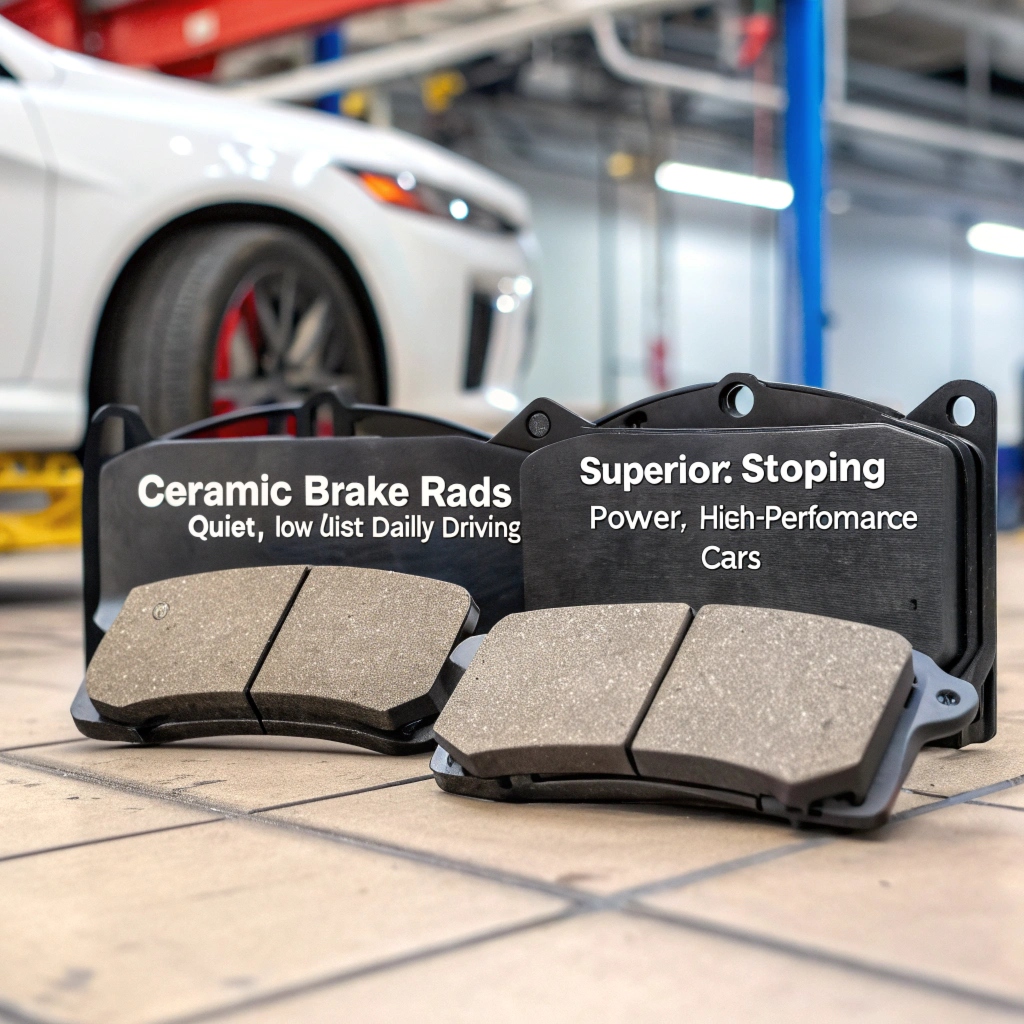
The choice seems simple, but there's a lot more to it. The manufacturing process, the materials, and the intended use all play a huge role. To really understand which pad is right for your customers or your vehicle, we need to break down what each type is and how it's made. Let's start with the basics.
What Are Ceramic Brake Pads and How Do They Work?
Tired of customers complaining about brake noise and dusty wheels? These issues can harm your brand's reputation. Ceramic brake pads offer a clean, quiet solution for everyday driving comfort.
Ceramic brake pads are made from a dense ceramic material mixed with copper fibers5. They work by creating stable friction6 against the brake rotor. This process dissipates heat well, produces very little dust, and operates quietly, making them ideal for daily-use passenger cars.
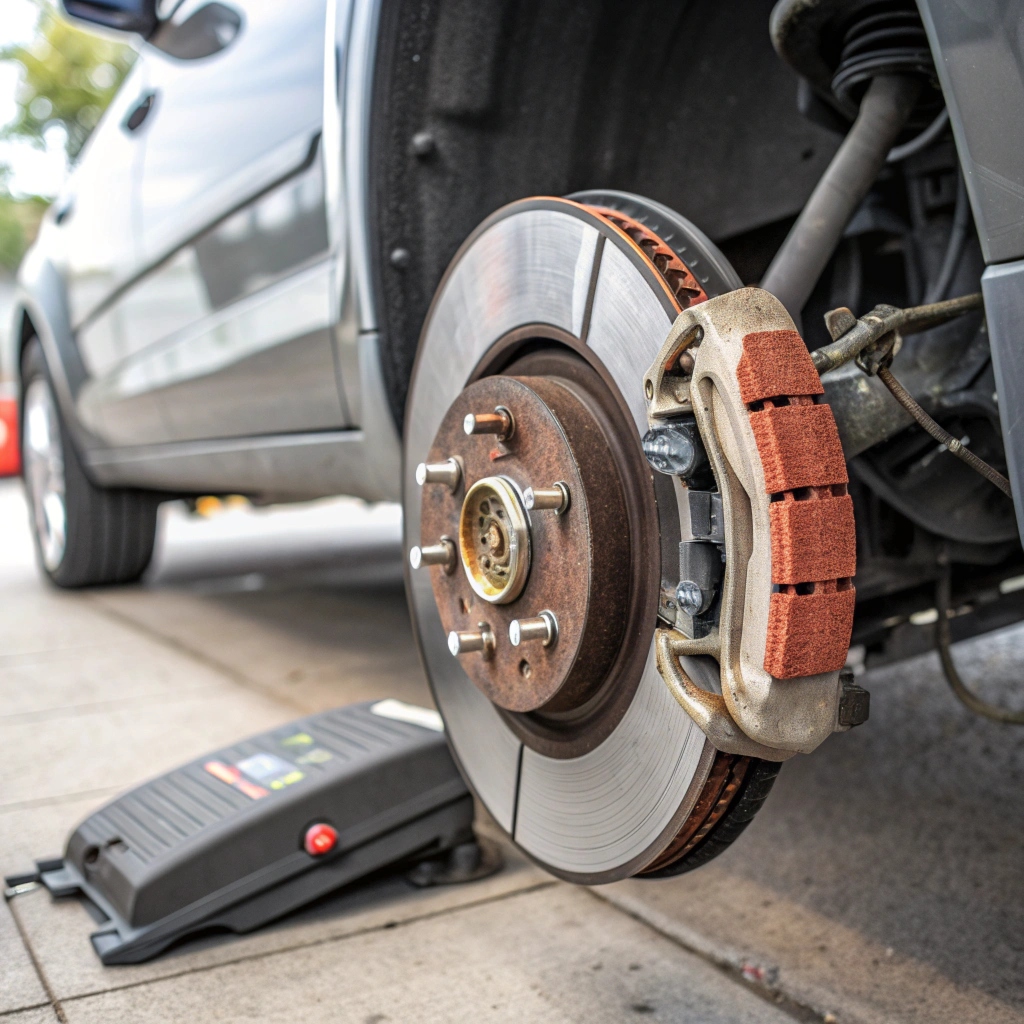
Let's look closer at what makes a standard ceramic pad tick. The real magic is in the formula.
Composition and Materials
The main ingredient is a ceramic compound, similar to pottery but much stronger and more heat-resistant. This is blended with non-ferrous metal filaments7, often copper, which helps with heat transfer and friction consistency. Unlike semi-metallic pads, they contain very little steel, which is why they are so quiet and gentle on brake rotors. Getting this material mix right is key. It's a precise process to ensure the final product is durable and performs consistently.
Performance Characteristics
For a business, understanding these characteristics is crucial for positioning your product. Ceramic pads excel in specific areas that appeal to the majority of drivers. They don't offer the absolute highest stopping power like a performance pad, but they provide more than enough for normal street driving. Their biggest selling points are comfort and convenience.
| Feature | Benefit for Daily Driving | Business Implication |
|---|---|---|
| Low Noise | Creates a quiet, smooth ride. | High customer satisfaction for luxury/family cars. |
| Low Dust | Keeps wheels cleaner for longer. | Reduces complaints, appeals to appearance-conscious owners. |
| Stable Friction | Provides consistent braking feel. | Builds trust in your brand's reliability. |
| Good Longevity | Wears down rotors slowly. | Lower long-term maintenance costs for the end-user. |
These pads are the go-to choice for most modern passenger vehicles, from family sedans to luxury SUVs. They represent the largest market segment, making them a staple for any parts supplier.
What Are Carbon Ceramic Brake Pads and How Are They Different from Standard Ceramic?
Need brake pads for high-performance applications that won't fail under pressure? Standard pads can fade dangerously during aggressive use. Carbon ceramic pads deliver elite stopping power, time after time.
Carbon ceramic brake pads8 are an evolution of ceramic pads, infused with carbon fibers. This key difference makes them much lighter and significantly more resistant to high temperatures. They offer superior fade resistance9 and stopping power, which is essential for supercars and track-focused vehicles.
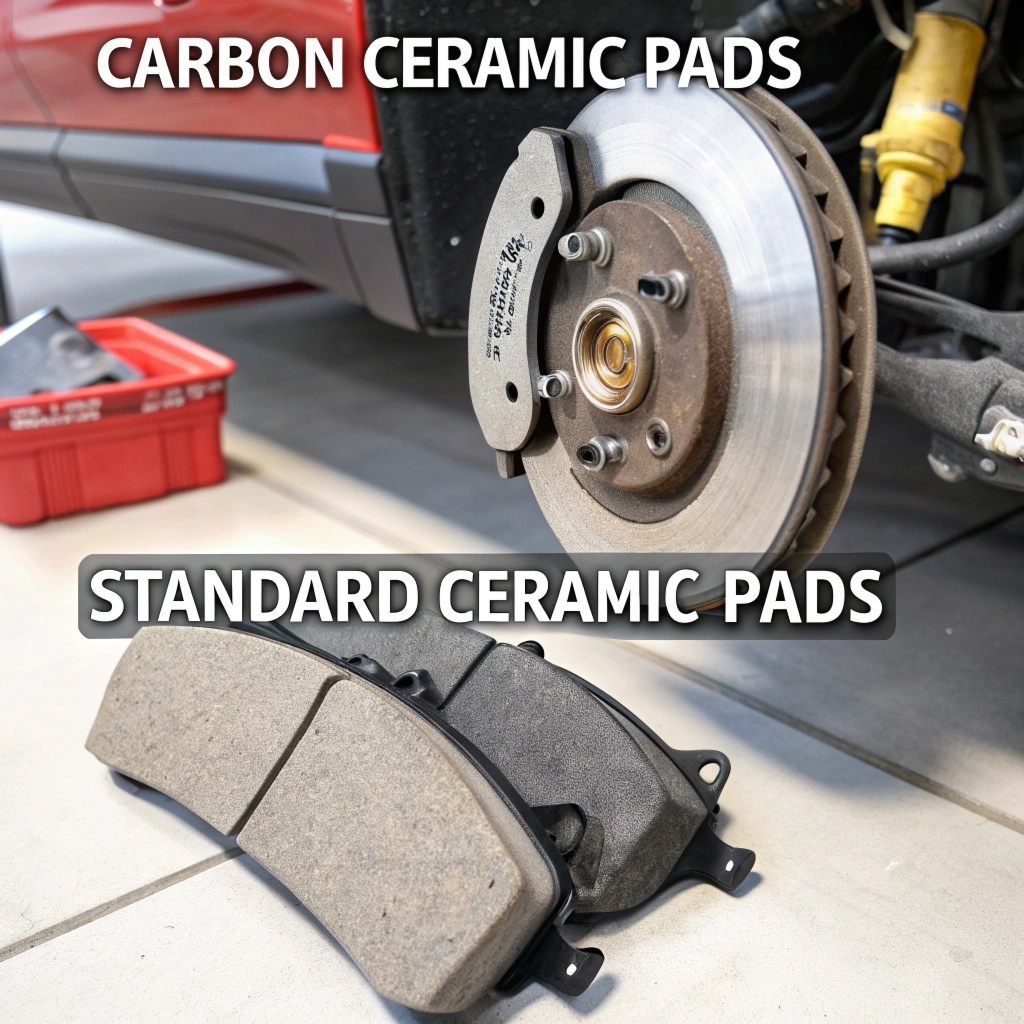
The jump from ceramic to carbon ceramic is huge, not just in performance but in manufacturing complexity10. This is where we, as a manufacturer, face our biggest challenges.
The Manufacturing Challenge
Producing these pads requires extreme precision. Standard equipment simply can't do it. The process has several critical stages, but the hardest parts are cooling and density control. High-precision machines, like the ones you find in the Fujian coastal region or near Shanghai, are necessary to get it right. Another major hurdle is the raw material mixing. To adjust the formula, the machine has to stop and the mold must be opened, which complicates the crucial cooling phase. It's a delicate balancing act. I remember my first project for these pads with a client from Pakistan. We were still learning, and the initial batch showed some "uneven wear." I was worried, but the client actually preferred the feel and performance it gave. It was a lucky break, but it taught us a valuable lesson about dialing in the process. We've perfected it since then.
Key Performance Differences
So what does all that complex manufacturing get you?
- Heat Resistance: They can handle temperatures that would make standard ceramic pads fade completely. This is because the carbon fibers dissipate heat incredibly well.
- Weight Reduction: They are significantly lighter than other pads, reducing unsprung weight and improving handling.
- Stopping Power: The bite is much stronger and more consistent, especially after repeated hard stops.
- Longevity: Under extreme use, they last much longer than other types of pads.
These are not for every car. They are a premium product for a niche market that demands the absolute best performance.
Are Carbon Ceramic Brake Pads the Same as Carbon Fiber or Performance Brake Pads?
Confused by all the "carbon" and "performance" brake pad terms? This confusion leads to costly mistakes when sourcing parts. Let's clear things up so you choose the right product.
No, they are not the same, but the terms overlap. "Carbon Ceramic" refers to a specific material blend. "Carbon Fiber" often refers to brake rotors (Carbon-Carbon), not pads. "Performance" is a broad category that can include carbon ceramic, semi-metallic, and other specialized friction materials.
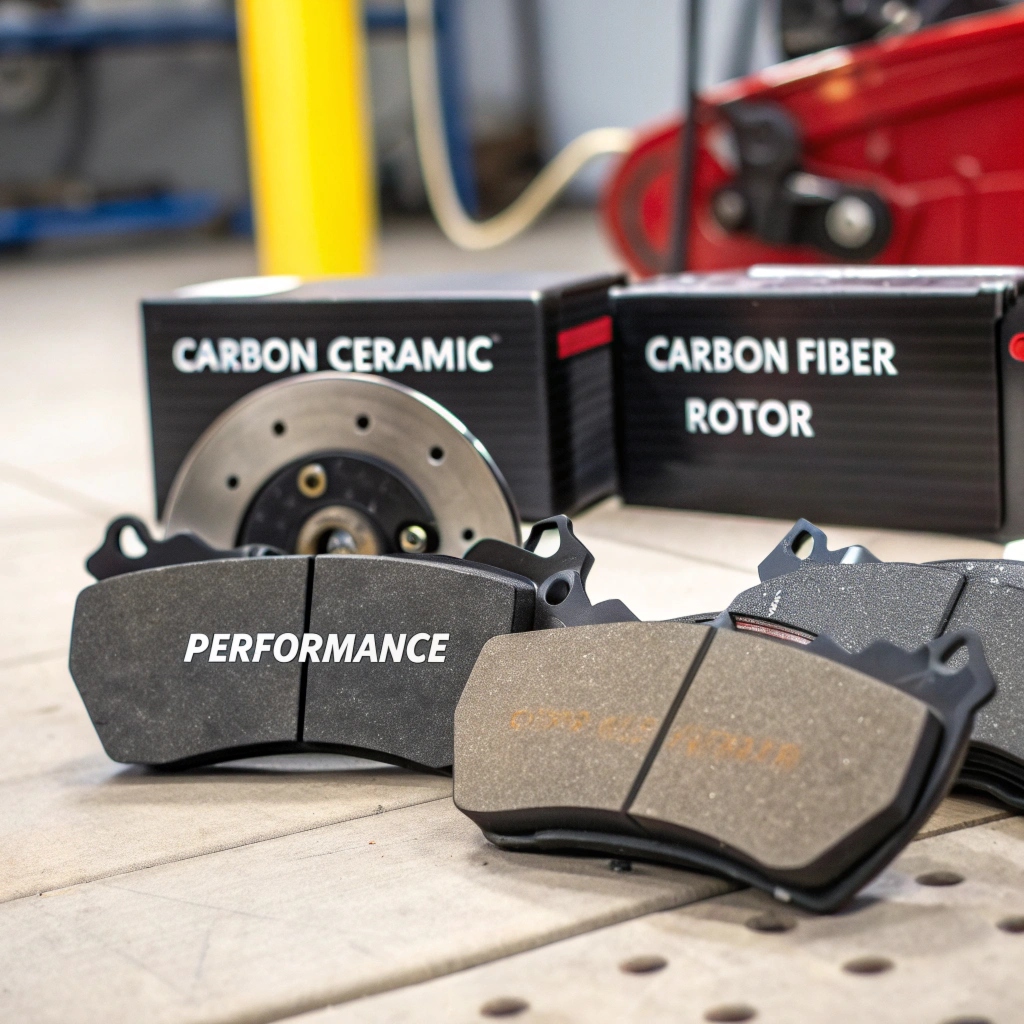
In the auto parts business, precision in language is as important as precision in manufacturing. Using the right terms ensures you and your clients are on the same page. Let's break down these common but confusing labels.
Defining the Terminology
The market uses these terms loosely, but for a professional, the differences are critical. A "performance brake pad11" is a general classification based on function—it's designed for better-than-stock stopping power, heat management, and fade resistance9. The actual material could be a highly aggressive semi-metallic compound or a sophisticated carbon ceramic blend. The terms are not mutually exclusive but describe different things.
| Term | Definition | Primary Use |
|---|---|---|
| Ceramic Pad | Ceramic compounds with copper fibers5. | Daily driving, luxury cars (low dust/noise). |
| Carbon Ceramic Pad | Ceramic base infused with carbon fibers. | High-performance street cars, track days. |
| Carbon-Carbon | Pure carbon fiber composite (rarely for pads). | Mostly for brake rotors in racing/aerospace. |
| Performance Pad | General category for any pad outperforming OEM. | Track racing, spirited driving, heavy-duty towing. |
Why the Distinction Matters for Business
As a distributor or brand owner, you need to market these products correctly. Selling a high-metal-content track pad as a "quiet ceramic" will lead to unhappy customers. Likewise, marketing a standard ceramic pad for track use is dangerous. Carbon ceramic pads sit at the top of the performance pyramid. They offer the benefits of ceramic (good feel) with the extreme heat capacity needed for supercars. Understanding this allows you to build a tiered product line12 that serves different customer needs, from the daily driver to the track day enthusiast, maximizing your market coverage.
Conclusion
For daily driving, choose ceramic pads for comfort. For elite performance and business in the high-end market, carbon ceramic is the clear winner. Know the difference to succeed.
Discover why carbon ceramic pads are preferred for high-performance cars and how they differ from standard ceramic pads. ↩
Find out how low-dust brake pads keep your wheels cleaner and reduce maintenance for everyday vehicles. ↩
Explore which brake pad types deliver the best stopping power for high-speed or track use. ↩
Understand why heat resistance is crucial for brake pads, especially in demanding driving conditions. ↩
Learn how copper fibers enhance the performance and durability of ceramic brake pads. ↩
See how stable friction ensures consistent braking and builds trust in your vehicle's reliability. ↩
Discover the benefits of using non-ferrous metals in brake pad manufacturing for improved performance. ↩
Learn the fundamentals of ceramic brake pads to understand their benefits for daily driving and why they're a top choice for most vehicles. ↩
Learn about brake fade resistance and why it's vital for safety during aggressive or repeated braking. ↩
Understand the challenges and precision required to produce high-quality carbon ceramic brake pads. ↩
Explore what makes a brake pad 'performance' grade and which materials are commonly used for high performance. ↩
See how offering a range of brake pads for different needs can maximize your market coverage and customer satisfaction. ↩