Struggling to find a Tesla parts supplier that meets your quality standards? You are not alone. Many face issues with precision, consistency, and reliability from Chinese factories.
To find a reliable Tesla parts supplier in China, focus on factories in coastal regions like Fujian and Shanghai. Verify their high-precision machinery, quality certifications like IATF 16949, and their specific experience with Tesla's demanding dimensional accuracy and assembly stability requirements.
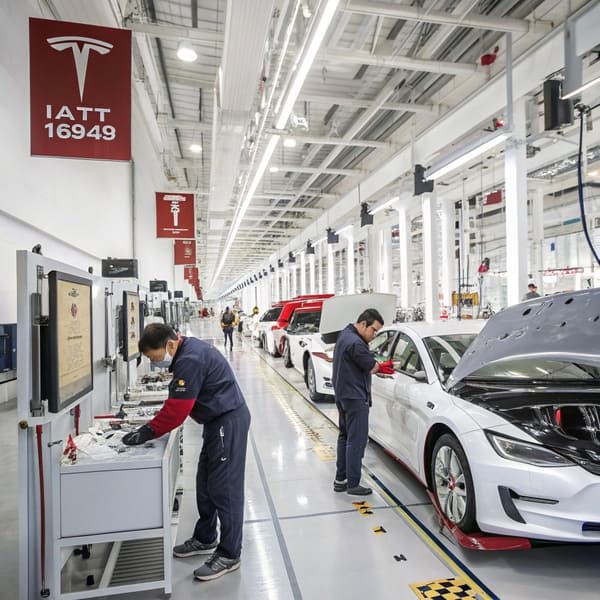
Finding the right partner is more than just a search; it's a detailed investigation. I learned this the hard way. It's crucial to know what to look for and how to verify it. Let's dive into the specifics so you can avoid common pitfalls and secure a supplier you can trust for your business.
What Are the Key Criteria to Evaluate a Tesla Parts Supplier in China?
Choosing the wrong supplier leads to wasted time and money. Poor-quality parts can ruin your reputation. You need a clear checklist to evaluate potential partners effectively and avoid costly mistakes.
Key criteria include their location (coastal areas like Shanghai or Fujian are better), their investment in high-precision manufacturing equipment, and a proven track record specifically with EV components. Also, check their engineering capabilities for managing tight tolerances and complex assembly processes.
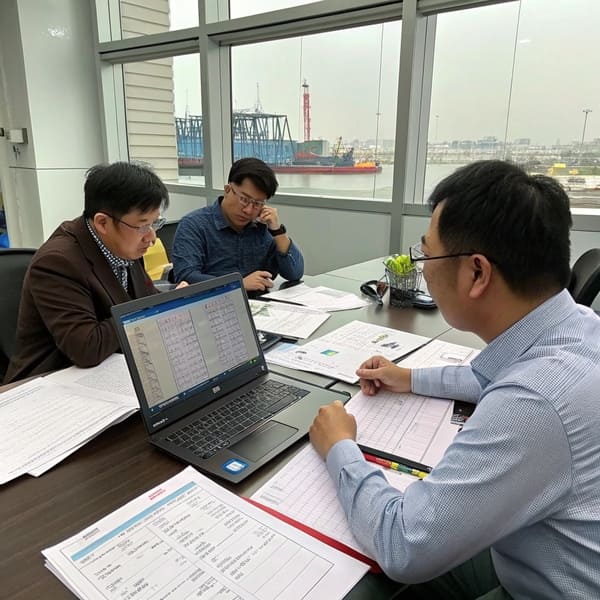
When I first started sourcing Tesla parts for a client, I underestimated the importance of location and equipment. A factory's geographical location in China often says a lot about its capabilities. Suppliers in coastal areas like Fujian or the Yangtze River Delta around Shanghai tend to have access to better technology and a more experienced workforce for high-precision manufacturing. This is because these regions have a long history of export-oriented manufacturing and have invested heavily in high-end industrial infrastructure. This is crucial for Tesla parts, where tolerances are incredibly tight. In contrast, factories in some inland regions, like parts of Hebei, might be more focused on heavy industry or lower-cost, lower-precision goods. Their equipment might not be suitable for the finesse required for Tesla components.
You need to break down your evaluation into a few key areas. I use a simple table to keep things organized.
Key Supplier Evaluation Checklist
| Criteria | Why It Matters & What to Look For | Red Flags |
|---|---|---|
| Location & Infrastructure | Proximity to tech hubs (Shanghai, Fujian, Guangdong) often means a better supply chain for materials, talent, and logistics. | Factories in remote regions may struggle with sourcing high-grade materials or shipping efficiently. |
| Machining & Tooling Precision | Tesla parts demand sub-millimeter accuracy. Look for evidence of 5-axis CNC machines, high-precision injection molding machines, and EDM (Electrical Discharge Machining) for molds. | Vague answers about machine models. An inability to show you their tooling workshop or their precision measurement tools. |
| Process Control System | A good supplier has multi-stage quality checks (IQC, IPQC, FQC). This ensures errors are caught early, not in the final product. | A simple, single-step quality check at the end. Inability to explain their process control or show documentation. |
| Raw Material Sourcing | The quality of the raw materials (e.g., specific aluminum alloys, polycarbonate grades) directly impacts fitment, durability, and safety. Ask for their material suppliers. | Unwillingness to share material sources or provide material certifications (RoHS, REACH). |
Always ask for a virtual or, if possible, an in-person factory tour. Pay close attention to their production line, their quality control stations, and the overall organization. A clean, well-organized factory is often a sign of a professional operation that takes quality seriously.
How Can I Verify the Manufacturer’s Quality and Certifications Before Ordering?
A supplier's website can promise anything. How do you know if their quality claims and certifications are real? Placing an order without verification is a huge financial risk.
Verify quality by requesting third-party audit reports and key certifications like IATF 16949 for automotive standards. Ask for sample parts to test dimensional accuracy and material quality. Also, conduct a video call to see their testing equipment and processes in action.
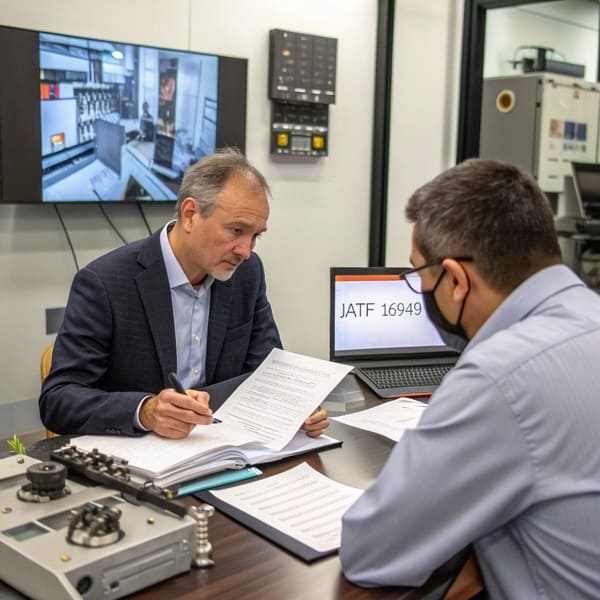
Verifying a supplier's claims is the most challenging part, and where many importers get it wrong. I once had a tough experience with this. We were developing a new part for a client from Pakistan. The supplier seemed great on paper and their initial samples looked good. But to confirm their process stability for mass production, we needed to do a deep audit. This meant asking them to halt a production run and open up their molds and inspection equipment for us to review. This created a lot of friction and made ongoing quality control difficult because they felt we were being disruptive.
From that experience, I learned that verification must be structured and non-confrontational. Here is the process I now use:
Steps for Effective Verification
- Request & Verify Core Certifications: Don't just ask if they have IATF 16949. Request a PDF copy of the certificate. Look up the certification number on the official IATF database to ensure it's valid and not expired. Check the "scope" to see if it covers the products you need.
- Order and Test Samples: This is non-negotiable. Order a small batch of samples. Don't just look at them. Use a digital caliper or, for critical dimensions, send them to a local lab to be measured by a Coordinate Measuring Machine (CMM). Test the fitment on an actual vehicle.
- Conduct a Live Video Audit: A video call is the minimum. Ask the factory manager to walk you through the entire process for a similar product. Specifically ask to see:
- The QC Lab: What equipment do they have? Look for CMMs, digital projectors, colorimeters, and material strength testers.
- In-Process Checks: Ask them to show you a quality control station on the assembly line. Who performs the checks and how are they recorded?
- Traceability Records: Ask them to demonstrate how they can trace a random finished part back to its raw material batch and production date. This is a sign of a mature quality system.
This level of scrutiny isn't about distrust; it's about due diligence. For high-precision Tesla parts, it's the only way to protect your investment.
Which Tesla Parts Are Commonly Produced by Chinese OEM and Aftermarket Suppliers?
You want to source Tesla parts, but which components offer the best opportunity? Focusing on the wrong products can lead to low demand or intense competition from established players.
Chinese suppliers excel at producing a wide range of Tesla parts. Common OEM and aftermarket items include interior electronics like custom displays, exterior accessories such as body kits and carbon fiber trim, and performance components like cooling system parts and suspension links.
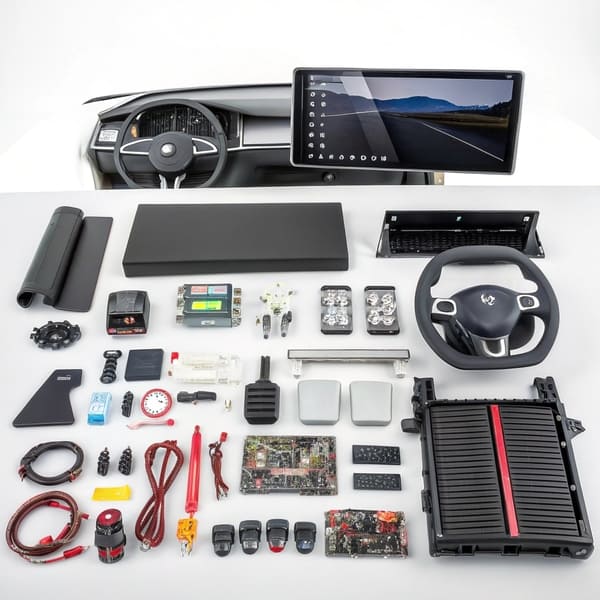
China's manufacturing ecosystem is vast, and many factories have specialized in specific types of Tesla components. Based on my experience helping clients develop their product lines, the opportunities are concentrated in a few key areas. It's not just about simple replacements; it's about customization and performance upgrades that allow owners to personalize their vehicles.
I think back to that first project with my Pakistani client. We were making an exterior body trim piece. After the first batch arrived, we found a slight, consistent dimensional deviation. I was panicked, thinking we'd have to scrap the whole order. But when the client installed it, he found that the slight change created a more aggressive, custom look that he and his customers loved. It was a lucky break, but it taught me a valuable lesson: the aftermarket is driven by differentiation, not just perfect replication. This is where Chinese factories, with their flexible tooling and rapid prototyping, truly shine.
Common Tesla Parts Categories from China
| Category | Popular Products | Why China is a Good Source |
|---|---|---|
| Interior Electronics | Center console displays, yoke steering wheels, ambient lighting kits, rear entertainment screens. | We have a strong electronics supply chain in Shenzhen and expertise in PCBA design, mold making for housings, and UI/UX customization for software. |
| Exterior Accessories | Carbon fiber spoilers, mirror caps, aerodynamic body kits, automated door handles, custom wheel covers. | Factories here have deep expertise in mold making, composites like carbon fiber, and advanced surface finishes. Tooling costs are also more competitive. |
| Chassis & Suspension | Adjustable control arms, stabilizer links, performance bushings, air suspension lowering kits. | There is a strong industrial base for metalwork, including forging, CNC machining, and heat treatment, allowing for durable and precise performance parts. |
| Automotive Lighting | Aftermarket taillights with sequential turn signals, upgraded LED fog lamps, projector headlight retrofits. | As a lighting manufacturer ourselves, we know this space well. China leads in LED tech, optical design, and creating plug-and-play lighting assemblies. |
When you approach a supplier, be specific. A factory that excels at carbon fiber parts may not have the electronic engineering skills for a custom display. Finding a supplier that specializes in your chosen category is the key to getting the quality and innovation needed to succeed.
Conclusion
Finding a reliable Tesla parts supplier in China requires careful evaluation of location, machinery, and certifications. Verifying these details is crucial to ensure quality and build a successful partnership.