-Struggling to find parts for your older Tesla Model S P85D? You worry it's becoming obsolete. But a dedicated market still values this classic, creating a unique demand for it.
Yes, the Tesla P85D is still very relevant, but not as a new car. Its value now lies in the robust aftermarket and enthusiast communities1. The real demand comes from B2B clients like repair shops and performance tuners2 who need high-quality replacement and custom parts.
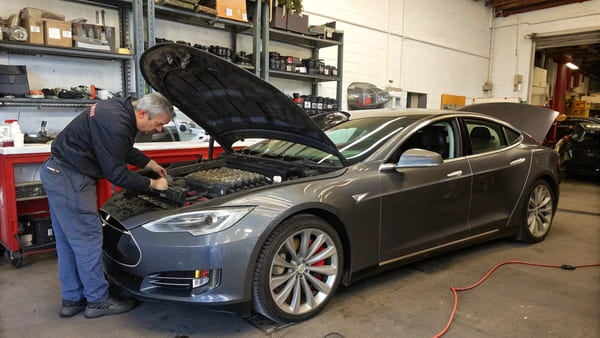
The Tesla P85D was a game-changer when it first hit the streets. It completely changed how people thought about electric cars. It wasn't just about saving the planet anymore; it was about raw, incredible power. Today, even with newer, faster models on the market, the P85D holds a special place. Its legacy continues, not just in the memories of car lovers, but in a very real, very active market for parts and services. Let's dive into what made this car a legend and where it fits in the world today.
What Made the Tesla P85D So Popular in the First Place?
Remember when electric cars were seen as slow and boring? The P85D completely destroyed that idea. It showed the world that electric power could deliver unbelievable, instant acceleration.
The Tesla P85D became famous for its dual-motor, all-wheel-drive system3 and the legendary "Insane Mode4." This feature gave it supercar-level acceleration, launching it from 0 to 60 mph in about 3.1 seconds. It was the first EV to perfectly mix everyday usability with extreme performance.
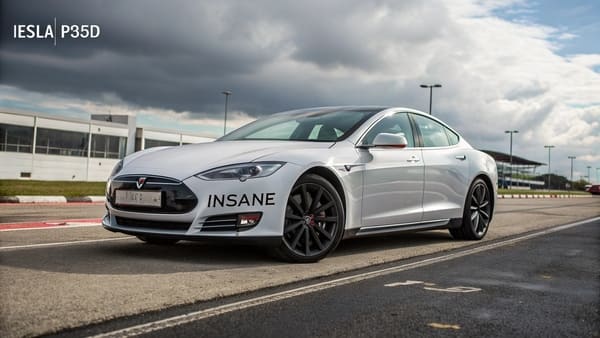
The P85D was more than just a car; it was a statement. When Tesla announced it, the automotive world was shocked. A four-door family sedan that could out-accelerate many Ferraris and Lamborghinis was unheard of. This was all thanks to its innovative dual-motor setup. One motor powered the front wheels, and another powered the rear wheels. This not only provided all-wheel-drive traction5 but also allowed for precise, computer-controlled power delivery6 to each wheel.
The "Insane Mode4" Revolution
The real magic was in the software. With a tap on the touchscreen, drivers could activate "Insane Mode4." This unleashed the full potential of the battery and motors7, delivering instant, brutal torque. It created a physical sensation that pinned you to your seat, and it became a viral sensation. Videos of passengers screaming with joy and shock flooded the internet, giving Tesla priceless marketing. It made performance accessible and fun in a way no traditional car had before.
P85D vs. The Competition (2015)
To understand its impact, you have to see how it stacked up against the gas-powered performance cars of its time.
| Vehicle | 0-60 mph Time | Powertrain |
|---|---|---|
| Tesla Model S P85D | 3.1 seconds | Dual Electric Motor |
| BMW M5 | 4.2 seconds | Twin-Turbo V8 |
| Porsche 911 Carrera S | 3.9 seconds | Flat-Six |
| Dodge Challenger Hellcat | 3.6 seconds | Supercharged V8 |
The P85D wasn't just competing; it was winning. It proved that the future of performance was electric, and it set the stage for every high-performance EV that came after it.
Where Are Tesla P85D Vehicles Most Concentrated Today?
Ever wonder where all the classic P85Ds ended up? You might think they are disappearing. But they are actually gathered in specific regions, creating unique markets for service and parts.
Today, you'll find the highest concentration of P85D vehicles in early EV adopter markets8. These include California in the U.S., countries like Norway and the Netherlands in Europe, and major cities in China. These areas had strong initial sales and now have many aging Teslas.
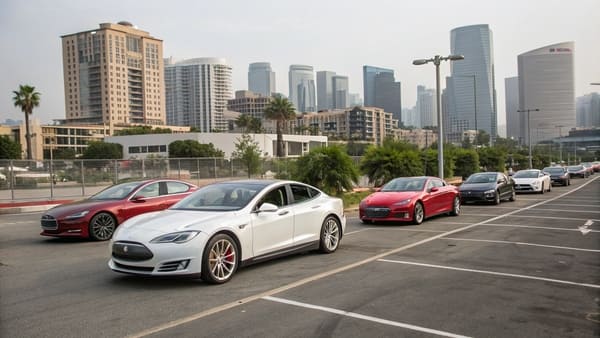
These hotspots didn't happen by accident. Each region had specific reasons for embracing the P85D early on, and now they face the shared challenge of keeping these older vehicles on the road. This has created a solid foundation for a dedicated aftermarket industry. These are not just cars; they are long-term assets for their owners, and the demand to maintain them is strong and growing.
North America's EV Heartland
California was ground zero for the EV revolution. Generous state incentives, a tech-savvy population, and Tesla's home-field advantage made it the P85D's biggest market. As a result, California now has a huge fleet of aging Model S vehicles. This has led to a thriving ecosystem of independent repair shops that specialize in out-of-warranty Teslas9, creating constant demand for high-quality replacement parts.
Europe's Early Adopters
Countries like Norway and the Netherlands offered massive tax breaks and perks for EV buyers. This made the P85D an attractive purchase, even with its high price tag. Now, these countries have a mature second-hand market for these cars10. Owners here are keen on maintaining their vehicles, and they rely on local service centers and parts suppliers to do so.
The Asian Aftermarket Hub
In China, the P85D was initially bought as a luxury status symbol in major cities like Shanghai and Shenzhen. Early government support also helped. Today, this first wave of cars is getting old, and the need for reliable parts, especially for the battery and drive units, is significant. This has created a big opportunity for manufacturers who can produce OEM-quality components11.
Which Markets Still Generate Demand for Tesla P85D Parts and Services?
Finding good parts for an older P85D can be hard. Official support from Tesla can be expensive or slow. This is where a strong B2B aftermarket comes in, serving specific needs worldwide.
The main demand for P85D parts comes from B2B clients. These are independent repair shops, vehicle exporters, and performance tuners. They need reliable, high-precision replica components12, especially for complex systems like the battery and cooling, to keep these powerful cars running properly.
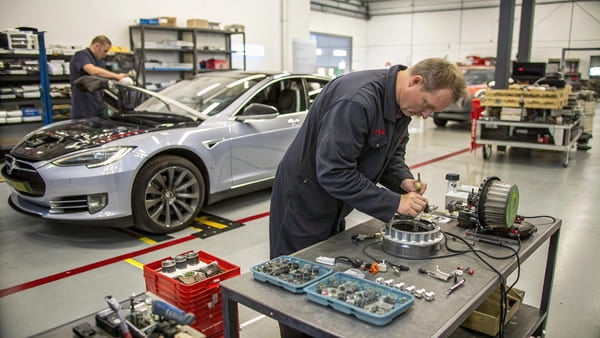
As a manufacturer, I can tell you that serving this market isn't easy. The P85D was built with incredible precision, and replicating its parts is a serious technical challenge. It's not something just any factory can do. You need specialized machinery and deep expertise to get it right. The demand isn't for cheap knock-offs; it's for components that meet or exceed the original specifications, because these cars are still all about performance.
The Challenge of High-Precision Replication
Making parts for the P85D is very difficult. Standard modification equipment just doesn't have the accuracy needed for these older electric cars. For example, when we produce a custom P85D component, our production line needs at least three main steps. The hardest part is often related to the battery bay cooling system13. The machines required for this level of precision are usually found in factories in the coastal Fujian area or around Shanghai. Factories in other regions, like Hebei, typically can't meet these strict accuracy standards.
A Personal Experience with Manufacturing
Another difficult step is adding conductive color powder to the insulation coating14. The machine has to stop, and we have to open the mold to add the powder. This makes the cooling process very tricky. I learned this the hard way on my first project for a Pakistani client. We were making a custom part, and after it cooled, we noticed it had "shrunk" more than we expected. I was worried, but the client actually loved the result. It was a lucky mistake. We figured out how to control the process perfectly after that and have never had a problem since.
Key Components in Demand
The B2B market is focused on specific parts that are known to wear out or are popular for upgrades.
| Part Category | Specific Components | Reason for Demand |
|---|---|---|
| Battery System | Cooling lines, cell modules, contactors15 | High-stress area, essential for performance and safety |
| Drive Unit | Bearings, seals, motor mounts | Common wear and tear items on high-mileage cars |
| Body & Interior | Bumpers, door handles, screen components | Prone to damage and electronic failure over time |
| Suspension | Air struts, control arms | Performance driving puts heavy strain on these parts |
Conclusion
The Tesla P85D is far from obsolete. It has become a modern classic, supported by a strong global aftermarket that demands high-quality, precision-made parts to keep these legends on the road.
Discover vibrant communities and resources where owners and fans share tips, parts, and support for keeping your P85D running strong. ↩
Learn how professional shops and tuners find reliable parts and services to maintain and upgrade Tesla P85Ds. ↩
Understand the engineering behind the P85D's legendary traction and performance, and why it's still sought after. ↩
Explore the technology and thrill behind Insane Mode, which made the P85D a viral sensation among car enthusiasts. ↩
Learn about the advantages of AWD in EVs, especially for performance and safety in various driving conditions. ↩
See how advanced power management enhances driving experience and reliability in high-performance EVs. ↩
Find out about typical battery and motor challenges and how to address them for long-term reliability. ↩
Discover where P85Ds are most concentrated and why these areas have thriving aftermarket support. ↩
Locate trusted specialists who can service and repair your aging Tesla without relying on expensive official channels. ↩
Explore how used P85Ds are bought, sold, and maintained, and what buyers should look for in these markets. ↩
Ensure your Tesla gets the best parts by finding reputable suppliers of OEM-quality components in key Asian markets. ↩
Learn about the importance of precision in replacement parts and which manufacturers meet these standards. ↩
Get expert advice on maintaining or upgrading the cooling system, a critical part for performance and safety. ↩
Understand this unique manufacturing step and its impact on part quality and performance. ↩
Learn about these essential battery components and how to source replacements for optimal performance. ↩