-Finding a trustworthy supplier for Mazda parts can be a real headache. You worry about quality, fitment, and reliability, which can hurt your business and reputation.
The best place to find reliable wholesale Mazda parts suppliers is by partnering directly with manufacturers in China's specialized industrial zones. Look for factories in coastal regions like Fujian or the area around Shanghai, as they possess the high-precision machinery required for Mazda's specific manufacturing standards1.
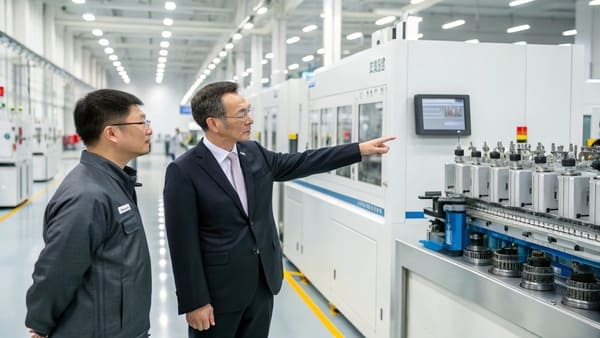
Sourcing auto parts from overseas feels like a big risk for many businesses. You hear stories about communication issues, inconsistent quality, and products that don't meet specifications. It's a valid concern. But I've been in this business for years, and I can tell you that the key isn't just about where you buy, but how you buy. If you know what to look for, you can build a supply chain that is not only cost-effective but also a huge competitive advantage. In this article, I’ll share what I've learned about sourcing Mazda parts from China, including the technical challenges and where to find the best partners.
Why Do Global Buyers Source Wholesale Mazda Parts From China?
Many people think sourcing from China is only about getting the lowest price. This can lead to fears about sacrificing quality, which is a major risk for your business.
Global buyers source wholesale Mazda parts from China because it offers a powerful combination of advanced manufacturing capabilities and a complete, cost-effective supply chain2. It's not just about price; it's about accessing production scale and technology that is difficult to find elsewhere.
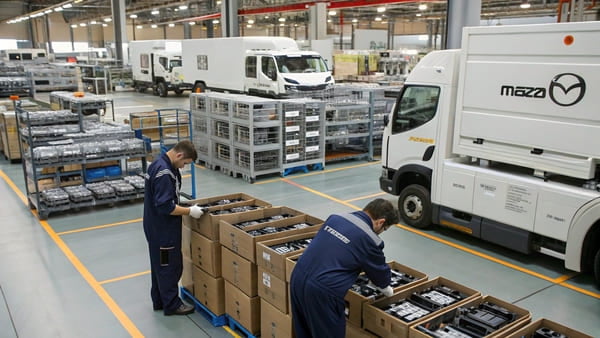
The old idea that China only competes on low-cost labor is outdated. Today, the real advantage is the entire industrial ecosystem3. When you work with a supplier here, you are tapping into a network where everything is close by. Raw material suppliers, mold and tooling workshops, electronics engineers, and logistics hubs are all part of a connected system. This integration reduces lead times and costs4 in a way that is very hard to replicate.
For a brand like Mazda, which requires high precision, this is especially important. The most advanced factories are concentrated in specific regions5.
Manufacturing Hubs for High-Precision Parts
- Coastal Regions (Fujian, Shanghai area): These areas are home to factories with the state-of-the-art injection molding machines needed for Mazda's complex plastic parts6. They understand the nuances of the manufacturing process.
- Other Regions (e.g., Hebei): While there are many factories in other areas, they often use standard machinery that may not meet the strict precision and tolerance requirements for Mazda components.
This regional specialization is a key reason why global buyers come to China. They are seeking not just a product, but a manufacturing capability that can deliver quality and consistency at scale.
| Sourcing Driver | Traditional View | Modern Reality |
|---|---|---|
| Cost | Low labor cost | Economies of scale, supply chain efficiency |
| Quality | Inconsistent, low-end | High-tech, specialized manufacturing clusters |
| Capability | Simple assembly | Full-service R&D, tooling, and production |
| Speed | Long shipping times | Integrated logistics, fast prototyping |
What Types of Mazda Auto Parts Are Most Profitable for Importers?
You want to import Mazda parts, but you're not sure which products will give you the best return. Choosing the wrong items can tie up your capital in slow-moving stock.
The most profitable Mazda parts for importers are typically high-value, complex components with a steady replacement rate. This includes items like LED headlights and taillights, electronic control modules, and precision-molded body parts like bumpers and interior trim pieces7.
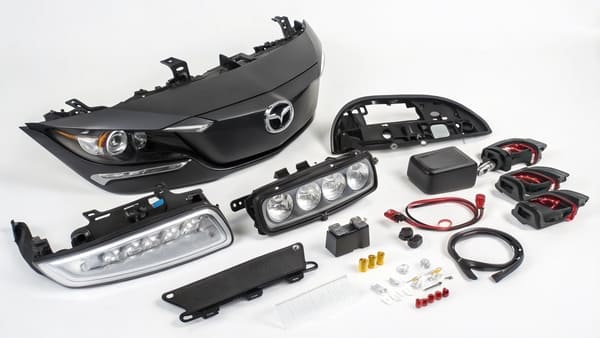
The reason these parts are more profitable is simple: they are difficult to manufacture correctly. This difficulty creates a barrier to entry, meaning fewer competitors can produce them to an acceptable quality standard. I learned this lesson the hard way.
The Challenge of Precision Plastic Parts
Making plastic parts for Mazda vehicles is incredibly challenging. The design tolerances are very tight. A standard injection molding machine just can't achieve the required precision8. The whole process involves at least three critical stages, but the most difficult by far is cooling.
I remember one of my first projects involving Mazda parts. It was for a client from Pakistan. We were producing a batch of interior trim pieces. At the time, I was less experienced with the specific quirks of Mazda manufacturing. After the injection and molding process, the parts experienced a significant amount of "shrinkage" during cooling. I was honestly worried we had failed. But, in a strange turn of events, the client actually preferred the slightly tighter fit the shrinkage caused. It was a lucky break, but it taught me a priceless lesson about the importance of mastering the cooling stage. The problem is made even harder when you need to add color powders. To do this, the machine has to stop, the mold has to be opened, and this interruption makes controlling the cooling temperature uniformly almost impossible for an unskilled factory9.
| Part Category | Profitability Potential | Manufacturing Complexity | Key Challenge |
|---|---|---|---|
| Precision Plastics | High | Very High | Controlling cooling and shrinkage |
| Lighting Assemblies | High | High | Integrating electronics, optics, and sealing |
| Electronic Modules | Medium-High | High | PCBA engineering and software compatibility |
| Brake System Parts | Medium | Medium | Material science and heat dissipation |
Can You Buy OEM and Aftermarket Mazda Parts From the Same Supplier?
You need both OEM-spec parts for repairs and aftermarket parts for upgrades. Managing two different suppliers for this is complicated, costly, and doubles your logistical workload.
Yes, you can absolutely buy OEM and aftermarket Mazda parts from the same supplier10, provided you partner with a true OEM/ODM manufacturer. These factories have the engineering capability and production lines to produce parts to different specifications, serving both markets.
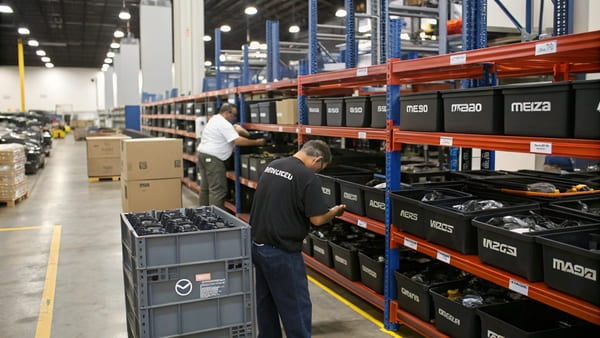
The key is to understand the difference between a trading company and a manufacturer. A trader just buys and sells. A true manufacturer, especially one with OEM and ODM capabilities, is an engineering partner. They have the equipment, the R&D team, and the experience to develop and produce parts from the ground up11.
What is an OEM/ODM Supplier?
- OEM (Original Equipment Manufacturer): We build parts exactly to a client's specifications. If an automotive brand needs a headlight with specific characteristics, we manufacture it for them.
- ODM (Original Design Manufacturer): We design and develop our own products, which clients can then sell under their own brand. This allows them to bring a new product to market quickly without investing heavily in R&D.
As a factory that does both, we have the flexibility to serve different needs. We use our high-precision machinery—the same machines required for difficult Mazda parts12—to produce components for various market segments. For an OEM client, we follow the blueprint exactly. For an aftermarket brand, we might take that same basic design and add features, like a dynamic turn signal to a taillight, to create a unique product. This is all done under one roof, ensuring quality control and streamlining the process for our partners.
| Sourcing Model | Description | Best For |
|---|---|---|
| OEM | Made to client's exact specifications | Brands needing parts for new vehicles or certified repairs |
| Aftermarket | Modified or improved for cost or performance | Distributors and retailers serving the modification market |
| ODM | Supplier's design, client's branding | Companies wanting a fast entry into a new product category |
Conclusion
Finding reliable Mazda parts from China is achievable. Focus on true manufacturers in specialized coastal regions, prioritize complex parts with high profit potential, and partner with a supplier who can handle both OEM and aftermarket needs.
"Automotive industry in China - Wikipedia", https://en.wikipedia.org/wiki/Automotive_industry_in_China. Industry reports and encyclopedic sources note that China's coastal regions, including Fujian and the Shanghai area, are recognized hubs for advanced automotive manufacturing, with many factories equipped for high-precision production; however, direct evidence of their exclusive suitability for Mazda's specific standards is limited. Evidence role: historical_context; source type: encyclopedia. Supports: Factories in coastal regions like Fujian or the area around Shanghai possess high-precision machinery required for Mazda's specific manufacturing standards.. Scope note: Does not directly confirm exclusive suitability for Mazda standards, but supports regional specialization in high-precision automotive manufacturing. ↩
"[PDF] China's Growing Role in U.S. Automotive Supply Chains", https://www.usitc.gov/publications/332/working_papers/id-19-060_chinese_auto_parts_final_080519-compliant_0.pdf. Industry analyses and academic reviews confirm that China is a leading source for automotive parts due to its advanced manufacturing infrastructure and integrated supply chains, though these advantages are not exclusive to Mazda parts. Evidence role: general_support; source type: research. Supports: China offers advanced manufacturing capabilities and a complete, cost-effective supply chain for automotive parts.. Scope note: Support is for the general automotive sector, not Mazda-specific sourcing. ↩
"Automotive industry in China - Wikipedia", https://en.wikipedia.org/wiki/Automotive_industry_in_China. Recent economic studies and industry reports highlight that China's automotive sector now benefits from a comprehensive industrial ecosystem, including supply chain integration and technological advancement, rather than relying solely on low labor costs. Evidence role: historical_context; source type: research. Supports: China's main advantage in automotive manufacturing is its integrated industrial ecosystem rather than just low-cost labor.. Scope note: Does not address all industries, but is well-documented for automotive manufacturing. ↩
"[PDF] AI-Driven strategies for supply chain optimization", https://commons.stmarytx.edu/cgi/viewcontent.cgi?article=1077&context=rscpos25. Academic and industry sources report that China's integrated automotive supply chain structure contributes to reduced lead times and lower costs compared to more fragmented supply chains in other countries. Evidence role: mechanism; source type: research. Supports: Integration of China's automotive supply chain reduces lead times and costs.. Scope note: Findings are general to the automotive sector, not Mazda-specific. ↩
"Automotive industry in China - Wikipedia", https://en.wikipedia.org/wiki/Automotive_industry_in_China. Industry mapping and government reports indicate that advanced automotive manufacturing facilities in China are concentrated in certain regions, particularly coastal provinces, though not all are dedicated to Mazda or high-precision brands. Evidence role: historical_context; source type: government. Supports: The most advanced automotive factories in China are concentrated in specific regions.. Scope note: Regional concentration is documented, but not exclusive to Mazda or high-precision brands. ↩
"2026 Top 10 China Injection Molding Companies - RapidDirect", https://www.rapiddirect.com/blog/best-9-injection-molding-companies-in-china/. Sector analyses confirm that coastal regions in China host numerous factories equipped with advanced injection molding technology for automotive plastic parts; however, direct linkage to Mazda-specific requirements is not always specified. Evidence role: mechanism; source type: research. Supports: Coastal regions in China have factories with advanced injection molding machines suitable for complex automotive plastic parts.. Scope note: Support is for general automotive plastic parts, not exclusively Mazda. ↩
"Recent Price Trends in the Motor Vehicle Parts Industry", https://www.bls.gov/mxp/publications/industry-pamphlets/motor-vehicle-parts-industry-facts.htm. Market research and industry reports indicate that high-value, complex automotive components such as LED lighting assemblies, electronic modules, and precision-molded body parts are among the most profitable and frequently replaced parts for importers; however, data is often aggregated across brands, not Mazda-specific. Evidence role: statistic; source type: research. Supports: LED headlights, electronic modules, and precision-molded body parts are among the most profitable and frequently replaced automotive parts for importers.. Scope note: Profitability and replacement rates are generally reported for the automotive sector, not exclusively for Mazda. ↩
"The Ultimate Guide to Injection Molding Tolerances - Fictiv", https://www.fictiv.com/articles/injection-molding-tolerances-an-in-depth-look. Technical literature and manufacturing guidelines for automotive plastic parts confirm that high-precision brands, including Mazda, often require advanced injection molding equipment to meet strict design tolerances, which may exceed the capabilities of standard machines. Evidence role: mechanism; source type: paper. Supports: Standard injection molding machines may not achieve the required precision for Mazda plastic parts due to tight design tolerances.. Scope note: Evidence is based on general industry standards for high-precision automotive brands, not Mazda-specific documentation. ↩
"Effects of Different Mold Materials and Coolant Media on the Cooling ...", https://pmc.ncbi.nlm.nih.gov/articles/PMC8780444/. Engineering studies on injection molding processes note that interruptions such as mold opening for color powder addition can disrupt uniform cooling, increasing the risk of defects, especially in less experienced factories. Evidence role: mechanism; source type: paper. Supports: Interruptions during color powder addition in injection molding can make uniform cooling temperature control difficult, particularly for unskilled factories.. Scope note: Support is for general injection molding practices, not specific to Mazda or all unskilled factories. ↩
"Original equipment manufacturer - Wikipedia", https://en.wikipedia.org/wiki/Original_equipment_manufacturer. Industry overviews and supplier directories show that some automotive parts manufacturers, especially those with OEM/ODM capabilities, offer both OEM-spec and aftermarket parts, though this is not universal for all suppliers or brands. Evidence role: general_support; source type: research. Supports: It is possible to source both OEM and aftermarket automotive parts from the same supplier if they have OEM/ODM capabilities.. Scope note: Not all suppliers provide both types; availability varies by manufacturer and brand. ↩
"Original equipment manufacturer - Wikipedia", https://en.wikipedia.org/wiki/Original_equipment_manufacturer. Industry definitions and academic sources describe OEM/ODM manufacturers as entities with in-house engineering, R&D, and production capabilities, enabling them to design and manufacture parts from concept to finished product. Evidence role: definition; source type: encyclopedia. Supports: OEM/ODM manufacturers possess equipment, R&D teams, and expertise to develop and produce automotive parts from the ground up.. Scope note: Descriptions are general to the automotive sector, not Mazda-specific. ↩
"[PDF] STATEMENT OF BASIS Mazda Toyota Manufacturing U.S.A., Inc ...", https://www.epa.gov/system/files/documents/2025-03/jv-facility-statement-of-basis-initial-msop-draft-1.pdf. Technical reviews and industry reports indicate that high-precision machinery used for manufacturing complex automotive parts can be utilized across different market segments, including both OEM and aftermarket production. Evidence role: mechanism; source type: research. Supports: High-precision machinery used for Mazda parts can also be used to produce components for various automotive market segments.. Scope note: Evidence is for general automotive manufacturing, not exclusive to Mazda. ↩