-Ever feel unsure about your headlights at night? Using the wrong beam can blind others or limit your view, creating real danger. Let's make it simple.
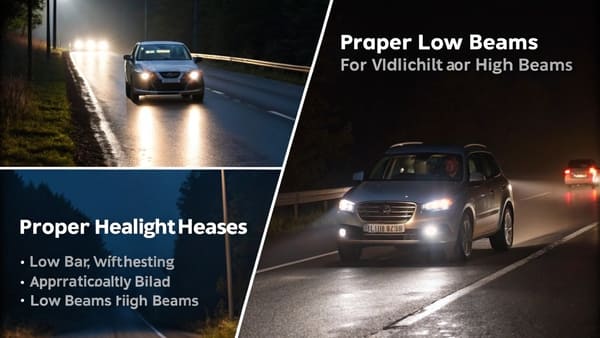
Use low beams for normal night driving with other cars around. Use high beams only on empty, dark roads for maximum visibility. Always switch back to low beams when you see another vehicle, either oncoming or ahead of you, to prevent blinding the other driver.
Knowing when to use them is the first step. But have you ever wondered what actually makes them different? It's not just about a simple switch. The technology and manufacturing behind them are surprisingly complex. Let's look closer at the key differences between your high and low beams and why getting them right matters so much.
What Is the Difference Between High Beam and Low Beam Headlights?
You know one is brighter, but what's the real difference? It’s more than just brightness; it’s about light direction, safety, and a completely different purpose for each beam.
The main difference is the angle of the light beam. Low beams are angled down and to the side to light up the road without blinding others. High beams are aimed straight ahead to see as far as possible, which is why they blind other drivers.1
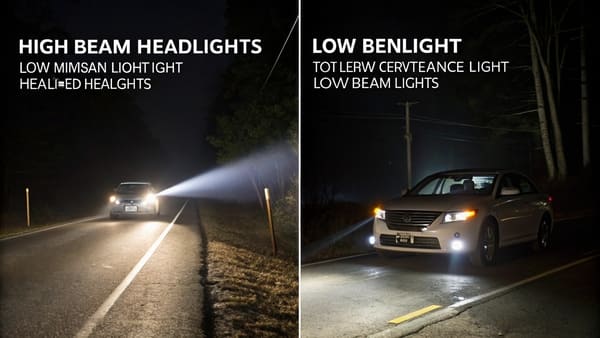
The key difference isn't just power, but direction. Think of low beams as polite and focused. They are designed to light up the immediate path in front of you and slightly to the side, keeping the light out of the eyes of oncoming drivers. High beams are the opposite; they are designed for maximum distance, pointing straight ahead. This is why they are so blinding. The design of the reflector or projector inside the headlight assembly is what creates this specific light pattern.2 Each beam has a very distinct job, and this precision is achieved through complex internal components. Even tiny variations in the shape of these parts can completely change the light output and its safety.3
| Feature | Low Beam Headlights | High Beam Headlights |
|---|---|---|
| Primary Use | City driving, traffic, poor weather | Empty roads, highways with no traffic |
| Light Angle | Angled downward and to the side | Aimed straight ahead |
| Main Goal | Short-range visibility without glare | Maximum long-range visibility |
| Effect on Others | Minimizes blinding oncoming traffic | Causes significant glare and danger |
How Do Low Beam Headlights Work on Modern Vehicles?
Modern low beams are more than just a bulb. They rely on complex parts. But this precision makes manufacturing incredibly difficult, where a tiny mistake causes big problems.
Low beams work by using either a reflector or a projector lens to direct light from the bulb downwards. A specific shield or "cutoff" inside the assembly creates the sharp line that prevents light from shining into the eyes of other drivers, ensuring road safety.4
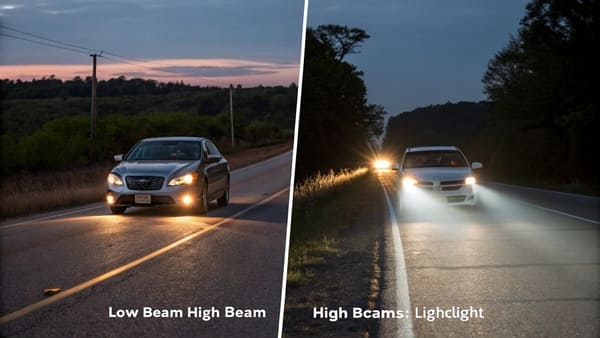
Modern low beams use a projector or reflector system to control the light.5 Inside, plastic components guide the light precisely. Making these parts is extremely difficult. Standard injection molding machines just aren't accurate enough for the job.6 As a manufacturer, I can tell you the process has at least three critical steps, and the hardest is cooling. The plastic must cool perfectly to hold its exact shape. High-precision machines that can do this are usually found in coastal areas like Fujian or near Shanghai. I once had a project with a client from Pakistan. Our first batch of plastic components "shrank" more than expected after cooling. I was worried, but the client actually preferred the result! It was a lucky break and a huge learning experience for me. Even adding color pigments is tough. We have to stop the machine and open the mold, which makes the cooling process even more complicated.
What Makes High Beam Headlights Brighter Than Low Beams?
Ever wonder if high beams just use a stronger bulb? It’s a common myth. The truth is more about clever engineering than just raw power, a deliberate design choice.
High beams seem brighter because they direct all available light straight ahead without a cutoff shield.7 This focuses the light into a concentrated beam for maximum distance, rather than spreading it out downwards like low beams do. It’s about focus, not always more power.
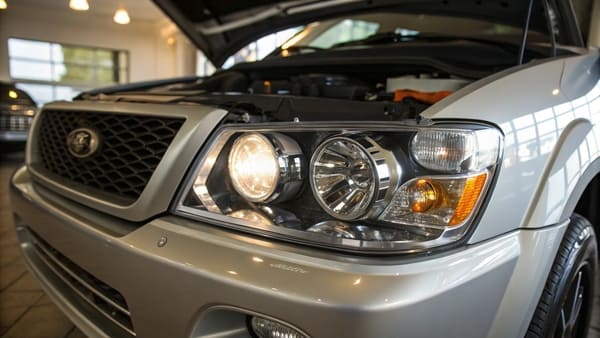
The "brightness" of high beams is mostly an illusion of focus. In many modern cars, the high and low beams use the exact same light source, like a single HID or LED chip.8 The difference is a small mechanical part, often a shutter or solenoid. For low beams, this shutter is in place, creating that sharp cutoff line. When you switch to high beams, an electronic signal moves the shutter out of the way.9 This instantly "unleashes" the full pattern of light, aiming it higher and further down the road. It’s not more power, just less restriction. This simple-sounding mechanism relies on incredibly precise plastic and metal components that must work perfectly millions of times.10 The reliability of this tiny moving part is essential for the headlight to function correctly.11
| Headlight Type | How High Beam is Activated |
|---|---|
| Dual-Filament Halogen | A second, differently positioned filament lights up. |
| Bi-Xenon (HID) | A mechanical shutter moves to expose the full light beam. |
| Bi-LED | A shutter moves, or additional LED chips are activated. |
Conclusion
Using the right beam is crucial for safety. Low beams are for driving in traffic, while high beams are for empty roads.12 The difference is all about the light's angle.
"Headlamp - Wikipedia", https://en.wikipedia.org/wiki/Headlamp. A technical overview from an automotive engineering source explains that low beams are designed with a downward and lateral angle to minimize glare for other drivers, while high beams are aimed straight ahead for maximum forward visibility, which can cause glare. Evidence role: mechanism; source type: education. Supports: Low beams are angled down and to the side to light up the road without blinding others. High beams are aimed straight ahead to see as far as possible, which is why they blind other drivers.. Scope note: This explanation is based on standard headlight designs and may not account for all vehicle types or adaptive lighting systems. ↩
"Projector Vs Reflector Headlights! - YouTube", https://www.youtube.com/shorts/R7EwuCqAwlA. Automotive lighting engineering texts explain that the reflector or projector design determines the distribution and pattern of light emitted by headlights. Evidence role: mechanism; source type: education. Supports: The design of the reflector or projector inside the headlight assembly is what creates this specific light pattern.. Scope note: Some advanced systems use additional electronics or adaptive features to further control the pattern. ↩
"Vehicle Headlamp Aim Angle Test Procedure and ...", https://rosap.ntl.bts.gov/view/dot/88136/dot_88136_DS1.pdf. Research on automotive lighting indicates that small deviations in optical component geometry can significantly affect headlight beam pattern and compliance with safety standards. Evidence role: mechanism; source type: research. Supports: Even tiny variations in the shape of these parts can completely change the light output and its safety.. Scope note: The degree of impact depends on the specific design and manufacturing tolerances. ↩
"49 CFR 571.108 -- Standard No. 108; Lamps, reflective devices, and ...", https://www.ecfr.gov/current/title-49/subtitle-B/chapter-V/part-571/subpart-B/section-571.108. Automotive lighting standards describe how a cutoff shield in projector or reflector headlights creates a defined light pattern that prevents glare for oncoming drivers. Evidence role: mechanism; source type: government. Supports: A specific shield or "cutoff" inside the assembly creates the sharp line that prevents light from shining into the eyes of other drivers, ensuring road safety.. Scope note: The description applies to standard headlight assemblies and may not cover all advanced or adaptive systems. ↩
"Headlamp - Wikipedia", https://en.wikipedia.org/wiki/Headlamp. A review of modern automotive lighting technologies confirms that both projector and reflector systems are commonly used to control the light pattern of low beam headlights. Evidence role: expert_consensus; source type: encyclopedia. Supports: Modern low beams use a projector or reflector system to control the light.. Scope note: Some luxury vehicles may use adaptive or matrix LED systems, which are more advanced than standard projector or reflector types. ↩
"Multi-Objective Optimization of Injection Molding Process ... - PMC", https://pmc.ncbi.nlm.nih.gov/articles/PMC12158006/. Manufacturing literature notes that high-precision plastic injection molding is required for optical components in automotive lighting, as standard machines may not achieve the necessary tolerances. Evidence role: mechanism; source type: education. Supports: Standard injection molding machines just aren't accurate enough for the job.. Scope note: The need for specialized equipment may vary depending on the complexity of the headlight design and manufacturer capabilities. ↩
"Low Beam vs High Beam - Understanding Headlight Functions", https://www.xenonpro.com/blogs/home/low-beam-vs-high-beam-headlights-function-explained?srsltid=AfmBOooWeGfSjPTOdaD7KGii11-OUXA6uu1E46hwfgOgr1pOd9lCnBmO. Automotive lighting guides explain that high beams lack a cutoff shield, allowing more light to be projected straight ahead, which increases perceived brightness and range. Evidence role: mechanism; source type: education. Supports: High beams seem brighter because they direct all available light straight ahead without a cutoff shield.. Scope note: Some advanced headlight systems may use variable beam patterns, but the principle applies to standard designs. ↩
"How Do Bi-Xenon Headlights Work?", https://www.youtube.com/shorts/HCNGzu1VZmM. Technical reviews of modern headlight systems confirm that bi-xenon and bi-LED headlights often use a single light source with a mechanical shutter to switch between high and low beams. Evidence role: mechanism; source type: encyclopedia. Supports: In many modern cars, the high and low beams use the exact same light source, like a single HID or LED chip.. Scope note: Not all vehicles use this system; some still have separate bulbs for each beam. ↩
"How Do Bi-Xenon Headlights Work? - YouTube", https://www.youtube.com/shorts/HCNGzu1VZmM. Automotive engineering sources describe how a mechanical shutter in bi-xenon and bi-LED headlights blocks part of the light for low beams and retracts for high beams, altering the beam pattern. Evidence role: mechanism; source type: education. Supports: For low beams, this shutter is in place, creating that sharp cutoff line. When you switch to high beams, an electronic signal moves the shutter out of the way.. Scope note: This mechanism is specific to bi-function projector systems and does not apply to all headlight types. ↩
"Headlamp shutter issues : r/MechanicAdvice - Reddit", https://www.reddit.com/r/MechanicAdvice/comments/p0m43w/headlamp_shutter_issues/. Engineering analyses of automotive headlight systems note that the reliability of mechanical shutters and moving parts is critical, requiring high-precision manufacturing for long-term durability. Evidence role: mechanism; source type: research. Supports: This simple-sounding mechanism relies on incredibly precise plastic and metal components that must work perfectly millions of times.. Scope note: Actual failure rates may vary by manufacturer and design. ↩
"A Safety Evaluation of UVA Vehicle Headlights, month 2010", https://www.fhwa.dot.gov/publications/research/safety/99074/litera.cfm. Technical reviews highlight that the proper operation of moving parts, such as shutters in bi-function headlights, is essential for maintaining correct beam patterns and road safety. Evidence role: mechanism; source type: education. Supports: The reliability of this tiny moving part is essential for the headlight to function correctly.. Scope note: This applies primarily to headlight systems with mechanical shutters; other systems may use different technologies. ↩
"Interpretation ID: nht92-7.4 - NHTSA", https://www.nhtsa.gov/interpretations/nht92-74. Driver's manuals and road safety guidelines recommend using low beams in traffic and high beams only on empty or rural roads to avoid blinding other drivers. Evidence role: expert_consensus; source type: government. Supports: Low beams are for driving in traffic, while high beams are for empty roads.. Scope note: Regulations may vary by country or region, but the general guidance is widely accepted. ↩