-Your car's engine seems like a mystery box. You know it’s important, but its inner workings feel too complex. Let's open it up and see what’s inside.
The main parts of a car engine are the engine block, cylinder head, pistons, connecting rods, crankshaft, and camshaft.1 These components work together in a synchronized process to convert fuel and air into the mechanical force that moves your vehicle2.
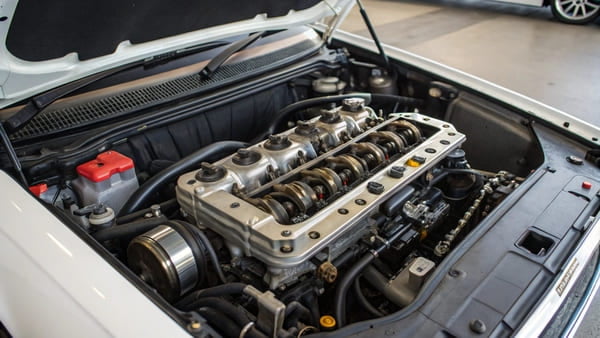
An engine is a marvel of engineering, where many parts move in perfect harmony. It looks complicated from the outside, but it's built on simple principles. Once you understand the role of each main part, the whole system starts to make sense. We are going to break down the most important sections of the engine. You will see how they connect and why each one is critical for making your car go. Let’s dive in and demystify the heart of your car.
What Is a Car Engine and Why Is It Called the Heart of a Vehicle?
Everyone calls the engine the "heart" of the car. But what does that really mean for how your vehicle functions? Let’s explore why this comparison is so accurate.
A car engine is a machine that creates power by burning fuel.3 It’s called the "heart" because it pumps life into the entire vehicle, providing the energy needed for movement and powering all the electrical systems, just like a heart pumps blood to a body.4
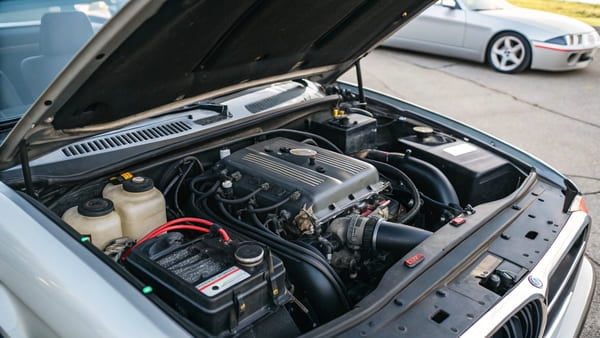
When we say the engine is the heart, it's more than just a saying. The engine doesn't just turn the wheels. It also drives other essential components. For example, a belt connected to the engine spins the alternator, which generates electricity for your lights, radio, and battery5. It also powers the pump for your power steering and the compressor for your air conditioning.6 Without the engine running, none of these systems would work. This is why a dead battery can stop a car, but a broken engine brings everything to a complete halt. It is the central power source for everything. The most common type is the internal combustion engine, which works on a simple, repeating cycle.7
The Four-Stroke Cycle
The engine creates power through a four-step process that happens thousands of times per minute.8
- Intake: The piston moves down, drawing a mix of air and fuel into the cylinder.
- Compression: The piston moves up, squeezing the air-fuel mixture to make it more explosive.
- Power: A spark plug ignites the mixture, causing a small explosion that pushes the piston down with great force.
- Exhaust: The piston moves up again, pushing the leftover burnt gases out of the cylinder.
This cycle is the pulse of the engine, turning tiny explosions into the smooth power that drives your car.
What Are the Core Mechanical Parts Inside a Car Engine?
You know an engine has parts, but inside it can look like a confusing jumble of metal. Let's identify the most important moving components and what they do.
The core moving parts are the pistons, connecting rods, crankshaft, and camshaft.9 Pistons are pushed by combustion, connecting rods link them to the crankshaft, and the crankshaft converts their up-and-down motion into the rotation that drives the wheels.
The inside of an engine is like a perfectly choreographed dance. Each part has a specific job, and its movement affects all the others. The goal is to turn the straight-line, up-and-down force from the power stroke into a spinning motion. This rotational force is then sent to the transmission and, eventually, to the wheels. It's this transformation of energy that is the engine's main job. To understand this better, let's look at how these key parts work together in a chain of action.
The Engine's Power Team
These components work as a team to create motion. Here is a simple breakdown of their roles.
| Part | Function |
|---|---|
| Piston | A cylindrical part that moves up and down inside the engine's cylinder. It gets pushed down by the force of combustion. |
| Connecting Rod | A strong metal arm that connects the piston to the crankshaft. It transfers the piston's motion. |
| Crankshaft | A complex shaft with "crankpins" that are offset. As pistons push down, they turn the crankshaft, creating rotation. |
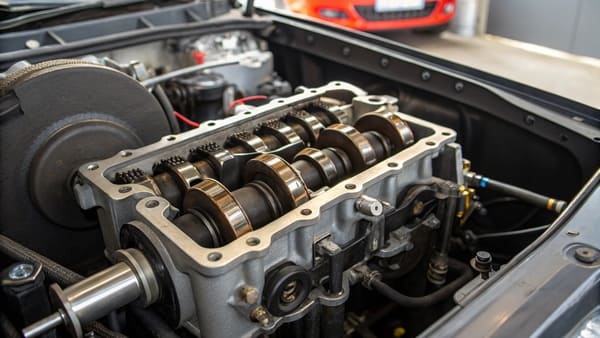
| Camshaft | A separate shaft with lobes (cams) that push open the intake and exhaust valves at precisely the right time for each stroke. |
| Valves | The "doors" to the cylinder. The intake valve lets air and fuel in, and the exhaust valve lets burnt gases out. |
The camshaft's timing is critical. It must open the valves in perfect sync with the piston's movement and the spark plug's firing.10 This perfect timing is what makes an engine run smoothly and efficiently.
What Is the Engine Block and Why Is It So Important?
The engine block just looks like a big, heavy piece of metal. Is it really that important compared to the moving parts? Let’s uncover why it's the foundation for everything.
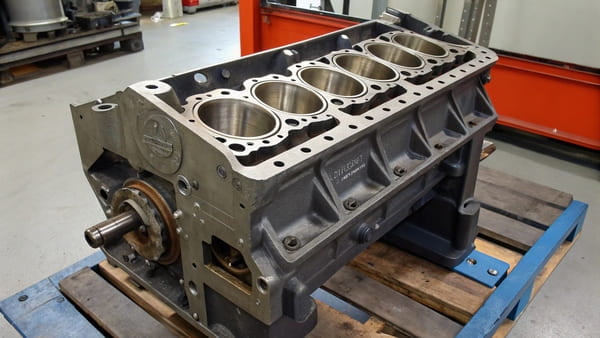
The engine block is the main structure of an engine that holds everything together.11 It contains the cylinders where the pistons move and provides a rigid frame for mounting the crankshaft, cylinder head, and all other components. Its strength is essential for engine durability.
Think of the engine block as the skeleton of the engine. It's the central component that all other parts are attached to. Made of either cast iron or aluminum, it has to be incredibly strong and rigid. It needs to withstand the intense heat and pressure from thousands of explosions per minute without warping or cracking. The block also contains important passages for oil and coolant to flow through, which lubricate and cool all the moving parts. Without a solid, precisely made block, the engine would quickly fall apart.
As a manufacturer, I know that even parts that attach to the block require extreme precision. For instance, manufacturing precision plastic parts for engines is incredibly difficult. A standard injection molding machine can't achieve the accuracy needed for core components like intake manifolds or sensor housings. The cooling process is the most challenging step. I remember my first project making these parts for a customer from Pakistan. We were still learning, and the plastic parts "shrank" more than we expected after they cooled. I was worried, but the client was actually happier with the result because the slightly smaller, denser parts created a tighter fit. It was a lucky break and a huge lesson in the complex science of materials. Since then, we've perfected our cooling process, but it showed me just how critical precision is in every single engine component, not just the big metal ones.
Conclusion
The engine is a system where the block provides a strong foundation. Inside, parts like the crankshaft and pistons work together in a precise cycle to create power for your car.
"Component parts of internal combustion engines - Wikipedia", https://en.wikipedia.org/wiki/Component_parts_of_internal_combustion_engines. A reputable automotive engineering source outlines the primary components of a typical internal combustion engine as the engine block, cylinder head, pistons, connecting rods, crankshaft, and camshaft, supporting this summary of main parts. Evidence role: definition; source type: encyclopedia. Supports: The main parts of a car engine are the engine block, cylinder head, pistons, connecting rods, crankshaft, and camshaft.. Scope note: This description applies to conventional four-stroke internal combustion engines; some engine designs may differ. ↩
"Internal Combustion Engine - Otto Cycle | Glenn Research Center", https://www1.grc.nasa.gov/beginners-guide-to-aeronautics/internal-combustion-engine-otto-cycle/. An educational resource on automotive engineering explains that internal combustion engines convert the chemical energy of fuel and air into mechanical energy to propel vehicles, supporting this mechanism. Evidence role: mechanism; source type: education. Supports: These components work together in a synchronized process to convert fuel and air into the mechanical force that moves your vehicle.. Scope note: This explanation is specific to internal combustion engines and does not apply to electric vehicles. ↩
"Engine - Wikipedia", https://en.wikipedia.org/wiki/Engine. A general encyclopedia entry on car engines defines them as machines that generate power through the combustion of fuel, supporting this statement. Evidence role: definition; source type: encyclopedia. Supports: A car engine is a machine that creates power by burning fuel.. Scope note: This definition applies to internal combustion engines and not to electric or alternative powertrains. ↩
"Internal Combustion Engine Basics | Department of Energy", https://www.energy.gov/cmei/vehicles/articles/internal-combustion-engine-basics. Automotive textbooks and educational resources often refer to the engine as the 'heart' of the vehicle due to its central role in providing power for movement and auxiliary systems, supporting this analogy. Evidence role: general_support; source type: education. Supports: It’s called the "heart" because it pumps life into the entire vehicle, providing the energy needed for movement and powering all the electrical systems, just like a heart pumps blood to a body.. Scope note: The analogy is widely used in educational contexts but is metaphorical rather than technical. ↩
"All About Alternators: What They Are & How They Work", https://universityautoflagstaff.com/all-about-alternators-what-they-are-how-they-work/. Automotive engineering guides explain that the engine drives a belt that powers the alternator, which generates electricity for vehicle electrical systems, supporting this description. Evidence role: mechanism; source type: education. Supports: A belt connected to the engine spins the alternator, which generates electricity for your lights, radio, and battery.. Scope note: The specific configuration may vary in hybrid or electric vehicles. ↩
"Serpentine belt - Wikipedia", https://en.wikipedia.org/wiki/Serpentine_belt. Standard automotive maintenance manuals confirm that the engine, via accessory belts, typically powers the power steering pump and air conditioning compressor in conventional vehicles, supporting this claim. Evidence role: mechanism; source type: education. Supports: It also powers the pump for your power steering and the compressor for your air conditioning.. Scope note: Some modern vehicles use electric pumps or compressors instead of engine-driven ones. ↩
"Automotive engine - Wikipedia", https://en.wikipedia.org/wiki/Automotive_engine. Automotive encyclopedias and industry reports state that the internal combustion engine is the most prevalent engine type in passenger vehicles, operating on a repeating cycle such as the four-stroke process, supporting this statement. Evidence role: statistic; source type: encyclopedia. Supports: The most common type is the internal combustion engine, which works on a simple, repeating cycle.. Scope note: The prevalence of internal combustion engines is changing with the rise of electric vehicles. ↩
"Four-stroke engine - Wikipedia", https://en.wikipedia.org/wiki/Four-stroke_engine. Automotive engineering textbooks describe the four-stroke cycle (intake, compression, power, exhaust) as the standard process in most car engines, occurring at high frequencies during operation, supporting this explanation. Evidence role: mechanism; source type: education. Supports: The engine creates power through a four-step process that happens thousands of times per minute.. Scope note: The exact number of cycles per minute depends on engine speed (RPM). ↩
"Internal combustion engine - Wikipedia", https://en.wikipedia.org/wiki/Internal_combustion_engine. Automotive engineering references identify the pistons, connecting rods, crankshaft, and camshaft as the primary moving components in a typical internal combustion engine, supporting this summary. Evidence role: definition; source type: encyclopedia. Supports: The core moving parts are the pistons, connecting rods, crankshaft, and camshaft.. Scope note: Some engine designs may include additional or alternative moving parts. ↩
"Camshaft Timing Explained: Improve Power in 2026 Cars", https://goldfarbinc.com/blogs/news/camshaft-timing-explained-improve-power?srsltid=AfmBOormD0IOFYH2MUNTMI2Q7Qp4MumH0Yzydimlg4EZMHv-vfTXdfX5. Automotive engineering literature emphasizes the importance of camshaft timing for proper valve operation and engine performance, supporting this statement. Evidence role: mechanism; source type: education. Supports: The camshaft's timing is critical. It must open the valves in perfect sync with the piston's movement and the spark plug's firing.. Scope note: The synchronization method may vary in engines with variable valve timing or different ignition systems. ↩
"Engine block - Wikipedia", https://en.wikipedia.org/wiki/Engine_block. Automotive encyclopedias describe the engine block as the central structure that houses the cylinders and supports other engine components, supporting this definition. Evidence role: definition; source type: encyclopedia. Supports: The engine block is the main structure of an engine that holds everything together.. Scope note: Some modern engines use alternative construction methods, but the block remains the primary structure in most designs. ↩