-Your check engine light is on, and the code points to a bad O2 sensor. You’ve heard cleaning it is a cheap fix, but will it actually work?
Yes, you can clean an O2 sensor, but its effectiveness is limited. Cleaning only works if the sensor is coated with carbon or oil. It cannot fix internal electrical failures or the natural aging of the sensor, which are the most common reasons for it to fail.1
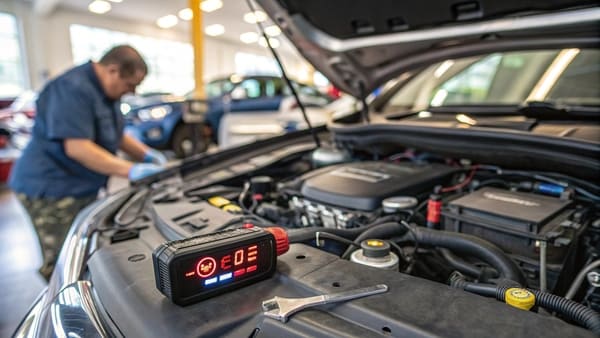
So, you're thinking of giving it a try. It sounds simple enough, right? But the reality is a bit more complex, and a failed attempt could just be a waste of your time. Before you get your hands dirty, it’s important to understand what you’re up against. Let's dive into whether cleaning is just a myth or a legitimate repair technique.
Can You Really Clean an O2 Sensor?
You see videos online showing a dirty sensor becoming sparkling clean. It seems like an easy way to save money, but many mechanics say it's a waste of time.
Cleaning can remove surface deposits like carbon, oil, or antifreeze residue. This might temporarily restore its function if contamination is the only problem.2 However, cleaning cannot repair an electrically failed or aged sensor element, which is the most common cause of failure.
An O2 sensor works by measuring the amount of unburned oxygen in your exhaust. This information helps your car's computer adjust the fuel mixture for optimal performance and emissions.3 Over time, the sensor's tip can get covered in soot, oil, or other gunk, which prevents it from getting an accurate reading.4 Most people just see the metal tip with its small vents, but there's a lot of engineering that goes into even the parts that protect it.
The Hidden Complexity of the Sensor's Design
I remember the first time I got an order for the plastic protective housing for these sensors. It was from a client in Pakistan, and I was still learning the ropes. I quickly found out that making this small part is incredibly precise work. Standard injection molding machines just can't handle it. The cooling process is the trickiest part. If it’s not perfect, the plastic shrinks and warps. On that first project, our parts shrank quite a bit. I was worried we had failed. But when I showed the client, he actually preferred the tighter fit. It was pure luck, but it taught me how delicate these components are. If the protective outside is that complex, imagine how sensitive the electronics inside are.
When Does Cleaning an O2 Sensor Actually Work?
Your car is running rough and guzzling gas. The O2 sensor seems to be the culprit, but you're on a tight budget and don't want to buy a new one.
Cleaning is most likely to work if the sensor failure is recent and caused by surface contamination. This often happens after you fix another engine issue, like a leaky injector or a bad gasket. If the sensor is just sluggish, not completely dead, cleaning might restore its responsiveness.
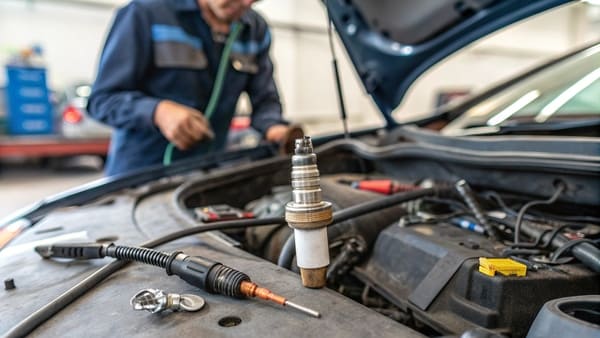
Deciding whether to clean your O2 sensor depends entirely on why it's failing. A sensor can fail in two main ways: it can get too dirty to read correctly, or it can fail electrically.5 Cleaning only helps with the first problem. Think of it as a diagnostic tool. If you clean the sensor and your car runs better for a week, you've confirmed the issue. But it’s still a sign that the sensor is on its way out and you should plan to replace it soon. If you do decide to clean it, use a dedicated Mass Air Flow (MAF) sensor cleaner or gasoline. Avoid harsh chemicals like brake cleaner, which can damage the sensitive internal components.6
Identifying the Right Scenarios for Cleaning
Here’s a simple breakdown to help you decide if cleaning is worth your time.
| Symptom | Is Cleaning a Good Idea? | Why? |
|---|---|---|
| Sluggish performance, poor MPG | Maybe | The sensor might just be coated in soot, slowing its reaction time. Cleaning could help restore its speed. |
| Specific O2 sensor codes (e.g., P0135 - Heater Circuit) | No | This is an electrical failure inside the sensor. Cleaning the tip won't fix a broken wire or heating element. |
| Contamination after fixing an oil/coolant leak | Yes | The sensor is likely coated in residue. Cleaning it off can restore function now that the source of the leak is fixed. |
| Old sensor (80,000+ miles) | Not really | The internal components are simply worn out from age. Cleaning is a very temporary fix at best. |
When Should You Replace an O2 Sensor Instead of Cleaning It?
You've tried cleaning your O2 sensor, or you're debating if it's even worth the effort. That check engine light is still glaring at you, and you need a permanent solution.
You should replace the sensor if it has an electrical fault code, is physically damaged, or is simply old (over 80,000 miles).7 Cleaning won't fix internal wear and tear, and a new sensor is the only reliable, long-term solution for these issues.
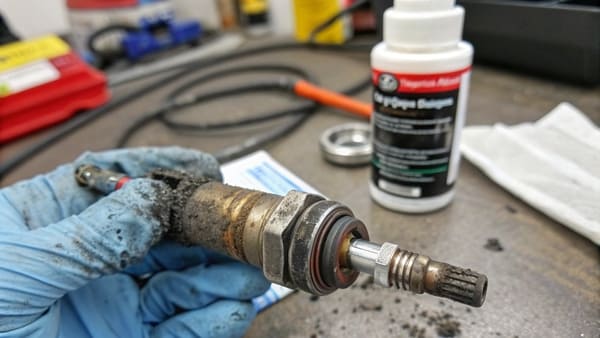
Sometimes, replacement is the only real option. An O2 sensor is a wear-and-tear item, much like brake pads or tires. It's not designed to last forever, and no amount of cleaning can turn back the clock on its internal components.8 Ignoring a truly bad sensor can lead to much bigger problems, like destroying your expensive catalytic converter, so it’s important to know when to give up on cleaning and just buy a new one.9
The Point of No Return: Why Replacement is a Must
Inside every O2 sensor is a zirconium ceramic element that chemically reacts with oxygen.10 Over tens of thousands of miles, this element simply wears out and loses its ability to produce an accurate voltage signal. Cleaning the outside does nothing to fix this internal degradation. Furthermore, many sensors have a built-in heating element that gets them to operating temperature (around 600°F) quickly.11 When this heater fails, you'll get a specific error code (like P0135). This is an electrical failure, and the only fix is a complete replacement.12 As a manufacturer, we design these parts to be reliable for their intended service life. They are sealed, consumable components. We focus on ensuring a new part is perfect out of the box, not on making it repairable.
Conclusion
Cleaning an O2 sensor can work for minor contamination, but it's not a permanent fix. For electrical faults or high-mileage sensors, replacement is the only reliable and safe choice.
"O2 sensor - Wikipedia", https://en.wikipedia.org/?title=O2_sensor&redirect=no. Automotive technical manuals and repair guides explain that O2 sensor cleaning is only effective for surface contamination, while most failures are due to internal electrical faults or sensor aging, which cannot be remedied by cleaning. Evidence role: mechanism; source type: education. Supports: Cleaning only works if the sensor is coated with carbon or oil. It cannot fix internal electrical failures or the natural aging of the sensor, which are the most common reasons for it to fail.. Scope note: This is based on general automotive repair consensus and may not account for rare, atypical sensor failures. ↩
"Durability of Oxygen Sensors - epa nepis", https://nepis.epa.gov/Exe/ZyPURL.cgi?Dockey=9100X1QV.TXT. Automotive repair literature indicates that cleaning O2 sensors may temporarily restore function if surface contamination is present, but does not address underlying electrical or mechanical faults. Evidence role: mechanism; source type: education. Supports: Cleaning can remove surface deposits like carbon, oil, or antifreeze residue. This might temporarily restore its function if contamination is the only problem.. Scope note: Temporary restoration is not guaranteed and depends on the nature of the contamination. ↩
"What Is an O2 Sensor? | UTI - Universal Technical Institute", https://www.uti.edu/blog/automotive/o2-sensor. Automotive engineering textbooks and encyclopedias describe the function of oxygen sensors in measuring exhaust oxygen content to enable engine control units to optimize air-fuel ratios for performance and emissions. Evidence role: mechanism; source type: encyclopedia. Supports: An O2 sensor works by measuring the amount of unburned oxygen in your exhaust. This information helps your car's computer adjust the fuel mixture for optimal performance and emissions.. Scope note: This explanation is general and may not cover all sensor types or vehicle models. ↩
"Durability of Oxygen Sensors - epa nepis", https://nepis.epa.gov/Exe/ZyPURL.cgi?Dockey=9100X1QV.TXT. Automotive maintenance guides note that O2 sensors can become contaminated with soot, oil, or coolant, which impairs their ability to accurately measure exhaust gases. Evidence role: mechanism; source type: education. Supports: Over time, the sensor's tip can get covered in soot, oil, or other gunk, which prevents it from getting an accurate reading.. Scope note: Contamination types and effects may vary by engine condition and sensor design. ↩
"Signs of a Bad Oxygen Sensor - AutoZone.com", https://www.autozone.com/diy/electrical/bad-o2-sensor-symptoms. Technical sources on automotive diagnostics identify contamination and electrical failure as the two primary failure modes for oxygen sensors. Evidence role: definition; source type: education. Supports: A sensor can fail in two main ways: it can get too dirty to read correctly, or it can fail electrically.. Scope note: Other rare failure modes may exist depending on sensor design and vehicle application. ↩
"[PDF] Protocol for Use and Maintenance of Oxygen Monitoring Devices", https://ors.od.nih.gov/sr/dohs/Documents/protocol-for-use-and-maintenance-of-oxygen-monitoring-devices.pdf. Automotive maintenance guides recommend using non-residue cleaners such as MAF sensor cleaner for O2 sensors and caution against harsh chemicals like brake cleaner, which can damage sensor elements. Evidence role: expert_consensus; source type: education. Supports: If you do decide to clean it, use a dedicated Mass Air Flow (MAF) sensor cleaner or gasoline. Avoid harsh chemicals like brake cleaner, which can damage the sensitive internal components.. Scope note: Some manufacturers advise against any cleaning; always consult the vehicle's service manual. ↩
"Should I replace both O2 sensors or just the downstream one?", https://www.facebook.com/groups/robinstogo/posts/2079871896075140/. Automotive service schedules and diagnostic guides recommend replacing O2 sensors after a certain mileage or when electrical faults or physical damage are present. Evidence role: expert_consensus; source type: education. Supports: You should replace the sensor if it has an electrical fault code, is physically damaged, or is simply old (over 80,000 miles).. Scope note: Replacement intervals may vary by manufacturer and vehicle model. ↩
"O2 Sensor Information - Columbia | Research", https://research.columbia.edu/o2-sensor-information. Automotive maintenance literature classifies O2 sensors as consumable components with a finite service life, similar to other wear items. Evidence role: expert_consensus; source type: education. Supports: An O2 sensor is a wear-and-tear item, much like brake pads or tires. It's not designed to last forever, and no amount of cleaning can turn back the clock on its internal components.. Scope note: Service life may vary depending on driving conditions and sensor quality. ↩
"Signs of Bad catalytic converter or O2 sensor |Which one is Bad?", https://www.youtube.com/watch?v=EDRksMU1axM. Automotive technical sources warn that a malfunctioning O2 sensor can cause improper fuel mixture, potentially damaging the catalytic converter over time. Evidence role: mechanism; source type: education. Supports: Ignoring a truly bad sensor can lead to much bigger problems, like destroying your expensive catalytic converter, so it’s important to know when to give up on cleaning and just buy a new one.. Scope note: Severity of catalytic converter damage depends on duration and type of sensor failure. ↩
"Electro-galvanic oxygen sensor - Wikipedia", https://en.wikipedia.org/wiki/Electro-galvanic_oxygen_sensor. Engineering references describe the construction of most automotive O2 sensors, which use a zirconium dioxide ceramic element to generate a voltage based on oxygen concentration. Evidence role: definition; source type: encyclopedia. Supports: Inside every O2 sensor is a zirconium ceramic element that chemically reacts with oxygen.. Scope note: Some O2 sensors use different materials or technologies (e.g., titania sensors). ↩
"How To Test Heated Oxygen Sensors(O2 Sensors) Without A ...", https://www.youtube.com/watch?v=M55qmlHZmko. Automotive engineering sources explain that heated O2 sensors (HO2S) include an internal heater to rapidly reach operating temperature, typically around 600°F (315°C). Evidence role: mechanism; source type: education. Supports: many sensors have a built-in heating element that gets them to operating temperature (around 600°F) quickly.. Scope note: Exact operating temperature may vary by sensor design and manufacturer. ↩
"O2 Sensor Heater Circuit Malfunction (Bank 1 Sensor 1) - YouTube", https://www.youtube.com/watch?v=ted9hj-OL7M. Automotive diagnostic manuals state that OBD-II code P0135 indicates a heater circuit malfunction in the O2 sensor, which typically requires sensor replacement. Evidence role: case_reference; source type: education. Supports: When this heater fails, you'll get a specific error code (like P0135). This is an electrical failure, and the only fix is a complete replacement.. Scope note: In rare cases, wiring or fuse issues may also cause this code. ↩