Sourcing reliable brake pads is a huge headache. Inconsistent quality can ruin your brand's reputation and lead to costly recalls. A proper vetting process is the only way forward.
To source the best brake pad manufacturers, you must go beyond basic certifications. The key is a multi-step verification process1 that includes OE-standard bench testing for durability2, on-site audits to verify production capacity3, and a thorough review of their supply chain traceability4 to ensure consistency.
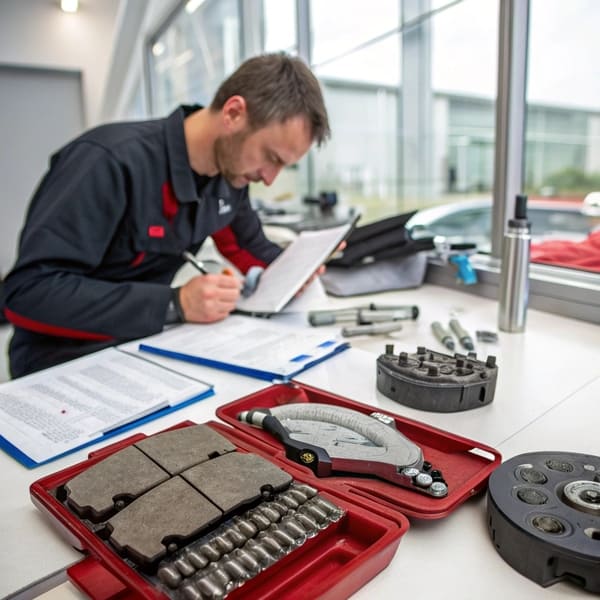
Finding a great partner isn't just about a good price or a nice-looking sample. I learned this the hard way. The real challenge is ensuring that the thousandth part is just as good as the first. This process starts with understanding the product itself. Before you can even think about audits and testing, you need to know exactly what you're looking for. To really understand this, we need to look at the different types of brake pads5 available. This choice is the first step in your sourcing journey, and it dictates everything that follows.
What Types of Brake Pads Are Available for Passenger and Commercial Vehicles?
Choosing the right brake pad type can feel overwhelming. The wrong choice can lead to poor performance, excessive noise, or premature wear, which ultimately disappoints your customers. Understanding the main types makes this decision simple.
The main types are organic, semi-metallic, and ceramic. Organic pads are quiet and affordable. Semi-metallic pads offer great performance but can be noisy. Ceramic pads provide a premium balance of quiet operation, low dust, and consistent performance. Commercial vehicles often use specialized semi-metallic formulas.
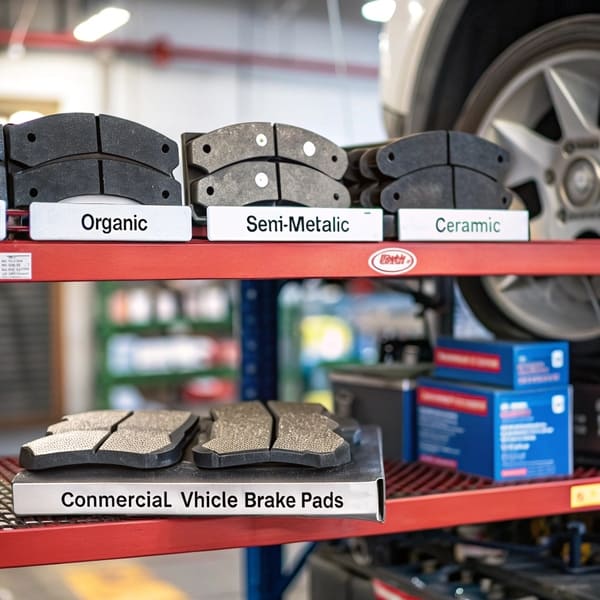
The type of brake pad you choose completely depends on your target vehicle and market. Let's break down the options in more detail to help you decide what's right for your business. Each material has its own set of advantages and disadvantages, and the best choice is a balance between performance, cost, and user experience. As a manufacturer, we handle all of these formulations, but it's crucial for our partners to understand what they're asking for.
Comparing Brake Pad Types
| Feature | Organic (NAO) | Semi-Metallic | Ceramic |
|---|---|---|---|
| Performance | Good for daily driving | Excellent stopping power, good in high heat | Consistent, smooth braking |
| Noise Level | Very Quiet | Can be noisy | Extremely Quiet |
| Brake Dust | Moderate | High | Very Low |
| Lifespan | Shorter | Very Long | Long |
| Rotor Wear | Gentle on rotors | Harsher on rotors | Gentle on rotors |
| Best For | Standard passenger cars | Performance vehicles, trucks, commercial use | Premium cars, daily drivers seeking clean wheels |
For commercial vehicles, the requirements are much more demanding. They carry heavy loads and operate under constant stress, generating immense heat. Standard passenger car pads would fail quickly. That's why commercial brake pads are almost always a specialized semi-metallic compound6, engineered with more aggressive friction materials and robust binders to withstand extreme temperatures and provide reliable stopping power, time after time.
How Do Material Choices Impact Brake Pad Performance and Lifespan?
You see different material claims from suppliers. Choosing the wrong material blend can mean failing to meet customer expectations for stopping power, noise levels, or longevity. Knowing the key ingredients helps you evaluate a supplier's capabilities.
A brake pad's friction material "recipe"7 determines everything. Binders hold it together under heat, abrasives clean the rotor, and fillers manage noise and heat. The specific blend of these components directly controls stopping power, heat resistance, noise, dust, and overall durability.
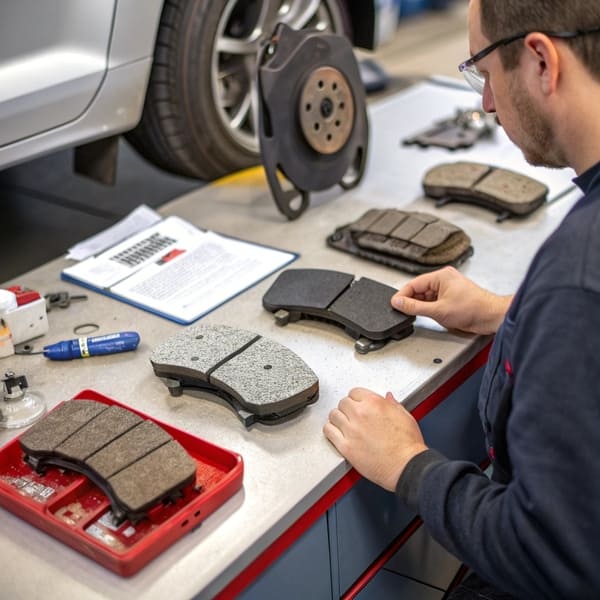
Think of a brake pad as a complex cake. You can't just throw ingredients together and hope for the best. A truly capable manufacturer is a master of material science. They understand how each component interacts to produce a specific result. This is where we, as an OEM/ODM supplier, focus a huge amount of our energy. It's not just about pressing powder into a shape; it's about engineering a material that performs safely and consistently.
The Building Blocks of a Brake Pad
A friction formula is a carefully guarded secret, but the main ingredient types are universal. The magic is in the precise percentage and quality of each one.
- Friction Modifiers: These are materials like graphite or metal sulfides. Their job is to stabilize the friction coefficient across a wide range of temperatures. This ensures the brake pedal feels the same whether the brakes are cold or hot.
- Binders: Phenolic resins are the glue that holds everything together. The quality of the resin is critical. A cheap binder will break down under high heat, causing the brake pad to crumble and fail.
- Fillers: These are often seen as "cheap" additives, but they play a vital role. Materials like barium sulfate8 add bulk, but they also help dissipate heat and dampen vibrations that cause brake squeal.
- Reinforcing Fibers: Steel, copper, aramid, or glass fibers provide the structural integrity. They prevent the pad from cracking or breaking apart under the immense pressure of the brake caliper.
When you're vetting a supplier, ask them about their material engineering process9. A good partner can explain how they adjust these recipes to create a low-dust pad for a luxury car or a high-friction pad for a performance application. A factory that can't have this conversation is likely just mixing a generic, one-size-fits-all formula.
Why Should Companies Compare OEM vs Aftermarket Brake Pads?
OEM or aftermarket? This choice can be confusing. One might be too expensive for your target market, while the other might not meet the quality standards your brand requires. Understanding the key differences empowers you to choose wisely.
OEM (Original Equipment Manufacturer) pads10 are designed for a specific vehicle model, ensuring perfect fit and balanced performance. Aftermarket pads offer a wider range of options, from budget replacements to high-performance upgrades. The best choice depends on your target market and quality standards.
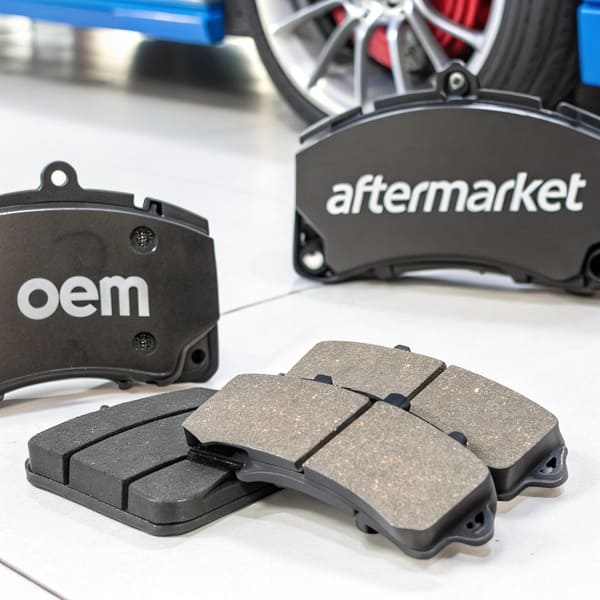
This decision is at the heart of your business strategy. There is no single "right" answer; there is only the right answer for your brand and your customers. I've worked with clients on both sides of this equation, and the key is to align your product with your promise. This is where a supplier's testing and validation capabilities become non-negotiable.
Making the Right Sourcing Decision: OE vs. Aftermarket
| Aspect | OEM (Original Equipment) | Aftermarket |
|---|---|---|
| Specification | Designed for one specific vehicle model. | Designed for a range of vehicles; can vary. |
| Performance | Balanced for quietness, comfort, and stopping. | Huge range: from basic economy to extreme performance. |
| Cost | Generally the highest price point. | Wide price range, from very cheap to very expensive. |
| Goal | To meet the car manufacturer's original standard. | To meet a specific market need (low cost, high performance, etc.). |
A few years ago, I started working with a client from Pakistan. We were sourcing an aftermarket brake pad for a popular local vehicle. The goal was a reliable product at a competitive price. We audited a factory that looked good on paper, with all the right ISO certifications. The first batch shipped, but we soon got feedback that there were issues. The "batch friction coefficient fluctuation11 was out of spec," meaning some pads in the batch grabbed harder than others. This is a classic sign of poor process control.
I was worried this would kill the deal. But my client had a different perspective. They needed a partner for the aftermarket, not a rigid OE supplier. What mattered more to them was our response. We immediately worked with the factory to identify the issue in the mixing process, implemented corrective actions, and expedited a replacement shipment. The client was impressed by our ability to quickly solve the problem and provide local support. They valued our flexibility and commitment more than a perfect first shipment. This experience taught me that for many businesses, a top-tier aftermarket supplier who can meet OE testing standards but also remain flexible is the most valuable partner.
Conclusion
Sourcing brake pads requires deep diligence. Focus on a supplier's testing capabilities, material expertise, and supply chain transparency12 to ensure long-term success and reliability for your business.
Understanding this process helps you avoid unreliable suppliers and ensures consistent quality for your brand. ↩
Learning about this testing ensures your products meet industry standards and avoid costly recalls. ↩
On-site audits reveal a supplier's true capabilities, reducing the risk of supply chain disruptions. ↩
Traceability ensures every component meets your standards, protecting your brand from quality issues. ↩
Knowing the types helps you select the right product for your target market and application. ↩
Discover why these compounds are essential for heavy-duty and commercial vehicle applications. ↩
The material blend determines safety, noise, and durability—key factors for your brand's reputation. ↩
Learn how this additive improves heat dissipation and reduces noise in brake pads. ↩
A robust engineering process ensures your supplier can tailor products to your exact needs. ↩
OEM pads guarantee fit and performance, which can be crucial for certain markets. ↩
Understanding this issue helps you avoid inconsistent quality and customer complaints. ↩
Transparency ensures you can trace and verify every step, reducing risks and building trust. ↩