-Your engine is overheating, and the temperature gauge is in the red. You check, but the coolant level seems fine. This frustrating problem could be caused by air in the system.
Air gets into your coolant system through leaks, a faulty radiator cap, a bad head gasket, or during an improper coolant flush.1 These air pockets block coolant circulation, leading to overheating, poor heater performance, and potentially catastrophic engine damage if not fixed quickly.2
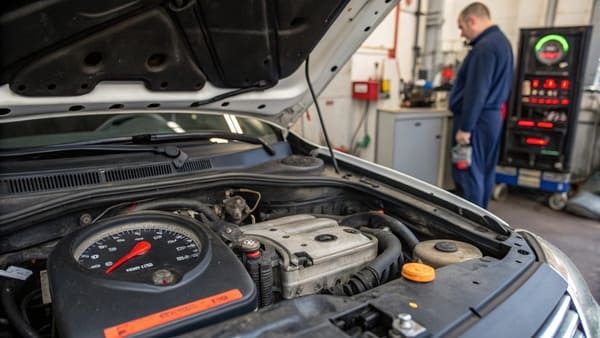
Now you know the general causes, but what exactly does an air bubble do inside your engine's cooling passages? It's more than just a minor annoyance; it’s a serious threat to your vehicle's health. To really understand the risk, we need to look at the symptoms and what they're telling us about the problem. Let's dig deeper into what happens when air gets where only coolant should be.
What Does Air in a Coolant System Mean?
You hear a strange gurgling sound from the dashboard, or your temperature gauge jumps up and down. These confusing signs can be unsettling, and ignoring them is a big risk.
Air in the coolant system creates an "airlock," which is a trapped bubble that blocks the normal flow of liquid coolant.3 This causes dangerous hot spots inside the engine, leads to overheating, and makes your car's heater blow cold air.4
To understand this better, let's break down how the system is supposed to work. Your engine's cooling system is a closed loop. The water pump pushes coolant through passages in the engine block to absorb heat. This hot fluid then flows to the radiator, where airflow cools it down before it cycles back to the engine. It’s a simple and effective process, as long as it's full of liquid.
Air is a terrible conductor of heat compared to liquid coolant.5 When an air pocket gets stuck, usually at a high point like the heater core or the cylinder head, the coolant flow stops. The water pump is designed to move liquid, not gas, so it can't push the air bubble out of the way.6 This leads to a few specific problems:
Common Issues Caused by an Airlock
| Symptom | Direct Cause |
|---|---|
| Engine Overheating | An air pocket is blocking coolant from reaching a hot part of the engine. |
| No Heat from Vents | The airlock is stuck in the heater core, so hot coolant can't get in to warm the cabin. |
| Gurgling Sounds | You are hearing air and coolant sloshing around in the hoses and heater core. |
| Erratic Temp Gauge | The temperature sensor is reading a pocket of air, then liquid coolant, causing the needle to jump. |
This is why properly "bleeding" the air out of the system is a critical step after any repair involving the coolant.
Why Is There Air in My Coolant System?
Your car keeps getting air in the coolant, even after you've bled it multiple times. The problem always comes back, pointing to a deeper issue you haven't found yet.
The most frequent causes are a slow leak from a hose or clamp, a faulty radiator cap that fails to hold pressure, or a crack in the radiator. In more severe cases, a blown head gasket is forcing exhaust gases into the coolant.
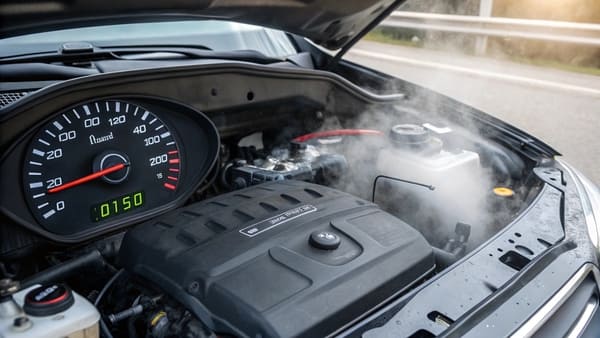
Finding the source can be tricky, but it usually falls into one of two categories: external leaks or internal leaks. External sources are the most common. A weak radiator cap won't hold pressure, causing coolant to boil at a lower temperature and allowing air to be sucked in as the engine cools.7 Hoses get old and brittle, and clamps can loosen, creating tiny leaks that introduce air.
One of the hardest-to-diagnose sources is a failure in a plastic cooling system component. In my experience as a manufacturer, producing these parts is extremely challenging. The precision required for plastic coolant pipes and housings is incredibly high; a standard injection molding machine just can't do it. The process involves several steps, with the cooling phase of the mold being the most difficult to control. I remember my first time producing these parts for a client from Pakistan. We were still learning, and the plastic pipes "shrank" more than we expected after cooling. Luckily, the client actually preferred the denser, slightly smaller fit, and it taught us a valuable lesson. A tiny, invisible crack or a poor seal in one of these complex plastic parts is a very common way for air to get into the system.
A more serious, internal cause is a blown head gasket. This allows high-pressure combustion gases to leak directly into the coolant passages, constantly feeding air into the system and causing rapid overheating.8
Can a Bad Water Pump Cause Air in the Coolant System?
You suspect your water pump is the problem, but you're not sure if it can also cause the air you're finding in the coolant. The two issues might seem separate.
Yes, a failing water pump is a definite cause of air in the coolant system.9 When the pump's internal seal or external gasket fails, it can leak coolant out and, just as importantly, suck air in as the system cools and creates a vacuum.10
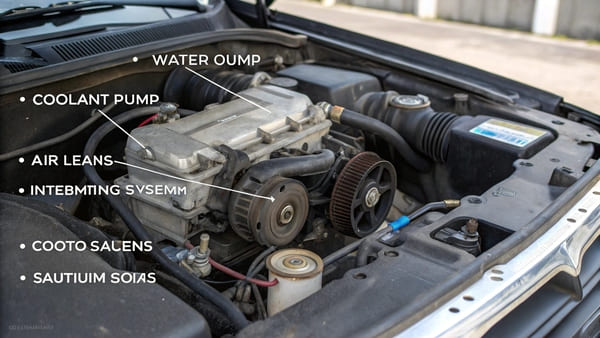
The water pump is the heart of your cooling system. Its main job is to circulate coolant, but it also has to seal the system completely. When it starts to fail, it can compromise that seal in a few ways. The most common failure is the shaft seal. The pump has a spinning shaft with an impeller on the end, and a seal prevents coolant from leaking out around it. When this seal wears out, you'll often see a small coolant drip from the pump's "weep hole."
However, this leak works both ways. When you turn off the hot engine, the coolant begins to cool and contract, creating a strong vacuum inside the system. A weak or failed seal provides a perfect path for air to be sucked into the pump and the cooling system. So, while you might be looking for a coolant leak on the ground, the pump could also be inhaling air every time the car cools down.
Another, more technical issue is cavitation. If the pump's impeller is damaged or system pressure is low (from a bad radiator cap), the intense pressure changes around the spinning blades can cause the coolant to vaporize, forming tiny bubbles. These bubbles then collapse violently. This process is destructive to the pump's metal parts and introduces vapor—which acts just like air—into the system, reducing cooling efficiency.11 As a parts supplier, we focus heavily on the quality of the seals and bearings in our water pumps to prevent exactly these kinds of failures.
Conclusion
Finding air in your coolant indicates a breach in the system.12 Whether it's a bad cap, a leaky hose, or a major internal gasket failure, finding the source is key to preventing serious engine damage.
"Internal combustion engine cooling - Wikipedia", https://en.wikipedia.org/wiki/Internal_combustion_engine_cooling. Automotive engineering sources describe that air can enter the cooling system through leaks, faulty radiator caps, head gasket failures, or improper coolant flushes, which is consistent with standard vehicle maintenance literature. Evidence role: mechanism; source type: encyclopedia. Supports: Air gets into your coolant system through leaks, a faulty radiator cap, a bad head gasket, or during an improper coolant flush.. Scope note: This explanation is based on general automotive consensus and may not cover rare vehicle-specific causes. ↩
"How To Purge Air Out of a Cooling System! [FREE and DIY Method]", https://www.youtube.com/watch?v=JEv8bC4S6UI. Automotive repair manuals and technical guides note that air pockets can block coolant flow, causing overheating, heater malfunction, and, if unresolved, severe engine damage. Evidence role: mechanism; source type: education. Supports: These air pockets block coolant circulation, leading to overheating, poor heater performance, and potentially catastrophic engine damage if not fixed quickly.. Scope note: Severity of engine damage depends on duration and extent of overheating. ↩
"Internal combustion engine cooling - Wikipedia", https://en.wikipedia.org/wiki/Internal_combustion_engine_cooling. Technical automotive sources define an airlock as a trapped air bubble that obstructs coolant flow, which is a recognized cause of cooling system malfunction. Evidence role: definition; source type: encyclopedia. Supports: Air in the coolant system creates an "airlock," which is a trapped bubble that blocks the normal flow of liquid coolant.. ↩
"Air in coolant system… : r/AskMechanics - Reddit", https://www.reddit.com/r/AskMechanics/comments/13ls6fg/air_in_coolant_system/. Automotive engineering texts explain that airlocks can cause localized overheating and prevent hot coolant from reaching the heater core, resulting in cold air from the vents. Evidence role: mechanism; source type: education. Supports: This causes dangerous hot spots inside the engine, leads to overheating, and makes your car's heater blow cold air.. Scope note: The specific symptoms may vary depending on vehicle design. ↩
"The Most Common Car Cooling System Problems | UTI", https://www.uti.edu/blog/automotive/the-most-common-cooling-system-problems. Thermodynamics references confirm that air has a much lower thermal conductivity than liquid coolant, making it ineffective for heat transfer in automotive systems. Evidence role: statistic; source type: education. Supports: Air is a terrible conductor of heat compared to liquid coolant.. Scope note: Exact conductivity values depend on coolant composition and temperature. ↩
"Pump - Wikipedia", https://en.wikipedia.org/wiki/Pump. Automotive engineering manuals state that water pumps are optimized for liquid movement and are ineffective at moving air, which can result in trapped air pockets. Evidence role: mechanism; source type: education. Supports: The water pump is designed to move liquid, not gas, so it can't push the air bubble out of the way.. Scope note: Some modern systems may have self-bleeding features, but most rely on liquid-only operation. ↩
"Air in coolant system… : r/AskMechanics - Reddit", https://www.reddit.com/r/AskMechanics/comments/13ls6fg/air_in_coolant_system/. Automotive maintenance guides explain that a faulty radiator cap can lower system pressure, reduce the boiling point of coolant, and allow air ingress during cooling cycles. Evidence role: mechanism; source type: education. Supports: A weak radiator cap won't hold pressure, causing coolant to boil at a lower temperature and allowing air to be sucked in as the engine cools.. Scope note: The effect may vary with cap design and system configuration. ↩
"Coolant bubbling = blown head gasket? : r/MechanicAdvice - Reddit", https://www.reddit.com/r/MechanicAdvice/comments/qi5rl0/coolant_bubbling_blown_head_gasket/. Automotive engineering literature documents that a blown head gasket can allow combustion gases to enter the cooling system, leading to air accumulation and overheating. Evidence role: mechanism; source type: education. Supports: A more serious, internal cause is a blown head gasket. This allows high-pressure combustion gases to leak directly into the coolant passages, constantly feeding air into the system and causing rapid overheating.. Scope note: Diagnosis may require further testing to confirm head gasket failure. ↩
"Air in coolant system… : r/AskMechanics - Reddit", https://www.reddit.com/r/AskMechanics/comments/13ls6fg/air_in_coolant_system/. Automotive repair sources indicate that a failing water pump, especially with a compromised seal, can allow air to enter the cooling system. Evidence role: mechanism; source type: education. Supports: Yes, a failing water pump is a definite cause of air in the coolant system.. Scope note: Not all water pump failures result in air ingress; depends on the nature of the failure. ↩
"Odd types of head gasket leaks, air in radiator, water pump seal ...", https://naxja.org/threads/odd-types-of-head-gasket-leaks-air-in-radiator-water-pump-seal-reverse-leak.940251/. Technical automotive manuals explain that failed water pump seals or gaskets can allow coolant to leak out and air to be drawn in during cooling cycles due to vacuum formation. Evidence role: mechanism; source type: education. Supports: When the pump's internal seal or external gasket fails, it can leak coolant out and, just as importantly, suck air in as the system cools and creates a vacuum.. Scope note: The extent of air ingress depends on the size and location of the seal failure. ↩
"Cavitation - Wikipedia", https://en.wikipedia.org/wiki/Cavitation. Engineering sources describe cavitation in water pumps as the formation and collapse of vapor bubbles due to low pressure, which can damage pump components and reduce cooling efficiency. Evidence role: mechanism; source type: education. Supports: If the pump's impeller is damaged or system pressure is low (from a bad radiator cap), the intense pressure changes around the spinning blades can cause the coolant to vaporize, forming tiny bubbles. These bubbles then collapse violently. This process is destructive to the pump's metal parts and introduces vapor—which acts just like air—into the system, reducing cooling efficiency.. Scope note: Cavitation is more common in specific conditions and may not occur in all vehicles with low pressure. ↩
"Air in coolant system… : r/AskMechanics - Reddit", https://www.reddit.com/r/AskMechanics/comments/13ls6fg/air_in_coolant_system/. Automotive diagnostic guides state that the presence of air in the coolant system typically signals a loss of system integrity, such as a leak or failed component. Evidence role: general_support; source type: education. Supports: Finding air in your coolant indicates a breach in the system.. Scope note: Rare cases may involve improper bleeding rather than a true breach. ↩