Struggling to find a clear list of who makes the parts for Tesla vehicles? This makes it hard for businesses to understand the supply chain and identify potential opportunities.
Tesla’s major suppliers include Panasonic, CATL, and LG Energy Solution for batteries1; Bosch and ZF for chassis systems2; and various electronics firms like STMicroelectronics for semiconductors3. Tesla also produces many key components, like motors and seats, in-house, creating a complex, hybrid supply chain.
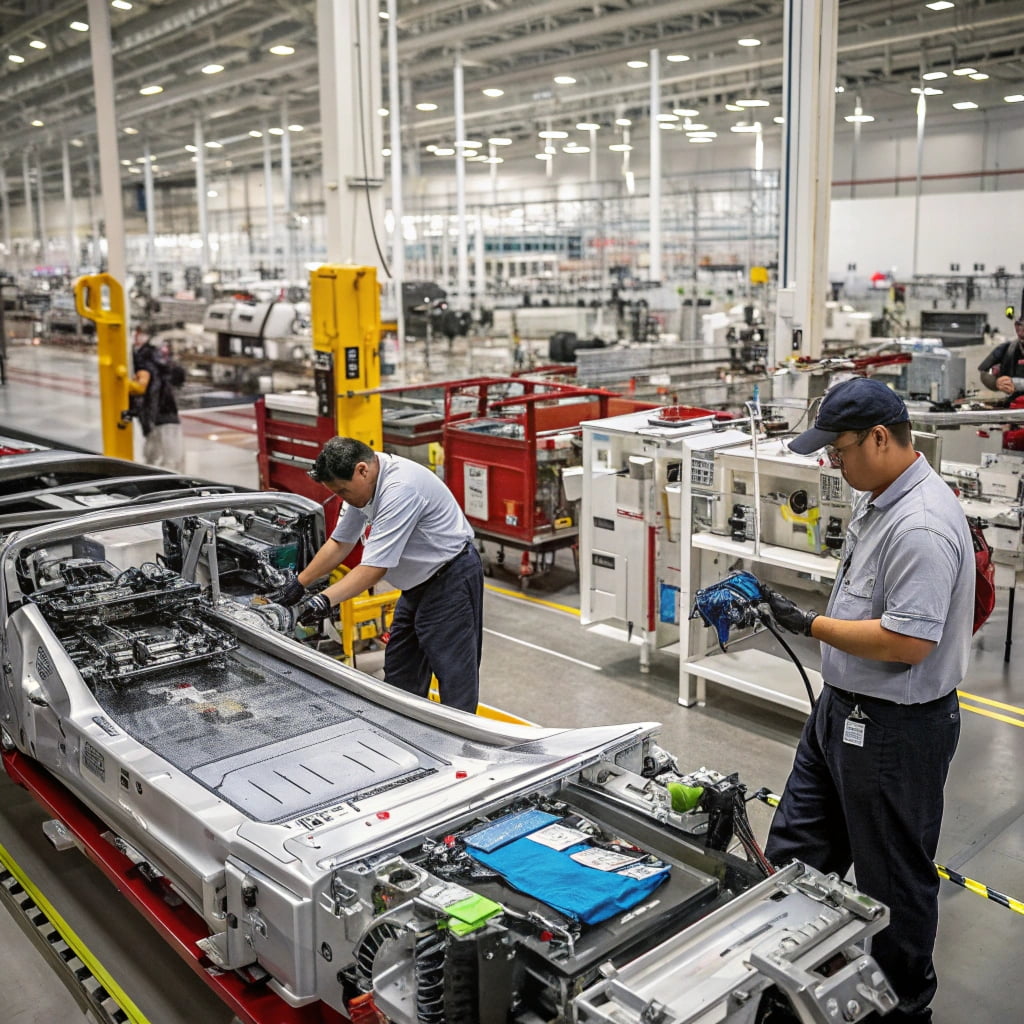
Mapping out Tesla's core component suppliers is a challenge. I've found that their technical standards and production flexibility requirements are incredibly high, which means most ordinary auto parts companies simply can't get in the door. For suppliers who do make the cut, they must navigate a tough process of adapting their parts to Tesla's vehicle platforms and then ramping up mass production with a high yield rate. This is no small task. To really understand this ecosystem, we need to look closer at the specific types of parts and the companies behind them.
What Types of Parts Do Tesla Suppliers Provide Across the EV Supply Chain?
The electric vehicle supply chain is more than just batteries; it's a complex web. Ignoring the other components means you're missing the full picture of how a modern EV is built.
Tesla suppliers provide a vast range of components across the entire vehicle. This includes battery cells and packs4, powertrain components5, chassis and braking systems6, autonomous driving hardware7, infotainment screens8, and interior materials9. Essentially, they cover everything from raw materials to finished electronic modules.
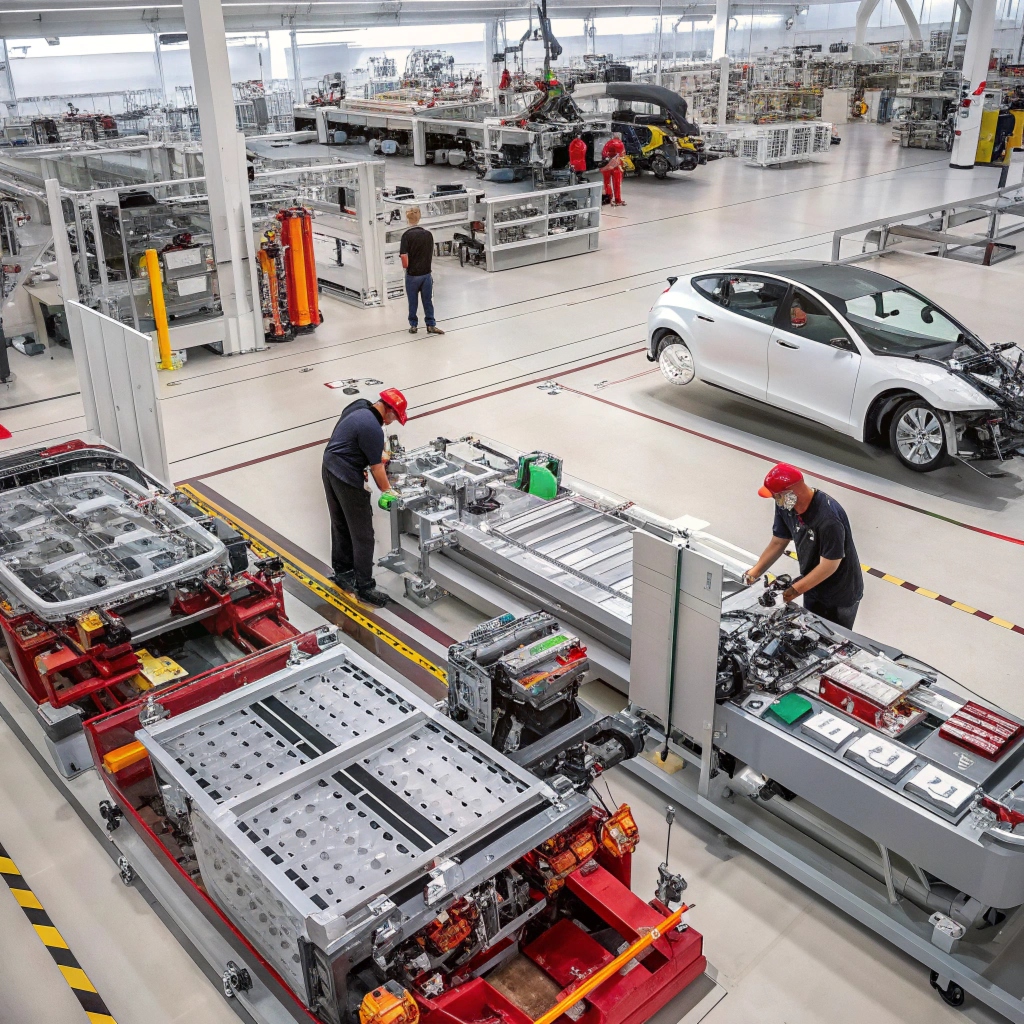
When we break down the Tesla supply chain, it's helpful to think in categories. These suppliers are not just providing simple parts; they are often co-developing advanced technology with Tesla. The suppliers with the right mix of skills are usually found in global automotive electronics hubs like the Yangtze River Delta in China, Japan, and South Korea. Small factories without experience in vehicle-level projects typically can't meet the precision and quality demands. One of the hardest parts of this analysis is distinguishing between Tier 1 suppliers, who sell directly to Tesla, and Tier 2 suppliers, who provide parts to the Tier 1s10. This creates layers of complexity.
Here’s a simplified breakdown of the main supplier categories:
| Component Category | Description | Key Supplier Examples |
|---|---|---|
| Battery System | Includes individual cells, battery management systems (BMS)11, and cooling12. | Panasonic, CATL, LG Energy Solution |
| Powertrain | Gears, inverters, and power electronics13 that support the in-house motors. | Hota Industrial, STMicroelectronics, Infineon |
| Chassis & Body | Braking systems, steering, suspension, and structural aluminum castings14. | Bosch, ZF Friedrichshafen, Brembo |
| Autonomous Driving | Cameras, radar sensors, and the central processing computer hardware15. | Samsung (for cameras), Bosch (for radar) |
| Interior & Electronics | Center display screens, seats, and other interior trim pieces. | LG Display, Faurecia (now Forvia) |
Who Are the Leading Battery Suppliers for Tesla Vehicles?
Everyone knows batteries are the heart of an EV, but who actually makes them for Tesla? The answer changes with different models and regions, which can make it very confusing.
Tesla’s primary battery cell suppliers are Panasonic, its longest-running partner; CATL, which provides cost-effective LFP batteries for standard-range models; and LG Energy Solution. These global giants provide the cells that Tesla assembles into its advanced battery packs for its entire vehicle lineup.
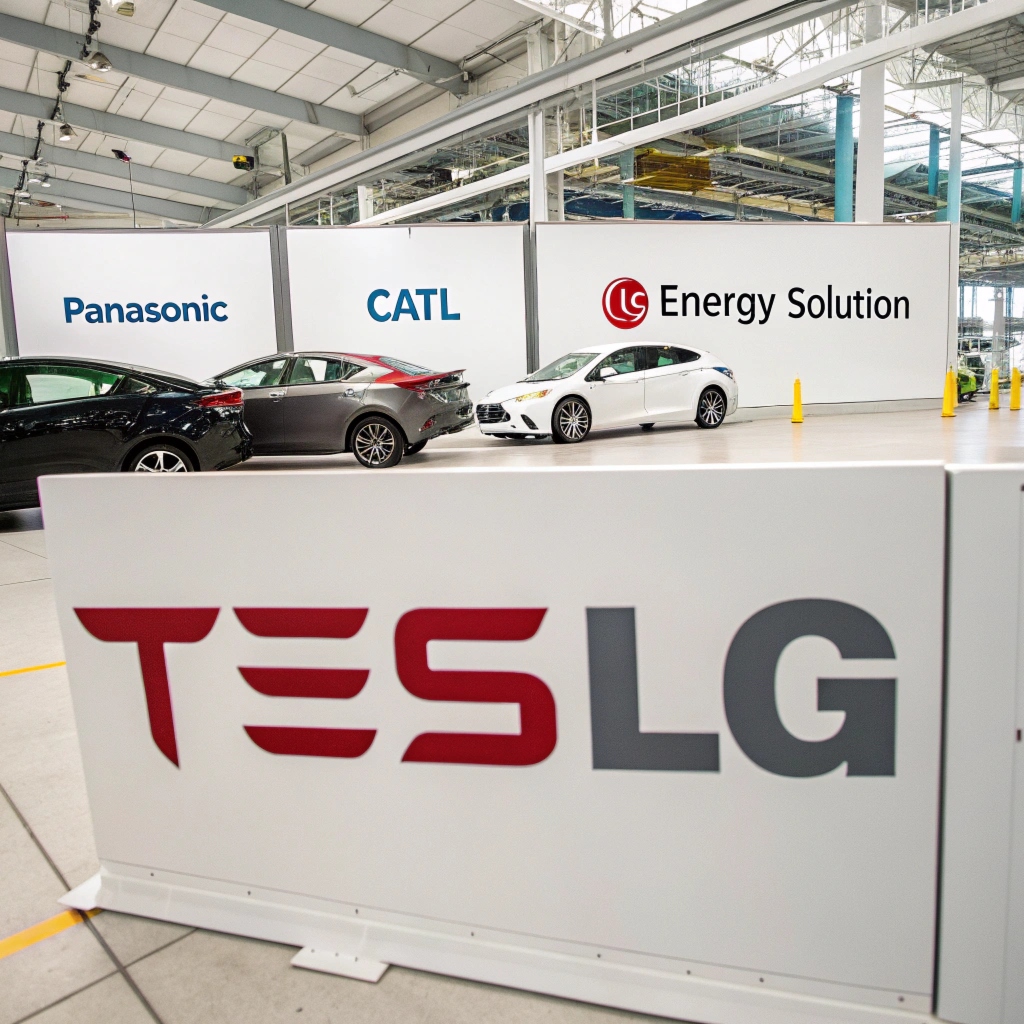
The battery is the single most expensive and important part of any EV, and Tesla has a multi-supplier strategy to ensure a stable supply. Each partner plays a specific role. Panasonic has been with Tesla from the early days, co-investing in Gigafactory Nevada and developing the custom cylindrical cells used in the Model S, 3, X, and Y. They are the original technology partner. More recently, CATL has become a critical supplier, especially for the vehicles made in Giga Shanghai. They specialize in Lithium Iron Phosphate (LFP) batteries, which don't use cobalt and are more affordable. This allows Tesla to offer more competitive pricing on its standard-range models globally. LG Energy Solution is another major player, supplying cells for vehicles produced in both China and Europe, helping Tesla diversify its supply chain even further. On top of all this, Tesla is pushing to produce its own "4680" battery cells in-house, which adds another layer of complexity for anyone trying to track who supplies what.
| Supplier | Primary Battery Type | Key Role |
|---|---|---|
| Panasonic | Nickel Cobalt Aluminum (NCA) | Long-term technology partner, supplies U.S. production |
| CATL | Lithium Iron Phosphate (LFP) | Supplies standard-range models from China, cost-leader |
| LG Energy Solution | Nickel Manganese Cobalt (NMC) | Supplies China and Europe production, diversification |
Which Companies Supply Tesla’s Electric Motors and Drive Systems?
The motor is the heart of an EV's performance, but its suppliers are often overlooked. Without knowing who builds these critical parts, you don't fully understand what makes the car so responsive.
Unlike many automakers, Tesla designs and manufactures its core electric motors and drive units in-house. However, it relies on a network of specialized Tier 2 suppliers for critical internal components like gears, rotors, stators, and the power electronics that control the motor.
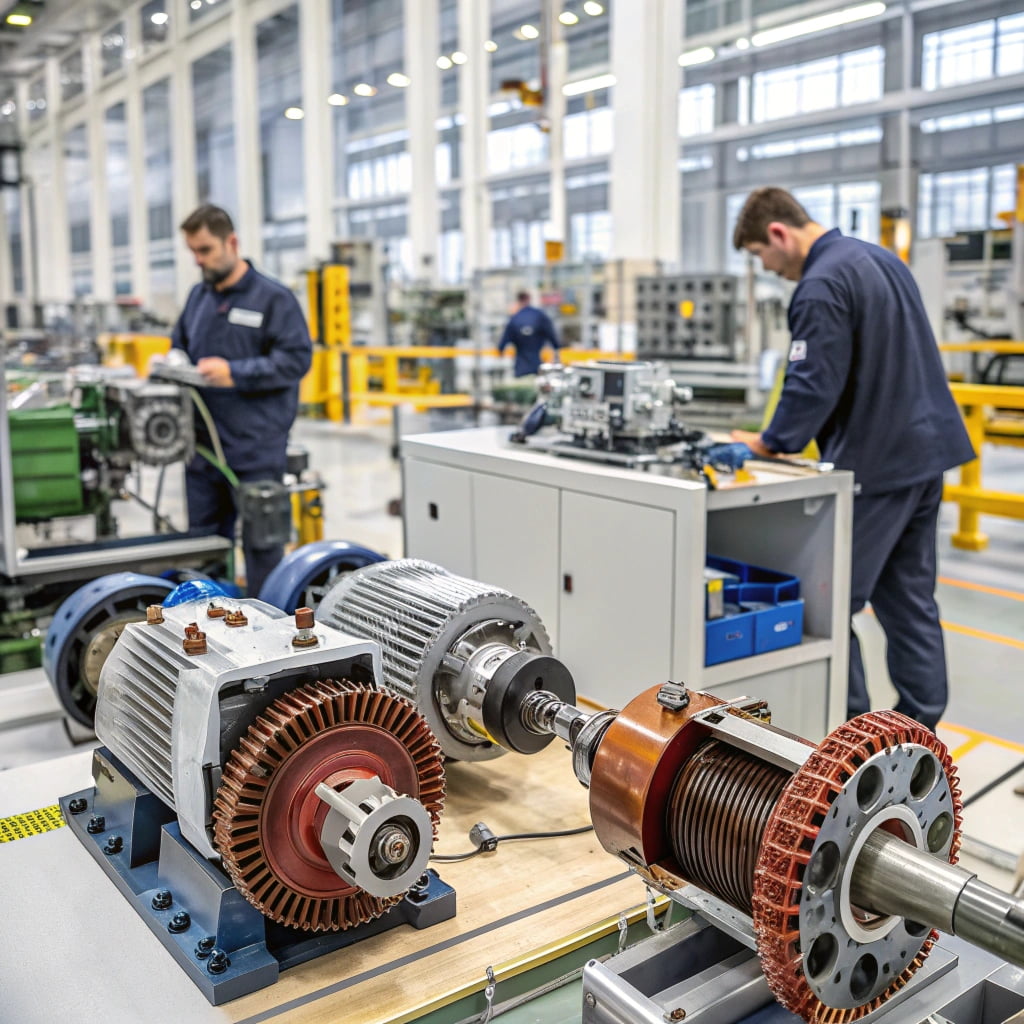
Tesla’s vertical integration is most obvious in its powertrain. By designing its own motors, Tesla controls the performance and efficiency of its vehicles down to the smallest detail. However, they don't make every single piece inside that motor. This is where specialized Tier 2 and Tier 3 suppliers come in. For example, a Taiwanese company named Hota Industrial Mfg. Co. is well-known for supplying high-precision gears for Tesla's drive units. For the power electronics that act as the motor's brain, Tesla sources advanced silicon carbide (SiC) semiconductors from companies like STMicroelectronics and Infineon.
I remember this distinction became very clear to me when I worked with a client from Pakistan. We were putting together a supplier list for his business, which focused on the local repair market. In my initial report, I didn't fully detail all the Tier 2 suppliers. I just listed "Tesla" as the motor supplier. He pointed out that while this was true, his mechanics couldn't buy a whole drive unit from Tesla for a simple gear repair. They needed to know who made the gears inside the unit. He was actually happier with the incomplete list because it forced us to dig deeper and identify companies like Hota. It taught me a valuable lesson: for aftermarket and repair channels, knowing the Tier 2 supplier is often more important than knowing the Tier 1.
Conclusion
Tesla's supply chain is a unique mix of in-house innovation and strategic partnerships with global leaders for batteries, electronics, and key components, creating a complex and ever-evolving manufacturing ecosystem.
Understanding Tesla's battery suppliers reveals the technology and cost structure behind their EVs, helping you spot business and investment opportunities. ↩
Exploring Bosch and ZF's contributions to Tesla's chassis systems highlights the advanced engineering and quality standards in Tesla's vehicles. ↩
Learning about STMicroelectronics' semiconductor supply helps you grasp Tesla's electronics innovation and potential supplier opportunities. ↩
Understanding battery cells and packs is crucial for anyone interested in EV technology, manufacturing, or supply chain analysis. ↩
Exploring powertrain suppliers reveals the performance and efficiency backbone of Tesla vehicles, vital for industry insights. ↩
Learning about chassis and braking system suppliers uncovers the safety and handling aspects of Tesla's cars. ↩
Investigating autonomous driving hardware suppliers shows the innovation behind Tesla's self-driving features and future trends. ↩
Understanding infotainment screen suppliers highlights the tech and design that make Tesla's interiors stand out. ↩
Exploring interior material suppliers reveals the comfort and luxury elements in Tesla vehicles, important for consumer appeal. ↩
Knowing the distinction between Tier 1 and Tier 2 suppliers helps businesses target the right opportunities in Tesla's ecosystem. ↩
Learning about BMS suppliers is key to understanding battery safety, longevity, and performance in Tesla EVs. ↩
Discovering cooling solutions for Tesla batteries is essential for understanding EV reliability and thermal management. ↩
Examining these suppliers reveals the critical parts that drive Tesla's performance and innovation in electric mobility. ↩
Learning about aluminum casting suppliers shows how Tesla achieves lightweight strength and manufacturing efficiency. ↩
Understanding these suppliers is vital for grasping Tesla's autonomous driving capabilities and technological leadership. ↩