-Your car's engine seems like a complex black box. Not knowing the basics can lead to confusion and costly decisions. But understanding the main parts is easier than you think.
The main parts of a car engine include the engine block, pistons, cylinder head, and crankshaft. Their job is to work together to convert the chemical energy in fuel into the mechanical force that moves your vehicle through a process called internal combustion1.
This article will guide you through the essential parts of a car engine. We will look at what each component does and why this knowledge is so important, especially if you are in the business of buying or selling automotive parts. Let's open up that "black box" and see what is inside. Understanding these basics will help you feel more confident when talking about cars.
What Is a Car Engine and How Does It Work?
You hear terms like "internal combustion" but may not really know what it means. This can make it hard to discuss engine performance or issues intelligently. Let's break it down.
A car engine is a machine that turns fuel into motion. It uses tiny, controlled explosions to push pistons up and down. This movement turns a shaft, which eventually spins the wheels. This process happens thousands of times per minute.2
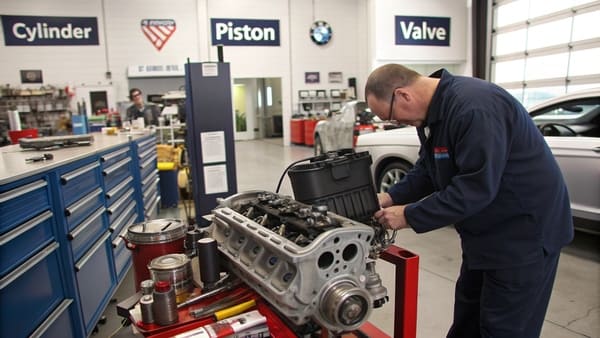
The most common type of engine in cars today is the four-stroke internal combustion engine.3 This name sounds technical, but the idea is simple. The engine repeats a four-step cycle to create power. This cycle happens inside cylinders, which are like tubes inside the engine. A piston moves up and down inside each cylinder.4 This simple up-and-down motion is what starts the entire process of moving a multi-ton vehicle down the road. It's a fantastic piece of engineering that has been refined for over a hundred years.
The Four-Stroke Cycle Explained
The engine's operation can be broken down into four distinct movements, or "strokes," of the piston.
| Stroke Name | Piston Movement | What Happens |
|---|---|---|
| Intake | Down | The intake valve opens, and a mix of air and fuel is drawn in. |
| Compression | Up | The valves close, and the piston squeezes the air-fuel mixture. |
| Combustion | Down | A spark plug ignites the mixture, causing a small explosion. |
| Exhaust | Up | The exhaust valve opens, pushing the burnt gases out. |
This cycle happens incredibly fast, over and over again, in all of the engine's cylinders. The force from the combustion stroke is what generates the power.5 The other strokes are just setting the stage for that powerful moment.
Why Is It Important to Understand Car Engine Parts?
You might source auto parts but feel lost in technical engine discussions. This can hurt your credibility with clients and may even lead to ordering the wrong components for your customers.
Understanding engine parts helps you diagnose problems, communicate clearly with suppliers, and make informed decisions when buying parts. This knowledge is essential for quality control and ensuring you get the right component for the job.
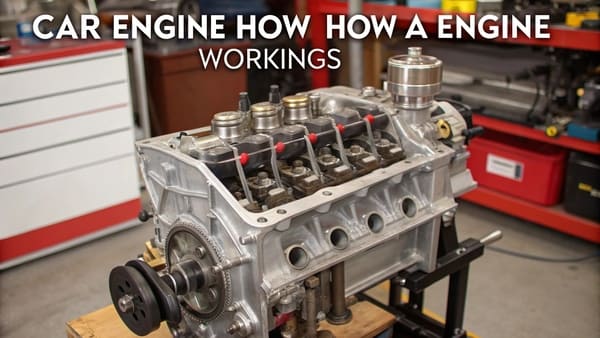
From a business perspective, especially in the B2B world of automotive parts, this knowledge is not just helpful—it is critical. When you are sourcing parts for your brand or for distribution, you are not just buying a piece of metal or plastic. You are buying a component that must perform under extreme heat and pressure. Knowing the difference between a cast component and a forged one, or understanding why a certain plastic polymer is used, allows you to ask the right questions and verify the quality of the products you are purchasing.6 It moves you from being just a buyer to being a knowledgeable partner for your customers.
The Manufacturer's Perspective on Quality
I learned this lesson firsthand. In our factory, we produce many OEM/ODM parts, including plastic components for engines. Making these parts is extremely difficult. A standard injection molding machine just does not have the precision needed. The plastic parts for an engine must be perfect.
For example, the process has at least three major steps, and the hardest one is cooling. If you do not cool the plastic correctly, it can warp or shrink, and it will not fit properly in the engine. The best machines for this kind of precision work are usually found in the coastal regions of China, like Fujian or near Shanghai.7
I remember my first time working on a project for a client from Pakistan. We were making plastic engine accessories. We were still learning, and the parts shrank a little more than we expected after they cooled. I was worried. But when we sent the parts, the client actually loved them. The slight shrinkage made them denser and a better fit for his application. It was a lucky break, but it taught me a valuable lesson about the tiny details in manufacturing. Since then, we have perfected our cooling process, but that experience showed me just how critical it is to understand every single aspect of a part's function and production.
What Are the Main Components Inside a Car Engine?
You know an engine has parts, but you can't name them or explain what they do. This makes it hard to follow a technical discussion or understand a repair estimate.
The main internal components are the engine block, cylinder head, pistons, connecting rods, and crankshaft.8 They form the core structure and the moving assembly that turns fuel into the rotational force that powers the car.
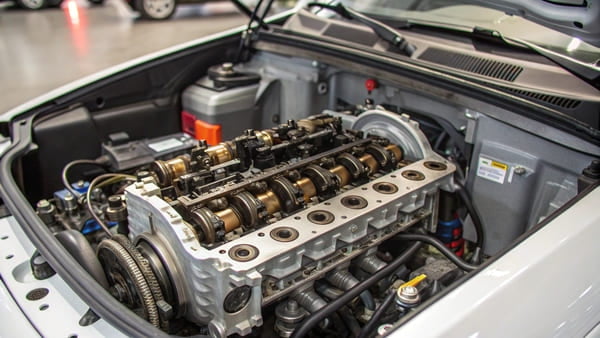
These components are the heart of the engine. They must be incredibly strong and precisely made to withstand millions of explosions and movements during the life of the vehicle.9 The engine block is the foundation, the cylinder head sits on top to control airflow, and the pistons, rods, and crankshaft work together as a team to create motion. Think of them as the skeleton and muscles of the engine. Each one has a specific job, but they can only function when they work together perfectly.
A Closer Look at Core Engine Components
To really understand the engine, you need to know the key players and their roles. These parts are designed to work in perfect harmony under intense conditions.
| Component | Function | Manufacturing & Material Notes |
|---|---|---|
| Engine Block | The main body and foundation of the engine. It houses the cylinders. | Usually made of cast iron or aluminum alloy. Requires precise casting. |
| Cylinder Head | Sits on top of the block. It contains valves, spark plugs, and camshafts. | Complex part, often aluminum. Manages air/fuel intake and exhaust out. |
| Pistons | Move up and down in the cylinders. They transfer force from combustion to the crankshaft. | High-strength aluminum alloy. Must handle extreme heat and pressure. |
| Connecting Rods | Connect the pistons to the crankshaft. | Usually made of forged steel for maximum strength. |
| Crankshaft | Converts the up-and-down motion of the pistons into rotational motion. | A heavy, balanced component made from forged or cast steel. |
| Camshaft(s) | Located in the cylinder head, it opens and closes the valves at the correct time. | Driven by the crankshaft via a timing belt or chain. Precision is key. |
| Valves | The "doors" of the cylinder that let the air-fuel mixture in and exhaust gases out. | Must seal perfectly. Made from heat-resistant steel alloys. |
These parts are not just randomly put together. The crankshaft, connecting rods, and pistons form the "rotating assembly." The force of the explosion pushes the piston down. The piston pushes the connecting rod, which then turns the crankshaft. It is just like how your legs push pedals to turn the crank on a bicycle. The cylinder head acts as the "brain," managing when to let fuel in and exhaust out by using the camshaft to open and close the valves at exactly the right moment. Every part is a link in a chain of power.
Conclusion
Understanding your car's engine parts is key. It helps with maintenance, repairs, and making smarter choices when sourcing high-quality components for your business. Knowledge is power.
"Internal combustion engine", https://en.wikipedia.org/wiki/Internal_combustion_engine. A standard reference on internal combustion engines explains that these engines convert the chemical energy of fuel into mechanical energy through a series of controlled combustions, which drive pistons and ultimately produce rotational force to move the vehicle. This process is widely described in engineering textbooks and encyclopedias, though specific engine designs may vary. Evidence role: mechanism; source type: encyclopedia. Supports: The main parts of a car engine work together to convert chemical energy in fuel into mechanical force through internal combustion.. Scope note: General explanation; specific engine types may differ in details. ↩
"Engine - Wikipedia", https://en.wikipedia.org/wiki/Engine. Automotive engineering sources confirm that internal combustion engines operate by igniting a fuel-air mixture, causing rapid expansion (often described as 'explosions') that pushes pistons. These pistons move a crankshaft, converting linear motion to rotational motion, and typical engines operate at thousands of revolutions per minute (RPM). Evidence role: mechanism; source type: encyclopedia. Supports: A car engine uses controlled combustions to move pistons, which turn a shaft, and this process occurs thousands of times per minute.. Scope note: The term 'explosions' is a simplification; technically, it is rapid combustion. ↩
"Automotive engine - Wikipedia", https://en.wikipedia.org/wiki/Automotive_engine. Industry and engineering references indicate that the four-stroke internal combustion engine is the predominant engine type used in modern passenger vehicles worldwide. Evidence role: statistic; source type: encyclopedia. Supports: The four-stroke internal combustion engine is the most common type in cars today.. Scope note: Applies primarily to gasoline and diesel passenger vehicles; some hybrids and electrics differ. ↩
"Four-stroke engine - Wikipedia", https://en.wikipedia.org/wiki/Four-stroke_engine. Engineering textbooks and encyclopedias describe the four-stroke cycle—intake, compression, combustion, and exhaust—as occurring within the engine's cylinders, with pistons moving up and down to facilitate each stage. Evidence role: mechanism; source type: encyclopedia. Supports: The engine operates by repeating a four-step cycle inside cylinders, with pistons moving up and down.. Scope note: Description applies to conventional four-stroke engines; other engine types may differ. ↩
"Four-stroke engine - Wikipedia", https://en.wikipedia.org/wiki/Four-stroke_engine. Automotive engineering sources state that in a four-stroke engine, only the combustion (power) stroke directly generates mechanical power, while the intake, compression, and exhaust strokes prepare for and clear the cycle. Evidence role: mechanism; source type: encyclopedia. Supports: The combustion stroke is the only stroke that generates power in a four-stroke engine.. Scope note: Description applies to four-stroke engines; other engine types may differ. ↩
"Forged vs. Cast - What's the Difference? - Milwaukee ForgeTech", https://www.milwaukeeforge.com/forged-vs-cast-whats-the-difference/. Industry guidelines emphasize that knowledge of manufacturing methods (casting vs. forging) and material selection is essential for quality assurance and effective sourcing in the automotive sector. Evidence role: expert_consensus; source type: institution. Supports: Understanding casting, forging, and material selection is important for quality control in automotive parts sourcing.. Scope note: Best practices may vary by company and region. ↩
"[PDF] China's Manufacturing Innovation Centers", https://nvlpubs.nist.gov/nistpubs/ams/NIST.AMS.600-17.pdf. Industry reports and economic analyses indicate that China's coastal regions, including areas near Shanghai and Fujian, are major centers for advanced manufacturing and precision equipment, particularly in the automotive and plastics sectors. Evidence role: statistic; source type: government. Supports: China's coastal regions, such as Fujian and Shanghai, are leading centers for precision manufacturing equipment.. Scope note: Regional leadership may shift over time; other regions also have advanced facilities. ↩
"Component parts of internal combustion engines - Wikipedia", https://en.wikipedia.org/wiki/Component_parts_of_internal_combustion_engines. Standard automotive references list the engine block, cylinder head, pistons, connecting rods, and crankshaft as the primary internal components responsible for converting fuel into mechanical power in most car engines. Evidence role: definition; source type: encyclopedia. Supports: The main internal components of a car engine are the engine block, cylinder head, pistons, connecting rods, and crankshaft.. Scope note: Component lists may vary slightly by engine design. ↩
"14 CFR Part 29 Subpart C -- Strength Requirements - eCFR", https://www.ecfr.gov/current/title-14/chapter-I/subchapter-C/part-29/subpart-C. Engineering literature notes that engine components are designed for high strength and precision to endure millions of combustion cycles and mechanical movements over a vehicle's lifespan. Evidence role: expert_consensus; source type: education. Supports: Engine components must be strong and precise to withstand millions of combustion cycles and movements.. Scope note: Exact durability depends on engine design and usage conditions. ↩