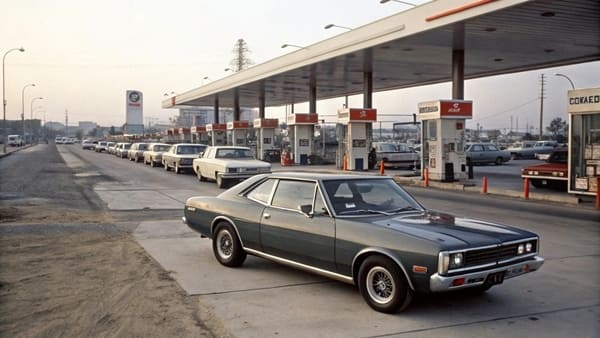
-You see them in movies and hear about them all the time. But what makes 1970s cars so special? It was a unique decade of bold style, sudden crisis, and new rules.
1970s cars are iconic because they mark a huge turning point in automotive history1. They blend the wild designs of the late '60s with the new realities of an oil crisis and strict safety laws. This forced creativity, resulting in a memorable mix of cars.
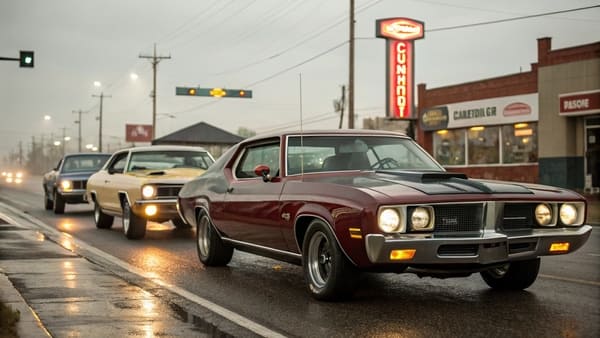
The 1970s was a decade of massive change. The cars from this era tell a story of a world in transition. On one hand, you had the last of the big, powerful machines from the muscle car golden age. On the other hand, you had the birth of smaller, more efficient cars that would change the industry forever. Understanding this push and pull is key to seeing why these vehicles still capture our imagination today. Let's look closer at what made them so different.
What Made 1970s Cars So Different From 1960s Cars?
Many people group '60s and '70s cars together. But the changes were huge and happened fast. New laws for safety and style completely reshaped how cars were designed.
The biggest differences were new safety and emissions rules2. The 1970s brought in mandatory 5-mph bumpers%%%FOOTNOTE_REF3%%%, which made cars look much heavier. [New emissions controls also started to lower engine power](https://19january2021snapshot.epa.gov/transportation-air-pollution-and-climate-change/accomplishments-and-success-air-pollution-transportation.html)4, a big shift from the powerful 1960s. Styling also moved from chrome to vinyl.
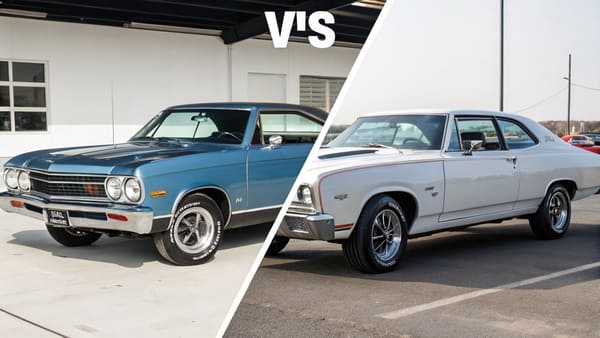
When you compare cars from the late 1960s to the mid-1970s, the changes are obvious. The sleek, chrome-heavy designs of the '60s gave way to something very different. This was not just a style choice; it was driven by government regulations.
From Style to Safety
The most visible change was the introduction of the "5-mph bumper." Starting in 1973, cars had to be able to withstand a 5-mph front collision (and 2.5-mph rear in 1974) without damage to safety components. This led to the huge, blocky bumpers that define the look of so many mid-'70s American cars. They were often just steel beams covered in plastic, bolted onto the existing body. This completely changed the flowing lines of earlier models.
A Shift in Materials and Colors
The style also changed inside and out. The bright chrome of the '60s was replaced with satin finishes, black trim, and large plastic grilles. Vinyl roofs became extremely popular5, adding a touch of "luxury" to many sedans and coupes. Color palettes also shifted from the bright pastels of the '60s to earthy tones like brown, avocado green, and harvest gold6.
Here is a simple table showing the contrast:
| Feature | 1960s Cars | 1970s Cars |
|---|---|---|
| Bumpers | Integrated, chrome, stylish | Large, protruding, "5-mph" safety bumpers |
| Roofs | Painted metal | Often covered in vinyl |
| Colors | Bright, pastel, two-tone | Earthy, muted tones (brown, green, orange) |
| Grilles | Intricate, chrome | Large, simple, often plastic |
These changes created a distinct look that was heavier and more imposing than the cars that came just a few years before.
How Did the 1973 Oil Crisis Change the Entire Auto Industry?
For decades, gas was cheap and big engines were king. Then, suddenly, fuel prices shot up and gas stations had long lines. The auto industry had to change everything, overnight.
The 1973 oil crisis made fuel efficiency the most important thing7. Big, gas-guzzling cars became unpopular almost instantly. The market quickly moved toward smaller, more economical cars, many of which came from Japan and Europe. This shift changed the industry forever.
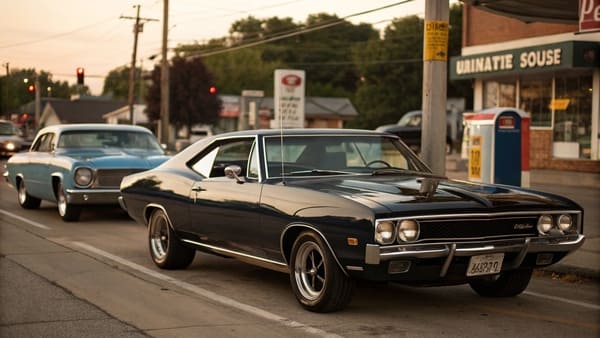
The 1973 oil embargo sent a shockwave through the world. For American car buyers, the party was over. The price of gas quadrupled, and for the first time, people had to think about miles per gallon (MPG). This had a massive and immediate effect on what people wanted to buy and what carmakers needed to build.
The End of Excess
Large sedans and powerful muscle cars sat on dealer lots, unable to sell. The demand for small, fuel-efficient cars exploded. Japanese automakers like Toyota, Honda, and Datsun (now Nissan) were perfectly positioned8. They were already making reliable, high-MPG cars like the Corolla and Civic. Their sales in the U.S. skyrocketed, and they gained a market foothold they have never lost.
The Manufacturing Legacy
This shift also changed how cars were made. To make cars lighter and cheaper, manufacturers started using more plastic for things like grilles, interior panels, and trim pieces9. As a manufacturer of OEM parts, I see the legacy of this every day. Reproducing parts for these classic '70s cars is surprisingly difficult. For example, making plastic parts for a vintage model requires very high-precision injection molding machines. The cooling process is the hardest part. If it's not done perfectly, the part can warp or shrink. I remember my first time working on a project for a client from Pakistan. We were making replica plastic components for a classic car. We didn't have much experience with that specific material, and the parts "shrank" more than we expected after cooling. I was worried we had failed. But the client actually loved it! He said the slight shrinkage made the parts look even more authentic and aged. It was a lucky mistake, but it taught us a valuable lesson about the unique challenges of recreating these vintage pieces. The best machines for this kind of precision work are usually found near the Fujian coast or around Shanghai; machines from other regions often can't meet the accuracy standards.
Why Did Muscle Cars Lose Horsepower During the 1970s?
1960s muscle cars were famous for their incredible power. But by the middle of the 1970s, even cars with the same name felt much slower. This wasn't just one thing, but a perfect storm of factors.
Muscle cars lost horsepower for three main reasons: new emissions laws that required restrictive equipment, the switch to lower-octane unleaded fuel, and a new, more honest way of measuring horsepower (from "gross" to "net" ratings).
The decline of the muscle car was swift and dramatic. A big V8 that made 350 horsepower in 1970 might only be rated at 180 horsepower by 1975. While the oil crisis killed the demand for these cars, new regulations killed their performance even before the crisis hit. It happened because of a few key changes.
1. The Clean Air Act
This was the biggest killer of performance. To meet new, stricter emissions standards, car companies had to add equipment that essentially "choked" the engines. Things like catalytic converters, Exhaust Gas Recirculation (EGR) valves, and air pumps were added to the exhaust system. These devices cleaned the exhaust, but they also created backpressure and restricted airflow, which directly reduced horsepower.
2. The Switch to Unleaded Gas
At the same time, lead was being phased out of gasoline for environmental and health reasons10. High-performance engines of the '60s relied on high-octane leaded fuel to prevent engine knock. To run safely on the new, lower-octane unleaded gas, automakers had to lower the engine's compression ratio. A lower compression ratio means a less powerful explosion in the cylinder, which results in less horsepower.
3. Gross vs. Net Horsepower Ratings
This change didn't reduce actual power, but it made the numbers look much worse.
- Gross HP (until 1971): Power was measured from a bare engine on a stand, with no accessories, open exhaust, and optimized tuning. It was an ideal, best-case number.
- Net HP (from 1972): Power was measured with the engine installed in the car, with all accessories (like the alternator and water pump), air filter, and full exhaust system attached. This was a much more realistic, real-world number.
This accounting change alone could make a 300-hp (gross) engine suddenly become a 220-hp (net) engine, even if the engine itself was identical.
| Engine Example (Chevy 350 V8) | 1971 Rating (Gross) | 1972 Rating (Net) |
|---|---|---|
| Horsepower | ~270 hp | ~175 hp |
When you combine all three factors, you can see why the muscle car era came to such an abrupt end.
Conclusion
The 1970s were a messy, transformative decade for cars. It was a period defined by the clash between old style, a new energy crisis, and tough regulations, creating truly unique vehicles.
"Malaise era - Wikipedia", https://en.wikipedia.org/wiki/Malaise_era. A scholarly source explains that the 1970s represented a major shift in automotive design and regulation, marking a turning point in car history due to new safety and emissions standards. Evidence role: historical_context; source type: encyclopedia. Supports: 1970s cars are iconic because they mark a huge turning point in automotive history.. Scope note: The source provides general historical context but may not address every aspect of 'iconic' status. ↩
"Lessons from the Clean Air Car Race 50 years later | MIT News", https://news.mit.edu/2020/lessons-clean-air-car-race-50-years-later-0902. A government or educational source details how new safety and emissions regulations in the 1970s significantly altered car design and performance. Evidence role: mechanism; source type: government. Supports: The biggest differences were new safety and emissions rules.. Scope note: The source may focus on U.S. regulations and not global changes. ↩
"49 CFR Part 581 -- Bumper Standard - eCFR", https://www.ecfr.gov/current/title-49/subtitle-B/chapter-V/part-581. A government or institutional source confirms that U.S. regulations in the early 1970s required cars to have bumpers that could withstand 5-mph impacts without damage to safety components. Evidence role: case_reference; source type: government. Supports: The 1970s brought in mandatory 5-mph bumpers, which made cars look much heavier.. Scope note: The regulation applied primarily to the U.S. market. ↩
"History of Reducing Air Pollution from Transportation in the United ...", https://19january2021snapshot.epa.gov/transportation-air-pollution-and-climate-change/accomplishments-and-success-air-pollution-transportation_.html. A research or government source explains that emissions control technologies introduced in the 1970s, such as catalytic converters and EGR valves, led to reductions in engine power. Evidence role: mechanism; source type: government. Supports: New emissions controls also started to lower engine power, a big shift from the powerful 1960s.. Scope note: The source may discuss general trends rather than specific models. ↩
"Vinyl roof - Wikipedia", https://en.wikipedia.org/wiki/Vinyl_roof. An automotive history source notes that vinyl roofs became a popular styling feature on many 1970s cars, reflecting changing design trends of the era. Evidence role: general_support; source type: encyclopedia. Supports: Vinyl roofs became extremely popular, adding a touch of 'luxury' to many sedans and coupes.. Scope note: Popularity may vary by region and manufacturer. ↩
"The 70's when cars were colorful - Facebook", https://www.facebook.com/jussayin.007/posts/the-70s-when-cars-were-colorful-/1216297507192166/. A design history source documents the shift in automotive color trends from bright pastels in the 1960s to earth tones in the 1970s. Evidence role: historical_context; source type: encyclopedia. Supports: Color palettes also shifted from the bright pastels of the '60s to earthy tones like brown, avocado green, and harvest gold.. Scope note: Color trends may differ by market and manufacturer. ↩
"Oil Embargo, 1973–1974 - Office of the Historian", https://history.state.gov/milestones/1969-1976/oil-embargo. A government or academic source explains that the 1973 oil crisis led to a major shift in consumer demand toward fuel-efficient vehicles. Evidence role: historical_context; source type: government. Supports: The 1973 oil crisis made fuel efficiency the most important thing.. Scope note: The source may focus on the U.S. market and not global effects. ↩
"Malaise era - Wikipedia", https://en.wikipedia.org/wiki/Malaise_era. A scholarly or industry source describes how Japanese automakers gained significant market share in the U.S. during the 1970s due to their focus on fuel-efficient cars. Evidence role: historical_context; source type: education. Supports: Japanese automakers like Toyota, Honda, and Datsun (now Nissan) were perfectly positioned.. Scope note: The source may not cover all Japanese brands or global markets. ↩
"Plastic automotive engine - Wikipedia", https://en.wikipedia.org/wiki/Plastic_automotive_engine. A research or industry source notes that the use of plastics in automotive manufacturing increased in the 1970s as a response to cost and weight reduction pressures. Evidence role: mechanism; source type: research. Supports: Manufacturers started using more plastic for things like grilles, interior panels, and trim pieces.. Scope note: The source may discuss general trends rather than specific parts or models. ↩
"Tetraethyllead", https://en.wikipedia.org/wiki/Tetraethyllead. A government or health agency source confirms that lead was phased out of gasoline in the 1970s due to environmental and public health concerns. Evidence role: historical_context; source type: government. Supports: Lead was being phased out of gasoline for environmental and health reasons.. Scope note: The timeline and regulations may vary by country. ↩