-Your clutch pedal feels spongy or sticks to the floor. This is a common issue, and the problem might be a small, inexpensive part that has a big job.
A clutch slave cylinder is a key component in a manual transmission's hydraulic system.1 It receives fluid pressure from the clutch master cylinder to move the clutch fork, which disengages the clutch and allows you to change gears smoothly.2
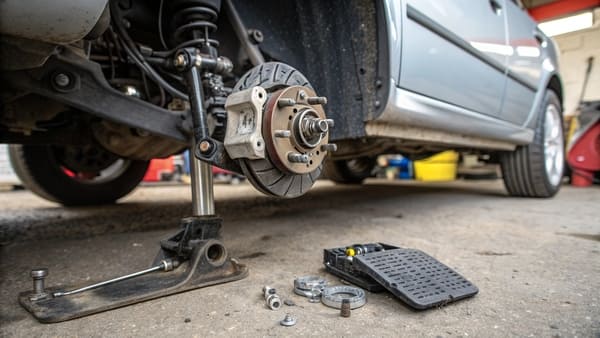
This small part is a perfect example of hydraulics at work in your car. It turns a light push on your pedal into the strong force needed to operate the clutch.3 Without it, you wouldn't be able to shift gears at all.4 Let's dive deeper into what this part is and how it works.
What Is a Clutch Slave Cylinder?
You hear mechanics talk about "master" and "slave" cylinders, which can be confusing. Not knowing what they are makes it hard to understand what's wrong with your car.
A clutch slave cylinder is a hydraulic actuator.5 It takes the hydraulic pressure created when you press the clutch pedal and converts that pressure into physical movement to operate the clutch mechanism.6
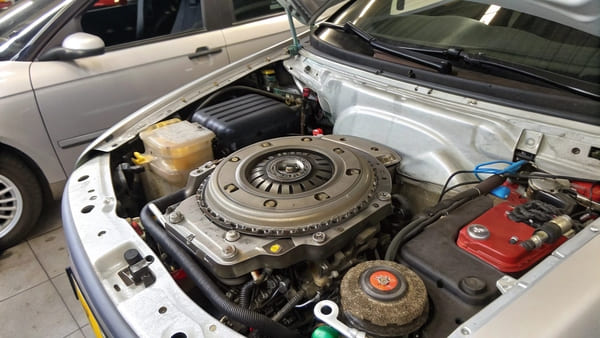
To understand the slave cylinder, you have to think of it as part of a team. The system starts with your foot on the clutch pedal. This action pushes a piston in the clutch master cylinder. The master cylinder then sends high-pressure hydraulic fluid through a line to the slave cylinder. The slave cylinder is the component that does the final bit of work. It has its own piston that gets pushed out by the incoming fluid. This piston then moves a rod or lever, which is what actually disengages the clutch. It's a simple but effective system that multiplies the force from your foot.
Here's a simple way to compare it to the older, mechanical systems:
| Feature | Hydraulic Clutch (with Slave Cylinder) | Cable-Operated Clutch |
|---|---|---|
| Feel | Smoother, more consistent pedal feel | Can feel heavier; prone to stretching |
| Mechanism | Uses fluid pressure | Uses a steel cable under tension |
| Maintenance | Requires fluid checks and bleeding | Requires cable adjustment and replacement |
| Complexity | More components (master, slave, lines) | Simpler design |
Where Is the Clutch Slave Cylinder Located?
You suspect a problem with your slave cylinder, but you can't find it. Looking for a small part in a packed engine bay is frustrating and wastes time.
The clutch slave cylinder is usually mounted on the outside of the transmission's bell housing.7 However, in some modern cars, it is located inside the bell housing as a single unit with the release bearing (concentric slave cylinder).8
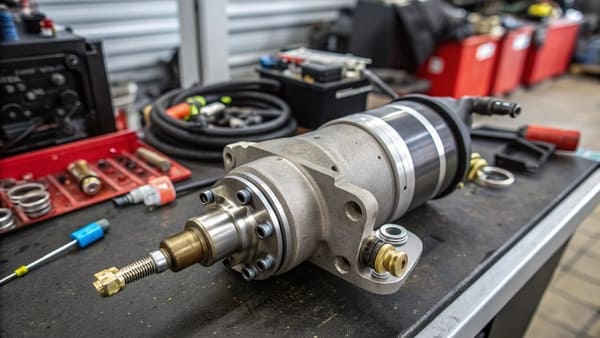
There are two primary designs for the location, and it's important to know which one your vehicle has.
1. External Slave Cylinder
This is the more traditional and service-friendly design. You'll find it bolted to the exterior of the transmission case, often on the side. A small pushrod extends from it and goes through an opening in the bell housing to push on the clutch release fork. The big advantage here is accessibility. If it fails, you can usually replace it without having to remove the entire transmission, which saves a lot of time and labor costs.9
2. Concentric (Internal) Slave Cylinder
This is a more modern and compact design. It combines the slave cylinder and the clutch release bearing into a single assembly. This unit is mounted inside the bell housing, directly around the transmission's input shaft. While this design is more efficient and provides a very direct action on the clutch, it has a major downside. If it fails, the entire transmission has to be removed from the vehicle to access and replace it.10 This makes the repair significantly more expensive and labor-intensive.
| Type | Pros | Cons |
|---|---|---|
| External | Easy to access, cheaper to replace | More linkage parts, takes up more space |
| Concentric | Compact, more direct action, fewer parts | Transmission must be removed for service |
What Does a Clutch Slave Cylinder Do?
You know what it is and where it is, but what exactly does it do step-by-step? Misunderstanding its function can lead you to diagnose the wrong part, costing you time and money.
The clutch slave cylinder’s main job is to use hydraulic force to disengage the clutch.11 When you press the pedal, it pushes a rod that moves the clutch fork, separating the engine from the transmission so you can shift.
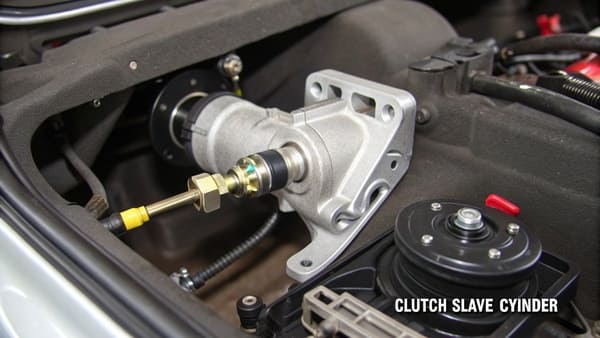
The process is a chain reaction. When you press the clutch pedal, you are really just starting a hydraulic process. That pressure travels through the fluid to the slave cylinder. Here, the magic happens. The fluid pushes a small piston inside the slave cylinder, causing a pushrod to extend and press against the clutch fork. The fork pivots and pushes the release bearing against the pressure plate, which releases the clutch disc.12
From a manufacturing standpoint, these parts are more complex than they look. I remember a project we had with a client from Pakistan. We were making the plastic fluid reservoirs for their slave cylinders. The precision needed for the injection molding process is extremely high. Your average machine just can't do it. The most difficult step is cooling. We found that the only machines with the required accuracy are located in specific regions, like the coastal areas of Fujian or near Shanghai.
On that first project, we had an interesting experience. After the injection and cooling process, the plastic reservoirs had "shrunk" a little more than our initial specifications. We were worried about sending them. However, our client loved them. They said the slightly denser, more compact part felt stronger and more robust. It was a happy accident that taught us a valuable lesson. Since then, we have perfected that process to create incredibly reliable components. It just goes to show how much engineering goes into even the smallest parts of a car's clutch system.
Conclusion
The clutch slave cylinder is a small but vital hydraulic part. Understanding its function and location helps you maintain your manual transmission vehicle and diagnose problems more effectively.
"Master cylinder - Wikipedia", https://en.wikipedia.org/wiki/Master_cylinder. According to automotive engineering references, the clutch slave cylinder is an essential part of the hydraulic system in manual transmissions, responsible for actuating the clutch mechanism. Evidence role: definition; source type: encyclopedia. Supports: A clutch slave cylinder is a key component in a manual transmission's hydraulic system.. ↩
"Bad Clutch Master or Slave Cylinder? Symptoms, Diagnosis, and ...", https://www.youtube.com/watch?v=TsMA82Nb8wQ. Automotive textbooks describe the clutch slave cylinder as receiving hydraulic pressure from the master cylinder to actuate the clutch fork, thereby disengaging the clutch for gear changes. Evidence role: mechanism; source type: education. Supports: It receives fluid pressure from the clutch master cylinder to move the clutch fork, which disengages the clutch and allows you to change gears smoothly.. Scope note: Descriptions may vary slightly depending on vehicle design. ↩
"10.2: Force Multiplication - Engineering LibreTexts", https://eng.libretexts.org/Courses/Northeast_Wisconsin_Technical_College/Fluids_1%3A_Fluid_Power_and_Pneumatics_(NWTC)/10%3A_Pascal's_Law/10.02%3A_Force_Multiplication. Engineering sources explain that hydraulic systems, such as those in clutch assemblies, amplify input force from the pedal to operate the clutch mechanism efficiently. Evidence role: mechanism; source type: education. Supports: It turns a light push on your pedal into the strong force needed to operate the clutch.. Scope note: The degree of force multiplication depends on system design. ↩
"Signs That Your Clutch Slave Cylinder Might Be Failing", https://clutchmasters.com/n-139-signs-that-your-clutch-slave-cylinder-might-be-failing.html?srsltid=AfmBOoqgG4HMg09YEEkEYBweABG-3lVr7XkHZe8eXedH4OtDyBVlyTDD. Automotive repair manuals note that a failed or missing clutch slave cylinder prevents disengagement of the clutch, making gear shifting impossible in manual transmissions. Evidence role: mechanism; source type: education. Supports: Without it, you wouldn't be able to shift gears at all.. Scope note: Some vehicles may have alternative clutch actuation systems, such as cables. ↩
"Master and Slave Cylinder Guide: Functions, Symptoms ...", https://southbendclutch.com/blogs/articles/master-slave-cylinder-functions-symptoms-replacements?srsltid=AfmBOooXXiglYhv6vlc9hRd_8Ba43GOOzPJ5TbGHw3EinnBfXIO5Tg8q. Technical dictionaries and automotive engineering texts define the clutch slave cylinder as a type of hydraulic actuator used in vehicle clutch systems. Evidence role: definition; source type: encyclopedia. Supports: A clutch slave cylinder is a hydraulic actuator.. ↩
"Introduction of clutch slave cylinder product principle - YouTube", https://www.youtube.com/watch?v=BOG3hNFnPv8. Automotive engineering sources describe the slave cylinder's function as converting hydraulic pressure from the master cylinder into mechanical movement to operate the clutch. Evidence role: mechanism; source type: education. Supports: It takes the hydraulic pressure created when you press the clutch pedal and converts that pressure into physical movement to operate the clutch mechanism.. ↩
"Clutch Master and Slave Cylinder Replacement and Bleeding ...", https://www.youtube.com/watch?v=B8HVp-klQ00. Automotive service guides state that the clutch slave cylinder is typically mounted externally on the transmission bell housing, though some designs place it inside. Evidence role: general_support; source type: education. Supports: The clutch slave cylinder is usually mounted on the outside of the transmission's bell housing.. Scope note: Mounting location can vary by vehicle make and model. ↩
"Clutch Release Bearing & Slave Cylinder Assembly", https://www.oreillyauto.com/shop/b/engines---transmissions/transmission---transaxle/clutch-parts/clutch-release-bearing---slave-cylinder-assembly/f084ac79d800?srsltid=AfmBOooNptb0wH0YDUKKzGw8hiuN2pea6ROVOv20X2Kut23IKa3dSIC9. Recent automotive engineering literature describes the concentric slave cylinder as an integrated unit with the release bearing, mounted inside the bell housing in many modern vehicles. Evidence role: historical_context; source type: education. Supports: in some modern cars, it is located inside the bell housing as a single unit with the release bearing (concentric slave cylinder).. Scope note: Not all modern cars use this design; some still use external slave cylinders. ↩
"How to replace a slave cylinder and bleed it. - YouTube", https://www.youtube.com/watch?v=e6_8EegSF7Q. Automotive repair manuals indicate that external slave cylinders can typically be replaced without removing the transmission, reducing labor time and cost. Evidence role: case_reference; source type: education. Supports: If it fails, you can usually replace it without having to remove the entire transmission, which saves a lot of time and labor costs.. Scope note: Some vehicle designs may require additional disassembly. ↩
"Concentric Slave Cylinder Installation Tips - YouTube", https://www.youtube.com/watch?v=558Om_1habU. Automotive service literature confirms that replacing an internal (concentric) slave cylinder requires removal of the transmission, increasing repair complexity and cost. Evidence role: case_reference; source type: education. Supports: If it fails, the entire transmission has to be removed from the vehicle to access and replace it.. Scope note: Some specialty vehicles may have unique service procedures. ↩
"Master and Slave Cylinder Guide: Functions, Symptoms ...", https://southbendclutch.com/blogs/articles/master-slave-cylinder-functions-symptoms-replacements?srsltid=AfmBOor2k-n4eISgh3bUQ1GSaV2b5mj-W-MGI7U1g6Cquy6wyxsKFnmg. Automotive engineering textbooks state that the primary function of the clutch slave cylinder is to use hydraulic force to disengage the clutch mechanism. Evidence role: definition; source type: education. Supports: The clutch slave cylinder’s main job is to use hydraulic force to disengage the clutch.. ↩
"How a Clutch Release Bearing works. (3D Animation) - YouTube", https://www.youtube.com/watch?v=JRIijFHb_4M. Automotive engineering sources explain that the clutch fork pivots to move the release bearing against the pressure plate, disengaging the clutch disc. Evidence role: mechanism; source type: education. Supports: The fork pivots and pushes the release bearing against the pressure plate, which releases the clutch disc.. Scope note: Some modern designs use a direct-acting concentric slave cylinder without a fork. ↩