-Sourcing Tesla headlights feels risky. The wrong choice means unhappy customers and wasted inventory. We can help you pick the right, reliable parts for your market.
To choose the right Tesla headlight, you must match the model, year, and specific generation (e.g., Reflector, Projector, Matrix). Always verify compatibility using part numbers1 and confirm regional specifications2 to avoid expensive errors and ensure performance for your customers.
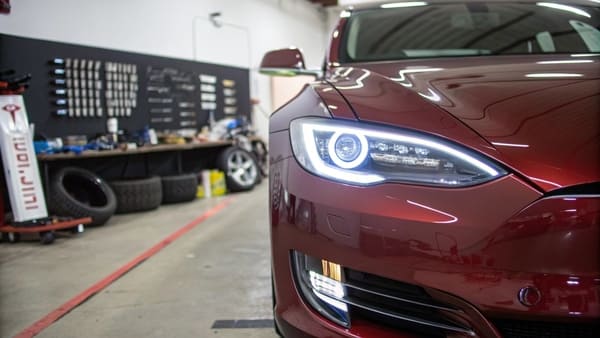
This seems simple on the surface, but there is so much more to it. The technology inside these headlights changes dramatically, even within the same model line. These changes affect everything from performance to price, and most importantly, compatibility. Let's break down the details so you can make an informed and profitable decision for your business. Understanding these differences is the first step to avoiding costly purchasing mistakes.
What Types of Tesla Headlights Exist Across Different Models and Years?
Confused by Tesla's headlight variations? Ordering the wrong type can halt your production line and lead to expensive returns. Let's clarify the different technologies available for each model.
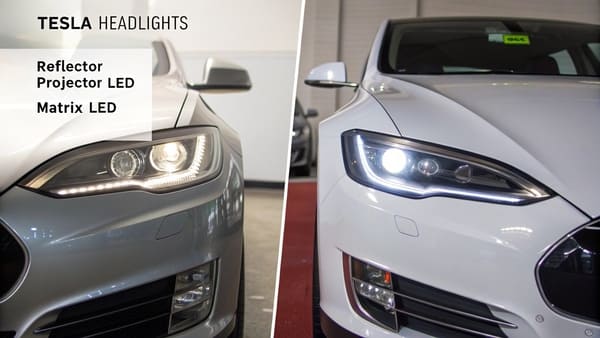
Tesla uses three main headlight types: standard LED Reflector3, upgraded LED Projector (Bi-LED)4, and advanced Matrix LED5. These types vary by model (3, Y, S, X) and production year, with newer models often featuring more sophisticated, software-controlled lighting systems6.
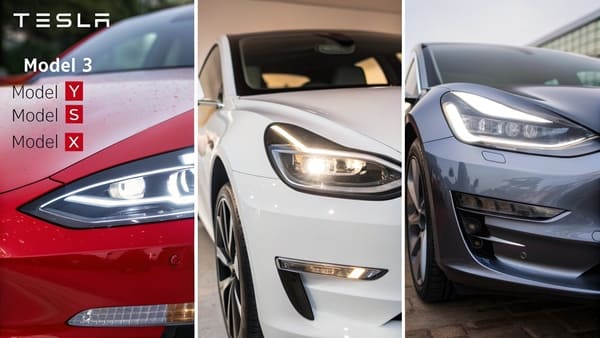
When we started manufacturing components for Tesla headlights, I quickly learned how complex they are. The production difficulty is extremely high. A standard injection molding machine just can't achieve the required precision for the internal parts and lenses. Our process involves several key stages, and the most difficult one is cooling. If the cooling isn't perfectly controlled, the part can warp or shrink, leading to a product that won't fit or function correctly. This is especially true for the more advanced headlight types. The machinery capable of this level of precision is not common; you typically find it in specialized factories in coastal regions like Fujian or near Shanghai, not just anywhere. Let's look at the main types you'll encounter.
Headlight Technology Breakdown
The technology inside the housing determines the light output, beam pattern, and special features. Understanding these is crucial for stocking the right inventory.
| Headlight Type | Description | Common Models | Key Feature |
|---|---|---|---|
| LED Reflector3 | The simplest type. LEDs shine into a chrome-plated reflector bowl, which bounces the light forward. | Early Model S, some early Model 3 | Cost-effective and reliable. |
| LED Projector | Also called Bi-LED. LEDs shine through a projector lens, creating a sharp, focused beam with a distinct cutoff line. | Most Model 3/Y, later Model S/X | Superior brightness and focus. |
| Matrix LED5 | The most advanced type. It uses dozens of individual LEDs that can be turned on or off to shape the light beam in real-time. | Newer Model S/X, newer Model 3/Y | Adaptive high beams, avoids dazzling other drivers. |
Each of these technologies requires a different manufacturing approach. A simple reflector is one thing, but a Matrix LED5 assembly with dozens of tiny, precisely aimed light sources is an entirely different challenge. This complexity directly impacts the cost and availability.
Which Tesla Headlights Are Compatible with Each Model and Generation?
Worried about compatibility issues? A mismatched headlight order can lead to returns from your clients and damage your business's reputation. Let's ensure you get the perfect fit every time.
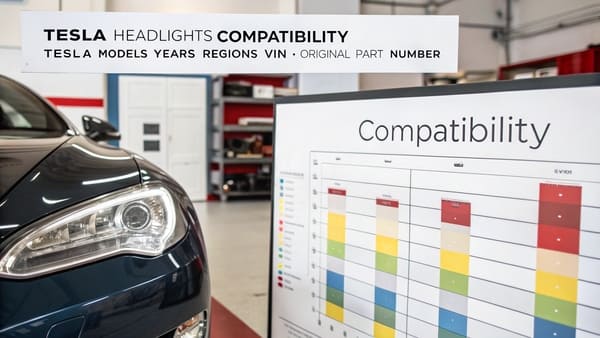
Compatibility depends on the model, year, and region. For example, a 2021 Model 3 might use a different headlight than a 2020 version. Always cross-reference the VIN or original part number. Physical fit does not guarantee electronic compatibility7 due to different connectors and software.
I learned a very important lesson about manufacturing tolerances8 early on. We had our first big order for Tesla headlight components from a client in Pakistan. At the time, we were still perfecting our process for these specific parts. The most difficult step, as I mentioned, is cooling. Another challenge is adding color powder for the lens tint. The machine has to stop, the mold opens to add the powder, and this makes the cooling process even harder to control. On that first run, the parts "shrank" just a tiny bit more than the specification after cooling. I was worried, but the client called me after receiving them. He said the slightly tighter fit was actually better for his application. We got lucky, but it taught us that a fraction of a millimeter matters. Now, our process is perfectly dialed in, but it shows why you need a supplier who understands these materials and processes inside and out.
Model and Year Compatibility Guide
Here is a general guide to help you navigate the main generations. Remember to always confirm with a part number.
| Model | Year Range (Approx.) | Key Headlight Generation & Notes |
|---|---|---|
| Model S | 2012 - 2016 | "Nosecone" generation. Typically used single-projector HID or early LED systems. |
| Model S | 2016 - 2020 | "Facelift" generation. Switched to full LED projector headlights with a new design. |
| Model S | 2021+ | "Palladium" refresh. Introduced the advanced Matrix LED5 headlights with adaptive capabilities. |
| Model 3 | 2017 - 2020 | Early generation. Used LED projector headlights. Some regional variations exist. |
| Model 3 | 2021+ | "Refresh" generation. Upgraded to a new projector lens, and later introduced Matrix LED5 technology. |
| Model Y | 2020+ | Launched with LED projector headlights. Newer models have transitioned to Matrix LED5 headlights. |
| Model X | 2016 - 2021 | Similar to the facelift Model S, using full LED projector headlights. |
| Model X | 2022+ | "Palladium" refresh. Like the Model S, it was upgraded to the advanced Matrix LED5 system. |
This table is a starting point. Always remember that Tesla can make mid-year changes9, so relying on the model year alone is a risk.
How Do Tesla Headlight Generations Affect Performance and Pricing?
Unsure if the latest headlight technology is worth the cost for your customers? Balancing price and performance is the key to running a successful parts business. We can help you understand the real value.
Newer generations like Matrix LED5 offer superior performance with adaptive lighting but come at a much higher wholesale price. Older Reflector or Projector LEDs are more affordable and reliable for basic replacements. The price difference reflects manufacturing complexity, technology, and materials.
The price difference you see isn't arbitrary; it comes directly from the manufacturing floor. A simple reflector headlight might need a good quality injection molding machine. But for a Matrix LED5 headlight, you need a machine with incredible precision, a multi-stage cooling process that is computer-controlled down to the second, and cleanroom assembly for the electronic components. The molds themselves are more complex and expensive to produce. Adding features like adaptive high beams10 requires sophisticated electronics and software integration, which adds another layer of cost and complexity. As a B2B supplier, we manage this entire process to deliver a reliable product. We understand that our clients—whether they are distributors serving collision centers or importers selling performance upgrades—need different products at different price points. Our job is to provide that choice without sacrificing quality.
Cost vs. Benefit Analysis for Your Business
Choosing what to stock depends entirely on your target market. Here's how the different generations stack up from a business perspective.
| Generation | Performance Benefit | Wholesale Price Index | Target Business Market |
|---|---|---|---|
| LED Reflector3 | Basic, reliable illumination. Meets all safety standards. | 1.0x (Baseline) | Collision repair shops, budget-conscious markets, older model replacement. |
| LED Projector | Sharper, brighter, and wider beam pattern. A noticeable upgrade in night driving visibility. | 1.5x - 2.0x | Mainstream replacement parts for most models, standard for distributors and importers. |
| Matrix LED5 | Top-tier adaptive lighting. Can block out parts of the high beam to avoid dazzling other drivers. | 3.0x - 4.0x+ | High-end repair, performance upgrade market11, e-commerce sellers specializing in premium parts. |
For most wholesale and distribution businesses, the LED Projector headlights offer the best balance of performance, cost, and demand. They are the most common type on the road. However, offering the high-end Matrix LED5 option can set you apart for customers looking for the latest and greatest technology upgrades.
Conclusion
Choosing the right Tesla headlight requires attention to model, year, and technology. Partner with us to ensure compatibility, quality, and profitability for your wholesale or OEM business.
Verifying part numbers ensures you get the exact headlight needed, preventing expensive mistakes and ensuring proper fit and function. ↩
Regional differences can impact headlight design and legality, so knowing these helps you avoid compliance issues and returns. ↩
Learning about LED Reflectors helps you stock cost-effective, reliable headlights for older or budget-focused markets. ↩
Understanding Bi-LED technology helps you offer brighter, more focused lighting options that appeal to mainstream customers. ↩
Matrix LEDs offer adaptive lighting and premium features, attracting high-end customers and setting your business apart. ↩
These systems offer advanced features and require careful sourcing to ensure compatibility and performance. ↩
Physical fit isn't enough; electronic compatibility ensures the headlights work with the car's software and connectors. ↩
Precise tolerances ensure headlights fit and function correctly, reducing returns and boosting your reputation for quality. ↩
Tesla often updates parts mid-year, so knowing this helps you avoid ordering outdated or incompatible headlights. ↩
Adaptive high beams improve safety and comfort, making them a selling point for premium customers. ↩
Catering to this market lets you offer high-end products to customers seeking the latest technology and features. ↩