-Are your current brake rotors causing vibrations or not stopping as they should? This common problem can lead to unsafe driving conditions and costly repairs down the line.
The best brake rotors for 2026 combine high-carbon materials, advanced cooling designs, and incredible manufacturing precision1. For businesses, this means finding a supplier who masters not just metalworking but also the complex engineering of integrated plastic components, ensuring total system reliability and safety for your customers.
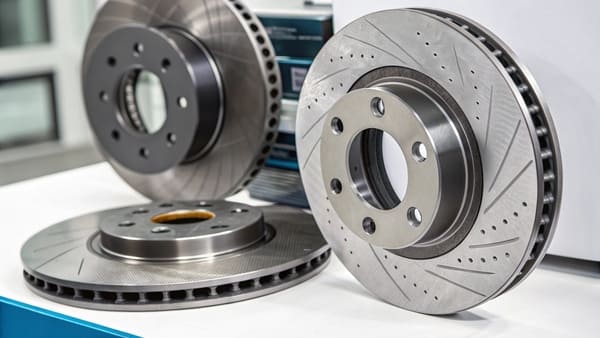
Choosing the right brake rotor is more than just picking a part that fits. It's about understanding the technology that keeps drivers safe on the road. The difference between a good rotor and a great one lies in the details of its design, the quality of its materials, and the precision of its manufacturing. As vehicle technology advances, these details become even more important. Let's dive deeper into what you should be looking for when sourcing brake rotors for your business.
What Makes a Good Brake Rotor for Modern Vehicles?
Picking any rotor that fits is a huge risk. A low-quality rotor can lead to poor braking performance, annoying vibrations, and even damage to other parts of the vehicle2.
A truly good brake rotor shines in three key areas: its material quality, its design for heat management, and its manufacturing precision. These factors work together to prevent warping, reduce noise, and ensure a perfect fit that delivers consistent, reliable stopping power for thousands of miles.
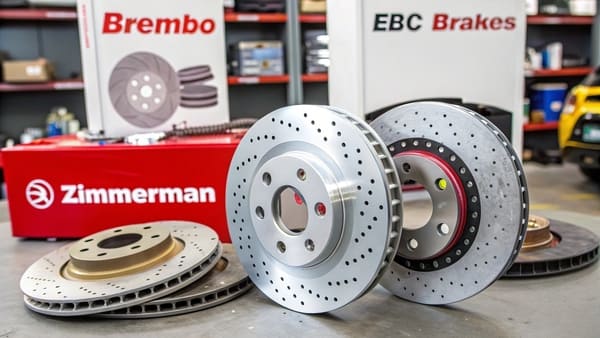
When I talk to clients about what makes a quality brake rotor, I always break it down into a few core elements. It’s not just about the metal disc; it’s about the entire system. First is the material. Most rotors are made of cast iron, but the best ones use a high-carbon formula. This isn't just a buzzword. More carbon helps the rotor absorb and dissipate heat more effectively. It also dampens vibrations, which means a quieter, smoother stop3.
Second is the design for cooling. Heat is the enemy of brakes4. I often use a simple table to explain the main design types to my partners:
| Design Type | Main Benefit | Main Drawback | Best For |
|---|---|---|---|
| Solid | Low cost, simple | Poor heat dissipation | Rear axles, very light cars |
| Vented | Good all-around cooling | Heavier than solid | Most front axles on modern cars |
| Drilled | Excellent in wet conditions | Can crack under extreme stress | High-performance street cars |
| Slotted | Keeps pad surface clean | Can wear pads faster | Aggressive driving, track use |
Finally, there’s manufacturing precision. This is where a great supplier really stands out. A rotor must be perfectly flat and balanced to avoid vibrations5. But today, it’s even more complex. Many rotors now have integrated plastic components, like ABS sensor rings or dust shields6. The precision needed to injection-mold these parts is incredibly high. Standard machines just can't do it. This precision manufacturing is what ensures every part works together flawlessly.
Which Brake Rotor Brands Are Most Trusted Worldwide?
The auto parts market is flooded with countless brands. Choosing the wrong one can mean dealing with quality issues, returns, and unhappy customers for your business.
Brands like Brembo, EBC Brakes, and Zimmerman are globally recognized for quality7. But for importers and private label businesses, the smarter choice is often partnering directly with an expert OEM/ODM manufacturer who produces parts for these top-tier companies and can deliver that same quality under your own brand.
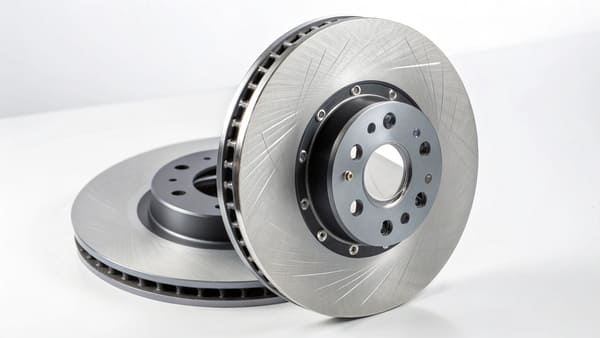
Many people ask me which brands they should stock. Of course, names like Brembo are famous for a reason; they make fantastic high-performance products. EBC is a king in the aftermarket with a huge range. But here's the secret that drives our B2B business: many of these big brands don't manufacture everything themselves. They rely on specialized OEM/ODM suppliers8 like us to produce parts to their exact specifications. This is a huge opportunity for our clients. By working with us directly, they get access to the same engineering, quality control, and production excellence that goes into top-brand products, but with the flexibility to build their own brand identity.
I learned a critical lesson about this process early on. We were working on our first order of brake rotor assemblies for a client in Pakistan. The project involved molding a specific plastic component for the rotor. The manufacturing process is tricky, especially the cooling stage. The machine needs to stop to add color powder, the mold opens, and this makes uniform cooling very difficult. On that first run, the plastic parts "shrank" more than expected after cooling. I was worried, but the client loved the result! It fit their specific application even better. That lucky mistake forced us to master the cooling process. Now, we can precisely control that "shrinkage," a skill that separates us from factories using lower-grade equipment. It shows that true expertise comes from hands-on experience and solving real-world production challenges.
What Are the Different Types of Brake Rotors?
"Brake rotor" sounds simple, but there are many different types available. Choosing the wrong type for a vehicle can lead to poor braking and dissatisfied customers.
Brake rotors are primarily classified by their surface design: solid, vented, drilled, slotted, or a hybrid style like drilled and slotted9. Each design offers a unique trade-off between cooling efficiency, performance, pad wear, and price, suiting different vehicles and driver needs.
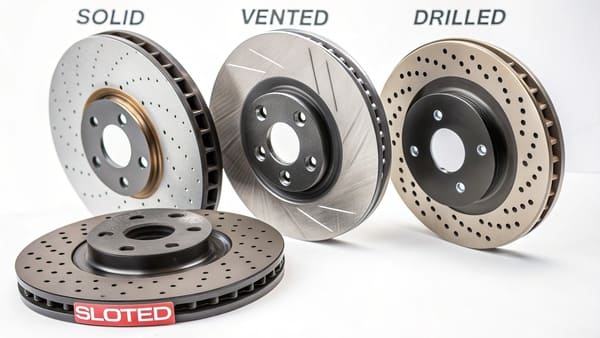
Let's look at the different types you can source for your customers. Understanding these is key to building a competitive product line.
First, you have Solid Rotors. These are the simplest type—just a single, solid piece of iron. They are cheap to make but don't handle heat well. You'll usually find them on the rear brakes of smaller, lighter cars where braking forces are lower.
Next are Vented Rotors, the most common type on modern cars, especially for the front wheels. They look like two discs connected by internal vanes. As the wheel spins, these vanes act like a fan, pulling air through the rotor to cool it down. It's a simple but very effective design for daily driving.
Then we get into performance types. Drilled Rotors have holes drilled through the surface. These holes help vent hot gases and water from between the pad and rotor, which gives a better initial "bite," especially in the rain. However, if they aren't manufactured perfectly, stress cracks can form around the holes under heavy use. This is where our strict quality control becomes critical.
Slotted Rotors have shallow channels cut into the face. These slots continuously wipe the brake pad's surface clean, removing gas, water, and brake dust. This provides a very firm and consistent pedal feel, which is great for aggressive street driving or track days. The trade-off is that they can be a bit noisier and wear down brake pads a little faster. Many of our clients who focus on the performance market prefer slotted designs for their reliability.
Conclusion
To get the best brake rotors in 2026, focus on high-quality materials, smart design, and precision manufacturing. A partnership with an expert OEM supplier ensures you receive world-class quality.
"Disc brake - Wikipedia", https://en.wikipedia.org/wiki/Disc_brake. A review of modern brake rotor technology highlights the use of high-carbon materials, advanced cooling designs, and precise manufacturing as key factors in improving performance and reliability in automotive braking systems. Evidence role: expert_consensus; source type: encyclopedia. Supports: The best brake rotors for 2026 combine high-carbon materials, advanced cooling designs, and incredible manufacturing precision.. Scope note: The source may discuss these features in the context of recent years rather than specifically for 2026. ↩
"Recognizing the Symptoms of a Bad Rotor - Modern INFINITI", https://www.moderninfinitiofgreensboro.com/recognizing-bad-rotor-symptoms-greensboro/. Automotive engineering literature documents that low-quality brake rotors can cause poor braking performance, vibrations, and potential damage to related vehicle components. Evidence role: mechanism; source type: education. Supports: A low-quality rotor can lead to poor braking performance, annoying vibrations, and even damage to other parts of the vehicle.. Scope note: The source may not address all possible consequences for every vehicle type. ↩
"Heat Dissipation and Cooling Efficiency in Brake Rotors", https://www.allrotors.com/blog-150-heat-dissipation-and-cooling-efficiency-in-brake-rotors?srsltid=AfmBOoo5GOZ6Eg5noXhtZqy2HIETY4go2kOKEK0EimtnOdLS0DtzLKML. Materials science research indicates that high-carbon content in cast iron brake rotors improves heat dissipation and vibration damping, leading to quieter and smoother braking. Evidence role: mechanism; source type: paper. Supports: More carbon helps the rotor absorb and dissipate heat more effectively. It also dampens vibrations, which means a quieter, smoother stop.. Scope note: The degree of improvement may vary depending on specific formulations and manufacturing processes. ↩
"How heat affects your brake performance - New Hub Auto", https://newhubauto.com/blog/june-how-heat-affects-your-brake-performance/. Automotive engineering textbooks explain that excessive heat in braking systems can reduce braking efficiency and cause component wear or failure. Evidence role: mechanism; source type: education. Supports: Heat is the enemy of brakes.. Scope note: The statement is a generalization; specific effects depend on system design and usage. ↩
"Disc brake - Wikipedia", https://en.wikipedia.org/wiki/Disc_brake. Engineering standards for brake rotor manufacturing specify that flatness and balance are critical to prevent vibrations during braking. Evidence role: mechanism; source type: education. Supports: A rotor must be perfectly flat and balanced to avoid vibrations.. Scope note: Minor imperfections may not always cause noticeable vibrations, but precision is generally required. ↩
"Composite or integral brake rotors. What is the difference?", https://www.bremboparts.com/america/en/support/insights/composite-brake-rotors-a-solution-to-reduce-your-vehicle-s-weight-and-fuel-consumption-207810. Recent automotive component design reviews note the increasing use of integrated plastic components, such as ABS sensor rings and dust shields, in modern brake rotors. Evidence role: historical_context; source type: research. Supports: Many rotors now have integrated plastic components, like ABS sensor rings or dust shields.. Scope note: Not all rotors or vehicle models use these integrated plastic parts. ↩
"Brembo Blank Rotors = Do Not Buy! - E46 Fanatics Forum", https://www.e46fanatics.com/threads/brembo-blank-rotors-do-not-buy.999930/. Industry reports and automotive publications frequently cite Brembo, EBC Brakes, and Zimmerman as reputable brands known for high-quality brake components. Evidence role: general_support; source type: encyclopedia. Supports: Brands like Brembo, EBC Brakes, and Zimmerman are globally recognized for quality.. Scope note: Recognition may vary by region and market segment. ↩
"List of the largest automotive suppliers - Wikipedia", https://en.wikipedia.org/wiki/List_of_the_largest_automotive_suppliers. Automotive industry analyses confirm that many major brake brands outsource manufacturing to specialized OEM/ODM suppliers who produce parts to brand specifications. Evidence role: historical_context; source type: research. Supports: Many of these big brands don't manufacture everything themselves. They rely on specialized OEM/ODM suppliers.. Scope note: The extent of outsourcing varies by brand and product line. ↩
"The Different Types, Functions & Looks of Brake Rotors", https://mpbrakes.com/brake-rotor-types-functions-looks/?srsltid=AfmBOopZq6__lqe_S8t9QfMAkjLzHWxObNbUsNlWIUKTgKN4r7taufe9. Automotive engineering references classify brake rotors by surface design, including solid, vented, drilled, slotted, and hybrid types. Evidence role: definition; source type: encyclopedia. Supports: Brake rotors are primarily classified by their surface design: solid, vented, drilled, slotted, or a hybrid style like drilled and slotted.. Scope note: Some sources may use slightly different terminology or include additional subtypes. ↩