-Struggling to choose the right brake pads for your product line? The decision impacts performance, cost, and customer satisfaction. It's a choice you need to get right.
The best brake pad depends on your target market. Ceramic pads are quiet, clean, and ideal for daily driving1. Semi-metallic pads offer superior performance and heat dissipation2 for heavy-duty or performance vehicles, but are noisier and create more dust.
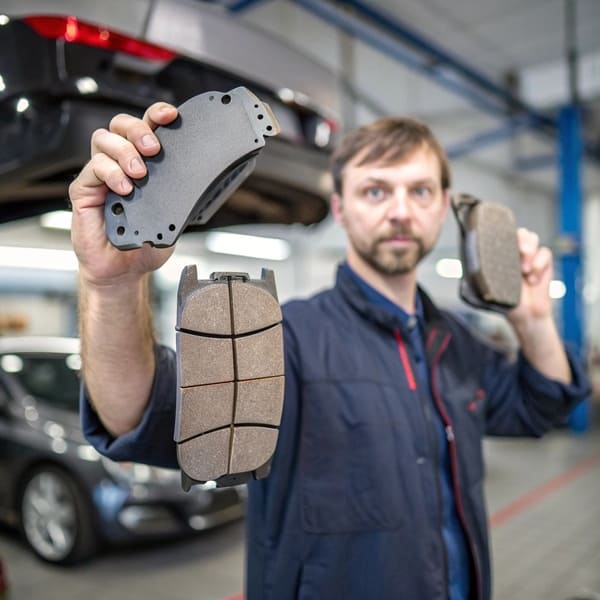
Choosing the right materials for your customers is a critical decision3. It affects not just the performance of the vehicle but also your brand's reputation and your bottom line. As a manufacturer, I've spent years navigating these choices, and I want to share what I've learned to help you make the best decision for your business. Let's break down the differences, the pros, and the cons, so you can stock a product line that truly meets your market's needs.
What Are Ceramic and Semi-Metallic Brake Pads and How Do They Differ?
Finding the right brake pad composition can feel complicated. You want to offer quality, but you also need to manage costs and meet specific performance demands for your customers.
Ceramic pads use dense ceramic fibers and non-ferrous fillers4, while semi-metallic pads are made from a mix of metal fibers (like steel and copper) and friction modifiers5. This core difference in materials dictates their performance, noise level, and lifespan.
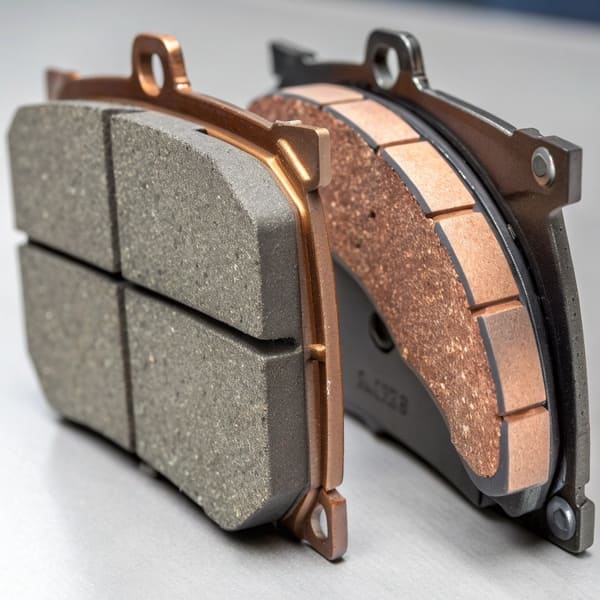
Let's dive deeper into what sets these two types of brake pads apart, especially from a manufacturing standpoint. The real difference isn't just the raw materials, but the extreme precision required to make them correctly. Producing a quality brake pad is not simple. It involves at least three critical stages, but the most difficult steps are cooling, setting the shape, and controlling the density6. This is where the quality of your manufacturing partner really shows.
The Challenge of Manufacturing
High-precision machinery is essential7. In my experience, the best machines for this job are often found in factories around Shanghai or in the Fujian coastal region. Equipment from other areas, like Hebei, sometimes can't achieve the necessary precision. The process is delicate. For example, when we adjust the raw material formula8, the machine has to stop. We then have to open the mold for the adjustment. This small action can create huge problems with cooling, affecting the final pad's consistency and performance. It’s a constant balancing act between formula accuracy and process stability.
| Feature | Ceramic Brake Pads | Semi-Metallic Brake Pads |
|---|---|---|
| Main Components | Ceramic fibers, non-ferrous fillers, bonding agents | Metal fibers (30-65%), graphite, fillers, binders |
| Manufacturing Focus | Achieving consistent density and heat resistance9 | Balancing friction performance with durability10 |
| Ideal Use Case | Daily drivers, luxury vehicles, city commuting | Trucks, performance cars, heavy-duty applications |
Understanding this manufacturing complexity helps you ask the right questions when sourcing products. It’s not just about the price; it’s about the process and precision behind the product.
What Are the Advantages and Disadvantages of Ceramic Brake Pads?
Are your customers complaining about brake dust on their wheels or annoying squealing noises? This can hurt your brand's reputation and lead to costly returns or complaints.
Ceramic brake pads are the solution for a quiet, clean braking experience. They produce very little dust and are virtually silent, making them perfect for the daily driver market. However, they are typically more expensive and less effective in extreme cold.
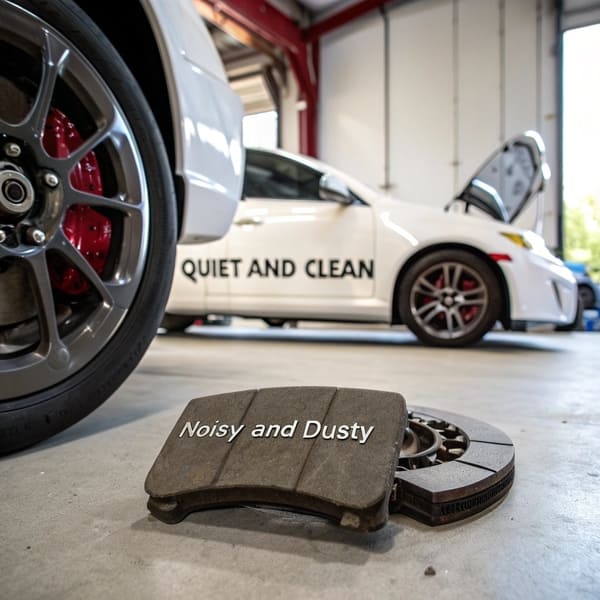
For many importers and distributors, ceramic pads represent the premium end of their product range. They appeal to a specific customer who values comfort and cleanliness over raw stopping power. But before you commit your inventory entirely to ceramic, it's crucial to understand the full picture of their benefits and drawbacks. This balance will determine if they are the right fit for the specific segment of the automotive market you serve.
Breaking Down Ceramic Pads
Ceramic pads are a feat of material science, but their strengths in one area create weaknesses in others. It's a trade-off you need to communicate to your customers.
1. The "Comfort" Advantages: The biggest selling point is the user experience.
- Low Noise11: The composition of ceramic fibers creates a friction frequency that is beyond the range of human hearing. This means no more annoying squeaks or squeals during stops, which is a major plus for luxury car owners and daily commuters.
- Low Dust12: The dust they produce is light-colored and doesn't stick to wheels. For customers who take pride in their car's appearance, this is a huge benefit. You can market this as "clean wheel technology."
2. The "Performance & Cost" Disadvantages:
- Higher Cost13: The raw materials and complex manufacturing process make ceramic pads more expensive to produce. This higher cost is passed on to you and, ultimately, the end consumer. You need to be sure your market can support this premium price point.
- Reduced Cold Bite14: In very cold climates, ceramic pads can take a little longer to warm up to their optimal operating temperature. This means the first few stops on a freezing morning might feel slightly less responsive.
- Heat Dissipation15: They don't conduct heat as well as metallic pads. For normal driving, this is fine. But for heavy-duty use like towing or track racing, they can overheat and fade faster.
| Pros of Ceramic Pads | Cons of Ceramic Pads |
|---|---|
| ✅ Exceptionally quiet operation | ❌ Higher manufacturing and retail cost |
| ✅ Produce very little, light-colored dust | ❌ Less effective in extreme cold temperatures |
| ✅ Gentle on brake rotors, extending their life16 | ❌ Not ideal for heavy-duty or performance use |
| ✅ Stable performance across a wide range of temperatures | ❌ Lower thermal conductivity than metallics |
Ultimately, ceramic pads are an excellent choice for a large portion of the market, but they are not a one-size-fits-all solution.
What Are the Advantages and Disadvantages of Semi-Metallic Brake Pads?
Do your customers need brake pads for trucks, commercial vehicles, or performance cars? Offering them a standard pad could lead to poor performance, rapid wear, and unhappy buyers.
Semi-metallic pads provide excellent stopping power and are great at dissipating heat, making them ideal for heavy-duty and high-performance applications. However, they are noisier, produce more dust, and are harder on brake rotors than ceramic pads.
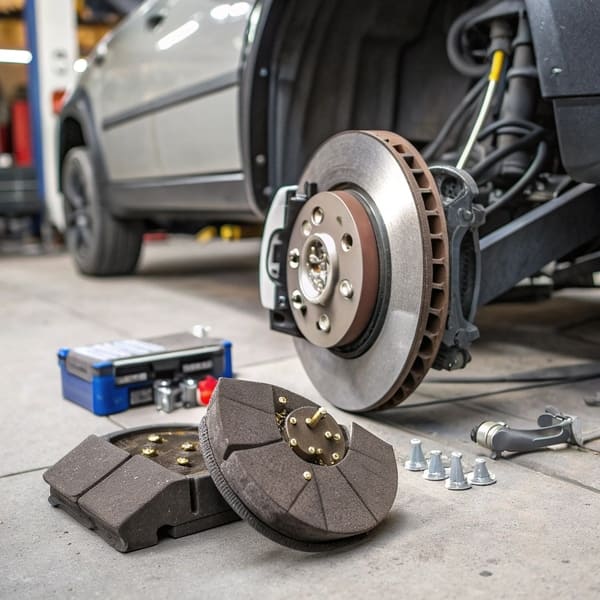
Semi-metallic pads are the workhorses of the brake world. They are often the default choice for original equipment manufacturers (OEMs) on trucks and performance-oriented vehicles for a reason: they get the job done reliably under pressure. As a supplier, this is often the bread-and-butter of a brake product line, offering a fantastic balance of cost and performance that appeals to a wide, practical-minded audience.
The Reality of Semi-Metallic Performance
I learned a valuable lesson about market perception early in my career. I was working with a client from Pakistan, and it was one of my first big orders for semi-metallic pads. After production, we found that the pads caused some "uneven wear." I was very worried this would be a major problem. To my surprise, the client was thrilled. In his market, that aggressive wear was seen as proof of powerful, heavy-duty performance. It taught me that sometimes, a "disadvantage" in one market is a "feature" in another.
1. The "Performance" Advantages:
- Superior Stopping Power17: The metal fibers provide excellent friction and a strong "bite," which translates to shorter stopping distances.
- Excellent Heat Management18: Metal is a great conductor of heat. These pads pull heat away from the rotor effectively, reducing the risk of brake fade during prolonged or hard braking. This is essential for towing, mountain driving, or racing.
- Cost-Effective: The materials are less expensive than those in ceramic pads, making them a more budget-friendly option for both you and your customers.
2. The "Comfort" Disadvantages:
- Noise and Dust: The trade-off for all that power is more noise and more dust. The metallic content can cause squealing, and the dust they produce is dark and can be corrosive to wheels if not cleaned off.
- Rotor Wear19: They are more abrasive than ceramic pads, which means they will wear down brake rotors more quickly. This is an important long-term cost for the end-user to consider.
| Pros of Semi-Metallic Pads | Cons of Semi-Metallic Pads |
|---|---|
| ✅ Excellent stopping power ("bite") | ❌ Can be noisy (squealing or grinding) |
| ✅ Superior heat dissipation for heavy use | ❌ Produce significant, dark-colored dust |
| ✅ Durable and long-lasting under stress | ❌ More abrasive, leading to faster rotor wear |
| ✅ More affordable to manufacture and buy | ❌ Can feel too "grabby" for casual driving |
For any business serving the truck, fleet, or performance aftermarket, a solid semi-metallic brake pad is a non-negotiable part of the inventory.
Conclusion
Choosing between ceramic and semi-metallic pads comes down to your target market. Offer ceramic for comfort and cleanliness, and semi-metallic for performance and heavy-duty applications to succeed.
Learn why ceramic pads are preferred for daily drivers and how they enhance comfort and cleanliness for your customers. ↩
Discover the science behind semi-metallic pads and why they're essential for heavy-duty and performance vehicles. ↩
Understand the impact of material selection on performance, cost, and customer satisfaction for your product line. ↩
Explore the composition of ceramic pads to better communicate their advantages to your market. ↩
Gain insights into the materials in semi-metallic pads and their impact on braking efficiency. ↩
Learn about the manufacturing challenges that affect brake pad quality and consistency. ↩
Find out how advanced machinery ensures the quality and reliability of brake pads. ↩
See why formula adjustments are delicate and how they influence final product performance. ↩
Understand the importance of these factors for product reliability and customer satisfaction. ↩
Learn how the right balance leads to better-performing and longer-lasting brake pads. ↩
Discover the technology behind silent braking and its appeal to luxury and daily drivers. ↩
Find out how low-dust technology benefits car owners and enhances your product's appeal. ↩
Understand the factors driving up costs and how to justify premium pricing to your customers. ↩
Learn about cold bite and how it affects braking performance in different climates. ↩
See why heat management is crucial for safety and performance in various driving conditions. ↩
Explore the long-term cost benefits of ceramic pads for your customers. ↩
Learn why stopping power matters for trucks and performance vehicles. ↩
Understand the importance of heat management for safety and performance. ↩
Find out the trade-offs between performance and maintenance costs for your customers. ↩