-Your brakes feel uneven, and you hear a strange noise. You suspect a seized caliper pin is the problem, but choosing the right lubricant feels like a guessing game.
To ensure long-lasting brake performance, the best caliper pin lube is a high-temperature, silicone-based or synthetic grease1. It must be specifically formulated for brake systems to prevent damage to rubber and plastic components like pin boots and bushings, ensuring smooth caliper movement over time.
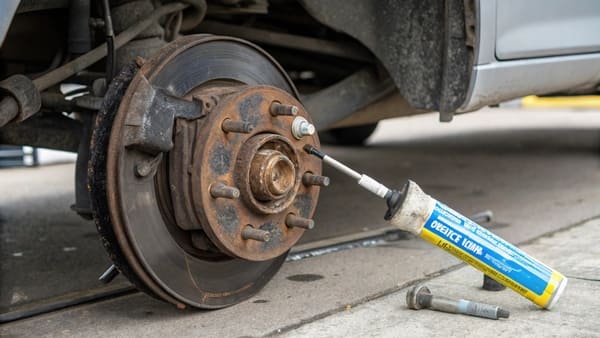
Choosing the right lube is only half the battle. To truly understand why this small detail is so critical for the entire brake system's safety and longevity, you need to see the bigger picture. Let's explore how these components work together and what it takes to manufacture them to the highest standard.
What Is Brake Caliper Pin Lube and Why Is It Important?
Your brake caliper guide pins are seizing, causing uneven pad wear. You need a lubricant that can withstand extreme heat and won't damage the rubber boots, but which one?
Brake caliper pin lube is a special grease that allows floating calipers to slide freely2. It's vital because this movement ensures even pressure is applied to the brake pads on both sides of the rotor, leading to consistent, reliable braking and preventing premature wear.
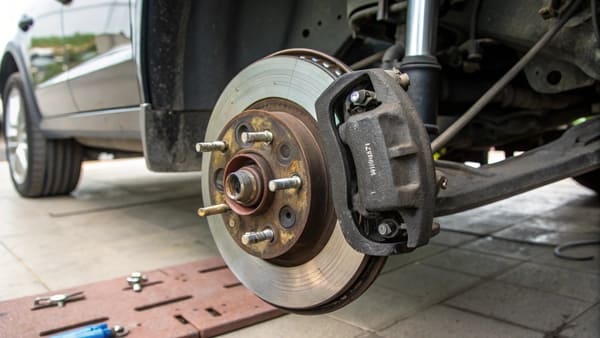
The function of this lubricant seems simple, but its properties are highly specialized. Using the wrong type of grease can cause more harm than good, leading to component failure and compromising brake safety. The science behind selecting the right lube is directly tied to the materials used in the brake caliper assembly.
The Right Grease for the Job
Not all greases are created equal, especially when it comes to brakes. A standard chassis grease or anti-seize compound is the wrong choice here. Brake caliper pins are almost always housed within rubber or plastic boots and bushings. Petroleum-based greases can cause these rubber and plastic parts to swell, soften, and break down over time3. When the boot fails, moisture and dirt get in, contaminating the grease and causing the pin to seize. This is why you must use a specific type of lubricant.
Types of Caliper Pin Lube
Here’s a breakdown of the correct lubricants to use:
| Lubricant Type | Key Features | Best For |
|---|---|---|
| Silicone-Based Grease | Excellent high-temperature resistance. Safe for all rubber and plastic parts. Provides a great waterproof seal. | The industry standard and safest choice for all caliper pin applications, especially those with rubber or plastic bushings. |
| Synthetic Grease | Often fortified with ceramic or other solids. Extremely high-temperature range. Excellent durability and water resistance. | Heavy-duty applications like trucks, performance vehicles, or any vehicle operating in harsh conditions. Always check if it's safe for rubber parts. |
Choosing between them depends on the specific vehicle and its use case, but a high-quality silicone-based grease is a reliable choice for the vast majority of passenger cars.
Why Do Brake Caliper Guide Pins Need Lubrication?
You've replaced your brake pads, but the brakes still feel "off." The car might pull to one side, or the new pads are already wearing unevenly.
Brake caliper guide pins need lubrication to allow the floating caliper to slide side-to-side4. This movement is essential for the caliper to center itself and apply equal clamping force to both the inner and outer brake pads, ensuring even wear and effective stopping.
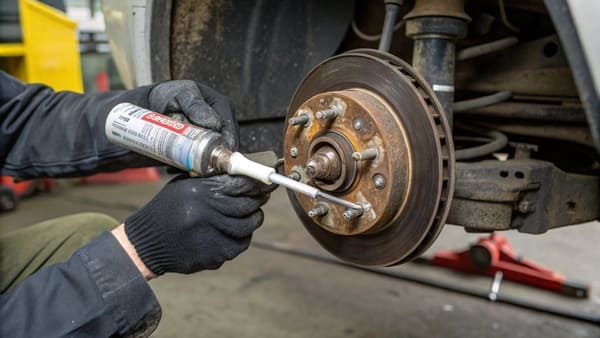
To really grasp this, you have to understand the mechanics of a floating caliper, which is the most common type used on passenger vehicles today5. Unlike a fixed caliper, which has pistons on both sides, a floating caliper has pistons on only one side. The lubrication on its guide pins is what makes the whole system work effectively.
The Mechanics of a Floating Caliper
When you press the brake pedal, hydraulic fluid pushes the piston on the inboard side of the caliper, pressing the inner brake pad against the rotor6. This action also causes the entire caliper assembly to slide inward on its guide pins. This sliding motion pulls the outboard side of the caliper, pressing the outer brake pad against the other side of the rotor. This creates a "clamping" action that slows the vehicle.
If the pins are dry, corroded, or seized, the caliper cannot slide. This means only one brake pad—the one pushed by the piston—is doing all the work.7
Lubricated vs. Unlubricated Pins
Let's look at the direct impact on performance:
| Feature | Lubricated Guide Pins | Unlubricated/Seized Guide Pins |
|---|---|---|
| Caliper Movement | Slides freely side-to-side. | Stuck or restricted movement. |
| Pad Pressure | Evenly distributed on both pads. | All force is on the inner (piston-side) pad. |
| Pad Wear | Both pads wear down at the same rate. | Inner pad wears out rapidly; outer pad barely wears. |
| Braking Feel | Smooth, consistent, and predictable. | Spongy feel, pulling to one side, noise. |
| Heat Distribution | Heat is managed across the entire assembly. | Extreme heat buildup on one side, risking rotor warp. |
Proper lubrication is not just about preventing noise; it's a fundamental requirement for the brake system to function as designed.8
What Happens If Brake Caliper Pins Are Not Properly Lubricated?
You notice a burning smell after driving, and one wheel is much hotter than the others. Your brake pads are wearing out incredibly fast, but only on one side.
If caliper pins are not lubricated, they can seize, preventing the caliper from sliding. This causes the inner brake pad to drag constantly on the rotor, leading to rapid and uneven pad wear, overheating, brake noise, pulling, and eventual brake failure.9
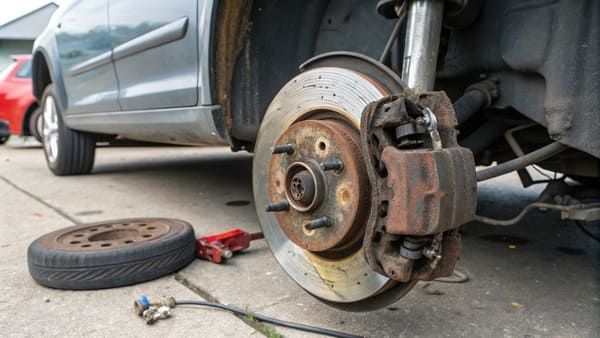
The consequences of skipping this simple maintenance step are severe and costly. But it’s not just about the grease; the quality of the surrounding plastic and rubber components is just as important. In my experience as a manufacturer, this is where many suppliers fail.
The Hidden Challenge: Manufacturing Caliper Pin Components
The lubricant is only effective if it's sealed in and contaminants are sealed out. This job falls to the rubber pin boots and sometimes small plastic bushings. Manufacturing these parts is surprisingly difficult. Standard injection molding machines often lack the precision needed to create a perfect seal.10 The process requires multiple steps, with the cooling stage being the most critical.
I learned this the hard way on a project with a Pakistani client. It was one of our first times producing a specific type of plastic caliper bushing. After the injection molding process, the parts "shrank" more than we expected during cooling. I was worried we had failed. But when the client received the samples, he was thrilled. The slightly smaller, denser part created an even tighter seal than the original design. It was a happy accident, but it taught us a valuable lesson about controlling the cooling process. Since then, we've perfected this, using high-precision machines to ensure every boot and bushing we produce meets exact tolerances for a perfect, lasting seal. A cheap, imprecise boot will fail quickly, letting the lubricant escape and dirt enter, guaranteeing the pin will seize.11
Conclusion
Properly lubricating brake caliper pins with a high-quality silicone or synthetic grease is non-negotiable for brake safety, performance, and longevity. It ensures the entire system works as designed.
"Disc brake - Wikipedia", https://en.wikipedia.org/wiki/Disc_brake. Industry standards and automotive maintenance guides recommend high-temperature silicone-based or synthetic greases for brake caliper pins due to their compatibility with rubber and plastic components and resistance to heat and moisture. This is generally accepted for passenger vehicles, though some specialty applications may require different formulations. Evidence role: expert_consensus; source type: encyclopedia. Supports: To ensure long-lasting brake performance, the best caliper pin lube is a high-temperature, silicone-based or synthetic grease.. Scope note: Some heavy-duty or specialty vehicles may require alternative lubricants. ↩
"Disc brake - Wikipedia", https://en.wikipedia.org/wiki/Disc_brake. Automotive engineering sources explain that brake caliper pin lube is formulated to enable smooth movement of floating calipers, ensuring even pad application and preventing seizing. This is a standard practice in disc brake maintenance. Evidence role: mechanism; source type: encyclopedia. Supports: Brake caliper pin lube is a special grease that allows floating calipers to slide freely.. Scope note: The mechanism applies primarily to floating caliper designs, not fixed calipers. ↩
"Manual says to apply rubber grease to the pin boots on the bolts ...", https://www.reddit.com/r/MechanicAdvice/comments/sngynh/manual_says_to_apply_rubber_grease_to_the_pin/. Materials compatibility studies and automotive manufacturer guidelines indicate that petroleum-based greases can degrade rubber and plastic components in brake caliper assemblies, leading to swelling and breakdown. This is a widely recognized issue in brake maintenance. Evidence role: mechanism; source type: education. Supports: Petroleum-based greases can cause these rubber and plastic parts to swell, soften, and break down over time.. Scope note: The effect may vary depending on the specific rubber formulation used in the caliper boots. ↩
"Do you clean and lubricate brake pins every time? - Reddit", https://www.reddit.com/r/AskMechanics/comments/1bdrmyp/do_you_clean_and_lubricate_brake_pins_every_time/. Automotive engineering texts confirm that lubrication of brake caliper guide pins is essential for allowing floating calipers to move freely, ensuring even pad wear and effective braking. This is a fundamental aspect of disc brake design. Evidence role: mechanism; source type: education. Supports: Brake caliper guide pins need lubrication to allow the floating caliper to slide side-to-side.. Scope note: This applies specifically to floating caliper designs, not fixed calipers. ↩
"Types of Brake Calipers: Fixed vs. Floating Explained - MAT Foundry", https://www.matfoundrygroup.com/products/types-of-brake-calipers-fixed-vs-floating-explained. Automotive industry surveys and technical sources report that floating calipers are the predominant design used in passenger vehicles due to their cost-effectiveness and performance. Fixed calipers are more common in high-performance or specialty vehicles. Evidence role: statistic; source type: institution. Supports: Floating caliper, which is the most common type used on passenger vehicles today.. Scope note: Prevalence may vary by region and vehicle segment. ↩
"Tutorial - How a floating caliper brake works - YouTube", https://www.youtube.com/watch?v=adOYIvi_s1k. Automotive engineering manuals illustrate that in floating caliper designs, hydraulic pressure moves the piston on the inboard side, pressing the inner pad against the rotor and causing the caliper to slide for outer pad engagement. Evidence role: mechanism; source type: education. Supports: When you press the brake pedal, hydraulic fluid pushes the piston on the inboard side of the caliper, pressing the inner brake pad against the rotor.. Scope note: This mechanism is specific to floating caliper designs. ↩
"Symptoms of stuck caliper but pins slide fine : r/AskMechanics - Reddit", https://www.reddit.com/r/AskMechanics/comments/1fgyut0/symptoms_of_stuck_caliper_but_pins_slide_fine/. Automotive repair case studies and technical documentation confirm that seized caliper pins prevent caliper movement, resulting in uneven pad wear and reduced braking performance, with only the piston-side pad engaging the rotor. Evidence role: case_reference; source type: education. Supports: If the pins are dry, corroded, or seized, the caliper cannot slide. This means only one brake pad—the one pushed by the piston—is doing all the work.. Scope note: Severity may depend on the extent of pin seizure and vehicle usage. ↩
"Do you clean and lubricate brake pins every time? - Reddit", https://www.reddit.com/r/AskMechanics/comments/1bdrmyp/do_you_clean_and_lubricate_brake_pins_every_time/. Automotive engineering standards and expert consensus emphasize that proper lubrication of caliper pins is essential for the intended function of disc brake systems, preventing uneven wear and ensuring safety. Evidence role: expert_consensus; source type: education. Supports: Proper lubrication is not just about preventing noise; it's a fundamental requirement for the brake system to function as designed.. Scope note: This applies primarily to disc brake systems with floating calipers. ↩
"What are the consequences of not lubricating caliper pins on new ...", https://www.quora.com/What-are-the-consequences-of-not-lubricating-caliper-pins-on-new-brakes. Technical reports and automotive repair case studies document that seized caliper pins lead to uneven pad wear, overheating, brake noise, vehicle pulling, and increased risk of brake failure. These outcomes are well-established in brake maintenance literature. Evidence role: case_reference; source type: education. Supports: If caliper pins are not lubricated, they can seize, preventing the caliper from sliding. This causes the inner brake pad to drag constantly on the rotor, leading to rapid and uneven pad wear, overheating, brake noise, pulling, and eventual brake failure.. Scope note: Severity of consequences may vary with driving conditions and maintenance history. ↩
"Disc Brake Caliper Tooling | Joint Production Technology", https://jptonline.com/disc-brake-caliper-tooling/. Engineering literature and industry reports note that manufacturing brake caliper pin boots and bushings requires high precision to ensure proper sealing and durability, with standard injection molding sometimes insufficient for tight tolerances. Evidence role: expert_consensus; source type: research. Supports: Manufacturing these parts is surprisingly difficult. Standard injection molding machines often lack the precision needed to create a perfect seal.. Scope note: Specific requirements may vary by manufacturer and material used. ↩
"Caliper Pin Boot Failure: Signs & Prevention Tips - PartCatalog", https://www.partcatalog.com/blogs/brake/caliper-pin-boot-failure-signs-prevention-tips?srsltid=AfmBOopKuktF2m-CWbN-uyaH4vbEhtV5xEGZQx6fZ1KNWTQsPLrdGnS8. Failure analyses and technical studies show that low-quality or imprecise caliper pin boots can compromise sealing, allowing lubricant loss and contamination, which increases the risk of pin seizure and brake failure. Evidence role: case_reference; source type: research. Supports: A cheap, imprecise boot will fail quickly, letting the lubricant escape and dirt enter, guaranteeing the pin will seize.. Scope note: Boot failure rates may depend on material quality and environmental conditions. ↩