-Tired of replacing brake pads too often? The wrong choice costs money and time. We'll show you how to pick durable pads from top manufacturers.
Ceramic and high-quality semi-metallic brake pads1 last the longest. Top manufacturers like Bosch, Brembo, and TMD Friction2, along with specialized Chinese patent holders like Gold Phoenix, produce the most durable options. They use advanced formulas and manufacturing processes3, not just thicker friction material.
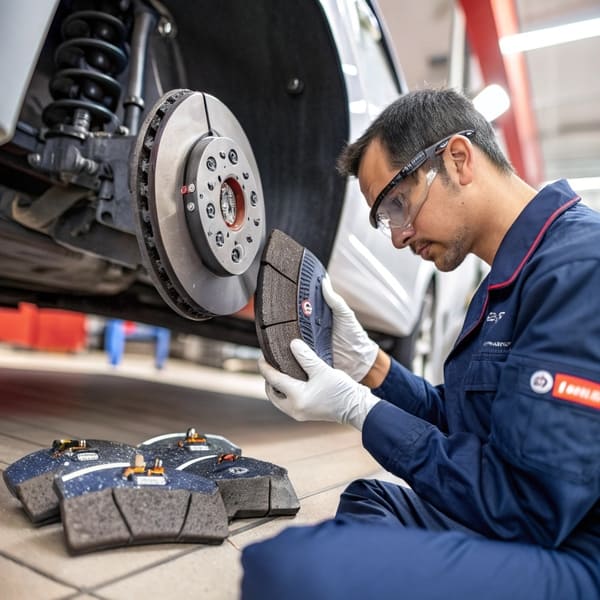
Understanding which brake pads last longer is just the start. To make the best choice for your business, you need to know what makes them different. Let's look closer at the materials and science behind brake pad durability. This will help you source the right products for your market.
What Are the Key Differences Between Ceramic and Semi-Metallic Brake Pads?
Do terms like 'ceramic' and 'semi-metallic' confuse you? Choosing the wrong one can lead to noise, dust, and unhappy customers. Let's clarify the key differences simply.
Ceramic pads are quiet, produce less dust, and are stable at high temperatures. Semi-metallic pads offer better heat dissipation and superior stopping power4, especially in cold weather. The choice depends on the driving application, balancing comfort with performance.
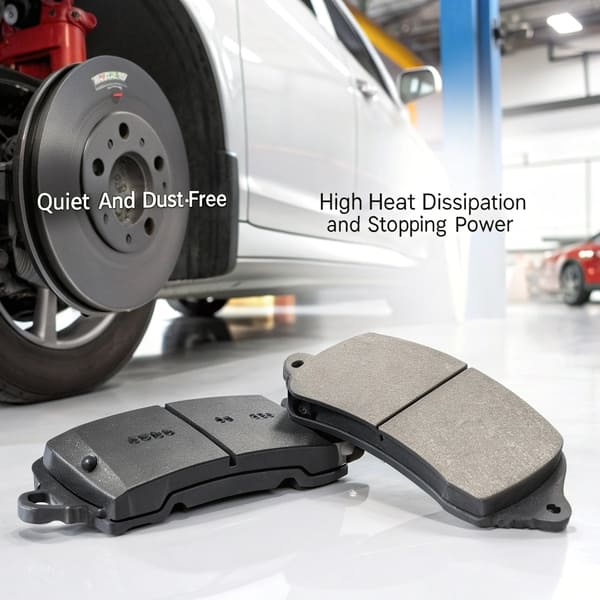
When we talk about brake pads, the two main players in the market are ceramic and semi-metallic. They look similar, but their internal makeup and performance are very different. As a manufacturer, we work with these materials every day, so I can break it down for you.
Material Makeup and Performance
Ceramic pads use dense ceramic fibers and non-ferrous filler materials5. This composition makes them extremely quiet and produces a fine, light-colored dust that doesn't stick to wheels. They are very stable across a wide range of temperatures, which means consistent performance. Semi-metallic pads, on the other hand, contain a high percentage of metal—usually between 30% and 65%—like steel, iron, or copper. This metal content gives them a stronger "bite" and helps pull heat away from the rotor, which is great for heavy-duty applications. The downside is they can be noisier and produce more dust.
Here is a simple comparison:
| Feature | Ceramic Brake Pads | Semi-Metallic Brake Pads |
|---|---|---|
| Noise Level | Very Low | Moderate to High |
| Dust Output | Low (Light Color) | High (Dark Color) |
| Stopping Power | Good & Consistent | Excellent (Especially Cold) |
| Durability | Excellent | Good to Excellent |
| Rotor Wear | Low | Higher than Ceramic |
| Best Use Case | Daily Driving, Luxury Cars | Trucks, Performance Cars |
How Do Material Composition and Structure Affect Brake Pad Durability?
Do you think all brake pads are made the same way? This assumption can lead to sourcing low-quality parts that wear out fast and damage rotors. The secret is in the formula.
Durability depends on the "recipe." The type of abrasive, fillers, and binders used in the friction material dictates its wear rate and heat resistance. A balanced formula with high-quality, wear-resistant particles6 and a stable curing process7 is key to creating a long-lasting brake pad.
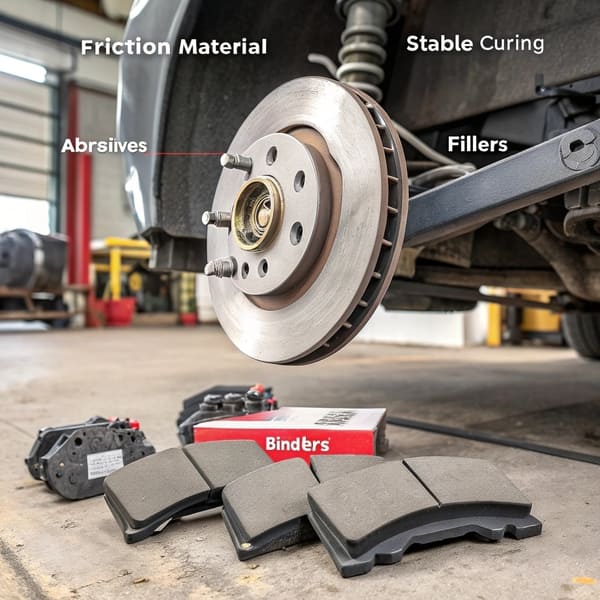
Developing and mass-producing a truly long-life brake pad is extremely difficult. It’s not as simple as making the friction layer thicker. In fact, small factories that do this often fail to meet the dual requirements of long mileage and low rotor wear. The real durability comes from advanced material science and precise manufacturing.
The Challenge of Long-Life Formulas
A top-tier, long-lasting brake pad requires at least three core manufacturing processes to be perfect. The hardest part is mastering the copper-free NAO (Non-Asbestos Organic) ceramic formula8. This involves getting the right gradation of wear-resistant particles and controlling the consistency of the high-temperature hot-press curing. This process is complex and expensive, which is why only major OE manufacturers like Bosch, TMD Friction, Brembo, and specialized patent-holders like China's Gold Phoenix and Xinyi Brake can do it reliably. They invest heavily in R&D to create formulas that provide a long service life without compromising safety or performance.
Structure and Heat Management
The structure of the pad also matters. A well-designed pad uses multiple layers, including shims and underlayers9, to dampen noise and manage heat. The friction material itself must be bonded perfectly to the steel backing plate10. If this bond fails, the pad is useless, no matter how good the material is.
Why Do Some Brake Pads Wear Faster Than Others?
Ever wonder why some brake pads wear out so quickly? This inconsistency hurts your reputation and makes inventory planning a nightmare. Let's uncover the real reasons behind uneven wear.
Wear rate is affected by the friction material formula, manufacturing consistency, driving habits, and operating conditions11. A key challenge is balancing high wear resistance with a stable friction coefficient12 across different temperatures. Inconsistency here causes premature wear.
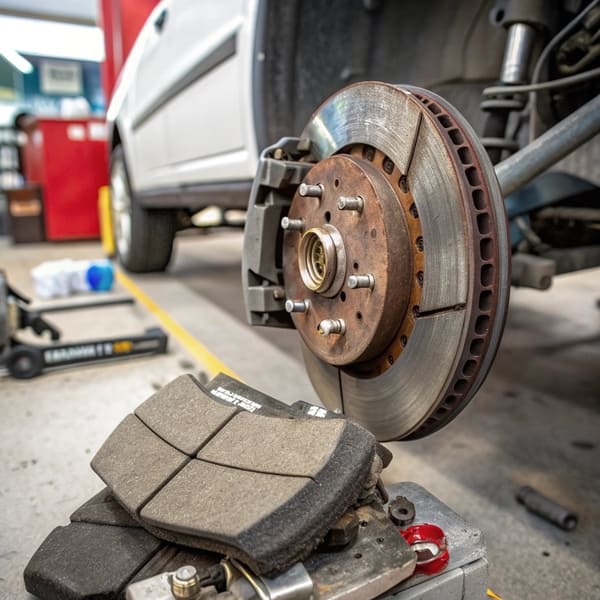
The most difficult part of creating a long-life brake pad is balancing wear resistance with a stable friction coefficient. You can add more hard, wear-resistant fillers to the formula to make the pad last longer, but this can make it less effective at stopping the car, especially when it's cold.
The Manufacturing Balancing Act
Finding this perfect balance is a huge challenge. When we are optimizing a formula, we have to pause the production line. Then, we need to recalibrate the proportion of wear-resistant fillers and adjust the curing temperature curve. This is a very sensitive process. If we get it wrong, it can cause problems with high-temperature brake fade or poor low-temperature braking response. It’s a constant trade-off between durability and performance.
A Real-World Example
I remember the first time we worked on a long-life brake pad project for a customer in Pakistan. We didn't have much experience with that specific application, and the first batch we delivered had a "low initial friction coefficient." This means the brakes didn't feel very strong on the first few stops. I was worried. However, our client used these pads on long-haul freight trucks under heavy loads. For them, the incredible 80,000+ km lifespan13 was far more important than a strong initial bite. They actually preferred it. We learned a valuable lesson and have never made that mistake again. This experience shows how a pad's "flaw" in one context can be a "feature" in another.
Conclusion
Choosing long-lasting brake pads means looking beyond thickness. Focus on advanced material formulas and trusted OEM manufacturers to ensure durability, performance, and reliability for your customers.
Learn why these types of brake pads are considered the most durable and how they can save you money and time in the long run. ↩
Discover what sets these leading brands apart in terms of quality, durability, and advanced manufacturing processes. ↩
Understand the science behind brake pad longevity and how top manufacturers achieve superior performance. ↩
Learn how proper heat management ensures safety and performance, especially in demanding driving conditions. ↩
Explore how these materials contribute to quiet operation, low dust, and consistent performance in ceramic brake pads. ↩
Discover how the right mix of materials leads to longer-lasting, safer brake pads for your vehicle or business. ↩
See why manufacturing consistency is crucial for producing reliable, high-performance brake pads. ↩
Learn about this advanced, eco-friendly formula and its benefits for durability and safety. ↩
Understand how structural design reduces noise and manages heat for a better driving experience. ↩
Find out how this manufacturing detail prevents pad failure and ensures long-term reliability. ↩
Get insights into the key variables that determine how long your brake pads will last and perform. ↩
Learn about the trade-offs involved in creating pads that last long without sacrificing safety or performance. ↩
Explore how ultra-durable brake pads can benefit businesses and drivers, especially in heavy-duty applications. ↩