-Your engine temperature is climbing, but the fan is silent. An overheating engine can cause severe damage.1 Let's figure out when your fan should start working.
Your radiator fan should turn on when the engine coolant gets hot enough, typically between 200-230°F (93-110°C).2 It also runs when your A/C is on to help the condenser, regardless of engine temperature.3
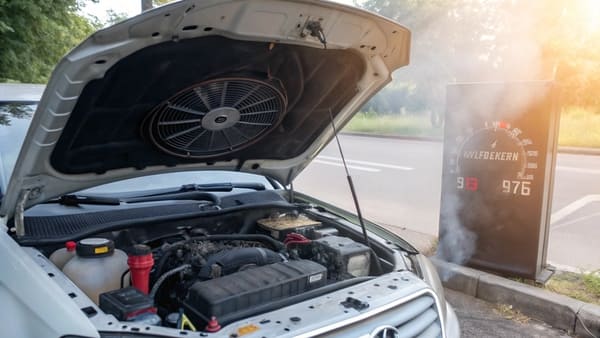
If your fan isn't turning on when it should, you have a problem. But to fix it, you first need to know what the fan is supposed to do. Let's dive into the basics of the radiator fan's job.
What Does a Radiator Fan Do in a Car?
Ever wondered what that big fan behind your car's grille actually does? Its failure can leave you stranded. Its job is simple but critical: preventing engine overheating.
The radiator fan's main purpose is to pull air through the radiator.4 This happens when you're stopped or moving slowly.5 This airflow cools the hot coolant, which then goes back to the engine to keep it from overheating.
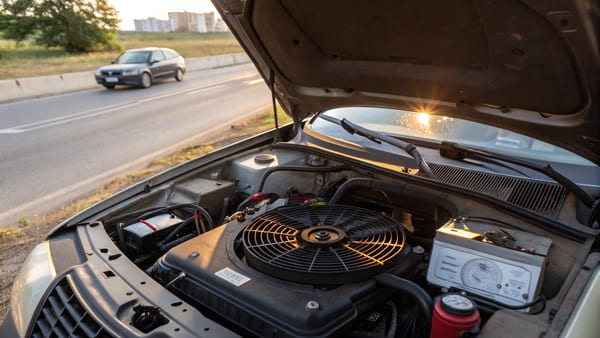
Your engine creates a lot of heat. The cooling system, with its radiator and coolant, moves that heat away from the engine. The radiator works like a heat exchanger, but it needs airflow to be effective.
The Fan's Role at Different Speeds
When you're driving on the highway, enough air naturally flows through the radiator to cool the coolant. But in stop-and-go traffic or when idling, there isn't enough natural airflow. This is where the fan comes in. It acts as a powerful substitute for the moving air, pulling it through the radiator fins to get the job done. Most modern cars use electric fans controlled by the engine's computer for this reason.6
Manufacturing the Fan Itself
Making the plastic parts for these fans is surprisingly complex. I learned this from experience. The plastic blades and shroud need to be made with very high precision. Standard injection molding machines often can't achieve this. The cooling step in the manufacturing process is the trickiest part.7 I remember working on an order for a client from Pakistan. We had issues with the plastic "shrinking" more than expected after cooling. Luckily, the client actually preferred the result, but it taught me a valuable lesson about the precision needed. Even adding color pigments can be difficult because it requires stopping the machine and opening the mold, which makes the cooling process even harder.
When Should a Radiator Fan Normally Turn On?
You're in traffic, and the temperature gauge is creeping up. You start to worry if your fan is broken. Knowing the normal triggers for the fan can bring peace of mind.
A radiator fan normally turns on in two situations. First, when the engine coolant gets too hot. Second, it turns on immediately when you switch on the air conditioning to help cool the A/C condenser.8
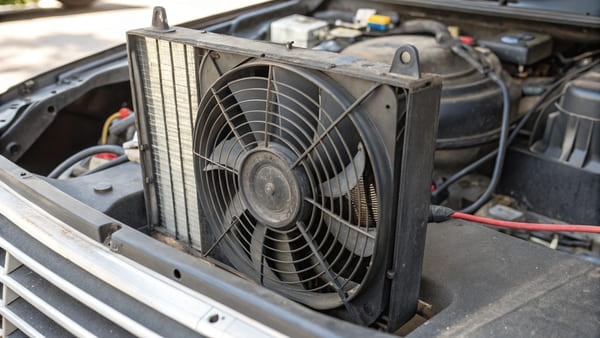
The fan doesn't run all the time. That would waste energy and could even over-cool the engine in some conditions. It's controlled by the Engine Control Unit (ECU) based on information it gets from various sensors around the car.9 Let's look at the two main reasons it gets the signal to start spinning.
The Engine Temperature Trigger
The main trigger is the engine coolant temperature sensor.10 This sensor constantly measures how hot the coolant is. When it tells the ECU that the coolant has reached a preset temperature, the ECU sends a signal to a relay. This relay then switches the fan on. Once the fan has pulled enough air through the radiator to cool the coolant down to a safe level, the sensor reports this back, and the ECU turns the fan off. This cycle repeats to keep the engine in its best operating temperature range.
The Air Conditioning Trigger
When you turn on your A/C, the refrigerant in the system gets very hot and needs to be cooled down. This happens in the condenser, which looks like a small radiator and is usually placed in front of the main one. To cool the refrigerant effectively, the fan must turn on to pull air across the condenser fins. This is why you'll often hear the fan start up right after you press the A/C button, even if the engine is completely cold. This is also a great way to quickly check if the fan motor itself is working.
At What Temperature Does a Radiator Fan Kick On?
You know the fan should turn on when the engine gets hot. But how hot is "hot"? Not knowing the specific number makes it hard to diagnose a problem.
For most vehicles, the radiator fan activates when the coolant temperature reaches about 200 to 230 degrees Fahrenheit (93 to 110 degrees Celsius).11 This specific temperature is set by the manufacturer for your car model.
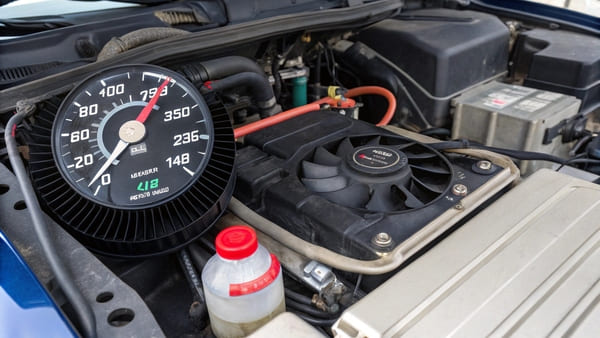
The exact temperature for the fan to switch on isn't a universal number; it's specific to your vehicle's design. The normal operating temperature shown on your dashboard gauge usually sits in the middle of the dial. The fan is designed to turn on only when the temperature rises above that normal range, like when you are idling for a long time.
Finding Your Car's Specific Temperature
The best way to find the exact temperature for your car is to check the owner's manual or a service manual. If you have an OBD2 scanner, you can watch the live coolant temperature data yourself and see exactly when the fan kicks in. Some cars even have two-speed fans, with a low speed that turns on earlier and a high speed for more extreme heat.12
| Vehicle Type | Typical Fan-On Temperature (Approx.) |
|---|---|
| Economy Sedan | 210°F / 99°C |
| Performance Car | 200°F / 93°C |
| Large Truck/SUV | 220°F / 104°C |
Why Precision Matters in Production
This need for precise temperature control in the car is mirrored by the need for precision in manufacturing the fan. As a manufacturer, I know that if the plastic fan assembly isn't perfectly balanced, it won't work well. This is why the injection molding process is so critical. We rely on highly advanced machines, often found in specialized industrial areas like the Fujian coast or around Shanghai. These machines can handle the difficult cooling process needed to prevent warping and ensure accuracy. A poorly made fan from a less precise machine might not move enough air or could fail from vibration, causing the very overheating problem it's supposed to prevent.
Conclusion
In short, your radiator fan is vital. It should turn on with high engine heat or when the A/C is running. If it fails, you risk serious engine damage.
"Nuclear meltdown - Wikipedia", https://en.wikipedia.org/wiki/Nuclear_meltdown. Automotive engineering sources confirm that engine overheating can lead to severe damage, including warped cylinder heads, blown head gaskets, and engine failure, though the extent depends on duration and severity of overheating. Evidence role: general_support; source type: education. Supports: An overheating engine can cause severe damage.. Scope note: Severity and specific damage depend on engine design and overheating duration. ↩
"Radiator (engine cooling) - Wikipedia", https://en.wikipedia.org/wiki/Radiator_(engine_cooling). Automotive manuals and technical sources indicate that most radiator fans activate when coolant temperatures reach approximately 200-230°F (93-110°C), though exact values vary by vehicle model. Evidence role: statistic; source type: education. Supports: Your radiator fan should turn on when the engine coolant gets hot enough, typically between 200-230°F (93-110°C).. Scope note: Specific activation temperature depends on manufacturer and model. ↩
"Fan coil unit - Wikipedia", https://en.wikipedia.org/wiki/Fan_coil_unit. Automotive technical guides confirm that the radiator fan is often activated when the air conditioning is turned on to assist in cooling the A/C condenser, independent of engine temperature. Evidence role: mechanism; source type: education. Supports: It also runs when your A/C is on to help the condenser, regardless of engine temperature.. Scope note: Some vehicles may use separate condenser fans or different control strategies. ↩
"Radiator (engine cooling) - Wikipedia", https://en.wikipedia.org/wiki/Radiator_(engine_cooling). Automotive encyclopedias and technical manuals define the radiator fan's primary function as pulling air through the radiator to facilitate coolant heat dissipation. Evidence role: definition; source type: encyclopedia. Supports: The radiator fan's main purpose is to pull air through the radiator.. Scope note: Some vehicles may use additional fans for other purposes. ↩
"High-volume low-speed fan - Wikipedia", https://en.wikipedia.org/wiki/High-volume_low-speed_fan. Automotive engineering sources explain that radiator fans are essential for cooling when vehicles are stationary or moving slowly, as natural airflow is insufficient. Evidence role: mechanism; source type: education. Supports: This happens when you're stopped or moving slowly.. Scope note: At higher speeds, natural airflow typically negates the need for fan operation. ↩
"Electronic stability control - Wikipedia", https://en.wikipedia.org/wiki/Electronic_stability_control. Automotive industry sources report that most modern vehicles employ electric radiator fans managed by the engine control unit (ECU) to optimize cooling based on sensor input. Evidence role: expert_consensus; source type: education. Supports: Most modern cars use electric fans controlled by the engine's computer for this reason.. Scope note: Some older or specialty vehicles may use mechanical fans or alternative control methods. ↩
"A Review on Injection Molding: Conformal Cooling Channels ... - PMC", https://pmc.ncbi.nlm.nih.gov/articles/PMC11991609/. Manufacturing engineering literature identifies the cooling phase in injection molding as a critical and challenging step, affecting dimensional accuracy and material properties. Evidence role: mechanism; source type: paper. Supports: The cooling step in the manufacturing process is the trickiest part.. Scope note: Difficulty varies with material, mold design, and product complexity. ↩
"Computer fan - Wikipedia", https://en.wikipedia.org/wiki/Computer_fan. Automotive technical manuals confirm that radiator fans are typically activated by high coolant temperature and by air conditioning operation to cool the condenser. Evidence role: mechanism; source type: encyclopedia. Supports: A radiator fan normally turns on in two situations. First, when the engine coolant gets too hot. Second, it turns on immediately when you switch on the air conditioning to help cool the A/C condenser.. Scope note: Some vehicles may have additional triggers or separate condenser fans. ↩
"SECU-3 - Wikipedia", https://en.wikipedia.org/wiki/SECU-3. Automotive engineering sources describe that modern radiator fans are controlled by the ECU, which receives input from temperature and other sensors to regulate fan operation. Evidence role: mechanism; source type: education. Supports: It's controlled by the Engine Control Unit (ECU) based on information it gets from various sensors around the car.. Scope note: Older vehicles may use mechanical or simpler electrical controls. ↩
"Radiator (engine cooling) - Wikipedia", https://en.wikipedia.org/wiki/Radiator_(engine_cooling). Automotive technical guides confirm that the engine coolant temperature sensor is the primary trigger for radiator fan activation in most vehicles. Evidence role: mechanism; source type: education. Supports: The main trigger is the engine coolant temperature sensor.. Scope note: Some vehicles may use additional sensors or triggers. ↩
"Radiator (engine cooling) - Wikipedia", https://en.wikipedia.org/wiki/Radiator_(engine_cooling). Automotive technical sources report that radiator fans in most vehicles activate when coolant temperatures reach approximately 200-230°F (93-110°C), though exact values depend on vehicle design. Evidence role: statistic; source type: education. Supports: For most vehicles, the radiator fan activates when the coolant temperature reaches about 200 to 230 degrees Fahrenheit (93 to 110 degrees Celsius).. Scope note: Manufacturer and model-specific variations exist. ↩
"Fan (machine) - Wikipedia", https://en.wikipedia.org/wiki/Fan_(machine). Automotive technical sources describe that some vehicles use two-speed radiator fans, with low speed activating at lower temperatures and high speed for higher heat loads. Evidence role: mechanism; source type: education. Supports: Some cars even have two-speed fans, with a low speed that turns on earlier and a high speed for more extreme heat.. Scope note: Not all vehicles are equipped with two-speed fans; design varies by manufacturer. ↩