-Your cab gets hot and stuffy during rest stops. Idling the engine all night is noisy, burns expensive fuel, and attracts fines.1 You need a better way to stay cool.
The best semi-truck air conditioner for long-haul drivers is an electric, battery-powered system. It provides powerful cooling without needing to idle the engine. This saves significant fuel, reduces noise for better sleep, and complies with anti-idling laws, making it the top choice for comfort and savings.

Choosing the right air conditioner for a semi-truck is a major decision. It affects fuel costs, maintenance schedules, and most importantly, the driver's ability to get quality rest. A well-rested driver is a safer and more efficient driver.2 But the market is filled with different options, and understanding the core differences is the first step toward making a smart investment. We've spent years manufacturing components for these systems, so we know what truly matters. Let's look at why a dedicated AC unit is not a luxury, but a necessity.
Why Do Semi Trucks Need a Dedicated Air Conditioner?
Relying on the truck's main engine for AC means idling all night. This wastes fuel, adds wear to a very expensive engine, and can lead to fines in many areas.
A dedicated air conditioner, often called an Auxiliary Power Unit (APU), allows drivers to cool their sleeper cabs without idling the main engine. This directly saves fuel, reduces engine wear, ensures compliance with anti-idling laws, and improves driver wellness through better sleep.
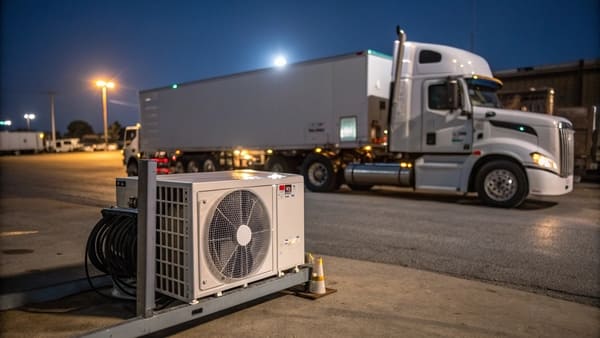
A dedicated AC system is one of the best investments you can make for a long-haul truck. The benefits go far beyond just feeling comfortable on a hot day. When we look at the operational costs and the well-being of the driver, it becomes clear why these systems are so important. They solve several key problems that every fleet manager and independent operator faces on the road.
Breaking Down the Benefits
The return on investment for a dedicated truck AC is easy to see. It impacts your wallet, your engine's lifespan, and your health.
- Financial Savings: Idling a truck engine can burn about one gallon of diesel per hour.3 At current prices, that's a huge expense for an 8-10 hour rest period. An electric APU uses a tiny fraction of that cost in electricity, paying for itself in fuel savings alone, often within the first year.4
- Regulatory Compliance: More and more states and local areas have strict anti-idling laws.5 Fines can be expensive and add up quickly. A no-idle AC solution completely avoids this problem, keeping you compliant everywhere you go.6
- Driver Wellness and Safety: Getting a full night of uninterrupted sleep is critical. A quiet, cool cabin makes this possible.7 A well-rested driver is more alert, safer on the road, and has better long-term health. The loud, vibrating environment of an idling engine is terrible for sleep quality.
| Feature | Idling Main Engine | Using Dedicated Electric AC |
|---|---|---|
| Fuel Cost | High (approx. 1 gal/hr) | Very Low (battery-powered) |
| Engine Wear | High | None |
| Noise Level | Loud and Vibrating | Very Quiet |
| Emissions | High | Zero |
| Legal Risk | Risk of Fines | Compliant with Laws |
What Types of Semi Truck Air Conditioners Are Available?
You know you need a better cooling solution, but the options can be confusing. You see diesel-powered units, electric systems, and integrated options, and it's hard to know which is right.
The main types of semi-truck air conditioners are diesel-powered APUs and electric APUs.8 Diesel APUs use a small, separate diesel engine to generate power. Electric APUs run on a dedicated bank of deep-cycle batteries, offering much quieter, zero-emission operation during rest periods.9
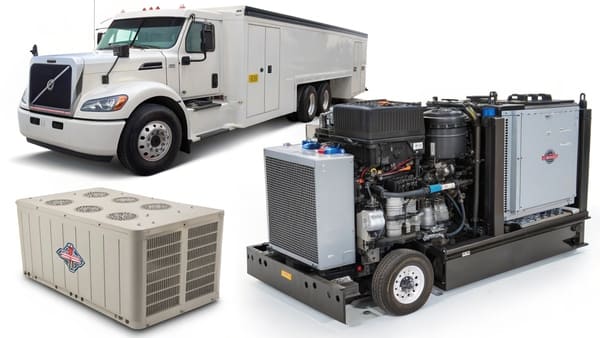
When we manufacture parts for these systems, we see the internal differences up close. Both types have their place, but the market is moving quickly toward electric solutions for sleeper cab comfort. The choice depends on the application, but it's also important to understand that not all units are created equal. The quality of the internal components makes a huge difference in performance and reliability.
The Hidden Complexity of Manufacturing
The quality of an AC unit goes deep. For example, making the plastic parts for these systems is incredibly difficult. Standard injection molding machines often can't achieve the precision needed for the vents, housings, and internal structures.10 We use specialized machines that have a multi-step process, with the cooling stage being the most critical. Controlling the temperature as the plastic sets is key to preventing warping and ensuring a perfect fit.
I remember my first time working on a project for a Pakistani client. We were manufacturing plastic housings for a new line of truck air conditioners. We were still dialing in our process, and the parts came out of the mold with slightly more "shrinkage" than the spec sheet called for. I was worried it was a failure. But when the client tested them, they found the slightly smaller dimensions created a tighter, more secure fit with no rattling. They loved it. It was a lucky break, but it taught us a valuable lesson about how small manufacturing details can have a big impact on the final product's quality.
What Is the Difference Between Engine-Driven and Electric Truck Air Conditioners?
The standard engine AC is powerful but requires idling. An electric APU is quiet but has a limited runtime based on battery power. Choosing the wrong one means either high fuel bills or a hot night.
An engine-driven air conditioner is part of the truck's main HVAC system and only works when the engine is running.11 An electric air conditioner is a separate, self-contained system that runs on batteries, specifically designed to cool the sleeper cab when the truck engine is off.12
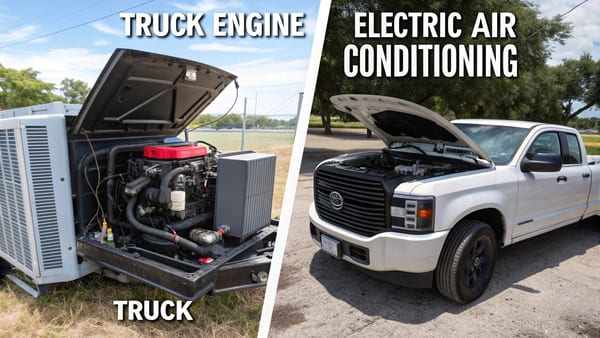
Understanding the fundamental power source is the key to choosing the right system for long-haul comfort. The two systems are designed for completely different situations. The engine-driven AC is for cooling the cab while driving. The electric AC, or APU, is for cooling the sleeper berth during rest periods without burning fuel. For any professional driver, having both is the ideal setup. Let's compare them directly to see why they serve different purposes.
Head-to-Head: Engine-Powered vs. Electric APU
The right tool for the right job. You wouldn't use a hammer to turn a screw. Likewise, you shouldn't use your main engine to cool your sleeper cab overnight. The systems are optimized for different tasks, and a direct comparison shows why an electric APU is the clear winner for no-idle comfort. It is built from the ground up to provide quiet, efficient cooling for hours, using only stored battery power.
| Feature | Engine-Driven AC (While Idling) | Dedicated Electric APU |
|---|---|---|
| Power Source | Main Truck Engine | Separate Deep-Cycle Batteries |
| Fuel Use | High (0.8-1.2 gal/hr) | None (uses stored electricity) |
| Noise Level | Loud (65-75 dB) | Very Quiet (45-55 dB) |
| Maintenance | Adds hours to main engine | Separate, minimal maintenance |
| Upfront Cost | N/A (Included with truck) | Medium to High |
| Emissions | High (CO2, NOx, Particulates) | Zero |
| Runtime | Unlimited (with fuel) | Limited by battery capacity (8-12 hrs) |
Conclusion
Choosing a battery-powered electric APU is the best decision for driver comfort, fuel savings, and compliance. As manufacturers, we have the expertise to develop reliable, high-quality cooling solutions for any market.
"Idle Reduction - Alternative Fuels Data Center - Department of Energy", https://afdc.energy.gov/conserve/idle-reduction-basics. Multiple government and industry sources confirm that idling a truck engine overnight consumes significant fuel, produces noise, and is subject to anti-idling regulations and fines in many jurisdictions. Evidence role: expert_consensus; source type: government. Supports: Idling the engine all night is noisy, burns expensive fuel, and attracts fines.. Scope note: Specific fine amounts and regulations vary by location. ↩
"Drowsy Driving: Avoid Falling Asleep Behind the Wheel | NHTSA", https://www.nhtsa.gov/risky-driving/drowsy-driving. Research from transportation safety agencies and academic studies supports the link between adequate driver rest and improved safety and efficiency. Evidence role: expert_consensus; source type: education. Supports: A well-rested driver is a safer and more efficient driver.. Scope note: Exact efficiency improvements may vary by study and context. ↩
"[PDF] Long-Haul Truck Idling Burns Up Profits", https://afdc.energy.gov/files/u/publication/hdv_idling_2015.pdf. U.S. Department of Energy and industry sources report that heavy-duty truck engines typically consume about one gallon of diesel per hour while idling. Evidence role: statistic; source type: government. Supports: Idling a truck engine can burn about one gallon of diesel per hour.. Scope note: Actual consumption may vary by engine model and conditions. ↩
"125155.pdf - Argonne Scientific Publications", https://publications.anl.gov/anlpubs/2016/03/125155.pdf. Industry analyses and fleet case studies indicate that electric APUs can significantly reduce fuel costs compared to idling, with payback periods sometimes under one year depending on usage and fuel prices. Evidence role: case_reference; source type: research. Supports: An electric APU uses a tiny fraction of that cost in electricity, paying for itself in fuel savings alone, often within the first year.. Scope note: Payback period depends on operational patterns and local fuel costs. ↩
"Idle Reduction | Department of Energy", https://www.energy.gov/cmei/vehicles/idle-reduction. The U.S. Environmental Protection Agency and state transportation departments document the increasing prevalence of anti-idling laws across states and municipalities. Evidence role: historical_context; source type: government. Supports: More and more states and local areas have strict anti-idling laws.. Scope note: Specific laws and enforcement vary by location and over time. ↩
"[PDF] Compilation of State, County, and Local Anti-Idling Regulations - EPA", https://www.epa.gov/sites/default/files/documents/CompilationofStateIdlingRegulations.pdf. Government and industry guidance confirms that no-idle AC systems are designed to comply with anti-idling regulations, reducing the risk of fines for drivers. Evidence role: general_support; source type: government. Supports: A no-idle AC solution completely avoids this problem, keeping you compliant everywhere you go.. Scope note: Compliance depends on proper use and local law specifics. ↩
"Evaluation of truck driver rest locations and sleep quality - PMC", https://pmc.ncbi.nlm.nih.gov/articles/PMC9153978/. Sleep research and occupational health studies indicate that a quiet, temperature-controlled environment improves sleep quality for truck drivers. Evidence role: mechanism; source type: education. Supports: A quiet, cool cabin makes this possible.. Scope note: Individual sensitivity to noise and temperature may vary. ↩
"What about those super small mini splits made for semi trucks?", https://www.reddit.com/r/vandwellers/comments/123vfwy/what_about_those_super_small_mini_splits_made_for/. Industry overviews and technical guides describe diesel-powered and electric APUs as the primary types of semi-truck air conditioning systems. Evidence role: definition; source type: encyclopedia. Supports: The main types of semi-truck air conditioners are diesel-powered APUs and electric APUs.. Scope note: Some specialized or hybrid systems may also exist. ↩
"Auxiliary power unit - Wikipedia", https://en.wikipedia.org/wiki/Auxiliary_power_unit. Technical specifications and industry sources confirm that electric APUs use deep-cycle batteries and provide quiet, zero-emission cooling during rest periods. Evidence role: mechanism; source type: research. Supports: Electric APUs run on a dedicated bank of deep-cycle batteries, offering much quieter, zero-emission operation during rest periods.. Scope note: Actual noise levels and emissions depend on specific models. ↩
"Regulatory Significance of Plastic Manufacturing Air Pollution ... - PMC", https://pmc.ncbi.nlm.nih.gov/articles/PMC9933524/. Manufacturing engineering literature notes that high-precision plastic components, such as those used in HVAC systems, may require specialized injection molding equipment and processes. Evidence role: mechanism; source type: education. Supports: Standard injection molding machines often can't achieve the precision needed for the vents, housings, and internal structures.. Scope note: Some standard machines can be adapted for higher precision with modifications. ↩
"How Does Car AC Work? | UTI - Universal Technical Institute", https://www.uti.edu/blog/automotive/air-conditioning. Technical manuals and industry guides explain that engine-driven air conditioners are integrated with the main HVAC system and require the engine to operate. Evidence role: definition; source type: encyclopedia. Supports: An engine-driven air conditioner is part of the truck's main HVAC system and only works when the engine is running.. Scope note: Some trucks may have auxiliary systems that allow limited operation without the engine. ↩
"Automotive air conditioning - Wikipedia", https://en.wikipedia.org/wiki/Automotive_air_conditioning. Industry sources and technical documentation describe electric air conditioners for trucks as battery-powered, self-contained units intended for sleeper cab cooling during engine-off periods. Evidence role: definition; source type: encyclopedia. Supports: An electric air conditioner is a separate, self-contained system that runs on batteries, specifically designed to cool the sleeper cab when the truck engine is off.. Scope note: Designs may vary by manufacturer and truck model. ↩