-Your temperature gauge is in the red, and panic sets in. A blown radiator isn't just an inconvenience; it's a direct threat to your engine's life. But what if you could act before it's too late?
A blown radiator typically shows signs like steam from the engine, a rapidly rising temperature gauge, puddles of green or pink coolant under your car, and a low coolant level.1 Spotting these early is the key to preventing catastrophic engine damage and costly repairs.
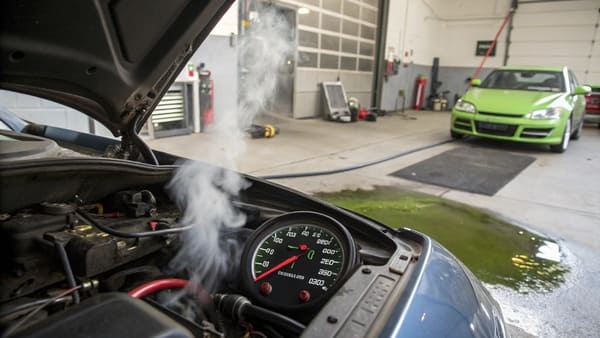
Seeing these warning signs can be stressful, I know. It feels like your car is on the verge of a major, expensive breakdown. But don't worry. Understanding what these signs mean is the first step to taking control. Let's break down exactly what to look for, so you can catch a problem before it leaves you stranded.
What Does a Blown Radiator Actually Mean?
You hear the term "blown radiator," and it sounds terrifying. Does it mean it exploded? Is your car a total loss? The uncertainty itself can be the most stressful part. Let's clear up what's really going on.
"Blown radiator" usually means a major failure, like a large crack in the plastic tanks or a severe internal blockage.2 This failure stops it from cooling the engine's antifreeze, causing rapid overheating.3 It’s a critical issue that needs immediate attention to prevent engine seizure.
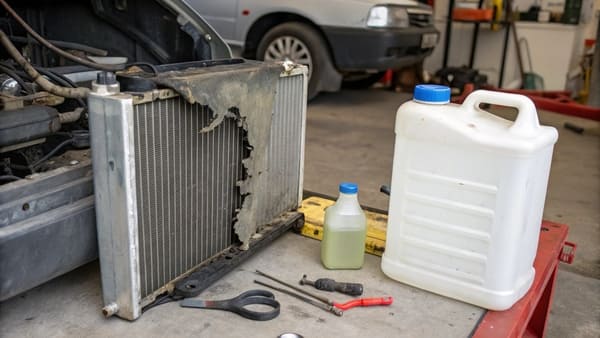
To understand a blown radiator, you first have to know what a healthy one does. Its job is simple: it moves hot liquid (coolant) through small tubes, where airflow cools it down before it goes back into the engine. The most vulnerable parts are often the plastic "end tanks" attached to the metal core.4 These tanks have to endure incredible pressure and constant, extreme temperature changes.
This is where manufacturing quality really matters. Early in my career, I was working on a project for a client from Pakistan, producing plastic components for radiator testing equipment. We had a small issue where the parts were shrinking slightly after the cooling phase of injection molding. It’s an incredibly difficult process; getting the cooling time and temperature just right is an art. To our surprise, the client actually preferred the slightly denser, shrunken parts because they were more robust. It was a fascinating lesson. It taught me how critical the manufacturing process—down to the specific machines used in regions like Fujian or near Shanghai known for precision—is for creating parts that won't crack under pressure.
Here’s a breakdown of common failure points:
| Component | Common Failure | Main Cause |
|---|---|---|
| Plastic End Tanks | Cracking or Warping5 | Age, heat cycles, manufacturing defects |
| Radiator Core | Internal Clogging6 | Old coolant, debris, mineral deposits |
| Cooling Fins | Corrosion or Damage7 | Road salt, impacts from rocks and debris |
| Seams/Gaskets | Leaking8 | Failure of the seal between the core and tanks |
What Are the Early Warning Signs of a Failing Radiator?
Nobody wants to be stranded on the side of the highway with steam pouring from their hood. A small issue today can become a catastrophic failure tomorrow, leaving you with a massive tow and repair bill. Knowing the subtle, early signs can save you all that trouble.
Early signs of a failing radiator include your temperature gauge reading slightly higher than normal, a faint sweet smell of antifreeze after driving, or needing to top up your coolant reservoir more often than usual.9 These are your car's first cries for help before a major failure.
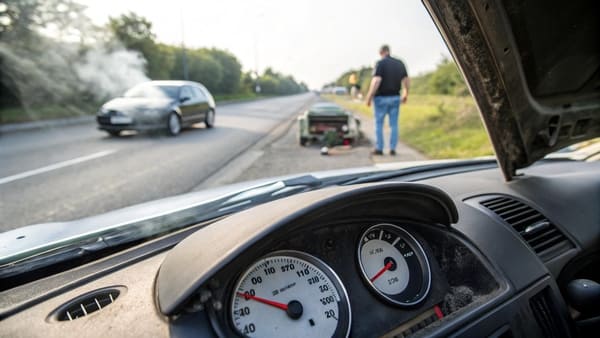
These early signs are easy to ignore, but they are the most important ones to catch. A radiator rarely fails without some kind of warning.
First is "temperature creep10." Your gauge might not be in the red, but you notice it's sitting just a little higher than it used to, especially when you're in stop-and-go traffic or climbing a hill. This often means the radiator is partially clogged and isn't as efficient as it once was.
Second is that sweet smell. If you park your car after a drive and notice a faint, syrupy smell, that's likely ethylene glycol—coolant.11 It means you have a very small leak somewhere that is burning off on a hot surface before it even has a chance to drip onto the ground.
The reliability of a cooling system comes down to the quality of every single part. The plastic components we manufacture, for example, require incredible precision. We learned that the injection molding process, especially the cooling stage, is everything. Even adding color pigments can be tricky, as it requires stopping the machine and opening the mold, which can affect the final part's integrity. It’s this obsessive attention to detail at the factory that prevents those microscopic flaws that eventually turn into the slow leaks that cause these early warning signs.
Here is a quick checklist for you:
- [ ] Is my temperature gauge consistently higher than its usual spot?
- [ ] Do I smell something sweet, like syrup, around my car after parking?
- [ ] Is the coolant level in the plastic reservoir dropping over a few weeks or months?
- [ ] Do I see any white, green, or pink crusty stains on the radiator itself?
How Can You Tell If Your Radiator Is Leaking Coolant?
You suspect a leak, but you're not sure where it's coming from or how serious it is. An undetected leak can drain your system, leading to a sudden overheat and major engine damage when you least expect it. Let's find out how to confirm a leak yourself.
To find a leak, look for puddles of brightly colored liquid (green, pink, or orange) under your car.12 You can also spot white or colored crusty residue on the radiator itself, which is dried coolant. For hidden leaks, a cooling system pressure tester is the definitive tool.
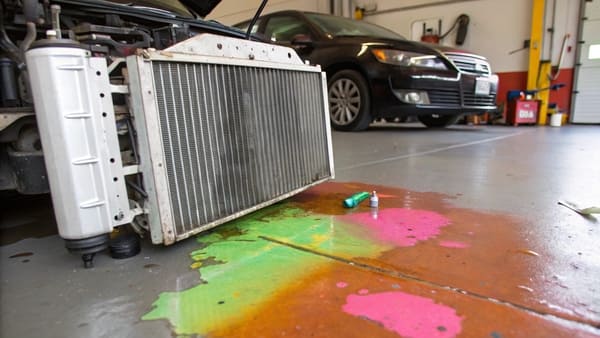
Finding a leak can be straightforward. The easiest way is the cardboard trick. Slide a large piece of clean cardboard under the front of your engine when you park overnight. In the morning, any drips will be obvious. Coolant is typically bright green, pink, orange, or yellow and has a slightly oily feel. Don't confuse it with clear water from your A/C compressor.
If you don't see drips, the leak might be small. With the engine completely cool, open the hood and use a flashlight. Carefully inspect the radiator, all the black rubber hoses connected to it, and the area around the water pump. Look for wet spots, active drips, or colored, crusty residue where coolant has leaked and dried.
This is why professional-grade testing is so crucial, both for mechanics and in manufacturing. We actually produce high-precision plastic components for the pressure testers that mechanics use. A tiny flaw in one of our fittings could cause a false reading, so perfection is non-negotiable. We rely on the best machines from industrial zones near Shanghai to get that level of accuracy. It ensures that when a mechanic tests your car, they can find even the tiniest leak and give you an accurate diagnosis.
Here are common leak locations and what they might mean:
| Leak Location | Probable Cause |
|---|---|
| Directly under the radiator | Radiator core leak or bad drain plug |
| Near the front of the engine belts | Water pump failure |
| At the ends of rubber hoses | Loose hose clamp or cracked hose |
| Inside the passenger cabin (wet carpet) | Leaking heater core (a serious issue) |
Conclusion
Pay attention to your temperature gauge, unusual smells, and any puddles under your car. Catching radiator problems early is the best way to prevent catastrophic and expensive engine damage.
"The Most Common Car Cooling System Problems | UTI", https://www.uti.edu/blog/automotive/the-most-common-cooling-system-problems. Automotive repair manuals and technical guides confirm that common symptoms of a blown radiator include steam, overheating, visible coolant leaks, and low coolant levels, though some symptoms may overlap with other cooling system failures. Evidence role: general_support; source type: education. Supports: A blown radiator typically shows signs like steam from the engine, a rapidly rising temperature gauge, puddles of green or pink coolant under your car, and a low coolant level.. Scope note: Some symptoms may also indicate other cooling system issues, not exclusively a blown radiator. ↩
"Diesel Engine Cooling System: Purpose & Components", https://www.uti.edu/blog/diesel/what-is-a-diesel-engine-cooling-system. Automotive engineering sources define a 'blown radiator' as a major structural failure, such as cracks in the end tanks or severe internal blockages, which compromise cooling efficiency. Evidence role: definition; source type: education. Supports: "Blown radiator" usually means a major failure, like a large crack in the plastic tanks or a severe internal blockage.. Scope note: The term 'blown radiator' is informal and may be used differently in various contexts. ↩
"The Most Common Car Cooling System Problems | UTI", https://www.uti.edu/blog/automotive/the-most-common-cooling-system-problems. Automotive cooling system guides explain that a failed radiator cannot dissipate heat from the coolant, leading to rapid engine overheating. Evidence role: mechanism; source type: education. Supports: This failure stops it from cooling the engine's antifreeze, causing rapid overheating.. Scope note: Other cooling system failures can also cause overheating; this is not exclusive to radiator failure. ↩
"The Most Common Car Cooling System Problems | UTI", https://www.uti.edu/blog/automotive/the-most-common-cooling-system-problems. Automotive engineering literature identifies plastic end tanks as common failure points in modern radiators due to their exposure to heat and pressure. Evidence role: expert_consensus; source type: education. Supports: The most vulnerable parts are often the plastic "end tanks" attached to the metal core.. Scope note: Vulnerability may vary depending on radiator design and materials used. ↩
"(PPT) 02 OE AM Cooling Systems - Academia.edu", https://www.academia.edu/11640392/02_OE_AM_Cooling_Systems. Technical sources report that plastic radiator end tanks are prone to cracking and warping due to repeated heat cycles and material fatigue. Evidence role: mechanism; source type: education. Supports: Plastic End Tanks: Cracking or Warping is a common failure.. Scope note: Cracking and warping can also result from manufacturing defects or external impacts. ↩
"The Most Common Car Cooling System Problems | UTI", https://www.uti.edu/blog/automotive/the-most-common-cooling-system-problems. Automotive maintenance guides note that internal clogging of radiator cores is often caused by old coolant, debris, or mineral deposits, reducing cooling efficiency. Evidence role: mechanism; source type: education. Supports: Radiator Core: Internal Clogging is a common failure.. Scope note: Clogging can also occur due to improper maintenance or use of incompatible coolants. ↩
"How Does a Car Radiator Work? | UTI - Universal Technical Institute", https://www.uti.edu/blog/automotive/radiators. Automotive repair manuals explain that radiator cooling fins are susceptible to corrosion from road salt and physical damage from debris, affecting heat dissipation. Evidence role: mechanism; source type: education. Supports: Cooling Fins: Corrosion or Damage is a common failure.. Scope note: Severity of corrosion or damage depends on environmental conditions and vehicle use. ↩
"How to Fix a Coolant Leak: 5 Tips - Pivot Lab", https://conversion-dev.svc.cul.columbia.edu/coolant-leak-cost-to-fix. Automotive engineering sources confirm that leaks at radiator seams or gaskets are often due to seal failure between the core and tanks. Evidence role: mechanism; source type: education. Supports: Seams/Gaskets: Leaking is a common failure.. Scope note: Leaks can also result from physical damage or improper installation. ↩
"The Most Common Car Cooling System Problems | UTI", https://www.uti.edu/blog/automotive/the-most-common-cooling-system-problems. Automotive troubleshooting guides list elevated temperature readings, sweet-smelling odors, and frequent coolant top-ups as early signs of radiator or cooling system issues. Evidence role: general_support; source type: education. Supports: Early signs of a failing radiator include your temperature gauge reading slightly higher than normal, a faint sweet smell of antifreeze after driving, or needing to top up your coolant reservoir more often than usual.. Scope note: These signs may also indicate other cooling system problems, not exclusively radiator failure. ↩
"[PDF] Thermal Analysis of a Novel Lightweight Layered and Tapered ...", https://www.colorado.edu/faculty/lopezjimenez/sites/default/files/attached-files/ices_-_thermal_analysis_of_a_novel_lightweight_layered_and_tapered_radiator_panel_with_pumped-fluid-loop_system.pdf. Automotive technical literature describes 'temperature creep' as a gradual increase in engine temperature, often due to partial radiator clogging or reduced cooling efficiency. Evidence role: definition; source type: education. Supports: Temperature creep is a sign of partial radiator clogging and reduced efficiency.. Scope note: Temperature creep can also result from other cooling system issues. ↩
"Stop Coolant Leaks Before They Cost You—Exclusive Repair Guide ...", https://dev-housing.rice.edu/tutorials/stop-coolant-leaks-before-they-cost-youexclusive-repair-guide-inside-9043899. Automotive safety and maintenance guides state that a sweet, syrupy odor near a vehicle is commonly associated with ethylene glycol coolant leaks. Evidence role: mechanism; source type: education. Supports: A faint, syrupy smell is likely ethylene glycol coolant.. Scope note: Other substances may produce similar odors; confirmation requires inspection. ↩
"Transmission Fluid Color Guide (with Chart) | UTI", https://www.uti.edu/blog/automotive/transmission-fluid-color-guide-(with-chart). Automotive maintenance sources confirm that coolant leaks are often identified by brightly colored puddles under the vehicle, with colors varying by coolant type. Evidence role: mechanism; source type: education. Supports: To find a leak, look for puddles of brightly colored liquid (green, pink, or orange) under your car.. Scope note: Other fluids may be mistaken for coolant; color alone is not definitive. ↩