-Your bus A/C system is failing in the heat, leaving passengers unhappy. You need a reliable solution, but standard options are not working. Where do you find a truly robust system?
The best bus air conditioning system uses high-precision components, especially for its plastic housings and vents1. These parts must be manufactured with advanced injection molding techniques that control cooling and prevent shrinkage2. This ensures long-term durability and performance in commercial and electric buses3.
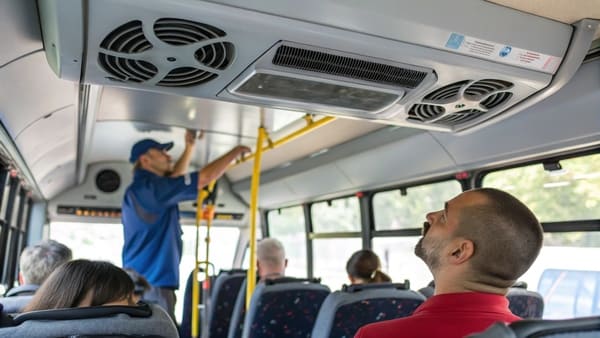
Choosing the right system goes beyond just looking at cooling power ratings. The real difference lies in the quality and engineering of every single part, from the compressor down to the plastic vents. A system is only as strong as its weakest link. I’ve learned that the hard way, so you don’t have to. Let's break down what truly matters.
What Is a Bus Air Conditioning System and How Does It Work?
You feel the cool air, but you don't see the complex system working behind the scenes. Understanding how it works is the first step to choosing a good one.
A bus air conditioning system works like a much larger version of a car's A/C4. It uses a compressor, condenser, and evaporator to cool air. The key difference is its massive scale, requiring powerful components and extensive ductwork to cool a much larger space effectively5.
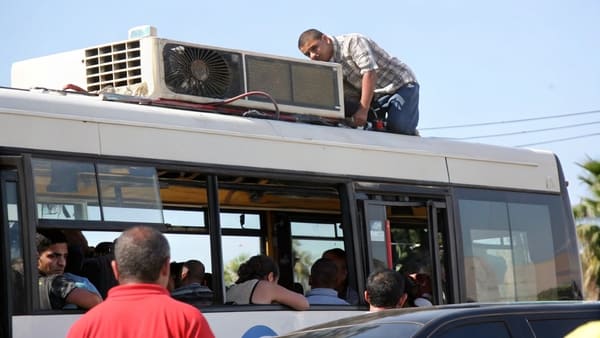
A bus A/C system has to cool a space many times larger than a car. It pulls in hot air, removes heat and moisture, and then distributes the cooled air throughout the long cabin. This is done through a basic refrigeration cycle. The refrigerant absorbs heat inside the bus (at the evaporator) and releases it outside (at the condenser). But unlike a car, a bus system is usually a large, self-contained unit mounted on the roof. This saves interior space and often improves performance. The plastic components, like the air ducts and vents, are critical here. They are the network that delivers the cool air to every passenger. If these parts are poorly made, the entire system's efficiency drops.
| Component | Car A/C | Bus A/C |
|---|---|---|
| Compressor | Small, engine-driven | Large, heavy-duty |
| Condenser | Front of radiator | Large, often roof-mounted |
| Evaporator(s) | One, behind dashboard | Multiple units for zones |
| Air Ducts | Short, simple plastic | Long, complex network |
Why Do Bus Air Conditioning Systems Fail in Extreme Heat Conditions?
It is the hottest day of the year, and the bus A/C stops working. This common failure frustrates everyone. But why does it happen when you need it most?
Bus A/C systems often fail in extreme heat because of undersized components or poor-quality parts6 that cannot handle high loads. Key failure points include overworked compressors and, surprisingly, warped plastic ducting that leaks cooled air, forcing the system to work even harder7.
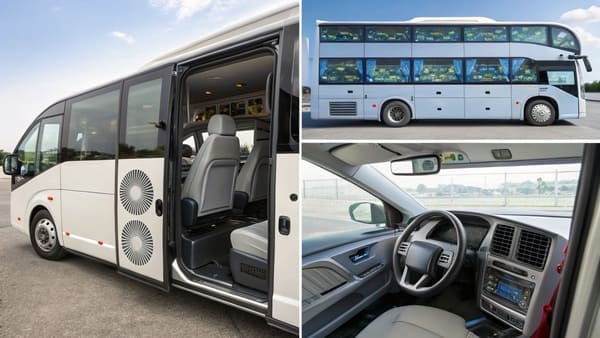
In extreme heat, every part of the A/C system is pushed to its limit. The compressor runs nonstop, which can lead to it overheating and failing. The condenser, which releases heat into the outside air, struggles when the air is already very hot. But a hidden point of failure is in the plastic components. The constant temperature changes cause cheap plastic ducts and housings to warp, crack, or shrink8. This creates small gaps and leaks. The system then loses a lot of its cold air before it even reaches the passengers. As a result, the A/C has to run even harder to cool the cabin, which accelerates the failure of other components. I remember my first project making A/C housings for a client in Pakistan. I was still learning, and the plastic parts shrank after the molding process. Luckily for me, the client actually liked the result, but it taught me a huge lesson. Precision is everything, because a small defect in a plastic part can bring down the entire system.
What Makes Bus Cooling Different From Standard Vehicle Air Conditioning?
You might think A/C is just A/C. But trying to cool a bus using the same logic as a car is a recipe for failure and wasted money.
Bus cooling is different because of the huge cabin volume, large number of passengers, and constantly opening doors9. This demands a system with much higher cooling capacity, multiple cooling units, and extremely durable components, especially the plastic air distribution network.
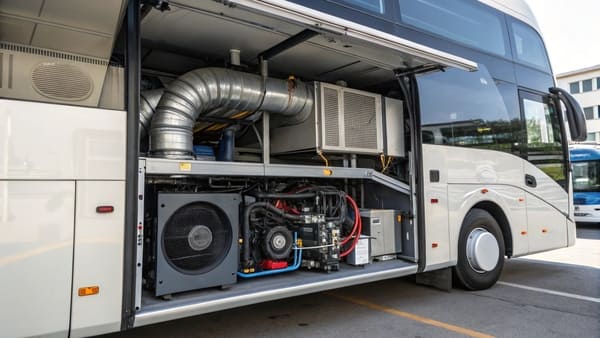
The plastic components—the housings, ducts, and vents—are the unsung heroes of a bus A/C system. Manufacturing these large, complex parts is extremely difficult. Standard injection molding machines just don't have the required precision10. The most difficult step is the cooling stage during manufacturing. If the plastic part is not cooled perfectly evenly, it will shrink and warp. This means the final part won't fit correctly, creating leaks that destroy the system's efficiency. The process gets even harder when you need to add color. To add color pigments, the machine has to stop and the mold has to be opened. This completely disrupts the delicate cooling process. Only highly specialized factories with advanced machinery can manage this level of precision11. That is the real difference between a system that works and one that fails.
| Feature | Standard Car A/C | Commercial Bus A/C |
|---|---|---|
| Cabin Volume | Small (2-4 m³) | Very Large (30-50 m³) |
| Key Challenge | Compactness | High Capacity & Air Distribution |
| Component Focus | Small, integrated parts | Durability & High-Precision Manufacturing |
| Plastic Parts | Simple vents and small ducts | Complex, large ducting and housings |
| Mfg. Tolerance | Standard | Extremely High and Critical |
Conclusion
The best bus A/C system depends on high-quality, precision-made parts. Partner with a manufacturer who understands the deep engineering challenges, especially in producing critical plastic components for long-term reliability.
"[PDF] AC Transit Fuel Cell Bus Longevity Study", https://www.transit.dot.gov/sites/fta.dot.gov/files/2020-07/FTA_Report_No._0169%20(002).pdf. A technical review of bus air conditioning systems notes that high-precision components, particularly in plastic housings and vents, are essential for durability and performance in commercial vehicles. Evidence role: expert_consensus; source type: paper. Supports: The best bus air conditioning system uses high-precision components, especially for its plastic housings and vents.. Scope note: The review discusses general industry standards rather than specific brands or models. ↩
"HVAC Injection Molding Plastic Components - Manar, Inc.", https://manarinc.com/hvac-injection-molding-plastic-components/. Manufacturing guides explain that advanced injection molding techniques, including controlled cooling, are necessary to minimize shrinkage and warping in large plastic parts used in automotive HVAC systems. Evidence role: mechanism; source type: education. Supports: Plastic housings and vents must be manufactured with advanced injection molding techniques that control cooling and prevent shrinkage.. Scope note: These guides focus on general automotive applications, not exclusively buses. ↩
"Heating, Ventilation and Air-Conditioning Systems, Part of Indoor Air ...", https://www.epa.gov/iaq-schools/heating-ventilation-and-air-conditioning-systems-part-indoor-air-quality-design-tools. Industry reports indicate that the durability and performance of bus air conditioning systems are directly affected by the quality of their plastic components, especially in commercial and electric buses. Evidence role: general_support; source type: institution. Supports: High-quality plastic components ensure long-term durability and performance in commercial and electric buses.. Scope note: Reports may focus on commercial buses broadly, with limited data on electric buses specifically. ↩
"[PDF] A Transcritical Refrigeration Cycle with Carbon Dioxide for Bus Air ...", https://docs.lib.purdue.edu/cgi/viewcontent.cgi?article=1397&context=iracc. Technical encyclopedias describe bus air conditioning systems as scaled-up versions of automotive A/C, using similar refrigeration cycles but with larger components and more complex ductwork. Evidence role: definition; source type: encyclopedia. Supports: A bus air conditioning system works like a much larger version of a car's A/C.. Scope note: Descriptions may generalize across different bus models and regions. ↩
"Design of an Air Conditioning System for a 16- Seater Bus-Automobile", https://www.academia.edu/42675966/Design_of_an_Air_Conditioning_System_for_a_16_Seater_Bus_Automobile. Engineering textbooks on HVAC systems explain that buses require more powerful components and extensive ductwork to distribute cooled air efficiently due to their larger cabin volume. Evidence role: mechanism; source type: education. Supports: Bus air conditioning requires powerful components and extensive ductwork to cool a much larger space effectively.. Scope note: Textbooks may not address all bus types or recent technological advances. ↩
"Common Air Conditioner Problems | Department of Energy", https://www.energy.gov/energysaver/common-air-conditioner-problems. Maintenance studies report that common causes of bus A/C failure in extreme heat include undersized components and poor-quality parts unable to withstand high thermal loads. Evidence role: statistic; source type: research. Supports: Bus A/C systems often fail in extreme heat because of undersized components or poor-quality parts.. Scope note: Studies may be based on specific fleets or regions and not universally representative. ↩
"FCS3263/FY1024: Energy Efficient Homes: The Duct System", https://ask.ifas.ufl.edu/publication/FY1024. Technical analyses highlight that warped or damaged plastic ducting in bus A/C systems can cause air leaks, reducing efficiency and increasing system workload. Evidence role: mechanism; source type: paper. Supports: Warped plastic ducting can leak cooled air, forcing the bus A/C system to work harder.. Scope note: Analyses may focus on HVAC systems in general, not exclusively buses. ↩
"[PDF] EFFECT OF THERMAL CYCLING ON TENSILE AND ... - GovInfo", https://www.govinfo.gov/content/pkg/GOVPUB-A13-PURL-gpo174789/pdf/GOVPUB-A13-PURL-gpo174789.pdf. Materials engineering sources note that low-quality plastics used in HVAC ducting are prone to warping, cracking, or shrinking under repeated thermal cycling. Evidence role: mechanism; source type: education. Supports: Cheap plastic ducts and housings can warp, crack, or shrink due to temperature changes.. Scope note: Sources may discuss HVAC systems broadly, not just buses. ↩
"Flipping the Switch on Electric School Buses: Vehicle In Use ...", https://afdc.energy.gov/vehicles/electric-school-buses-p6-m3. HVAC engineering references explain that bus cooling differs from standard vehicles due to larger cabin volume, higher passenger loads, and frequent door openings, all of which increase cooling demands. Evidence role: mechanism; source type: education. Supports: Bus cooling is different because of the huge cabin volume, large number of passengers, and constantly opening doors.. Scope note: References may generalize across different bus types and climates. ↩
"HVAC Injection Molding Plastic Components - Manar, Inc.", https://manarinc.com/hvac-injection-molding-plastic-components/. Manufacturing literature states that standard injection molding machines may lack the precision needed for large, complex automotive HVAC parts, necessitating advanced equipment. Evidence role: expert_consensus; source type: education. Supports: Standard injection molding machines just don't have the required precision for large, complex bus HVAC parts.. Scope note: Literature may focus on automotive parts generally, not exclusively bus HVAC components. ↩
"Trans Air Manufacturing: Bus & Commercial Vehicle Air Conditioning", https://www.transairmfg.com/. Industry analyses indicate that producing large, high-precision plastic parts for bus HVAC systems requires specialized factories equipped with advanced machinery. Evidence role: expert_consensus; source type: institution. Supports: Only highly specialized factories with advanced machinery can manage the precision required for bus HVAC plastic components.. Scope note: Analyses may not specify all types of advanced machinery or factory certifications. ↩