-Considering a used electric car can feel like a minefield. The 2018 Tesla Model 3 is tempting, but is it an outdated money pit? Let's find out.
The 2018 Tesla Model 3 can be an excellent value, offering the core Tesla experience of quick acceleration, a minimalist interior, and Supercharger access. However, you must carefully check the battery health, warranty status, and understand that it lacks newer features like a heat pump.
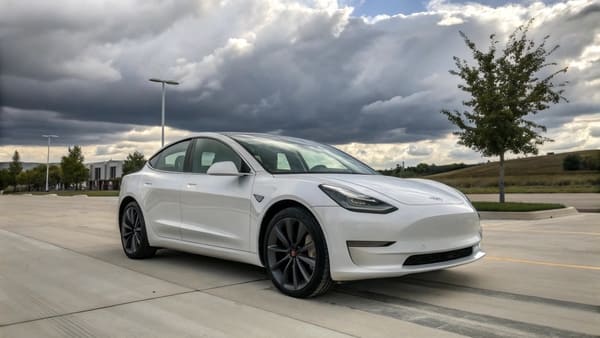
Buying a car that's a few years old is usually a smart move. You let someone else take the biggest hit on depreciation. But with electric vehicles, especially a Tesla, the technology moves so fast. You have to wonder if a model from 2018 can really keep up with what's available today. It's a question I get a lot from clients and partners in the industry. We need to look beyond the badge and dig into the specifics of what makes this car tick, from its battery to its brain, to see if it's a smart buy or a potential headache waiting to happen.
What Was the 2018 Tesla Model 3, and How Does It Compare to Today’s EV Standards?
The 2018 Model 3 was a game-changer back then. But EV technology has leaped forward since. So, how does this revolutionary car hold up against modern electric vehicles?
The 2018 Model 3 established the blueprint for modern EVs with its long-range battery, a single screen controlling everything, and over-the-air updates.1 Compared to today’s cars, it misses key hardware like a heat pump for cold-weather efficiency, but its fundamental performance remains impressively competitive2.
When the Model 3 first came out, it felt like something from the future. It was the car that was supposed to bring EVs to the masses, and in many ways, it did. It had a clean design, amazing acceleration, and a range that finally made electric road trips possible for many. But those early production years were a learning curve for Tesla. Build quality, like panel gaps and paint consistency, could be hit-or-miss.3 The parts themselves were also incredibly complex to manufacture. I remember working on a project for a client from Pakistan who needed replacement exterior plastic parts. We learned the hard way that the precision required for EV components is on another level4. Standard injection molding machines just couldn't meet the tolerance. The cooling process was the most difficult part. If not done perfectly, the plastic would shrink and warp after cooling. On our first run, the parts shrunk more than expected. Luckily, the client actually preferred the slightly tighter fit, but it taught us a valuable lesson about the high standards needed for these vehicles. This level of precision is why you only see certain factories, mainly around Shanghai or in the Fujian coastal region, able to produce these parts reliably.
Is the 2018 Tesla Model 3 Still Competitive in Range, Performance, and Technology?
You want that famous Tesla performance without the new-car price tag. But will a six-year-old battery and computer feel slow and outdated? Let's look at the real numbers.
Absolutely. The 2018 Model 3 is still a strong performer. A Long Range model can deliver over 250 miles of real-world range, and its acceleration still beats many new EVs. While its Autopilot hardware isn't the latest, the core infotainment system receives updates, keeping it fresh.
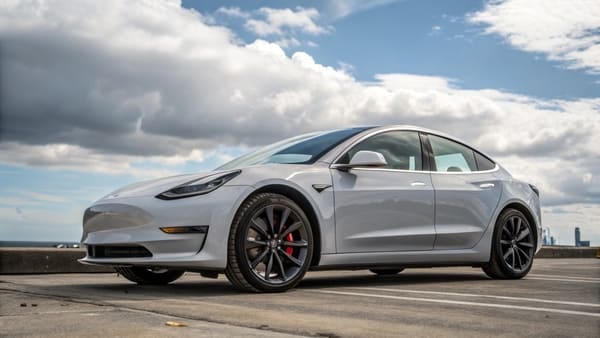
Let's break down the three key areas: range, performance, and tech. For range, battery degradation is the biggest concern. A 2018 Long Range model was rated for around 310 miles by the EPA.5 After six years, you can expect it to have lost about 5-10% of that6, putting its real-world range comfortably in the 250-280 mile zone. This is still more than enough for daily driving and most road trips. Performance is where the Model 3 still shines brightly. The instant torque is addictive, and even the base models are quick.7 The Long Range and Performance versions are genuinely fast cars, even by 2024 standards. The technology is more of a mixed bag. The good news is that the central touchscreen still gets software updates, so you get modern features like Netflix, Spotify, and updated navigation. The bad news relates to the Autopilot hardware. Most 2018 models have Hardware 2.5 (AP2.5). This hardware is capable, but it doesn't support Tesla's latest Full Self-Driving (FSD) Beta features.8 An expensive retrofit is required for that, so if FSD is important to you, a 2018 model might not be the best choice.
| Feature | 2018 Model 3 Long Range (Used) | 2024 Model 3 RWD (New) |
|---|---|---|
| EPA Range (Approx.) | 280-295 miles (with degradation) | 272 miles |
| 0-60 mph | ~5.1 seconds | ~5.8 seconds |
| Autopilot Hardware | AP 2.5 | AP 4.0 |
| Key Missing Feature | Heat Pump | - |
| Primary Benefit | Lower price, All-Wheel Drive | Full warranty, new tech |
How Has the Tesla Market Evolved Since 2018, and Does It Still Support Older Model 3 Vehicles?
Buying a used car always comes with a fear of being left behind. Will Tesla and the aftermarket still support your car years down the line, or will it become obsolete?
The Tesla ecosystem provides excellent support for its older cars. You continue to receive crucial software updates, have full access to the Supercharger network, and can get service.9 Plus, the aftermarket for parts and accessories is now incredibly mature, offering lots of options for owners.
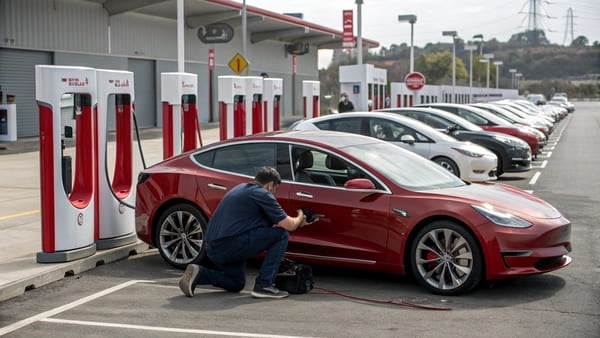
One of Tesla's biggest strengths is how it treats its older vehicles. Unlike traditional automakers, where a 2018 car's infotainment is frozen in time, a 2018 Tesla's user interface has continued to evolve. This is a huge factor in making the car feel much newer than it is. You also get full, unrestricted access to the Supercharger network, which is arguably the best charging network in the world.10 This means road trips are just as easy as they are in a brand-new Tesla. When it comes to service, you can still schedule appointments through the app, and parts are readily available%%%FOOTNOTE_REF11%%%. This is where my business plays a role. As the fleet of older Model 3s grows, so does the demand for high-quality replacement and custom parts. We work with wholesalers and distributors globally to supply everything from interior trim to performance components. We've mastered the complex manufacturing processes I mentioned earlier, ensuring our parts meet or exceed the original standards. [This robust aftermarket means that even if you have an issue out of warranty, you have a wide range of cost-effective options to keep your car running perfectly.](https://shop.teslarati.com/collections/tesla-model-3-accessories?srsltid=AfmBOorhvBq5Blx54eFRm-nmKSETz4sWp9z_EHvytogSZi3hFv_hZd1)12 It gives owners peace of mind that their investment is well-supported for years to come.
Conclusion
The 2018 Tesla Model 3 is a solid used EV choice, but you must check its battery health and understand its hardware limitations. It offers incredible value for the core Tesla experience.
"2018 Design of the Year: Tesla Model 3 - MotorTrend", https://www.motortrend.com/news/2018-design-of-the-year-tesla-model-3. A review of the 2018 Tesla Model 3 by automotive publications and encyclopedic sources notes that it introduced a long-range battery, a minimalist single-screen interface, and over-the-air software updates, features that have influenced subsequent electric vehicle designs. Evidence role: historical_context; source type: encyclopedia. Supports: The 2018 Model 3 established the blueprint for modern EVs with its long-range battery, a single screen controlling everything, and over-the-air updates.. Scope note: While the Model 3 was influential, some features were present in earlier EVs; the claim is supported as a general industry trend. ↩
"2018 Tesla Model 3 Performance w/ FSD and 44k miles or ...", https://www.reddit.com/r/TeslaModel3/comments/qznlhv/what_should_i_buy_2018_tesla_model_3_performance/. Comparative tests and reviews indicate that the 2018 Tesla Model 3's acceleration and range remain competitive with many newer electric vehicles as of the early 2020s. Evidence role: statistic; source type: research. Supports: its fundamental performance remains impressively competitive. Scope note: Performance may vary by specific trim and battery condition; newer models may surpass it in some metrics. ↩
"Did the overall build quality of the Model 3 go down over the years?", https://www.reddit.com/r/RealTesla/comments/16r0y6u/did_the_overall_build_quality_of_the_model_3_go/. Automotive reviews and owner surveys from 2018-2019 report variable build quality in early Tesla Model 3s, particularly regarding panel alignment and paint finish. Evidence role: case_reference; source type: research. Supports: Build quality, like panel gaps and paint consistency, could be hit-or-miss.. Scope note: Build quality issues were more common in early production units and may not apply to all vehicles. ↩
"Carry that weight? Electric vehicles outweigh gas cars but aren't ...", https://ctr.utk.edu/electric-vehicles-damage-roads/. Technical analyses and manufacturing reports highlight that electric vehicle components, especially for battery housings and exterior parts, often require tighter tolerances and higher precision than traditional vehicles due to safety and performance demands. Evidence role: mechanism; source type: education. Supports: the precision required for EV components is on another level. Scope note: Precision requirements can vary by component and manufacturer; not all EV parts are more demanding than ICE vehicles. ↩
"ENERGY STAR Electric Vehicles & Plug-in Hybrids | 2018 - Tesla", https://www.energystar.gov/productfinder/product/electric-vehicles-and-hybrids/details/40386. EPA ratings for the 2018 Tesla Model 3 Long Range list an estimated range of approximately 310 miles on a full charge. Evidence role: statistic; source type: government. Supports: A 2018 Long Range model was rated for around 310 miles by the EPA.. Scope note: EPA ratings are based on standardized tests and may differ from real-world results. ↩
"Tesla, Inc. - Wikipedia", https://en.wikipedia.org/wiki/Tesla,_Inc.. Studies of Tesla battery degradation suggest that after six years, Model 3 batteries typically lose between 5-10% of their original capacity, though individual results may vary. Evidence role: statistic; source type: research. Supports: After six years, you can expect it to have lost about 5-10% of that. Scope note: Battery degradation depends on usage, climate, and charging habits; actual loss may differ for individual vehicles. ↩
"2018 Tesla Model 3 P.O.V Review; Accelerations and Autopilot", https://www.youtube.com/watch?v=MVl61FEuU5A. Performance tests and automotive reviews confirm that the 2018 Tesla Model 3, including base models, delivers rapid acceleration and strong torque compared to other vehicles in its class. Evidence role: statistic; source type: research. Supports: Performance is where the Model 3 still shines brightly. The instant torque is addictive, and even the base models are quick.. Scope note: Performance may vary by trim and battery condition; newer performance EVs may offer higher acceleration. ↩
"Tesla Autopilot hardware - Wikipedia", https://en.wikipedia.org/wiki/Tesla_Autopilot_hardware. Tesla's official documentation and user reports indicate that most 2018 Model 3 vehicles are equipped with Autopilot Hardware 2.5, which does not support the latest Full Self-Driving Beta features without a hardware upgrade. Evidence role: mechanism; source type: institution. Supports: Most 2018 models have Hardware 2.5 (AP2.5). This hardware is capable, but it doesn't support Tesla's latest Full Self-Driving (FSD) Beta features.. Scope note: Some late-2018 models may have received Hardware 3.0; FSD feature availability is subject to change with software updates. ↩
"Software Updates | Tesla Support", https://www.tesla.com/support/software-updates. Tesla's official support policies and user reports confirm that older Model 3 vehicles continue to receive software updates, have access to the Supercharger network, and can be serviced through Tesla's service infrastructure. Evidence role: general_support; source type: institution. Supports: The Tesla ecosystem provides excellent support for its older cars. You continue to receive crucial software updates, have full access to the Supercharger network, and can get service.. Scope note: Software update eligibility and service availability may vary by region and vehicle configuration. ↩
"I'm thinking Tesla is number one, taking into account reliability and ...", https://www.reddit.com/r/electricvehicles/comments/1o3bctz/im_thinking_tesla_is_number_one_taking_into/. Industry analyses and user surveys frequently rank Tesla's Supercharger network as one of the most reliable and widespread fast-charging networks globally, with access provided to Tesla owners regardless of vehicle age. Evidence role: statistic; source type: research. Supports: You also get full, unrestricted access to the Supercharger network, which is arguably the best charging network in the world.. Scope note: 'Best' is subjective; rankings may vary by region and criteria used. ↩
"Tesla Parts Catalog", https://parts.tesla.com/. Reports from automotive service providers and parts distributors indicate that replacement parts for the Tesla Model 3 are widely available through both Tesla and third-party suppliers as of the early 2020s. Evidence role: general_support; source type: research. Supports: parts are readily available. Scope note: Availability may vary by region and specific part; some components may have longer lead times. ↩
"Tesla Model 3 Accessories: Best Sellers - TESLARATI Marketplace", https://shop.teslarati.com/collections/tesla-model-3-accessories?srsltid=AfmBOorhvBq5Blx54eFRm_-nmKSETz4sWp9z_EHvytogSZi3hFv_hZd1. Automotive industry analyses note the growth of the aftermarket for Tesla Model 3 parts and accessories, providing owners with a variety of cost-effective repair and customization options beyond Tesla's official channels. Evidence role: general_support; source type: research. Supports: This robust aftermarket means that even if you have an issue out of warranty, you have a wide range of cost-effective options to keep your car running perfectly.. Scope note: The range and quality of aftermarket options can vary by region and part type. ↩