-Your truck's cab is an oven, and the AC is struggling. This isn't just uncomfortable; it's a risk to your focus and health.1 You need a reliable cooling solution.
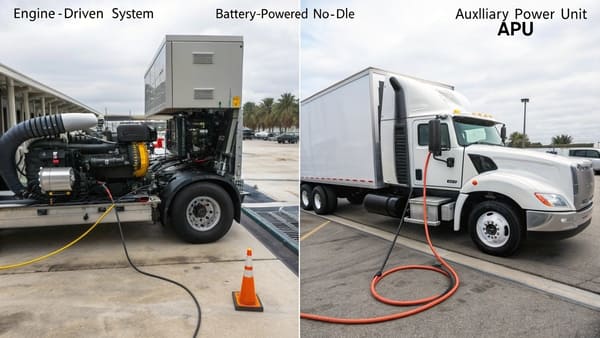
The best truck AC for hot climates combines a powerful, engine-driven system for on-the-road cooling with a separate no-idle solution, like a battery-powered unit or an APU, for restful, fuel-efficient stops.2 This dual approach ensures comfort and efficiency during long hauls.

Finding the perfect cooling setup is more than just picking a brand off the shelf. It's about understanding the technology, the different types of systems available, and how they fit your specific operation, whether you're an independent owner-operator or managing a large fleet. To make the best choice, you need to know what you're looking for. Let's break down the details to help you find the right system that will keep you cool and productive on the road.
What Is a Truck AC System?
You see the controls on the dash, but what's happening behind the scenes? Not knowing the components can lead to costly mistakes when specifying or repairing your system.
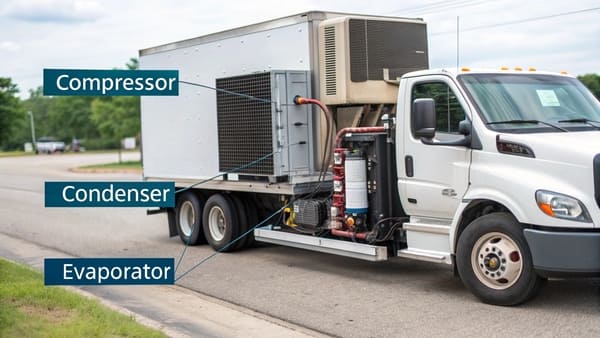
A truck AC system is a group of parts working together to cool the cabin. It includes a compressor, condenser, evaporator, and refrigerant.3 These parts move heat from inside your truck to the outside, leaving you with cool, comfortable air.
From my experience as a manufacturer, the quality of every single part matters, even the ones you don't see. Take the plastic components, like the main housing and air vents. Creating these parts is surprisingly difficult. They require high-precision injection molding machines to meet the exact standards for fit and durability.4 A standard machine just won't do. The manufacturing process involves several steps, but the cooling stage is the most critical and challenging. If the plastic parts don't cool correctly, they can warp or shrink, leading to poor airflow, rattles, or leaks.5 As an inside tip, the most precise machines capable of this work are often found in factories around the Shanghai area or along the coast in Fujian. It's something we always consider when sourcing for our OEM projects to guarantee top quality.
Key Components of a Truck AC System
To understand the system, you need to know its core parts. Each one plays a vital role in the cooling cycle.
| Component | Function | Why Quality Matters |
|---|---|---|
| Compressor | The "heart" of the system. It pressurizes the refrigerant. | A robust compressor is essential for handling high heat loads. |
| Condenser | Located at the front of the truck. It releases heat from the refrigerant. | An efficient condenser is crucial for performance in hot climates. |
| Evaporator | Located inside the cab. It absorbs heat from the cabin air. | A clean, high-quality evaporator ensures maximum cooling effect. |
| Refrigerant | The chemical that circulates through the system, carrying heat. | The correct type and charge level are critical for operation. |
| Housings | The plastic structures that hold components and direct airflow. | Precision-molded housings prevent leaks, rattles, and airflow loss. |
How Does a Truck Air Conditioner Work?
Your AC works, but how? Not understanding the process makes it hard to diagnose problems or explain what you need to a mechanic or parts supplier. Let's simplify the magic.
Your truck’s AC uses a process called the refrigeration cycle. The compressor squeezes refrigerant gas, making it hot. It flows to the condenser, which cools it into a liquid. This liquid then expands in the evaporator, turning back into a gas and absorbing heat from the cabin.
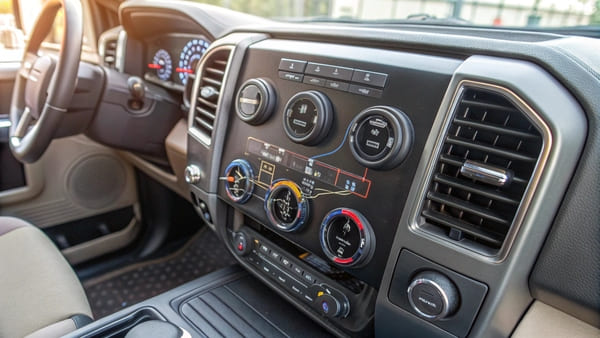
Let's dive deeper into this cycle. It all starts with the compressor.
The Compression and Condensation Stage
First, the compressor, which is driven by the engine's belt, pressurizes low-pressure refrigerant gas. This process packs the molecules together, which dramatically increases its temperature. This hot, high-pressure gas then flows to the condenser, which usually sits in front of the truck's radiator. As air passes over the condenser's fins, it carries heat away from the refrigerant, causing it to cool down and condense into a high-pressure liquid.6 This stage is critical in hot climates; if the condenser can't shed heat effectively, the whole system suffers.
The Expansion and Evaporation Stage
This high-pressure liquid then moves to an expansion valve or orifice tube, which acts as a tiny, controlled restriction. As the liquid is forced through, its pressure drops suddenly. This drop in pressure causes it to start boiling and turning back into a gas inside the evaporator core, which is located inside your dashboard. This change from liquid to gas is a physical process that absorbs a massive amount of heat.7 The blower motor pushes cabin air across the cold evaporator fins, and the heat from that air is absorbed by the refrigerant. The result is cold air blowing from your vents. The now low-pressure refrigerant gas then flows back to the compressor to start the cycle all over again.
I remember one of our first big projects for a client in Pakistan who needed custom AC housings. After we produced the first batch, we noticed the plastic parts had "shrunk" slightly more than our specs allowed during the cooling phase. We were worried it was a total loss. However, the client tested them and found the slightly tighter fit was actually perfect for their assembly, reducing vibration. It was a lucky break, but it taught us a valuable lesson about controlling the cooling process down to the millimeter. We’ve since perfected that process, ensuring every part is exactly as designed.
What Types of Truck AC Systems Are Available?
You know you need powerful AC, but the options are confusing. Choosing the wrong type could mean wasting thousands on fuel or failing to comply with anti-idling laws.
The main types are engine-driven systems, battery-powered no-idle systems, and Auxiliary Power Units (APUs) that include AC.8 Engine-driven is strongest but needs the engine on. Battery and APU systems cool the cab with the engine off, saving fuel and engine hours.9
For fleet managers and owner-operators, the choice between these systems has a huge impact on your bottom line. It affects fuel costs, maintenance schedules, driver comfort, and even driver retention. As a parts manufacturer, we engineer components specifically for the demands of each system type. For example, battery-powered systems require extremely efficient blower motors and lightweight but durable plastic housings to conserve energy and maximize runtime. APU systems, on the other hand, need components built for near-constant operation.
Another manufacturing detail that many don't consider is adding color. If a client needs a specific color for their plastic AC parts, we have to add color pigments during the molding process. This requires stopping the machine and opening the mold to mix the colorant properly. This interruption makes the already-tricky cooling process even more complex.10 It requires highly advanced machinery and skilled operators to prevent defects like flow lines or weak spots. This is a level of detail that separates high-quality suppliers from the rest.
Comparing Truck AC Systems
Let's put the main options side-by-side to make the decision clearer.
| System Type | Power Source | Best Use Case | Pros | Cons |
|---|---|---|---|---|
| Engine-Driven | Truck's main engine | Cooling while driving in extreme heat | Highest cooling capacity (BTUs); reliable | Requires engine to be running; high fuel consumption when idling |
| Battery-Powered | Dedicated deep-cycle batteries | Overnight cooling in moderate heat; anti-idling compliance | Quiet operation; zero emissions; low maintenance | Limited runtime (4-10 hours); lower cooling capacity than engine-driven |
| APU-Integrated | Small, separate diesel engine | All-in-one solution for long-haul rest stops | Powers AC, heat, and electronics; saves main engine wear; high cooling capacity | Highest initial cost; requires its own maintenance and fuel |
Conclusion
Choosing the best truck AC involves matching the right system to your needs. A powerful engine-driven unit for the road and a no-idle option for rest stops is the ideal combination.
"[PDF] Preventing Heat Stress for Truck Drivers", https://www.niehs.nih.gov/sites/default/files/news/events/pastmtg/hazmat/assets/2022/wtp_22_fall_workshop_d1_austin_508.pdf. Research from occupational health and transportation safety agencies indicates that excessive heat in vehicle cabins can impair driver concentration and increase health risks, including heat exhaustion and dehydration. Evidence role: expert_consensus; source type: government. Supports: Excessive heat in a truck cab can threaten driver focus and health.. Scope note: The specific risk level depends on ambient temperature, humidity, and individual health factors. ↩
"Summer Fleet Maintenance Tips to Keep Your Crew Out of Hot Water", https://www.youtube.com/watch?v=5rmbMY_WITQ. Industry guidelines and fleet management studies recommend combining engine-driven AC for driving with no-idle solutions such as battery-powered units or APUs to optimize comfort and fuel efficiency in hot climates. Evidence role: expert_consensus; source type: institution. Supports: A dual AC system approach is optimal for hot climates and long-haul trucking.. Scope note: Recommendations may vary based on climate, truck model, and operational requirements. ↩
"Air conditioning - Wikipedia", https://en.wikipedia.org/wiki/Air_conditioning. Automotive engineering references and technical manuals describe truck AC systems as comprising a compressor, condenser, evaporator, and refrigerant, which together facilitate cabin cooling. Evidence role: definition; source type: encyclopedia. Supports: Truck AC systems consist of compressor, condenser, evaporator, and refrigerant.. Scope note: Component specifics may differ by vehicle model and manufacturer. ↩
"HVAC Injection Molding Plastic Components - Manar, Inc.", https://manarinc.com/hvac-injection-molding-plastic-components/. Manufacturing engineering literature explains that high-precision injection molding is necessary for producing durable, accurately fitting plastic components used in automotive HVAC systems. Evidence role: mechanism; source type: education. Supports: High-precision injection molding is required for durable, well-fitting plastic AC parts.. Scope note: Precision requirements may vary depending on part complexity and application. ↩
"A Brief Review of Materials and Influence on the Cooling Rates - PMC", https://pmc.ncbi.nlm.nih.gov/articles/PMC8658370/. Materials science research confirms that improper cooling during injection molding can cause warping or shrinkage in plastic parts, resulting in fit and performance issues such as leaks or rattles. Evidence role: mechanism; source type: paper. Supports: Improper cooling of molded plastic parts can cause warping, shrinkage, and performance issues.. Scope note: The extent of defects depends on material type and cooling parameters. ↩
"How Does Car AC Work? | UTI - Universal Technical Institute", https://www.uti.edu/blog/automotive/air-conditioning. Thermodynamics and automotive engineering sources explain that airflow over condenser fins removes heat from refrigerant, causing it to condense into a liquid at high pressure. Evidence role: mechanism; source type: education. Supports: Airflow over condenser fins removes heat from refrigerant, causing condensation into a liquid.. Scope note: Efficiency depends on airflow rate and ambient temperature. ↩
"Absorption refrigerator - Wikipedia", https://en.wikipedia.org/wiki/Absorption_refrigerator. Physics and HVAC engineering literature describe the evaporator's function: a pressure drop causes refrigerant to evaporate, absorbing heat from cabin air in the process. Evidence role: mechanism; source type: education. Supports: Pressure drop in the evaporator causes refrigerant to evaporate and absorb heat from cabin air.. Scope note: Heat absorption rate depends on refrigerant properties and evaporator design. ↩
"Motor Vehicle Air Conditioning | Significant New Alternatives Policy ...", https://19january2017snapshot.epa.gov/snap/motor-vehicle-air-conditioning_.html. Fleet management and transportation industry publications categorize truck AC systems into engine-driven, battery-powered no-idle, and APU-integrated types. Evidence role: definition; source type: institution. Supports: Truck AC systems are classified as engine-driven, battery-powered no-idle, and APU-integrated.. Scope note: Some specialized systems may exist outside these main categories. ↩
"12V 24V Electric Truck Air Conditioner |Battery Powered A/C System", https://www.guchen.com/electrical-truck-air-conditioner/. Industry analyses confirm that engine-driven AC systems provide the highest cooling capacity but require the engine to run, while battery-powered and APU systems allow cooling during stops, reducing fuel consumption and engine wear. Evidence role: general_support; source type: institution. Supports: Engine-driven AC offers highest cooling but requires engine operation; battery/APU systems enable no-idle cooling.. Scope note: Cooling capacity and runtime vary by system model and truck configuration. ↩
"Evaluating Processing Parameter Effects on Polymer Grades and ...", https://pmc.ncbi.nlm.nih.gov/articles/PMC11644222/. Plastics manufacturing guides note that adding color pigments during injection molding can require process interruptions and complicate cooling, potentially affecting part quality. Evidence role: mechanism; source type: education. Supports: Adding color pigments during injection molding can complicate the cooling process and require production interruptions.. Scope note: Process complexity varies with pigment type and production scale. ↩