-Standard rotors rust quickly, looking terrible and hurting performance. This corrosion forces early replacements1, costing you money. Geomet coated rotors offer a superior, long-lasting solution2 to this problem.
Yes, Geomet coated rotors are generally better than standard ones. They offer excellent corrosion resistance3, which extends their lifespan and maintains braking performance, especially in wet or salty environments. This protective layer prevents rust buildup4 on the entire rotor surface, not just the braking area.
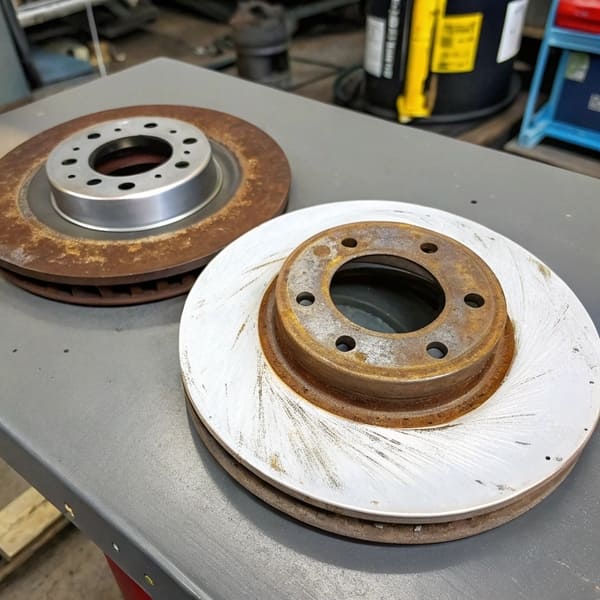
You've seen the difference, but what exactly is this special coating? Understanding the technology behind Geomet helps you see why it's a game-changer for brake system reliability. Let's break down what this coating is and how it provides such powerful protection, so you can make an informed choice for your product line.
What Is a Geomet Coating on Brake Rotors?
You see "Geomet coated" on product specs, but what does it mean? This uncertainty makes it hard to evaluate its real benefits. Let's define it simply for you.
Geomet is a water-based, chrome-free coating5 primarily made of zinc and aluminum flakes6. It's applied to the entire brake rotor to create a thin, protective barrier. This barrier shields the metal from moisture and salt, effectively preventing rust and corrosion without impacting braking performance.
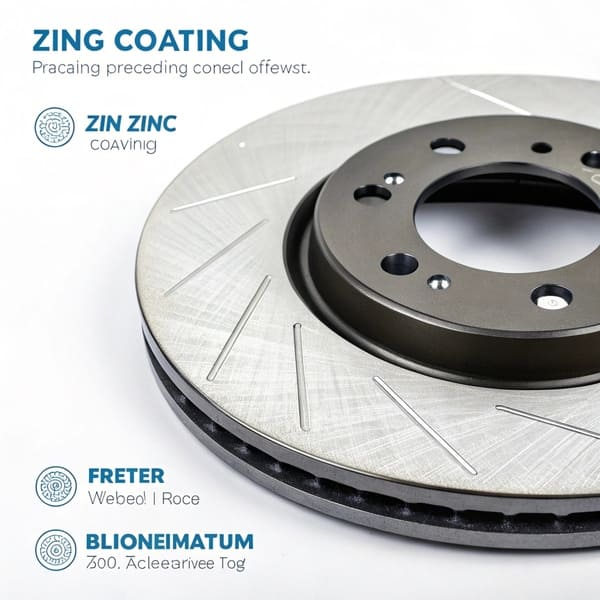
The Geomet coating isn't just a layer of paint. It's an advanced surface treatment technology. We're talking about a non-electrolytic process7, which means we avoid the risk of hydrogen embrittlement that can weaken the rotor's metal structure. The coating itself is a proprietary mix of zinc and aluminum flakes6 suspended in a water-based binder. When cured, it forms a metallic silver-gray finish that is both functional and aesthetically pleasing. It's important to understand this isn't just for looks. The main goal is long-term corrosion protection for the entire part, including the hub, vanes, and edges that standard rotors leave exposed to the elements. This comprehensive coverage8 is a key differentiator. It ensures that the rotor maintains its structural integrity and appearance much longer than an uncoated or partially painted rotor. It's a premium feature that signifies a higher quality product.
How Does Geomet Coating Work to Prevent Corrosion?
You know Geomet coating stops rust, but the "how" is a mystery. Without understanding the science, it's hard to trust the claims. Let's explain its powerful protective action.
Geomet coating works in three ways. First, the overlapping zinc and aluminum flakes6 create a physical barrier against moisture. Second, the zinc provides sacrificial protection, corroding before the iron rotor. Finally, a passivation layer forms, further slowing down the corrosion process and sealing the surface.
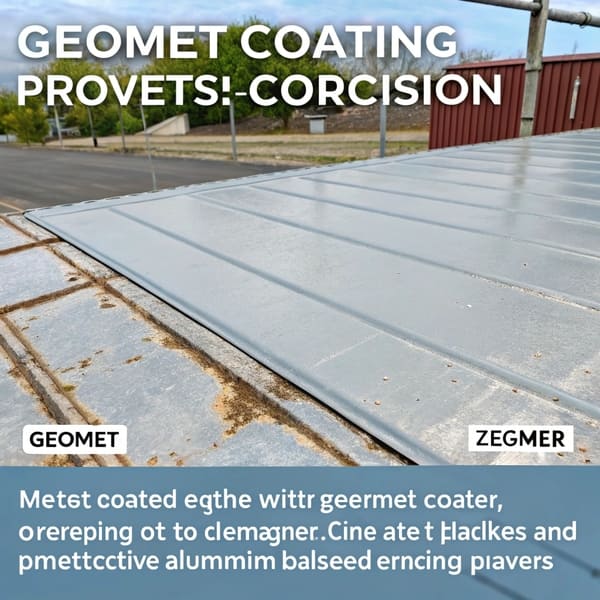
The science behind Geomet's effectiveness is quite smart. It relies on a combination of protective actions that work together. Think of it as a defense-in-depth strategy for your brake rotors. The first line of defense is the physical barrier created by the densely packed metal flakes. These flakes overlap like scales on a fish, making it very difficult for water and salt to reach the underlying iron. But no barrier is perfect. So, the second mechanism kicks in: galvanic action9. Zinc is more reactive than iron, so it acts as a "sacrificial" anode. It corrodes first, protecting the steel rotor underneath. This is the same principle used to protect ship hulls. Finally, as the coating interacts with the environment, it forms a stable, passivating layer10 that further seals the surface and slows down any potential corrosion. This multi-faceted approach is far superior to simple paint, which just cracks and traps moisture underneath.
| Protection Mechanism | How It Works | Benefit |
|---|---|---|
| Barrier Protection | Overlapping zinc/aluminum flakes block moisture. | Prevents corrosive elements from reaching the rotor. |
| Sacrificial Protection | Zinc corrodes before the iron rotor. | Actively protects the rotor's structural integrity. |
| Passivation | A stable oxide layer forms on the surface. | Self-seals the coating and slows corrosion. |
What Materials and Technology Are Used in Geomet Coated Rotors?
You might think making a coated rotor is easy. But poor manufacturing creates warped, defective products that fail quickly. The process actually requires immense precision and specialized technology.
Manufacturing uses high-grade G3000 cast iron11 for the rotor and a water-based solution of zinc and aluminum flakes6 for the coating. The technology involves precise spray application, followed by a multi-stage curing and cooling process. High-precision machinery is essential to control flatness and prevent warping during these stages.
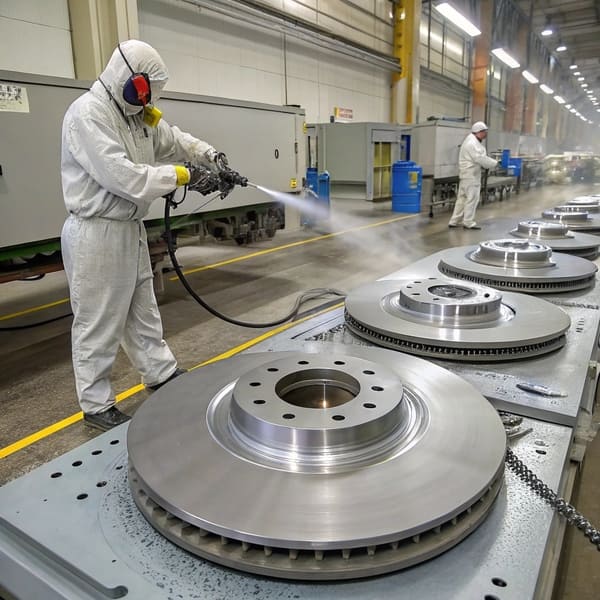
Making a high-quality Geomet coated rotor is incredibly challenging. The production requires more than just standard equipment; it demands high-precision machinery to meet strict tolerances. The process has at least three critical stages, but the hardest part is the cooling and flatness control after the coating is cured. This is where things can go wrong. We learned this the hard way. I remember my first project for this product with a client from Pakistan. We were still new to the process, and after curing, the rotors showed significant "warping." The flatness was off. I thought it was a disaster. Surprisingly, the client actually liked the result for their specific application, but it was a wake-up call for us. Since then, we've perfected our process. We now understand that the machines capable of this precision are typically found in factories around Shanghai and in the coastal Fujian province, not elsewhere. Another tricky step is the spray application. To adjust parameters, the machine must stop, and the mold opens. This makes the cooling process very difficult to control consistently. It's a delicate balance of temperature, timing, and mechanical precision to produce a perfectly flat, durable, and reliable Geomet rotor every single time.
Conclusion
In short, Geomet coated rotors offer superior rust protection and a longer lifespan. They are a worthwhile upgrade over standard rotors, provided they are manufactured with the necessary precision.
Understanding how corrosion accelerates rotor replacement helps you avoid unnecessary costs and choose longer-lasting products. ↩
Learn why Geomet coated rotors outperform standard options, ensuring better value and reliability for your vehicle. ↩
Discover the science behind Geomet's corrosion resistance to make informed decisions about brake rotor upgrades. ↩
Explore how this layer keeps your rotors looking and performing like new, even in harsh environments. ↩
Find out why this eco-friendly coating is safer and more effective than traditional methods. ↩
Learn how these materials contribute to superior protection and durability in automotive applications. ↩
Understand how this process prevents metal weakening and ensures long-term rotor reliability. ↩
See why full coverage protects every part of the rotor, extending its lifespan and maintaining performance. ↩
Discover the advanced chemistry that actively shields your rotors from corrosion and structural damage. ↩
Learn about this self-sealing feature that further enhances the longevity of your brake rotors. ↩
Find out how premium materials improve rotor strength, performance, and resistance to wear. ↩