-Struggling with hot, stuffy cabins during rest stops? Idling your engine all night burns fuel and creates noise. A parking air conditioner provides cool, quiet comfort without running the engine.1
A parking air conditioner is an independent cooling system for vehicles like trucks and RVs. It runs directly on the vehicle's battery power, allowing you to cool the cabin for hours with the engine completely turned off.2 This saves fuel, reduces engine wear, and ensures a quiet environment.3
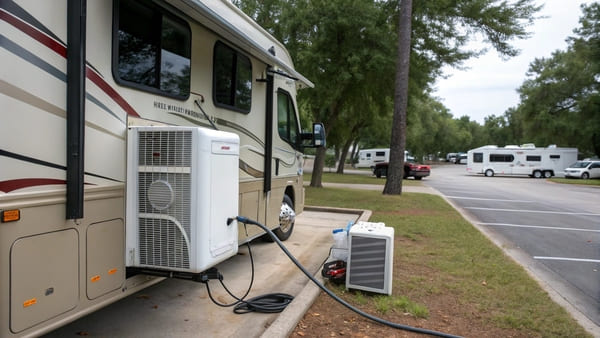
This technology sounds like a game-changer for anyone who spends long hours in their vehicle. But you might be wondering how it’s different from the standard AC already in your dashboard, and more importantly, how it can run for so long without killing your battery. Let's break down the details and see how this system really works.
What Is a Parking Air Conditioner and Why Is It Different from Traditional Vehicle AC?
You might think your standard vehicle AC is all you need. But running it means idling the engine for hours, which is expensive and loud. A parking AC is built for a different purpose.
A parking AC is a standalone unit powered by the battery, not the engine. A traditional vehicle AC needs the engine to run its compressor.4 This key difference allows the parking AC to provide quiet, fuel-free cooling for long periods when the vehicle is stationary.
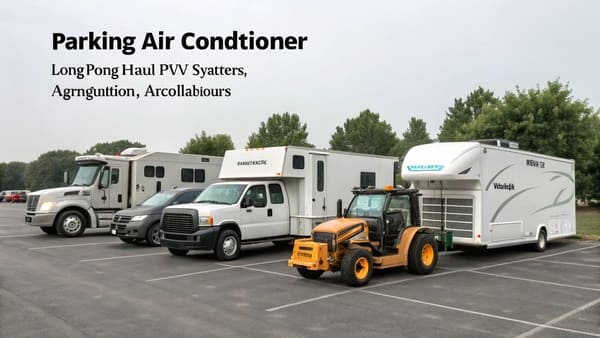
The fundamental difference lies in the power source. Your car's built-in air conditioning uses a compressor that is driven by the engine's serpentine belt. If the engine is off, the belt isn't moving, and the AC compressor can't work. This is why you have to idle your engine to stay cool, burning fuel and causing wear and tear.
A parking air conditioner, on the other hand, has its own electric compressor.5 It connects directly to your vehicle's 12V or 24V battery system. This design makes it completely independent of the engine. It's built for efficiency, using minimal power to provide sustained cooling while you rest.6 Think of it as a specialized tool for a specific job: keeping you comfortable when parked. It's not designed to replace your main AC while driving, but to take over when the engine stops.
Here’s a simple breakdown:
| Feature | Traditional Vehicle AC | Parking Air Conditioner |
|---|---|---|
| Power Source | Engine-driven belt | Vehicle battery (12V/24V) |
| Engine Status | Must be running (idling) | Can be turned off |
| Fuel Consumption | High (0.2-0.5 gallons/hour) | Zero |
| Noise Level | Loud (engine noise) | Very quiet (fan noise only) |
| Best Use Case | Cooling while driving | Cooling while parked or resting |
| Environmental Impact | Emissions from idling engine | No direct emissions |
How Does a Parking AC Work When the Engine Is Turned Off?
The thought of running an air conditioner on just a battery sounds risky. You probably worry it will drain your power and leave you stranded. But these systems are designed with smart, efficient technology.
A parking AC uses an electric compressor powered by the vehicle's battery (12V or 24V).7 It circulates refrigerant in a closed loop to pull heat from the cabin and release it outside. It works just like a home AC but is optimized for low power consumption.8
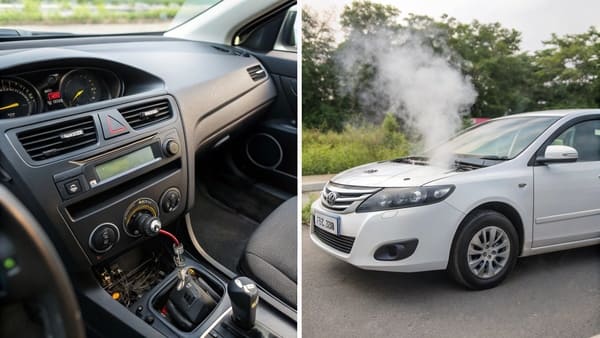
The system's core components are an electric compressor, a condenser unit (outside), an evaporator unit (inside), and a control panel. When you turn it on, the battery sends power to the electric compressor. This compressor pressurizes the refrigerant gas, turning it into a hot liquid. The liquid flows to the condenser, where an external fan blows air over it, releasing the heat into the outside atmosphere. The now-cooler liquid refrigerant then moves to the evaporator inside your cab. As it expands back into a gas, it absorbs a massive amount of heat from the cabin air. A fan blows air over the cold evaporator coils, delivering chilled air into your space.
The quality of every component is crucial, especially the plastic housings. Manufacturing these parts is surprisingly difficult. The injection molding process requires incredible precision. I learned this the hard way on one of my first projects for a client from Pakistan. We were inexperienced, and the plastic parts for the AC unit showed significant "shrinkage" after cooling. Luckily, the client actually preferred the slightly more compact result, but it was a wake-up call. Now, we use high-precision machines that can handle the complex cooling phase without causing deformities. Adding color is another challenge, as the machine must stop and the mold must be opened, which makes the cooling process even trickier. It’s why we source our production from top-tier facilities.
What Vehicles Can Use a Parking Air Conditioner System?
Wondering if this cooling solution is right for your vehicle? You don't want to invest in a system that isn't a good fit. The good news is that these units are quite versatile.
Parking air conditioners are perfect for any vehicle where people need to rest or work with the engine off. This includes long-haul trucks, RVs, camper vans, and commercial vehicles like delivery vans, agricultural tractors, and construction equipment. Any vehicle with a robust battery system can benefit.
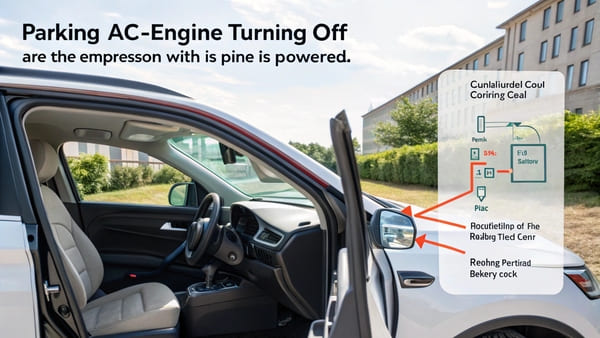
These systems are adaptable, but they truly shine in specific applications where engine-off comfort is a priority. The main consideration is having a battery setup that can handle the load, which often means having a dedicated auxiliary battery bank to avoid draining the starter battery.
For Long-Haul Truckers
For truck drivers, a parking AC is more than a luxury; it's a necessity. Many regions have strict anti-idling laws that come with heavy fines.9 A parking AC allows drivers to comply with these laws while getting a good, quiet night's sleep. The fuel savings alone can pay for the unit over time, not to mention the reduced engine maintenance from thousands of hours of avoided idling.10
For RV and Camper Enthusiasts
In the world of RVs and camper vans, a parking AC means freedom. It allows you to stay cool without needing to be hooked up to shore power or running a noisy generator. This is perfect for boondocking or staying in campgrounds with noise restrictions. It provides silent, off-grid comfort so you can enjoy the peace and quiet of nature.
For Commercial and Special-Use Vehicles
The application extends to a wide range of commercial fleets. Delivery drivers who make frequent stops can keep their cabins cool without constantly restarting the engine. Operators of heavy equipment, like cranes or tractors, can stay comfortable during long shifts in the field. It creates a better, safer, and more productive work environment. As a manufacturer, we supply components for all these types, customizing solutions for different vehicle needs.
Conclusion
A parking AC offers an efficient, engine-off cooling solution for trucks, RVs, and commercial vehicles. It saves fuel, eliminates noise, and provides a comfortable space to rest or work.
"The effect of air conditioner sound on sleep latency, duration ... - PMC", https://pmc.ncbi.nlm.nih.gov/articles/PMC6341869/. A government or research source can confirm that parking air conditioners are designed to provide cooling without requiring the vehicle's engine to run, thereby reducing noise and fuel consumption compared to idling. Evidence role: mechanism; source type: government. Supports: A parking air conditioner provides cool, quiet comfort without running the engine.. Scope note: Most sources will describe the general function but may not address all models or specific noise levels. ↩
"So Exactly How Long CAN We Run the Air Conditioner on Battery ...", https://www.thefitrv.com/rv-tech/so-exactly-how-long-can-we-run-the-air-conditioner-on-battery-power/. Technical documentation or an educational source can verify that battery-powered parking air conditioners are designed to operate for several hours without the engine running, depending on battery capacity and system efficiency. Evidence role: mechanism; source type: education. Supports: It runs directly on the vehicle's battery power, allowing you to cool the cabin for hours with the engine completely turned off.. Scope note: Actual runtime depends on battery size, system efficiency, and ambient conditions. ↩
"Fuel Economy in Hot Weather", https://www.energy.gov/energysaver/fuel-economy-hot-weather. A research paper or government report can support that using a parking air conditioner instead of idling the engine reduces fuel consumption, engine wear, and noise pollution. Evidence role: statistic; source type: research. Supports: This saves fuel, reduces engine wear, and ensures a quiet environment.. Scope note: Exact savings and reductions will vary by vehicle and usage pattern. ↩
"Air conditioning - Wikipedia", https://en.wikipedia.org/wiki/Air_conditioning. An encyclopedia or technical manual can confirm that traditional vehicle air conditioning systems use a compressor driven by the engine's belt, requiring the engine to be running for AC operation. Evidence role: mechanism; source type: encyclopedia. Supports: A traditional vehicle AC needs the engine to run its compressor.. Scope note: Some hybrid or electric vehicles may use electric compressors, but most conventional vehicles use engine-driven compressors. ↩
"How Does Car AC Work? | UTI - Universal Technical Institute", https://www.uti.edu/blog/automotive/air-conditioning. A technical or educational source can verify that parking air conditioners use independent electric compressors powered by the vehicle's battery, distinguishing them from engine-driven systems. Evidence role: mechanism; source type: education. Supports: A parking air conditioner, on the other hand, has its own electric compressor.. Scope note: Designs may vary, but electric compressors are standard in battery-powered parking AC units. ↩
"Air Conditioning - Department of Energy", https://www.energy.gov/energysaver/air-conditioning. A research or technical source can support that parking air conditioners are engineered for energy efficiency to maximize cooling duration on limited battery power. Evidence role: mechanism; source type: research. Supports: It's built for efficiency, using minimal power to provide sustained cooling while you rest.. Scope note: Efficiency varies by model and operating conditions. ↩
"24V DC Air Conditioner, 20CC Scroll Compressor Truck Cab RV Air ...", https://www.amazon.com/Treeligo-Conditioner-Compressor-13500BTU-Excavator/dp/B0CT36QND4. A technical or educational source can confirm that parking air conditioners typically use electric compressors powered by 12V or 24V vehicle battery systems. Evidence role: mechanism; source type: education. Supports: A parking AC uses an electric compressor powered by the vehicle's battery (12V or 24V).. Scope note: Some systems may use alternative voltages or auxiliary batteries. ↩
"What is Parking Air Conditioning? - TKT HVAC", https://www.tkthvac.com/news/what-is-parking-air-conditioning.html. A technical or educational source can explain that parking air conditioners operate on the same refrigeration principles as home AC units but are specifically designed for lower power consumption due to battery limitations. Evidence role: mechanism; source type: education. Supports: It works just like a home AC but is optimized for low power consumption.. Scope note: Design optimizations may differ by manufacturer and model. ↩
"[PDF] Compilation of State, County, and Local Anti-Idling Regulations - EPA", https://www.epa.gov/sites/default/files/documents/CompilationofStateIdlingRegulations.pdf. A government or legal source can confirm that various regions have enacted anti-idling regulations for trucks and commercial vehicles, often imposing fines for violations. Evidence role: historical_context; source type: government. Supports: Many regions have strict anti-idling laws that come with heavy fines.. Scope note: Laws and fines vary by jurisdiction and vehicle type. ↩
"Idle Reduction Benefits and Considerations", https://afdc.energy.gov/conserve/idle-reduction-benefits. A research or government report can provide data on fuel and maintenance cost savings from reduced engine idling, supporting the claim that parking air conditioners can offset their purchase cost over time. Evidence role: statistic; source type: research. Supports: The fuel savings alone can pay for the unit over time, not to mention the reduced engine maintenance from thousands of hours of avoided idling.. Scope note: Actual payback period depends on usage, fuel prices, and maintenance costs. ↩