-Struggling to find an AC unit that can handle the heat in a large bus? Choosing wrong can be a costly mistake, leading to unhappy passengers and wasted investment.
The best AC unit for a bus depends on the vehicle's size, local climate, and your budget. Key factors include cooling capacity (measured in BTU)1, system type (like rooftop or split), and the reliability of the manufacturer for producing high-precision, durable components.

Choosing the right system can feel overwhelming. There are so many technical details to consider. But to make a smart decision for your fleet or product line, you first need to understand the fundamentals of how these powerful systems work. Let's break it down together, step by step, so you can source the perfect solution with confidence.
What Is an AC Unit for a Bus and How Does It Work?
You know buses need powerful air conditioning, but the technology seems complex. This uncertainty makes it hard to source the right systems or components for your business.
A bus AC unit is a heavy-duty system designed to cool a large interior space by circulating refrigerant.2 It uses a compressor, condenser, evaporator, and expansion valve to absorb heat and humidity from inside the bus and release it outside, creating a comfortable environment.
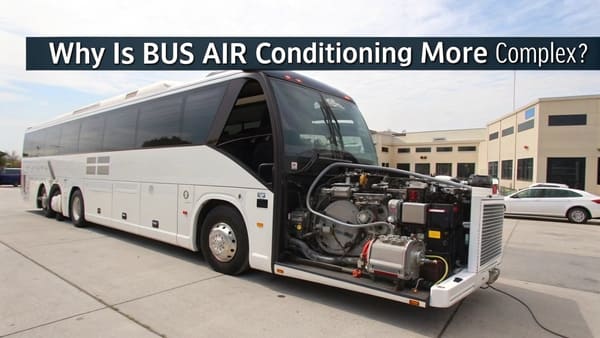
A bus AC system works on the same basic principle as any refrigerator or air conditioner, but on a much larger scale. The whole process is a continuous loop. The bus engine usually powers a compressor, which is the heart of the system.3 This compressor pressurizes refrigerant gas, making it very hot. This hot gas then flows to the condenser, which is often on the roof. Here, fans blow air over the condenser coils, releasing the heat and turning the refrigerant into a high-pressure liquid. This liquid then goes through an expansion valve, which causes a sudden drop in pressure and temperature. The now cold, low-pressure liquid refrigerant enters the evaporator inside the bus. A blower fan pushes cabin air over the cold evaporator coils. The refrigerant absorbs the heat from the air, turning back into a gas, and the cooled air is circulated throughout the bus. The cycle then repeats.
| Component | Function |
|---|---|
| Compressor | Pressurizes the refrigerant, starting the cycle. |
| Condenser | Releases heat from the refrigerant to the outside air. |
| Expansion Valve | Lowers the pressure and temperature of the refrigerant. |
| Evaporator | Absorbs heat from the cabin air, cooling the bus interior. |
Why Is Bus Air Conditioning More Complex Than Standard Vehicle Cooling Systems?
You might think a bus AC is just a bigger version of a car's AC. This common mistake can lead you to underestimate the engineering involved and make poor sourcing decisions.
Bus air conditioning is far more complex due to the massive interior volume, high passenger capacity, and large windows that create huge heat loads.4 These systems demand significantly higher cooling power, specialized components, and advanced airflow management to work effectively.
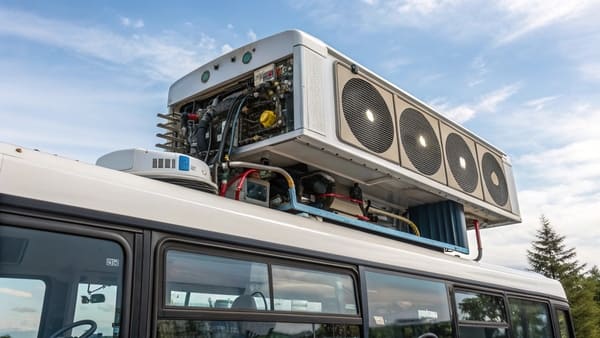
The manufacturing challenge for bus AC parts is incredibly high. I learned this the hard way. For example, the plastic components for the housing and vents require extreme precision that standard injection molding machines just can't achieve. The process involves at least three critical stages, with cooling being the most difficult. High-precision machines capable of this work are typically found in specific industrial zones, like those along the Fujian coast or around Shanghai.5 Machines from other regions often don't meet the required accuracy.
Another major difficulty is adding color pigments. To add color, you have to stop the machine and open the mold. This interrupts the carefully controlled cooling process and can easily lead to defects. I remember my first time working on these parts for a customer from Pakistan. We were still learning, and the plastic parts showed significant "shrinkage" after cooling6. I was very worried we had failed the project. But, to my surprise, the client actually preferred the slightly shrunken look! It was a lucky break, but a powerful lesson in manufacturing precision. We've refined our process since then and never had that issue again.
| Feature | Car AC | Bus AC |
|---|---|---|
| Cooling Space | Small, 2-4 cubic meters | Huge, 30-70+ cubic meters |
| Heat Load | 1-5 people, small windows | 50+ people, large windows, engine heat |
| Component Size | Compact and integrated | Large, heavy-duty, often modular |
| Manufacturing | Standard mass production | High-precision, specialized tooling |
What Are the Main Types of Bus Air Conditioning Systems Available Today?
You know you need a powerful system, but the different types are confusing. Choosing the wrong one means wasting money on a system that either doesn't fit or can't perform.
The main options are rooftop-mounted units and split systems. Rooftop units are self-contained and very common on coaches and city buses. Split systems have separate indoor and outdoor components, offering more flexible installation for smaller or specialized vehicles.
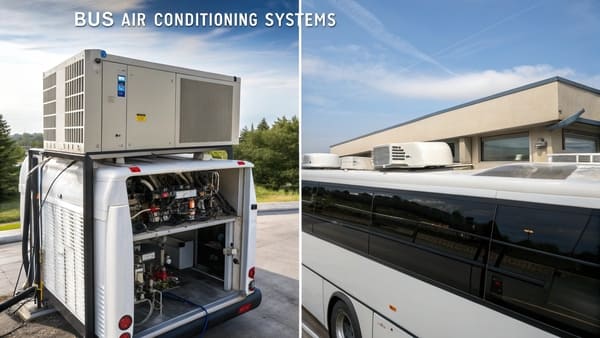
Let's look closer at these options. Rooftop-mounted systems are the most common choice for large buses.7 They are all-in-one units that contain the compressor, condenser, and evaporator in a single housing on top of the bus. This makes installation relatively straightforward and saves valuable space inside the vehicle. The main downside is that they add height and weight to the roof, which can affect the bus's stability and aerodynamics. Maintenance also requires someone to get on the roof.
Split systems, on the other hand, separate the components.8 Typically, the condenser and compressor are mounted under the bus chassis or in the engine bay, while the evaporator units are placed inside the cabin, often along the ceiling. This provides great flexibility in installation and helps distribute weight more evenly. This design is very popular for minibuses, shuttle vans, and school buses where a large rooftop unit might not be practical. The installation is more complex because it requires running refrigerant lines between the units. A new trend is emerging with electric buses, which use all-electric AC systems powered by the vehicle's high-voltage battery instead of the engine.9 This requires completely different engineering for power management and control.10
| System Type | Installation | Best Use Case | Key Advantage |
|---|---|---|---|
| Rooftop-Mounted | Simple, all-in-one unit | Large coaches, city buses | Saves interior space |
| Split System | Complex, separate components | Minibuses, shuttle vans | Flexible placement, better weight balance |
| All-Electric | Integrated with EV battery | Electric buses | Engine-independent, zero emissions |
Conclusion
Choosing the right bus AC involves understanding its complexity, knowing the different types, and most importantly, partnering with a manufacturer who can handle the high-precision engineering required for reliable performance.11
"British thermal unit - Wikipedia", https://en.wikipedia.org/wiki/British_thermal_unit. British Thermal Units (BTU) are widely used as the standard measurement for cooling capacity in air conditioning systems, including those for buses, as documented in technical standards and HVAC literature. Evidence role: definition; source type: encyclopedia. Supports: Cooling capacity for AC units is measured in BTU and is a key factor in system selection.. ↩
"Air conditioning - Wikipedia", https://en.wikipedia.org/wiki/Air_conditioning. Bus air conditioning systems are defined as heavy-duty HVAC units designed to cool large passenger spaces by circulating refrigerant, as described in industry standards and technical manuals. Evidence role: definition; source type: encyclopedia. Supports: A bus AC unit is a heavy-duty system designed to cool a large interior space by circulating refrigerant.. ↩
"DD Series Sub-Engine Bus Air Conditioner - Guchen Industry", https://www.guchen.com/bus-air-conditioner/dfdd.html. Most conventional bus air conditioning systems use engine-driven compressors as the primary power source, according to HVAC engineering references. Evidence role: mechanism; source type: education. Supports: The bus engine usually powers a compressor, which is the heart of the system.. Scope note: Electric buses may use battery-powered compressors instead. ↩
"The Basics of Bus Air Conditioners", https://www.lippert.com/blog/bus-air-conditioning-basics?srsltid=AfmBOor6YY_nOKck-q7v-HzZKoMF-B6PU2FKhFPoY2V5LaegEFv7XfQJ. Bus air conditioning systems are significantly more complex than those in cars due to larger interior volumes, higher passenger loads, and increased heat gain from large windows, as documented in HVAC engineering literature. Evidence role: expert_consensus; source type: education. Supports: Bus air conditioning is far more complex due to the massive interior volume, high passenger capacity, and large windows that create huge heat loads.. ↩
"[PDF] China's Special Economic Zones and Industrial Clusters", https://www.lincolninst.edu/app/uploads/legacy-files/pubfiles/2261_1600_Zeng_WP13DZ1.pdf. The Fujian coast and Shanghai region are recognized as major industrial zones for high-precision injection molding in China, according to manufacturing industry reports. Evidence role: historical_context; source type: institution. Supports: High-precision machines capable of this work are typically found in specific industrial zones, like those along the Fujian coast or around Shanghai.. Scope note: This concentration is subject to change with industry development. ↩
"Shrinkage Value of Plastics Material & Injection Molding - Chart", https://www.specialchem.com/plastics/guide/shrinkage. Shrinkage in plastic parts after cooling is a well-documented phenomenon in injection molding, resulting from polymer contraction as it transitions from molten to solid state, as explained in materials engineering literature. Evidence role: mechanism; source type: education. Supports: The plastic parts showed significant "shrinkage" after cooling.. Scope note: Shrinkage varies by material and process parameters. ↩
"SD series Bus Air Conditioner System - Guchen Industry", https://www.guchen.com/bus-air-conditioner/sd-brt-city-bus-air-conditioner.html. Rooftop-mounted air conditioning units are the predominant choice for large buses, as reported in transportation industry surveys and HVAC market analyses. Evidence role: statistic; source type: institution. Supports: Rooftop-mounted systems are the most common choice for large buses.. Scope note: Regional preferences may vary. ↩
"Split System HVAC | HVAC Glossary & Definitions - Lennox", https://www.lennox.com/residential/buyers-guide/guide-to-hvac/glossary/split-system. Split air conditioning systems for buses are defined as those with separate indoor and outdoor components, as described in HVAC technical manuals and industry standards. Evidence role: definition; source type: encyclopedia. Supports: Split systems, on the other hand, separate the components.. ↩
"All Electric Bus Air Conditioner - Guchen Industry", https://www.guchen.com/all-electric-bus-ac/bus-hvac.html. Recent industry reports confirm the adoption of all-electric air conditioning systems in electric buses, powered by high-voltage batteries rather than the engine. Evidence role: statistic; source type: institution. Supports: A new trend is emerging with electric buses, which use all-electric AC systems powered by the vehicle's high-voltage battery instead of the engine.. Scope note: Adoption rates vary by region and manufacturer. ↩
"Flipping the Switch on Electric School Buses: Vehicle In Use ...", https://afdc.energy.gov/vehicles/electric-school-buses-p6-m3. All-electric bus air conditioning systems necessitate specialized engineering for power management and control, as documented in electric vehicle HVAC technical literature. Evidence role: mechanism; source type: education. Supports: This requires completely different engineering for power management and control.. Scope note: Designs differ across manufacturers and bus models. ↩
"Why Is Accuracy and Precision Crucial in Industrial Automation?", https://blogs.bu.edu/jpark3/article-309/. Industry standards and expert consensus emphasize that high-precision manufacturing is critical for reliable bus air conditioning performance, as documented in HVAC quality assurance literature. Evidence role: expert_consensus; source type: institution. Supports: Choosing the right bus AC involves understanding its complexity, knowing the different types, and most importantly, partnering with a manufacturer who can handle the high-precision engineering required for reliable performance.. Scope note: Manufacturer capabilities vary widely. ↩