Choosing the right brake pads feels overwhelming with so many options. Making the wrong choice can compromise your safety and waste money. This guide simplifies the process for you.
The "best" brake pad is the one that best matches your vehicle, your driving style, and your priorities. The main types are organic, semi-metallic, and ceramic. Each offers a different balance of stopping power1, noise level2, lifespan3, and cost, so the right choice is always a trade-off.
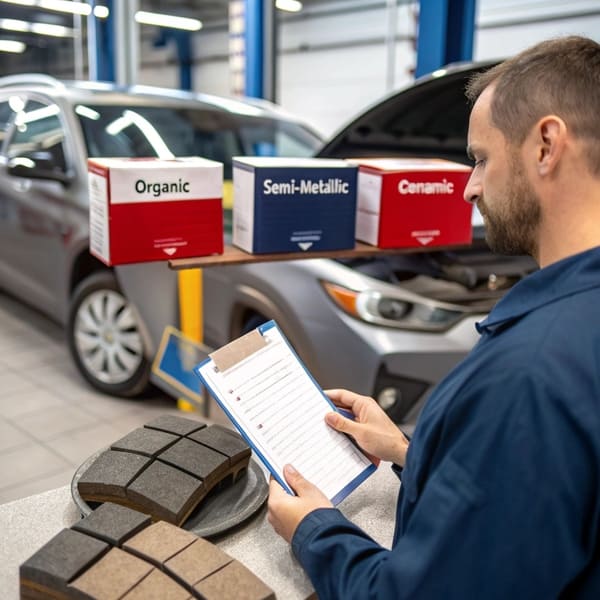
When I talk with clients, the first question is always "What's the best?" But "best" is a tricky word. The best brake pad for a race car would be terrible for a family minivan, and vice versa. It’s all about finding the perfect fit for a specific job. To do that, we first need to break down what makes a brake pad good for different situations. Let's look at what "best" really means for different drivers and vehicles.
What Makes a Brake Pad “The Best” for Different Applications?
A "best" pad for a race car is not the best for a daily driver. Mismatching them leads to poor performance, noise, or rapid wear. Let's define "best" for your needs.
"The best" brake pad is one that perfectly balances stopping power1, noise, dust, and lifespan3 for its intended use. Daily drivers need quiet, low-dust pads. Performance cars need high-temperature resistance. Heavy-duty trucks need extreme durability and consistent stopping power1 under heavy loads.
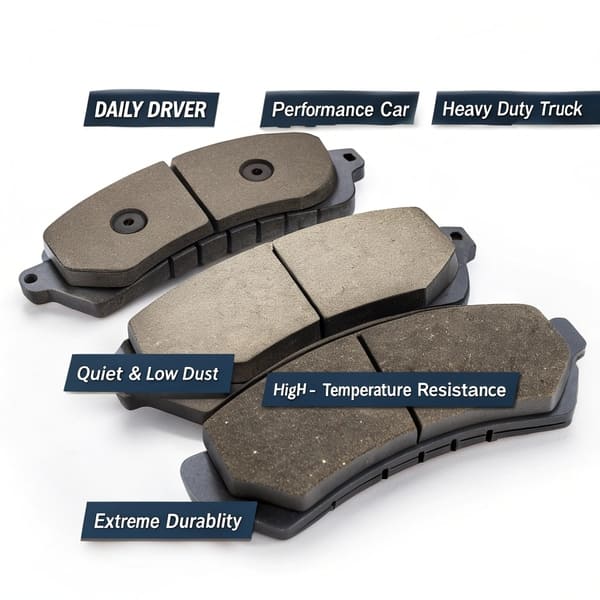
Defining the "best" brake pad is impossible without context. It’s not about finding a single product that does everything perfectly. Instead, it’s about identifying the key performance characteristics you need and finding a pad that excels in those areas. For our B2B clients, we always start by defining the target application. This ensures the final product we develop meets the end-user's expectations.
Think of it in three main categories:
- Daily Commuting: For the average driver, comfort is king. The most important factors are low noise and minimal brake dust4. You want brakes that work reliably every morning without squealing or turning your wheels black.
- Performance Driving: For sports cars or track use, stopping power1 is everything. These drivers need pads with a high friction coefficient that resist "brake fade5" at very high temperatures. They will gladly trade some noise and dust for an extra margin of safety and performance.
- Heavy-Duty & Towing: For trucks and SUVs that haul heavy loads, durability and heat management are critical. These pads must provide consistent stopping power1, even when carrying thousands of pounds, without wearing out prematurely.
| Application | Key Priority #1 | Key Priority #2 | Acceptable Trade-Off |
|---|---|---|---|
| Daily Commuter | Low Noise | Low Dust | Maximum Stopping Power |
| Performance / Track | Fade Resistance | High Friction | Noise & Dust |
| Heavy-Duty / Towing | Durability Under Load | Heat Dissipation | Cost & Some Noise |
As you can see, there’s always a trade-off. A pad that’s great at one thing is often just average at another. The goal is to find the right balance for the job.
What Are the Main Types of Brake Pads and How Do They Compare?
You hear terms like ceramic and semi-metallic, but they can be confusing. Not knowing the difference can lead to a poor choice. Let's break down what these materials really mean.
The main types are Organic (NAO), Semi-Metallic, and Ceramic. Organic pads are quiet and cheap but wear fast. Semi-metallic pads offer great performance and durability but can be noisy. Ceramic pads provide a clean, quiet, and smooth experience but are typically more expensive.
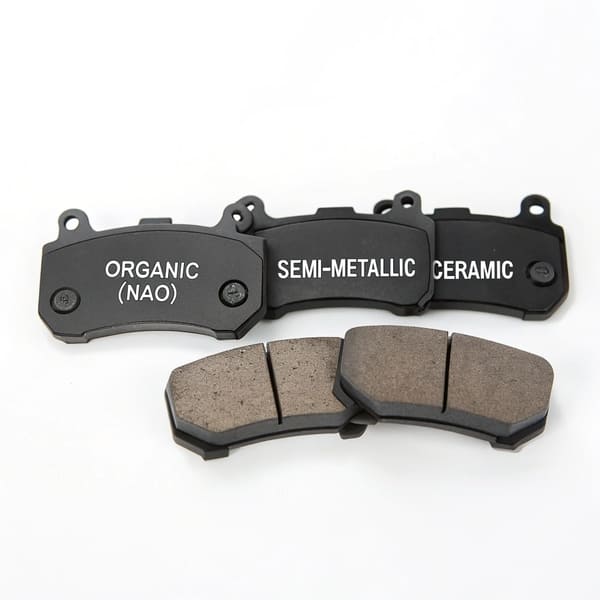
The material composition6, or formulation, is what gives a brake pad its unique characteristics. In our factory, creating these formulations is a precise science. Producing high-quality brake pads is actually very difficult. A standard injection molding machine just doesn't have the precision required. The process involves at least three stages, and the most critical one is the cooling and shaping phase7. This is where the pad gets its final density and structural integrity.
The machines capable of this level of precision are not common. You usually find them in specialized factories in coastal regions like Fujian or near Shanghai. Machines from other areas often can't meet the strict tolerance standards. Another challenge is adding the raw ingredients for the friction material8. The machine has to be stopped and the mold opened to add the compound. This makes the cooling process very tricky to control. I remember my first time producing brake pads for a client from Pakistan. We were still new to the process, and the pads "shrank" a bit more than we expected after molding. I was worried, but it turned out to be a happy accident. The client actually preferred the slightly smaller dimension, and we've perfected the process since then. This experience taught me just how much precision and expertise go into making a reliable brake pad.
Are Ceramic, Semi-Metallic, or Organic Brake Pads Better?
You're stuck trying to choose between ceramic, semi-metallic, and organic. Making the wrong choice can be frustrating and lead to buyer's remorse. Let's compare them directly to find your best fit.
No single type is "better"; it depends on your needs. Ceramic pads are better for quiet, low-dust daily driving. Semi-metallic pads are better for high-performance and heavy-duty use. Organic pads are a good, quiet budget option for older, lighter vehicles.
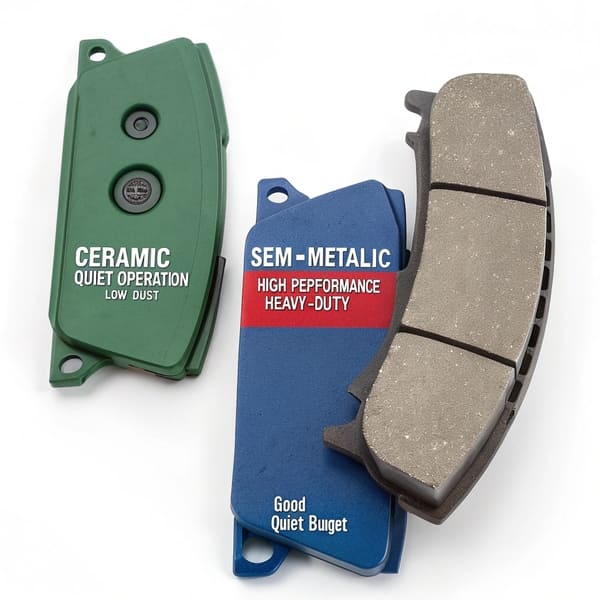
Let's dive deeper into a direct comparison. The "better" choice comes down to which features you value most. As a manufacturer, we produce all types, because each one serves a valuable purpose in the market. Here's a clear breakdown to help you or your customers decide.
Ceramic Brake Pads are made from dense ceramic fibers and non-ferrous filler materials. They represent the premium end of the market for most passenger cars.
- Pros: Extremely quiet, produce a very fine, light-colored dust that is barely noticeable, and are very stable across a wide range of temperatures. They are also gentle on brake rotors.
- Cons: They are usually the most expensive option and may not have the aggressive initial "bite" of semi-metallic pads.
Semi-Metallic Brake Pads contain a high percentage of metal, typically between 30% and 65% steel, copper, and other metals.
- Pros: They offer excellent stopping power1 and are fantastic at dissipating heat, which makes them very resistant to brake fade5. This makes them ideal for performance driving9 and towing. They are also very durable.
- Cons: The high metal content can make them noisy and produce more dark-colored dust than ceramic pads. They can also cause more wear on brake rotors over time.
Organic Brake Pads (NAO) are made from a mix of non-asbestos organic materials like glass, fiber, and rubber, all held together with a resin.
- Pros: They are very quiet, inexpensive, and easy on brake rotors. They are a good default choice for many smaller, lighter cars that don't need extreme performance.
- Cons: They wear out faster than other types and create a fair amount of dust. They also have a lower tolerance for high heat, making them unsuitable for aggressive driving or heavy vehicles.
Here is a summary table:
| Feature | Ceramic | Semi-Metallic | Organic (NAO) |
|---|---|---|---|
| Stopping Power | Very Good | Excellent | Good |
| Noise Level | Very Low | Moderate to High | Very Low |
| Brake Dust | Very Low | High | Moderate |
| Lifespan | Long | Very Long | Short |
| Rotor Wear | Low | High | Very Low |
| Cost | High | Moderate | Low |
| Best For | Daily Driving, Luxury Cars | Performance, Towing | Small Cars, Budget |
Ultimately, the choice is yours. For most modern cars in everyday use, ceramic pads offer the best all-around experience. For those who demand more performance, semi-metallic is the way to go.
Conclusion
Choosing the right brake pad means matching the material—ceramic, semi-metallic, or organic—to your driving needs and budget. There is no single "best" pad that fits every car.
Understanding stopping power helps you choose brake pads that ensure your vehicle stops quickly and safely in all conditions. ↩
Learning about noise levels can help you select brake pads that provide a quieter, more comfortable driving experience. ↩
Knowing about brake pad lifespan helps you plan for maintenance and avoid unexpected repair costs. ↩
Exploring brake dust differences helps you keep your wheels cleaner and maintain your car’s appearance. ↩
Knowing about brake fade is crucial for safety, especially if you drive in demanding conditions or tow heavy loads. ↩
Understanding material composition helps you pick pads that match your driving style and needs. ↩
Learning about this phase reveals why quality manufacturing leads to safer, more reliable brake pads. ↩
Exploring friction materials helps you understand what makes brake pads effective and reliable. ↩
Choosing the right pads for performance driving maximizes safety and control at high speeds. ↩