Struggling with dim, outdated car lights? Replacing a whole sealed beam unit for one burnt-out bulb is expensive and a hassle. Modern composite headlights are the brighter, more efficient solution.
A composite headlight is a modern vehicle light assembly featuring a separate, replaceable bulb, a reflector housing, and a durable plastic lens. It replaced sealed beam headlights because it allows for greater design freedom, improved aerodynamics, easier maintenance (you only replace the bulb), and superior lighting performance.
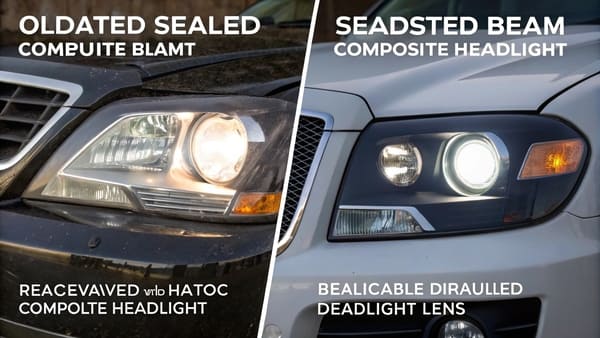
For decades, sealed beam headlights were the standard. They were simple, but they were also limiting. When the automotive industry began to focus more on aerodynamics and unique brand styling, a new solution was needed. The shift to composite headlights was a game-changer, not just for car designers, but for manufacturers and drivers too. But what exactly makes them "composite," and how did they become the new global standard? Let's break it down and look at the technology that lights up our roads today.
What Is a Composite Headlight?
You hear the term "composite headlight" all the time, but what does it really mean? It sounds complicated, but the idea is actually very simple: a housing, a lens, and a bulb.
A composite headlight is an assembly made of separate components: a main housing that contains the reflector, a replaceable light bulb, and a clear outer lens. Unlike old sealed beams, these parts are not sealed into one unit, which means you can change just the bulb when it fails.
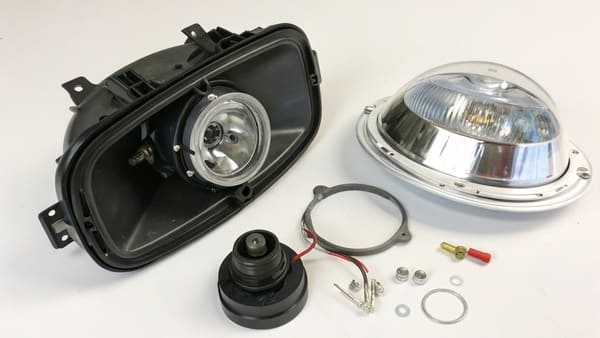
To really understand a composite headlight, you need to look at its individual parts. Each piece has a specific job, and manufacturing them requires a high level of precision. As a manufacturer, we know that the plastic housing is one of the most critical parts. It's not made with just any injection molding machine. The precision required to get the shape and fit right is extremely high. The housing holds everything together and includes the reflector, which directs the light. The outer lens is typically made from polycarbonate, a strong and clear plastic that can be molded into aerodynamic shapes. Finally, the bulb itself can be a standard halogen, a brighter HID, or a modern, efficient LED. This modular design is the key to its success.
| Component | Material | Function |
|---|---|---|
| Housing | High-grade Plastic | Holds all components and includes the reflector surface. |
| Lens | Polycarbonate | Protects the internal parts and helps shape the light beam. |
| Bulb | Halogen, HID, LED | Generates the light; can be replaced separately. |
How Does a Composite Headlight Work?
A headlight seems simple; you flip a switch and it turns on. But the technology that directs that light safely and effectively is surprisingly advanced. Let's look inside to see how it works.
A composite headlight works by using a replaceable bulb to create light. That light is then captured and aimed by a reflector or a projector inside the housing. Finally, the shaped beam passes through the clear outer lens, safely illuminating the road ahead for the driver.
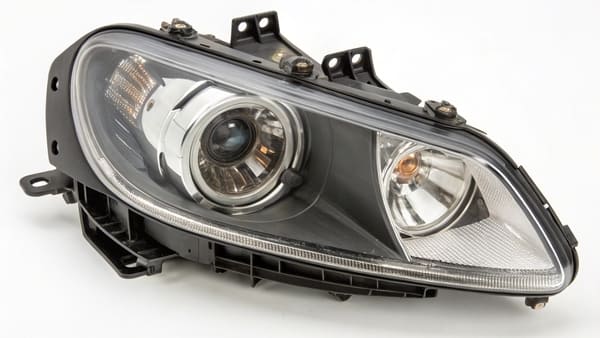
The process starts with the bulb generating light. But an unmanaged light source would just scatter everywhere, blinding other drivers. The magic happens in how that light is controlled. There are two main systems:
1. Reflector Headlights
This is the more traditional composite style. The bulb sits in front of a bowl-shaped, mirror-like surface. This reflector is carefully designed to gather the light and bounce it forward in a controlled pattern.
2. Projector Headlights
This is a more advanced system. The bulb shines light into a small projector lens, similar to a slide projector. There is a "cutoff shield" inside that creates a very sharp, flat-topped beam. This prevents glare for oncoming traffic and focuses the light exactly where you need it on the road.
I remember one of our first big OEM projects for these lights with a client from Pakistan. The cooling stage of the injection molding process is the hardest part. On that first run, the plastic housing shrank a little more than we expected after cooling. I was worried it was a failure. But the client actually preferred the slightly tighter look! It was a lucky break, but it taught us a huge lesson. We now have the cooling process perfected to guarantee consistent results every time.
What Is the Difference Between Composite and Sealed Beam Headlights?
Cars used to have simple round or square headlights. Now, they are sleek and flow with the body lines. What caused this big change? The difference is huge, impacting everything from cost to safety.
The key difference is in their construction. A sealed beam is a single, all-in-one glass unit; if the bulb burns out, you replace the entire headlight. A composite headlight has a multi-part design with a separate bulb, making it repairable, more aerodynamic, and technologically superior.
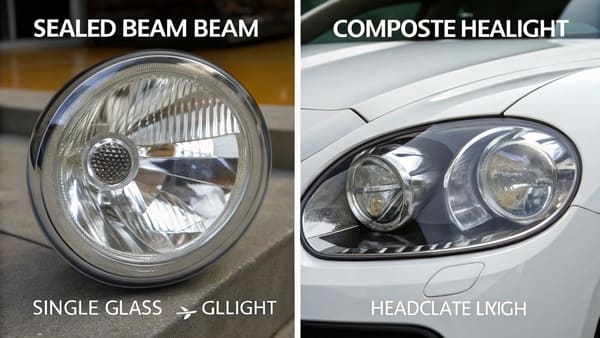
The shift away from sealed beams was a major evolution in automotive design and engineering. Sealed beams were mandated in the U.S. for decades, which is why older American cars all had similar-looking lights. Once those regulations were lifted, designers were free to integrate headlights into the car's body for better aerodynamics and style. This freedom is only possible with composite headlights. The polycarbonate lens can be shaped to match any curve, unlike the simple glass of a sealed beam. This change also allowed for huge advancements in lighting technology, like the introduction of projector beams and LED systems, which would be impossible to fit into a standardized sealed beam unit. For drivers, the change meant better visibility and easier maintenance. For manufacturers like us, it opened up a new world of custom design and engineering possibilities.
| Feature | Sealed Beam Headlight | Composite Headlight |
|---|---|---|
| Construction | All-in-one, sealed glass unit | Multi-part assembly (housing, lens, bulb) |
| Bulb Replacement | Entire unit must be replaced | Only the bulb is replaced |
| Material | Glass | Polycarbonate lens, plastic housing |
| Design Freedom | Very limited (standard shapes) | Extremely flexible and aerodynamic |
| Light Performance | Basic, less focused | Superior, can use projector/LED tech |
| Maintenance Cost | High (replace whole unit) | Low (replace inexpensive bulb) |
Conclusion
Composite headlights replaced sealed beams because they offer better performance, easier maintenance, and total design freedom. They are the modern standard that makes our cars safer and more stylish.