-Finding a trustworthy supplier for automotive parts is a huge challenge. A bad choice can damage your brand and cost you a lot of money.1 Let's review what to look for.
To choose a reliable tail lamp manufacturer, you must verify their technical skills. Look for expertise in precision injection molding and complex cooling processes.2 Also, check their quality control, material sourcing, and their experience with custom OEM/ODM projects. A good partner understands the challenges from design to production.

Choosing the right partner is more than just looking at a price list. It's about understanding the deep technical challenges behind making a seemingly simple part. To see why this is so important, let's start with the basics. This will help you understand what separates a great manufacturer from an average one.
What Is a Tail Lamp and Why Is It Important in Modern Vehicles?
Tail lamps might look simple, but their role is often misunderstood. They are absolutely critical for both vehicle safety and modern automotive design, so getting them right is not optional.
A tail lamp is the complete lighting assembly located at the rear of a vehicle.3 It contains several types of lights, including tail lights, brake lights, and turn signals. It is essential for safety, making the vehicle visible to other drivers and clearly communicating your actions on the road.4
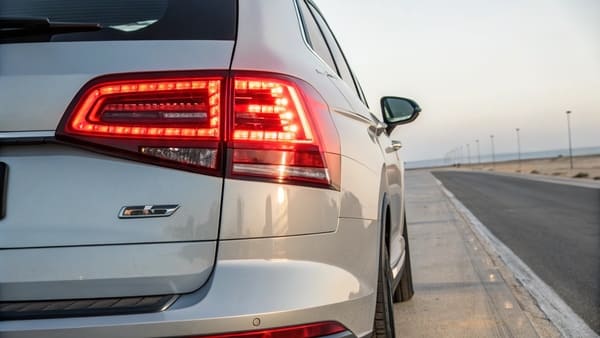
A modern tail lamp is much more than just a plastic housing with a bulb inside. It's a complex component that serves multiple functions, all of which are critical for safety and legal compliance. In our factory, we think about these functions every day.
More Than Just a Light
The primary job of a tail lamp is communication. It tells drivers behind you where you are, if you are slowing down, and where you plan to turn. With today’s technology, it does even more. Many new cars use full LED tail lamps, which are brighter, last longer, and use less energy than old halogen bulbs.5 They also allow for unique designs, like dynamic "sequential" turn signals that sweep across the light.6 These features are not just for looks; they make the driver's intentions clearer. A reliable manufacturer must have the engineering ability to integrate these electronics, manage heat dissipation, and ensure everything is sealed perfectly against water and dust.
What Is the Difference Between Tail Lights, Brake Lights, and Rear Lamps?
People often use terms like "tail light," "brake light," and "rear lamp" as if they mean the same thing. This confusion can cause problems, leading to incorrect orders or misunderstandings about product specs.
The term "tail lamp" or "rear lamp" refers to the entire assembly or housing at the back of the car. "Tail lights" are the constant, low-intensity red lights that turn on with your headlights. "Brake lights" are the much brighter red lights that only activate when you press the brake.
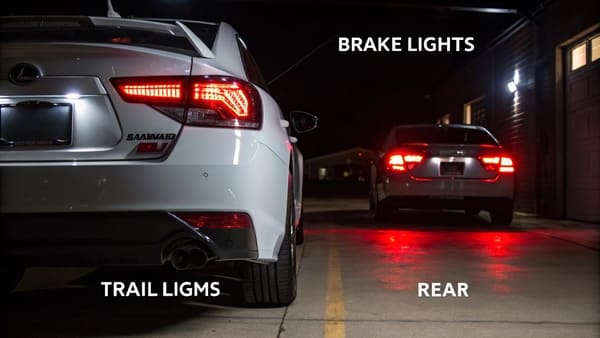
Understanding these differences is not just about using the right words. For a manufacturer, this precision is everything. Each light inside the lamp assembly has different requirements for brightness, color, and activation that are mandated by law in different countries.7 A factory must be able to produce parts that meet these exact standards. For example, a brake light must be significantly brighter than a tail light to be effective.
Here is a simple breakdown of the main lights in a rear lamp assembly:
| Light | Function | Brightness | When It Is On |
|---|---|---|---|
| Tail Light | Makes the car visible from behind at night. | Low | When headlights or parking lights are on. |
| Brake Light | Signals that the car is slowing or stopping. | High | Only when the brake pedal is pressed. |
| Turn Signal | Shows the intention to turn or change lanes. | Medium | When the turn signal stalk is activated. |
| Reverse Light | Illuminates the area behind the car. | Medium | Only when the car is in reverse gear. |
A professional manufacturer needs deep knowledge of optics, electronics, and global regulations to get every one of these functions right.
Why Are Aftermarket Tail Lamps in High Demand Worldwide?
Original factory parts can be very expensive to replace when they get damaged.8 At the same time, many car owners want to customize their vehicles. The aftermarket provides great solutions.
Aftermarket tail lamps are popular for a few key reasons.9 First, they are a cost-effective replacement for damaged original parts. Second, they allow for customization with unique styles, like smoked or clear lenses. Third, they often offer technology upgrades, like moving from halogen bulbs to brighter, more efficient LEDs.
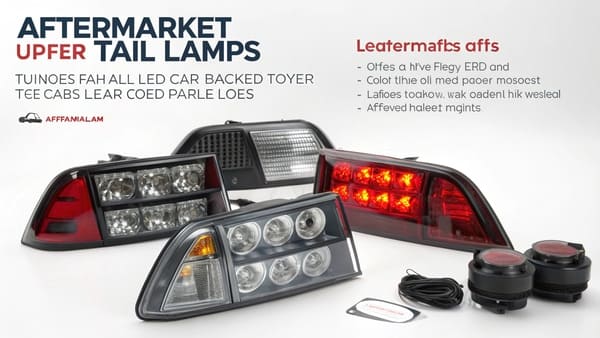
Meeting this global demand is difficult because manufacturing high-quality tail lamps is a very technical process. Not every factory can do it well. The plastic components require extremely precise injection molding machines. Standard machines just can't meet the tight tolerances.10
The Hidden Complexity of Manufacturing
The process has at least three major steps, and the cooling stage is by far the most challenging. I learned this the hard way. Early in my career, I took on a project for a client in Pakistan. We were new to this specific type of tail lamp, and after the injection molding process, the plastic parts "shrank" more than we expected during cooling. I was very worried. But luckily, the client actually preferred the slightly different look. We got lucky that time, and it taught me a valuable lesson about controlling the cooling process. Since then, we have perfected it. This kind of precision work is why the best factories for these parts are usually found in coastal areas like Fujian or near Shanghai, where the manufacturing ecosystem is more advanced. Adding color pigments also complicates things, as the machine must be stopped and the mold opened, making consistent cooling even harder. An inexperienced factory will struggle with shrinkage, color matching, and weak seals, which is why choosing a partner with proven experience is so important.11
Conclusion
Choosing the right tail lamp manufacturer means looking beyond the price tag. You need to focus on their technical skill, production experience, and quality control to ensure you get a reliable product.
"[PDF] Fueling Success: How Effective Supplier Relationship Management ...", https://encompass.eku.edu/cgi/viewcontent.cgi?article=2057&context=honors_theses. Industry analyses and case studies indicate that supplier quality failures can lead to brand reputation damage and financial losses for automotive companies, though the extent of impact varies by context. Evidence role: case_reference; source type: research. Supports: A bad choice can damage your brand and cost you a lot of money.. Scope note: The degree of brand and financial impact depends on the severity of the supplier issue and company response. ↩
"How Injection Molding Improves Automotive Lighting Components ...", https://cqbernice.com/2026/03/injection-molding-automotive-components/. Technical reviews of automotive lighting manufacturing emphasize the necessity of precision injection molding and controlled cooling for achieving required tolerances and material properties in tail lamp assemblies. Evidence role: mechanism; source type: education. Supports: Look for expertise in precision injection molding and complex cooling processes.. Scope note: Specific process requirements may vary by lamp design and material. ↩
"Taillamps - Wikipedia", https://en.wikipedia.org/?title=Taillamps&redirect=no. Automotive encyclopedias and technical standards define a tail lamp as the rear lighting assembly containing multiple light functions, including tail, brake, and turn signals. Evidence role: definition; source type: encyclopedia. Supports: A tail lamp is the complete lighting assembly located at the rear of a vehicle.. Scope note: Definitions may differ slightly across regions and standards. ↩
"Interpretation ID: 21575.ztv - NHTSA", https://www.nhtsa.gov/interpretations/21575ztv. Government transportation agencies and safety organizations highlight the critical role of tail lamps in ensuring vehicle visibility and signaling intentions to other drivers, which is mandated by law in most countries. Evidence role: general_support; source type: government. Supports: It is essential for safety, making the vehicle visible to other drivers and clearly communicating your actions on the road.. Scope note: Specific safety requirements may vary by jurisdiction. ↩
"A Comprehensive Comparison of LED Taillights and Halogen ...", https://dsautomotive.com/blog/led-taillights-vs-halogen-taillights?srsltid=AfmBOoqKvVSbLb-yx6JHJ-BvvUJ_QiM_znfiSY6N5rcwJ1nYDPjLLUWB. Technical comparisons from automotive engineering sources confirm that LED tail lamps offer greater brightness, longer lifespan, and improved energy efficiency compared to halogen bulbs, though initial costs may be higher. Evidence role: statistic; source type: education. Supports: Many new cars use full LED tail lamps, which are brighter, last longer, and use less energy than old halogen bulbs.. Scope note: Performance advantages may depend on specific LED and halogen models. ↩
"The Difference Between Standard and Sequential Turn Signals", https://www.jwspeaker.com/blog/education-center/the-difference-between-standard-and-sequential-turn-signals/?srsltid=AfmBOooT05SvuInKcMlH4m7oV-qYlu7Q9cigmx1VPMvqm7Knex04PmYy. Automotive design literature and industry standards note that LED technology enables advanced features such as sequential turn signals, which are increasingly adopted for both aesthetic and functional purposes. Evidence role: mechanism; source type: education. Supports: They also allow for unique designs, like dynamic "sequential" turn signals that sweep across the light.. Scope note: Adoption of sequential turn signals varies by manufacturer and model. ↩
"Interpretation ID: 21575.ztv - NHTSA", https://www.nhtsa.gov/interpretations/21575ztv. International automotive lighting regulations, such as those from UNECE and NHTSA, specify distinct requirements for brightness, color, and activation of tail, brake, and turn lights, with variations across jurisdictions. Evidence role: historical_context; source type: government. Supports: Each light inside the lamp assembly has different requirements for brightness, color, and activation that are mandated by law in different countries.. Scope note: Regulatory details differ between countries and regions. ↩
"Is there a significant difference between choosing an OEM or ...", https://www.reddit.com/r/Cartalk/comments/17744zy/is_there_a_significant_difference_between/. Market analyses show that OEM automotive parts, including tail lamps, are typically priced higher than aftermarket alternatives, contributing to demand for cost-effective replacements. Evidence role: statistic; source type: research. Supports: Original factory parts can be very expensive to replace when they get damaged.. Scope note: Actual price differences vary by brand, model, and region. ↩
"Automotive Tail Light Market Shows Incredible Growth Soon", https://www.htfmarketinsights.com/report/4421992-united-states-automotive-tail-light-market. Industry reports and market research confirm strong global demand for aftermarket tail lamps, driven by replacement needs, customization, and technology upgrades. Evidence role: statistic; source type: research. Supports: Aftermarket tail lamps are popular for a few key reasons.. Scope note: Demand levels and reasons may differ by region and vehicle segment. ↩
"49 CFR 571.108 -- Standard No. 108; Lamps, reflective devices, and ...", https://www.ecfr.gov/current/title-49/subtitle-B/chapter-V/part-571/subpart-B/section-571.108. Technical papers on automotive lighting manufacturing detail the need for high-precision injection molding equipment to achieve the tight tolerances required for tail lamp components, which standard machines may not provide. Evidence role: mechanism; source type: paper. Supports: The plastic components require extremely precise injection molding machines. Standard machines just can't meet the tight tolerances.. Scope note: Precision requirements depend on lamp design and material specifications. ↩
"Root Cause Analysis Of Crack Initiation on Tail Lights - Academia.edu", https://www.academia.edu/35516088/Root_Cause_Analysis_Of_Crack_Initiation_on_Tail_Lights_An_Automotive_Case_Study. Industry case studies and technical reviews indicate that inexperienced manufacturers are more prone to defects such as shrinkage, color inconsistency, and poor sealing in automotive tail lamp production. Evidence role: case_reference; source type: research. Supports: An inexperienced factory will struggle with shrinkage, color matching, and weak seals, which is why choosing a partner with proven experience is so important.. Scope note: Defect rates and types may vary by factory and production process. ↩